Patras Castle: A Byzantine and Ottoman Hilltop Fortress in Greece


Site at a Glance
- Rating
- 4.6
- Popularity
- Medium
- Country
- Greece
- Primary era
- Medieval
- External website
- Open
- Eras represented
- Medieval, Early Modern
- Civilizations
- Byzantine, Crusader, Principality of Achaea, Venetian
- Site type
- Military
- Remains
- Castle
On this page12 sections
History
Patras Castle is a medieval hilltop fortress in Patras, Greece, built over the ruins of the ancient acropolis of the city. Its first fortress was constructed in the second half of the sixth century, after the catastrophic earthquake of 551, during the reign of Byzantine Emperor Justinian I. It defended the area and its inhabitants, and its long history reflects the changing military and political control of the Peloponnese.
Byzantine foundations and early defenses
The first fortress reused materials from pre-Christian buildings, including structures connected with the ancient acropolis. From the Byzantine period onward, the site remained in continuous defensive, administrative, and military use. Before the Frankish takeover in 1205, Slavs, Saracens, Bulgarians, Normans, and other forces besieged the fortress without capturing it.
The defense of Patras against a major Arab-Slav siege in 805 became associated with Saint Andrew, one of the apostles in Christian tradition and the patron saint of the city. Local tradition attributed the successful defense to his intervention, adding a religious dimension to the fortress’s military history.
Frankish, Latin, and Byzantine rule
Frankish forces took control of the castle in 1205, following the Fourth Crusade, the campaign that captured and divided Constantinople in 1204 and led to Frankish states in parts of Greece. They enlarged and strengthened the fortress and dug a moat along three sides. In 1278, the Principality of Achaea, a Frankish-ruled state established in the Peloponnese, pawned the castle to the local Latin Archbishop, a Catholic archbishop serving the Latin Church in the medieval crusader states of Greece.
The Latin Archbishop retained possession until 1430. That year, Constantine Palaiologos took the castle and undertook extensive repairs to its walls. Before becoming emperor, Constantine, also known as Constantine XI, ruled the Byzantine territory called the Despotate of the Morea.
Ottoman and Venetian control
The Ottoman Empire captured the fortress in 1458. For most of the Ottoman period, it remained an important seat of power and an administrative center in the Peloponnese. Venice seized it in 1687 during the Morean War, the late-seventeenth-century conflict in which Venice temporarily conquered much of the Peloponnese from the Ottoman Empire.
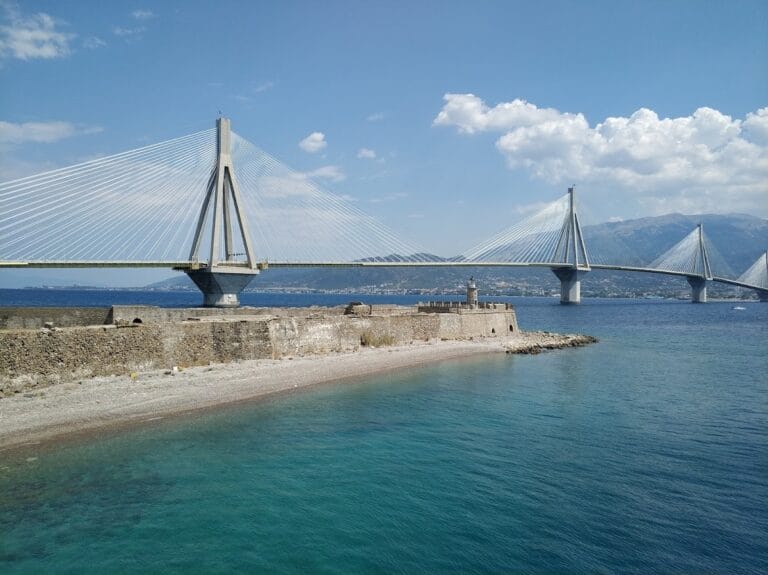
The Venetians repaired the fortress and fortified the upper-town settlement. A wall ran from the Ottoman bastion around the settlement near the castle to the Venetian bastion. The Ottomans recovered the castle in 1715. Afterward, it gradually lost defensive importance to the more modern fortress at Rio, which controlled the entrance to the Gulf of Patras.
War of Independence and modern military use
During the Greek War of Independence, Greek forces besieged the castle several times under the leadership of Theodoros Kolokotronis and came close to taking it. The efforts failed because of disputes among the Greek military leaders. The Turkish garrison finally surrendered in 1828 to the French General Nicolas Joseph Maison during the French Morea expedition.
After Greek independence, the fortress served for several years as a prison and military camp. The Greek Army continued to use it until after the Second World War. German forces occupied the castle from 1941 to 1944, and it was liberated with the city of Patras on 4 October 1944.
Since 1973, Patras Castle has been supervised by the Sixth Ephorate of Byzantine Antiquities, a regional archaeological service responsible for protecting and managing Byzantine-era antiquities. The fortress is a legally protected archaeological site and listed building in Greece. It is now a monument and landmark of Patras.
Remains
Layout and defensive structures
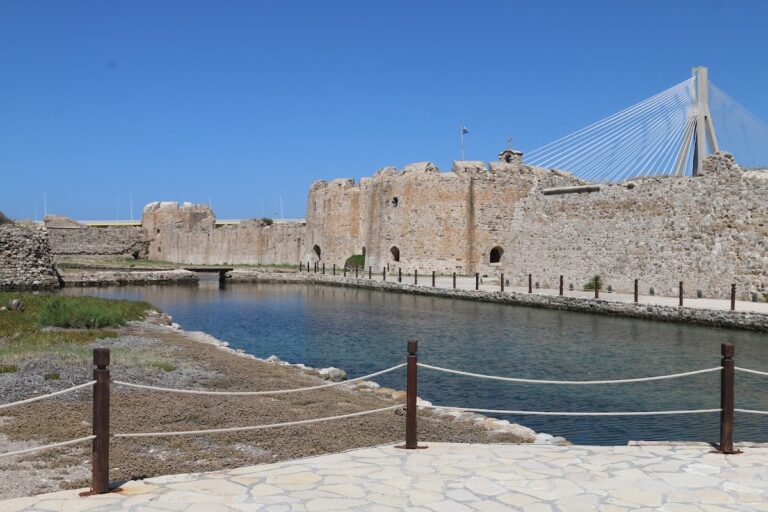
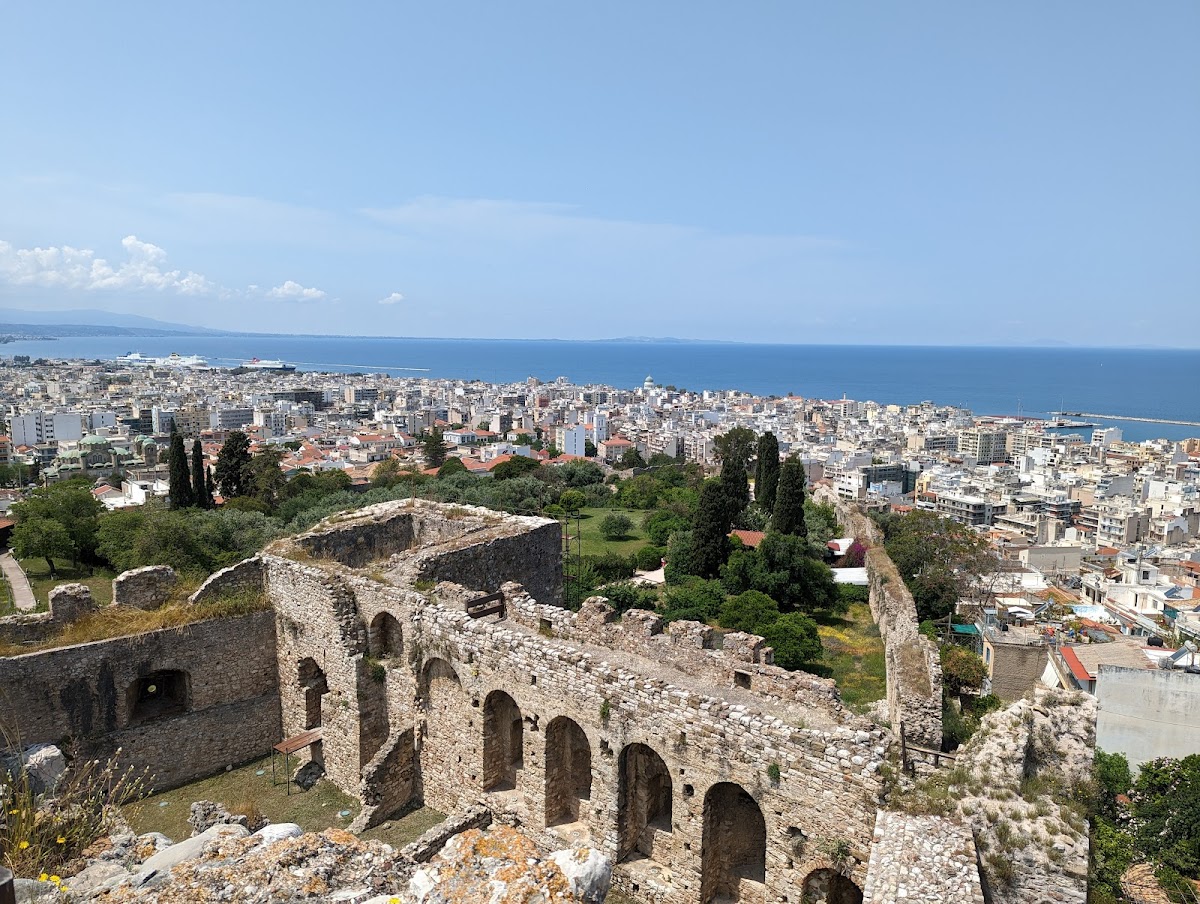
Patras Castle occupies approximately 22,725 square metres on a low hill at the outer slopes of Mount Panachaiko, about 800 metres from the coast of the Gulf of Patras. Its principal plan is a triangular outer enclosure strengthened by towers, bastions, and gates. A deep moat originally protected this enclosure, while a second moat surrounded an inner compound at the northeastern corner of the fortress.
Outer enclosure and entrance
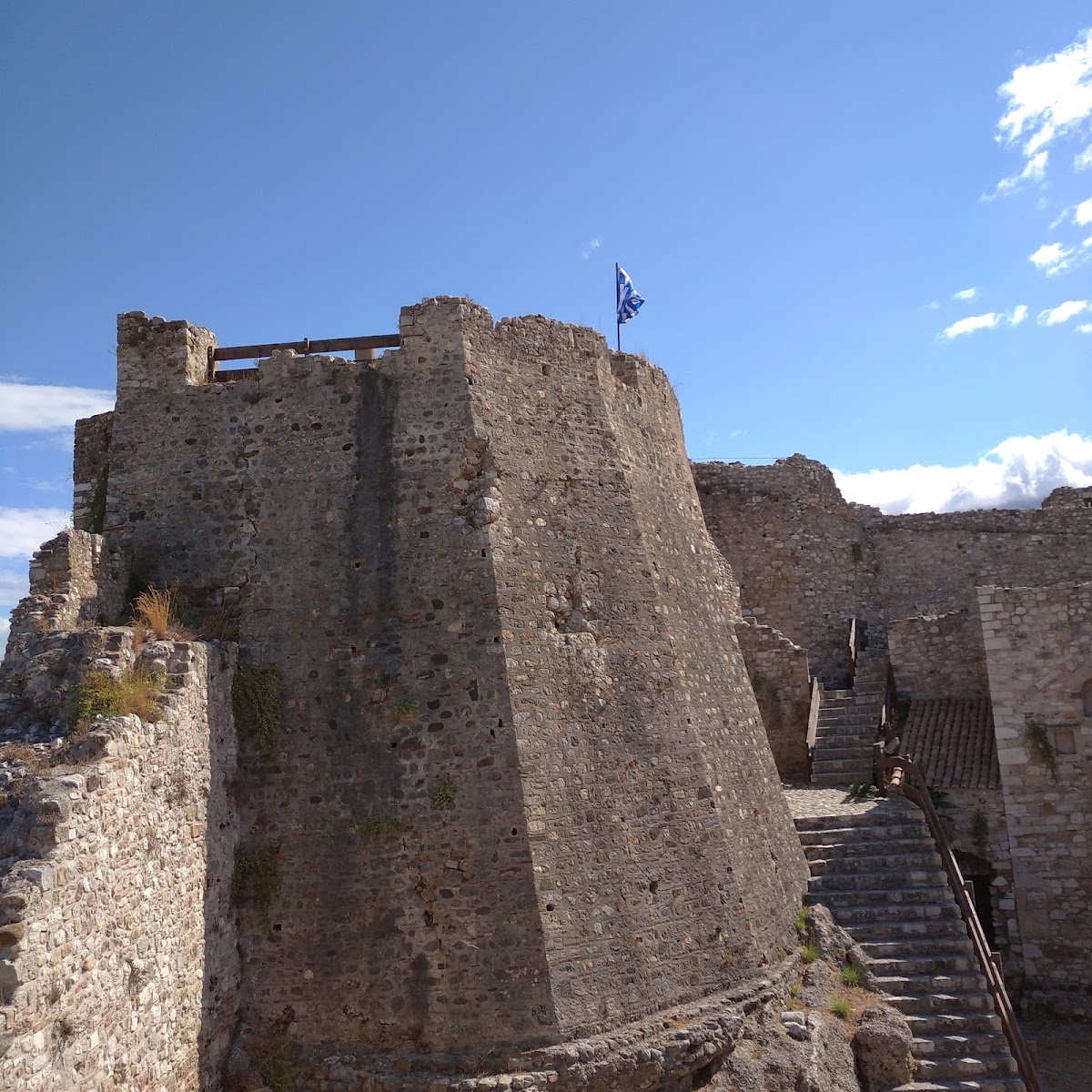
The main entrance is set within a tower measuring approximately 30 square metres at the middle of the eastern wall. The outer wall rises to about 40 feet and incorporates successive repairs, additions, and adaptations made by different occupying powers. These visible phases reflect changes in military technology and the continuing adjustment of the fortress to new defensive requirements.
Inner compound
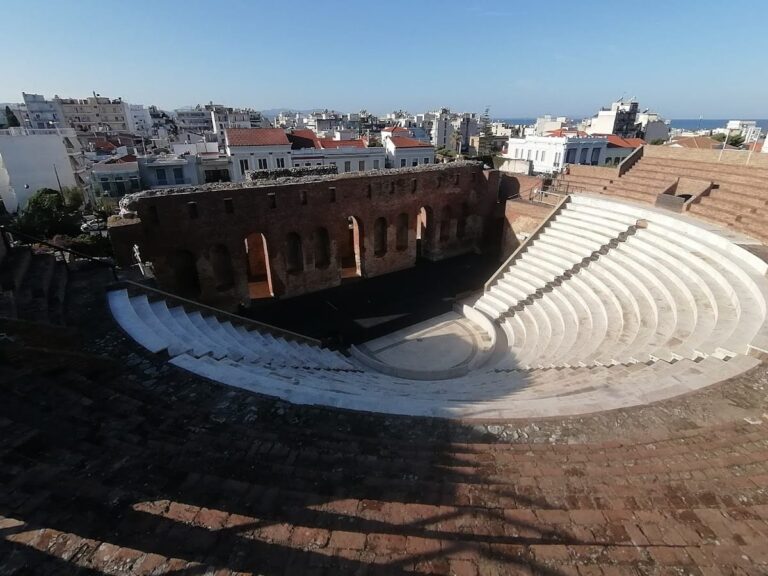
The inner compound forms a separate fortified area within the northeastern part of the site. It is surrounded by its own moat and contains a temporary theatre with seating for 640 people. The theatre is used for cultural events, particularly during the summer, within the fortress’s surviving ruinous setting.
Reused masonry and the Patrinella tradition
Ancient building material
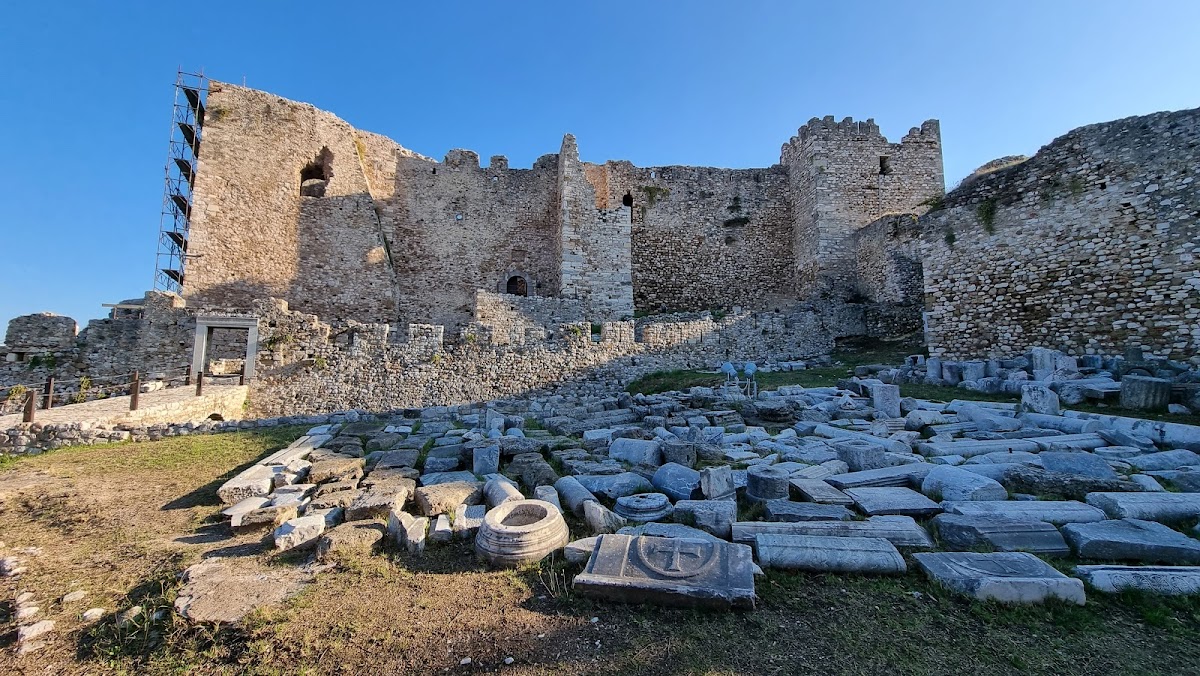
The walls contain extensive material taken from earlier buildings. Hewn stone, architectural blocks, friezes, structural slabs, columns, and other elements from the ancient acropolis and pre-Christian structures were incorporated into the medieval defenses. This reused masonry forms part of the visible relationship between the ancient settlement and the later fortress.
Roman statue fragment
A torso and male head from a marble Roman statue are set in a special recess in the masonry. The distorted fragment is associated with the local tradition of Patrinella, a female figure supposedly transformed into a man during the Ottoman period. Patrinella is believed to protect the city from epidemics and to weep at night when a prominent citizen of Patras dies.