Palaio Pyli: A Byzantine Settlement and Castle on Kos

Site at a Glance
- Rating
- 4.7
- Popularity
- Medium
- Country
- Greece
- Primary era
- Medieval
- Eras represented
- Medieval
- Civilizations
- Byzantine, Crusader, Knights Hospitaller
- Site type
- Military
- Remains
- Castle
On this page7 sections
History
Palaio Pyli is an abandoned Byzantine settlement and castle in Greece, on the island of Kos in the Dodecanese. The present castle is generally dated to the eleventh century, although some datings place its construction between the ninth and eleventh centuries, with 1093 proposed as a possible date. During the Byzantine period, the era of the eastern Roman Empire centered on Constantinople, Palaio Pyli became the capital of Kos and one of the island’s important medieval refuges.
Early and Byzantine origins
The hill appears to have been fortified during the Mycenaean period, the Late Bronze Age civilization of mainland Greece and the Aegean, and may have been fortified again in antiquity. The present castle belongs to the Byzantine period. Tradition attributes its foundation to Christodoulos Latrinos, a Byzantine monk associated with Patmos and the foundation of the monastery of Saint John the Theologian there. The castle is first documented in 1085 in records preserved by that monastery.
The settlement occupied a naturally defensible hill position that was difficult to see from the sea. Its inaccessibility helped it survive a Turkish siege in 1457. A village established to the south during the fifteenth century was also protected by the castle from pirate attacks.
Hospitaller and Ottoman rule
The Knights Hospitaller, a military-religious order that ruled Rhodes and neighboring Aegean territories including Kos, restored and strengthened Palaio Pyli during the fourteenth century. Their rule of Kos lasted from 1315 to 1522 and included major fortification works. An earthquake in 1493 seriously damaged the castle, after which it was repaired.
Ottoman forces captured Kos in 1523 and partially repaired the castle walls. Palaio Pyli was the only fortress on the island to rebel in 1526, although it later surrendered. The settlement and castle were abandoned between 1813 and 1830, or in 1830, after a cholera epidemic. Most inhabitants moved to modern Pyli, also called Neo Pyli, and the former settlement subsequently fell into ruin.
Historical status
The ruins are designated as an archaeological monument of Greece. Their resemblance to the better-known Byzantine fortified settlement of Mystras in the Peloponnese has given Palaio Pyli the modern descriptive nickname “the Mystras of the Dodecanese.”
Remains
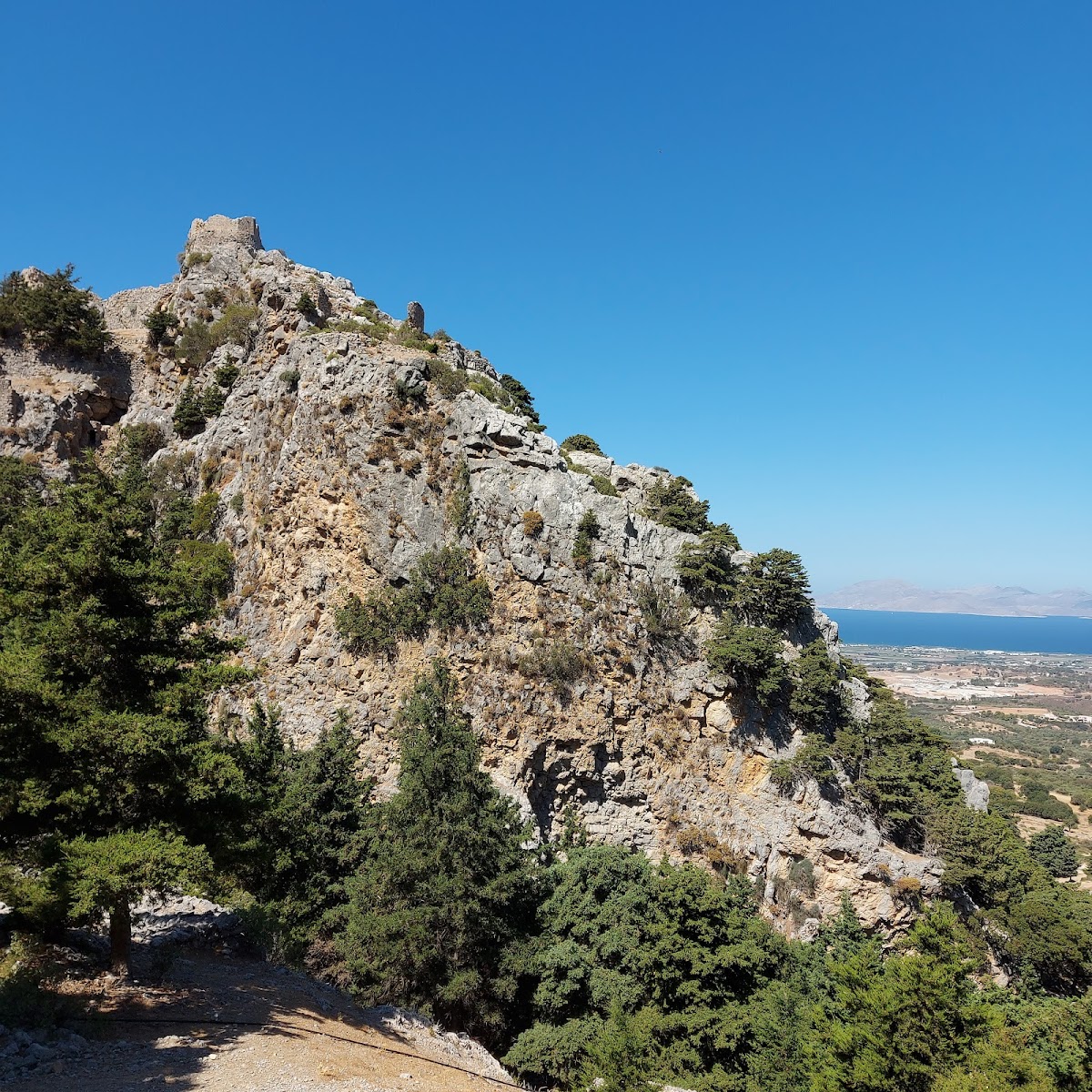
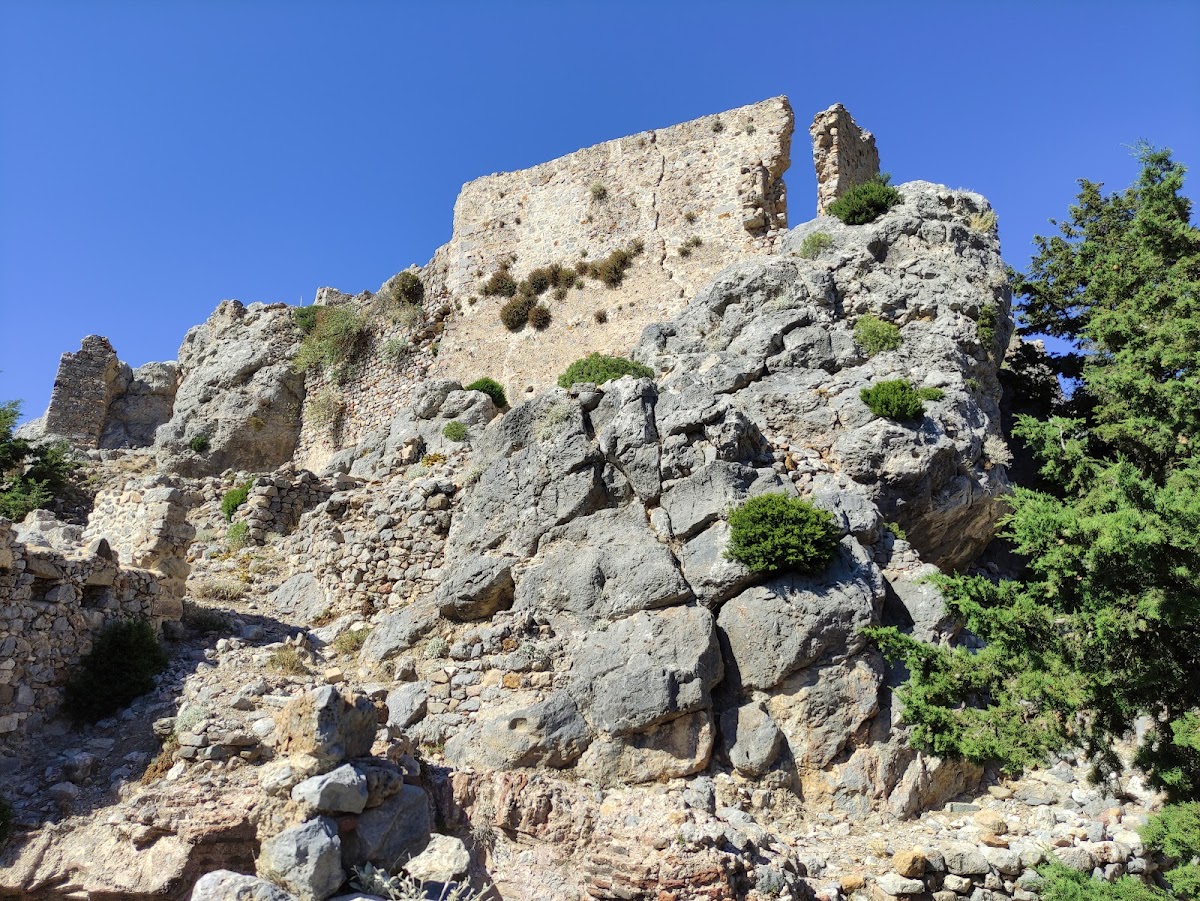
Palaio Pyli occupies a lower summit on the northwestern slope of Mount Dikaios, near modern Pyli and about 3 kilometers southeast of the village. The ruins lie at approximately 300 to 360 meters above sea level and overlook the northern coast of Kos, including Marmari, Tigaki, the Alykes salt lake, and the sea. The castle is arranged in three concentric defensive enclosures, built mainly from limestone and igneous rock, with brick used in a distinctive manner for the Dodecanese.
Defensive enclosures and entrance
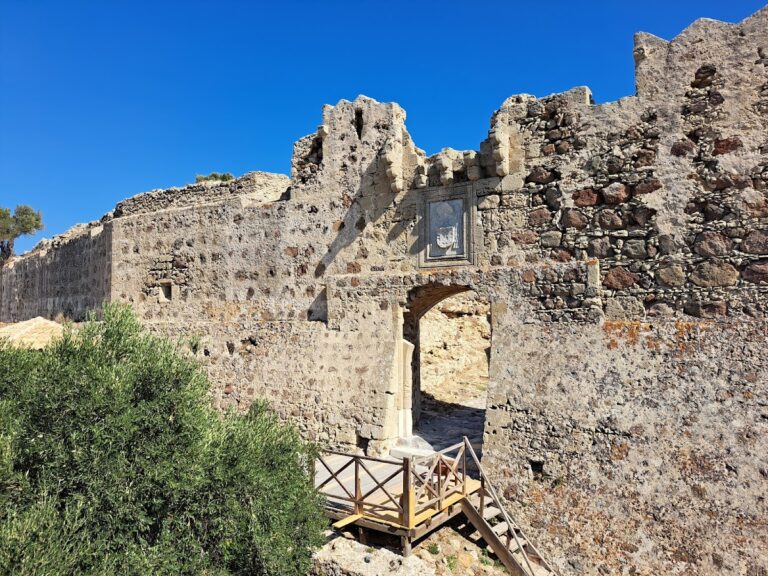
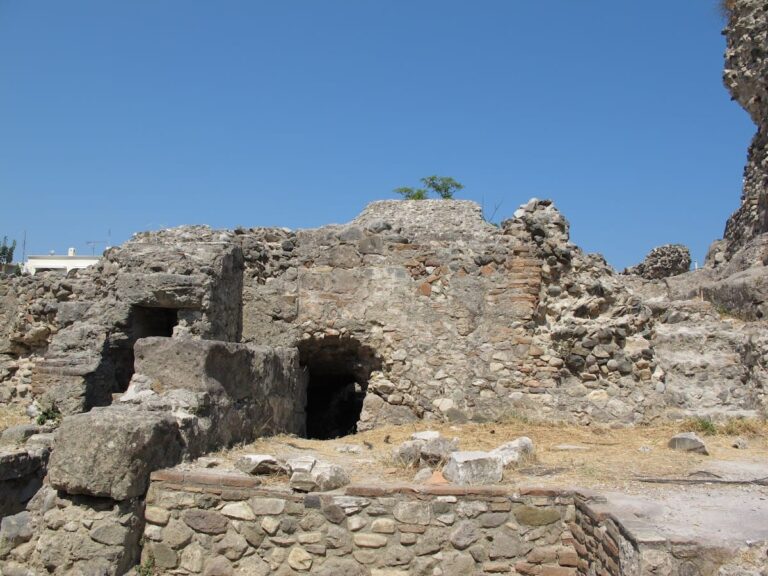
The upper enclosure surrounds the summit. A second enclosure extends around a larger area to the east, south, and west, while a third, quadrangular enclosure lies north of the upper walls. Seven towers survive: four in the upper enclosure and three in the second. The walls and most buildings within the castle are almost completely ruined, but a square structure remains at the northern corner of the upper enclosure, with walls approximately 6 meters long.
A square entrance gate, framed by semicircular arches, was built approximately in the late eleventh or early twelfth century. Its masonry uses a concealed-plinth technique, in which the lower supporting course is recessed or hidden beneath the main wall fabric. A large underground cistern, a constructed reservoir for collecting and storing water, lies at the center of the upper enclosure.
Churches and monastery buildings
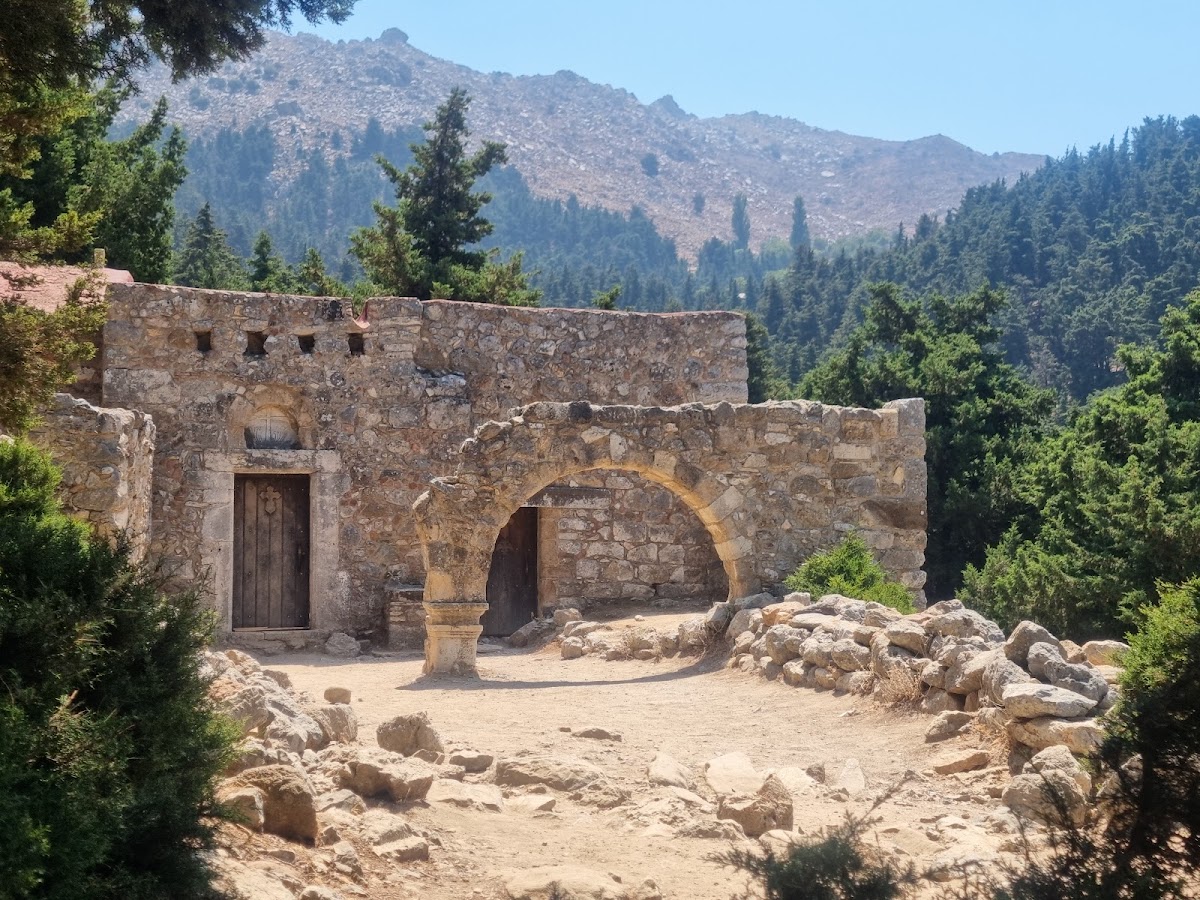
The ruined settlement contains three identified churches: the Church of Saint Anthony, the Church of the Virgin Mary of the Castles, and the Church of the Holy Bodiless Ones, also called the Church of the Angels. The Church of the Virgin Mary of the Castles is also identified as an eleventh-century monastery founded by Christodoulos Latrinos. Two surviving church buildings are dated to the eleventh century, the Church of the Archangels Michael and Gabriel and the Monastery of the Virgin Mary of the Castles.