Chrysocheria Castle: A Fifteenth-Century Frankish Fortress on Kalymnos
Site at a Glance
- Rating
- 4.5
- Popularity
- Low
- Country
- Greece
- Primary era
- Medieval
- Eras represented
- Medieval
- Civilizations
- Crusader, Knights Hospitaller
- Site type
- Military
- Remains
- Castle
On this page10 sections
History
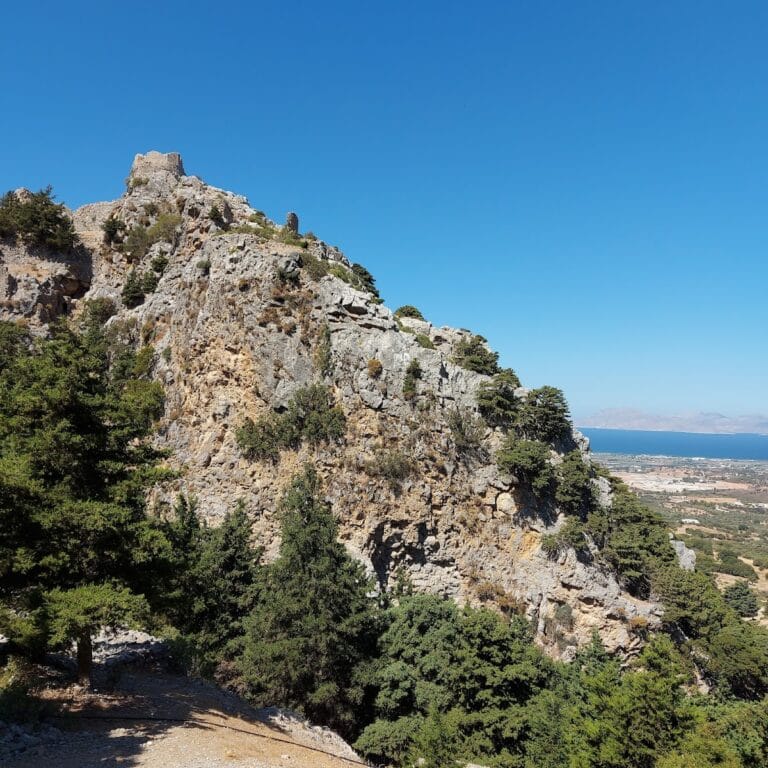
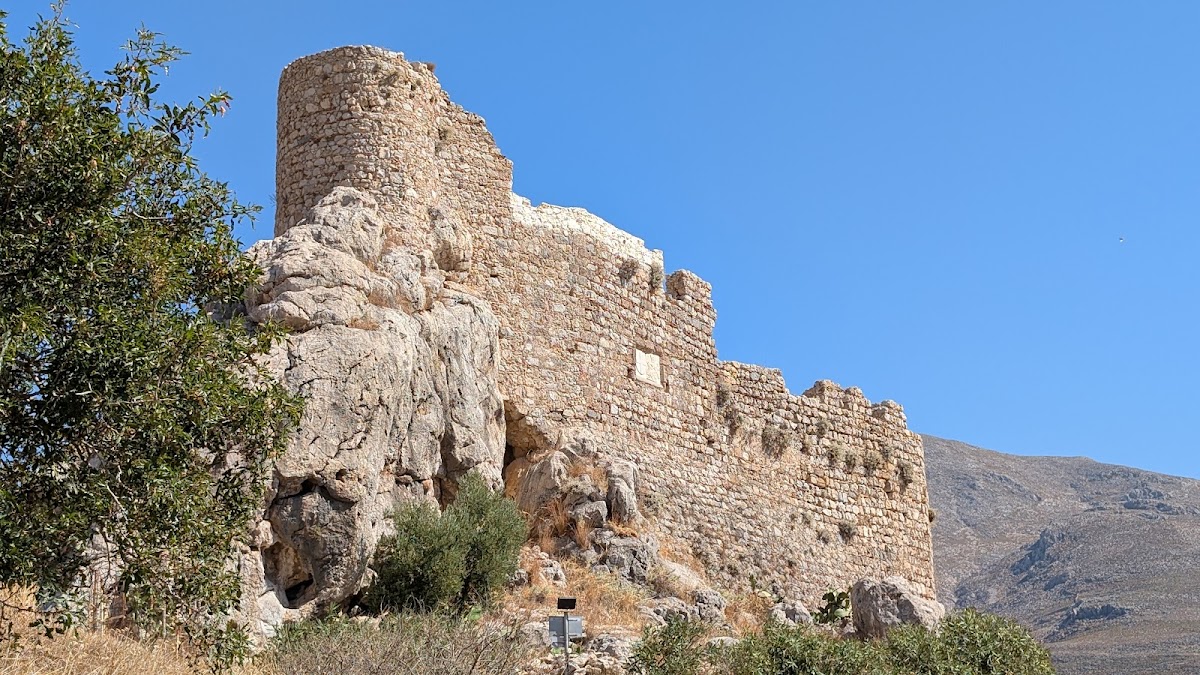
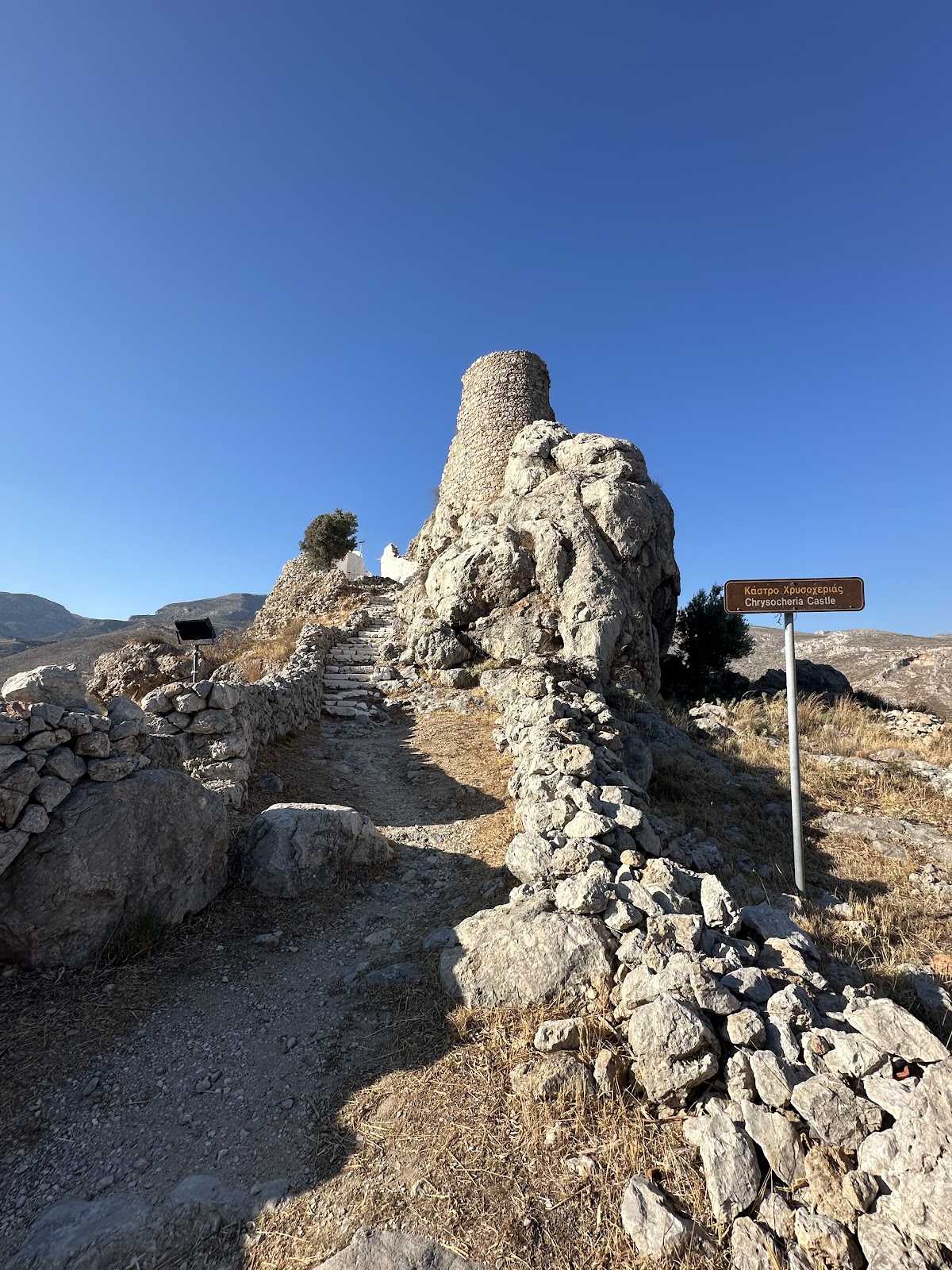
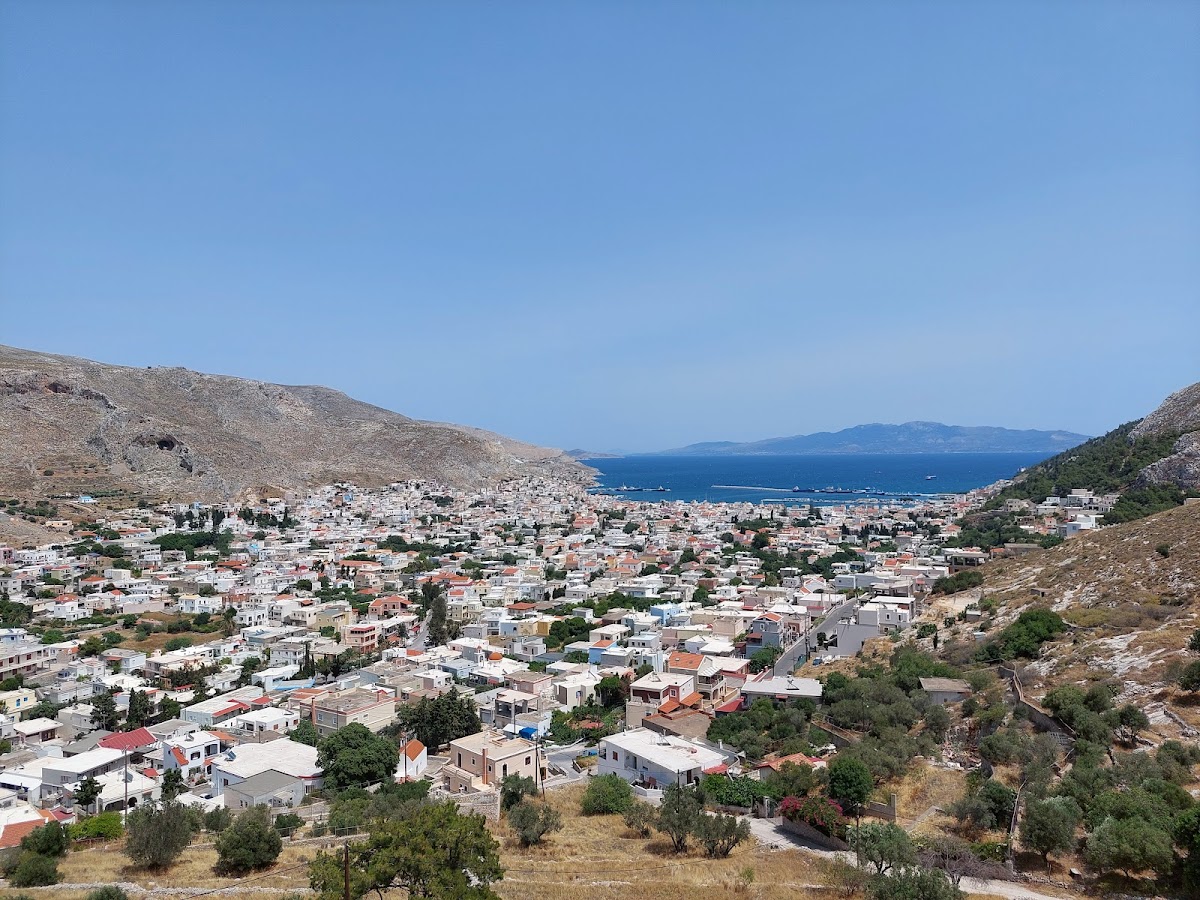
Chrysocheria Castle, also called Pera Castle, is a fifteenth-century medieval Frankish fortress on Kalymnos, Greece, between Pothia and Chora. Built by the Western European Latin Christian military order known as the Knights Hospitaller, construction began around 1445 to strengthen the order’s defenses in the Aegean.
Foundation under the Knights Hospitaller
The fortress was commissioned by Jean de Lastic, Grand Master of the Knights Hospitaller of Rhodes. His instructions were carried out by Fantino Quirini, the knight commander responsible for the project. Quirini intended to establish a castle under his own ownership, even though Kalymnos already had the Great Castle, also known as Chora Castle, as a defensive stronghold.
The local inhabitants initially refused the compulsory labor required for construction. A court decision in Quirini’s favor enabled the work to proceed, and the castle was built on a hill between Pothia and Chora.
Early abandonment and older occupation
Chrysocheria Castle was abandoned rapidly in the middle of the fifteenth century because its defenses could not withstand attacks by Ottoman raiders, particularly Ottoman pirates. The site had a much older history before the fortress was erected. Traces of habitation extend back to the Neolithic period, the prehistoric era associated with farming, settled communities, and stone tools, while an ancient temple once occupied the location.
The name and protected status
The castle took its name from the pre-existing Church of Panagia Chrysocheria, a Greek Christian dedication to the Virgin Mary. The name means “Golden Hands” and refers to a famous Marian icon whose hands were covered with gold leaf. Chrysocheria Castle is recognized under Greek law as both an archaeological site and a protected building.
Remains
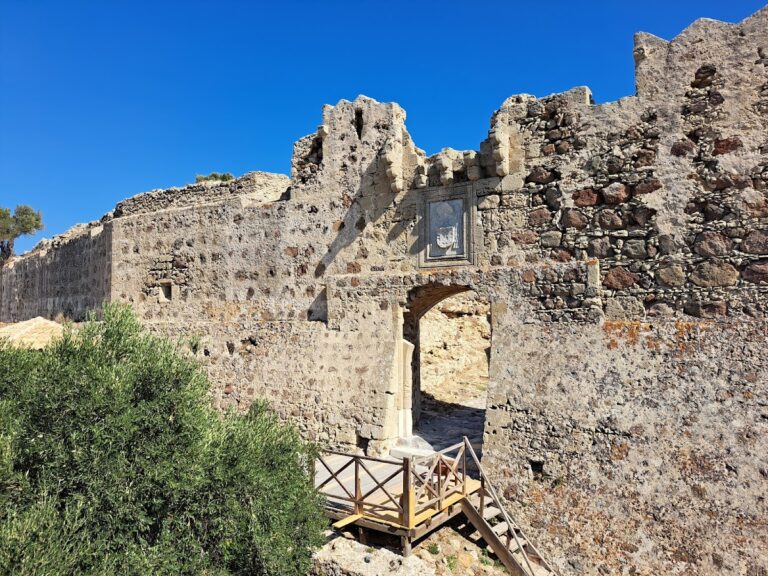
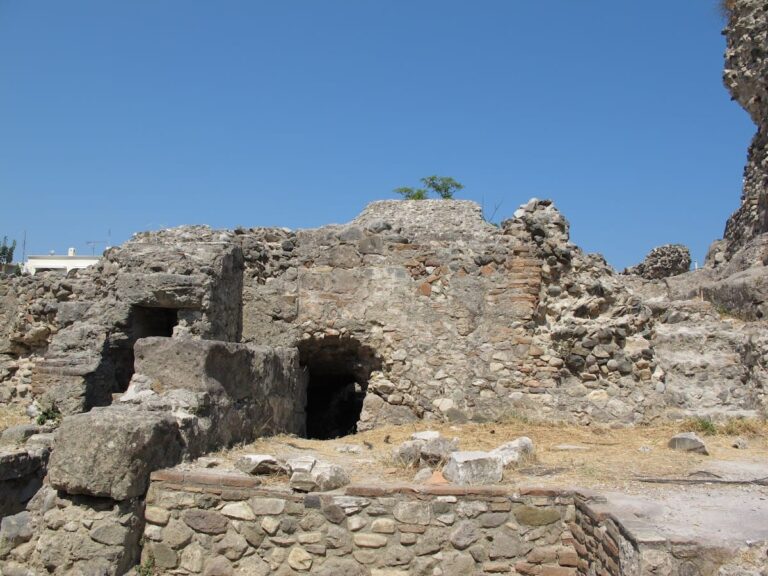
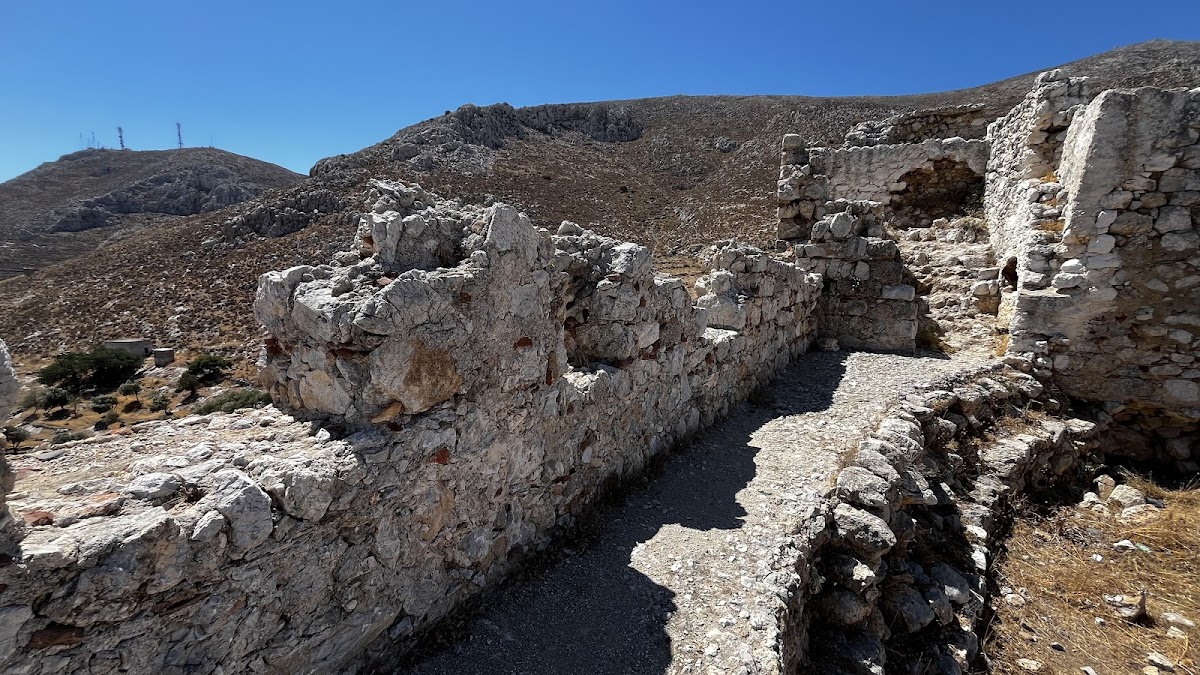
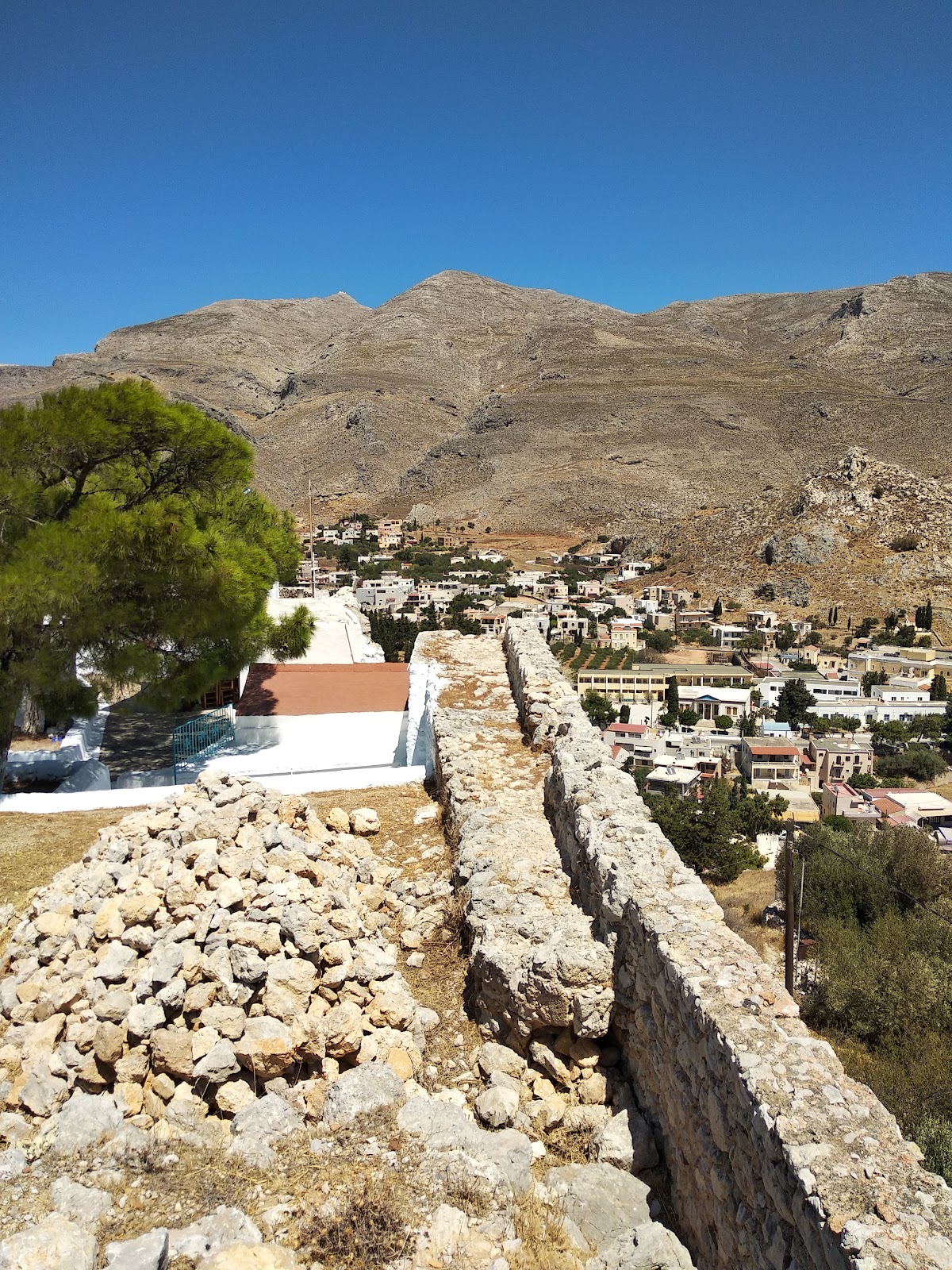
The fortress occupies a hill approximately 4 kilometers from Pothia. Its rhomboid plan is enclosed by a defensive outer wall and an additional fore-wall, an extra barrier built outside the main fortification. Two towers and two gates strengthen the enclosure, with the gates positioned on the northern and eastern sides. Rock formations surround the castle on every side except the south, while sections of the earlier ancient temple were incorporated into the fortress walls.
Fortifications and eastern gate
The surviving defensive arrangement combines the rhomboid enclosure, its two towers, the outer wall, and the additional fore-wall. Above the eastern gate are coats of arms associated with Fantino Quirini, Jean de Lastic, and Fra Juan Geltru, who governed Kos. These heraldic features remain connected with the castle’s construction under the Knights Hospitaller.
Buildings within the enclosure
Storehouse
A storehouse stood among the buildings inside the castle. Its remains form part of the surviving interior evidence for the fortress’s occupied spaces.
Churches
The interior also contained the churches of Saint George and the Virgin Mary. Remains of frescoes survive in the churches. The Church of Panagia Chrysocheria, which predated the fortress and gave it its name, is located within the castle area.
Windmills outside the eastern wall
Three windmills stand beyond the eastern wall. Built after 1522, they are preserved today and were sometimes also used for the island’s defense.