Leśnica Castle: A Baroque Castle and Cultural Centre in Wrocław

Site at a Glance
- Rating
- 4.6
- Popularity
- Medium
- Country
- Poland
- Primary era
- Early Modern
- External website
- Open
- Eras represented
- Medieval, Early Modern, Modern
- Civilizations
- Habsburg, Holy Roman Empire, Kingdom of Bohemia, Kingdom of Prussia
- Site type
- Domestic
- Remains
- Castle
On this page14 sections
History
Leśnica Castle is a historic masonry residence in Wrocław, Poland, whose origins are associated with the Silesian Piasts and a small defensive stronghold established probably in 1132. A masonry castle was mentioned in 1271, and it was built either by Bolesław I the Tall or by his son Henry I the Bearded. The site later became a burgher residence, a fortified family property, and a Baroque palace before becoming a cultural centre.
Piast and Bohemian periods
Bolesław I the Tall died at the castle during the night of 7–8 December 1201. His will assigned the locality to the Cistercians of Lubiąż Abbey, but Henry I the Bearded retained the castle because he needed a residence during frequent journeys between Wrocław and Legnica. He compensated the abbey with the village of Bartoszowa.
After the death of Henry VI the Good, the last Duke of Wrocław, the castle and the Duchy of Wrocław became part of the Kingdom of Bohemia. In 1339, Bohemian King John of Luxembourg sold the independent town of Leśnica and its castle to the Wrocław burgher Gysko de Reste for 300 Prague groschen. The property then became a burgher residence and changed hands several times before 1412, passing through the von Sitten brothers, Peter Rieger, Otto von der Neisse, and Nikolaus Klettendorf.
Holy Roman Emperor Charles IV stayed at the castle in 1348. In 1412, the Wrocław patrician Michael Banke acquired it and received royal permission to construct a new fortified masonry complex. Built in 1420, this complex comprised two buildings and a tower within a moat.
Destruction and rebuilding in the sixteenth and seventeenth centuries
Hussite forces destroyed the castle in 1428. The Hussites followed the Bohemian religious reform movement associated with Jan Hus. In 1459, Wrocław burghers burned the castle because they feared that forces supporting George of Poděbrady, a Hussite-aligned king of Bohemia, might seize it. In 1494, the property passed to the von Hörnig family.
After Louis II of Hungary and Bohemia died without an heir in 1526, Bohemia came under Habsburg rule. The Habsburgs were a major European ruling dynasty whose authority extended over Bohemia and Silesia. Holy Roman Emperor Maximilian II visited the castle in 1563, and the Bohemian King Matthias of Habsburg stayed there in 1611.
In 1610, Heinrich von Hörnig replaced the earlier castle with a lavish fortified family residence. Military actions during the Thirty Years’ War, a major seventeenth-century European conflict, destroyed the castle in 1633. The von Hörnig family retained the property until 1641.
Horatius von Forno acquired the castle in 1651, and his family held it, apart from a short interruption at the beginning of the eighteenth century, until 1733. In that year, the Red Star Crusaders acquired the property. This Catholic religious order was formally known as the Canons Regular of the Order of the Holy Cross with the Red Star.
Baroque residence and Prussian ownership
Under the direction of Christoph Hackner, the castle was rebuilt in the Baroque style between 1735 and 1740. The two existing wings were joined into a single building, and the elevations were unified while the earlier character of the interiors was retained. Baron Ferdinand von Mudrach acquired the castle in 1742 and commissioned a Rococo refurbishment between 1752 and 1757, directed by the architect Johann Merck. Rococo was a later European style associated with delicate ornament and lighter, asymmetrical interiors. During this work, parts of the moat were filled and sections of the fortifications were demolished.
After the First Silesian War, Leśnica and most of Silesia, together with the Kłodzko region, became part of the Kingdom of Prussia and later the German Empire. Before 1800, the grounds were landscaped as a park, and the interiors were altered again.
The castle was occupied by French and Bavarian troops during the Napoleonic Wars in 1806–1807. Jérôme Bonaparte stayed there in 1808, and Marshal Michel Ney stayed there in 1813. Charles of Lorraine, commander-in-chief of the Austrian forces, was also associated with a wartime stay before the Battle of Leuthen.
The von Wylich und Lottum estate
Carl von Wylich und Lottum bought the castle and estate in 1836. The following year, he incorporated them into a family entail comprising the estates of Leśnica, Ratyń, and Mokra. A family entail kept an estate within a designated hereditary line and restricted its division or sale. Carl’s son Hermann Friedrich inherited the estate in 1841, followed by Hermann’s sons Moritz, who held it from 1849 to 1876, and Wilhelm, who held it from 1876 to 1907.
The castle later passed to Wilhelm’s third daughter, Victoria von Wylich und Lottum, who died in 1933. Her husband, Ludolf von Wylich und Lottum, was the last owner. He died without heirs on 20 March 1944 at Neklade on Rügen.
War damage, reconstruction, and present use
Leśnica Castle was not damaged during the Second World War, but it was subsequently looted. It stood abandoned from 1945 to 1953 and suffered fire damage in 1953. The building was secured in 1958.
Reconstruction and adaptation as a cultural centre took place from 1959 to 1963. The surviving interior fittings and decoration left after the fire were destroyed during the work. The castle entered the historic-monuments register in 1962, and repairs to the cellars and casemates began after 1974. The facades were repaired in 1995.
The building now houses the Zamek Cultural Centre, a cultural institution of the City of Wrocław. Together with its historic park, it forms a palace-and-park complex owned by the Municipality of Wrocław.
A local legend says that the ghost of Horatius von Forno haunts the castle. The story connects him with the alleged massacre in 1663 of Protestant peasants from Stabłowice who resisted the suppression of Protestant churches or refused conversion to Catholicism. Horatius von Forno was a historical official who served as president of the chamber. After his death in 1654, the city council permitted his burial in the Church of the Blessed Virgin Mary on Piasek only at night and without singing or ceremony.
Remains
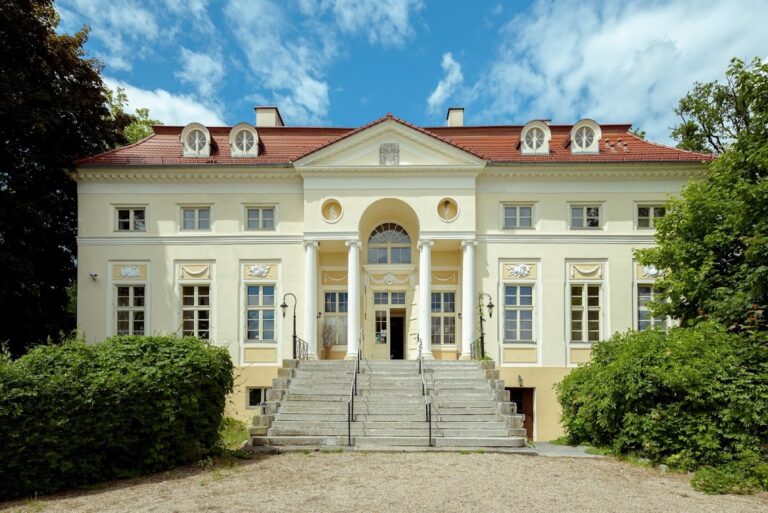
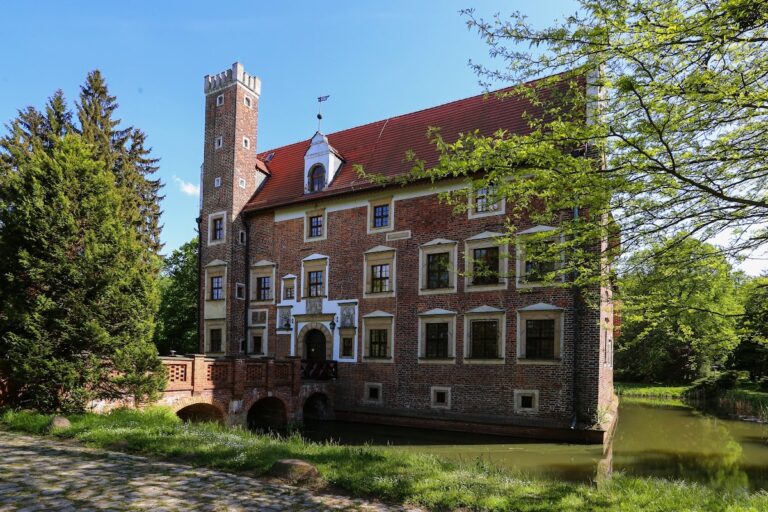
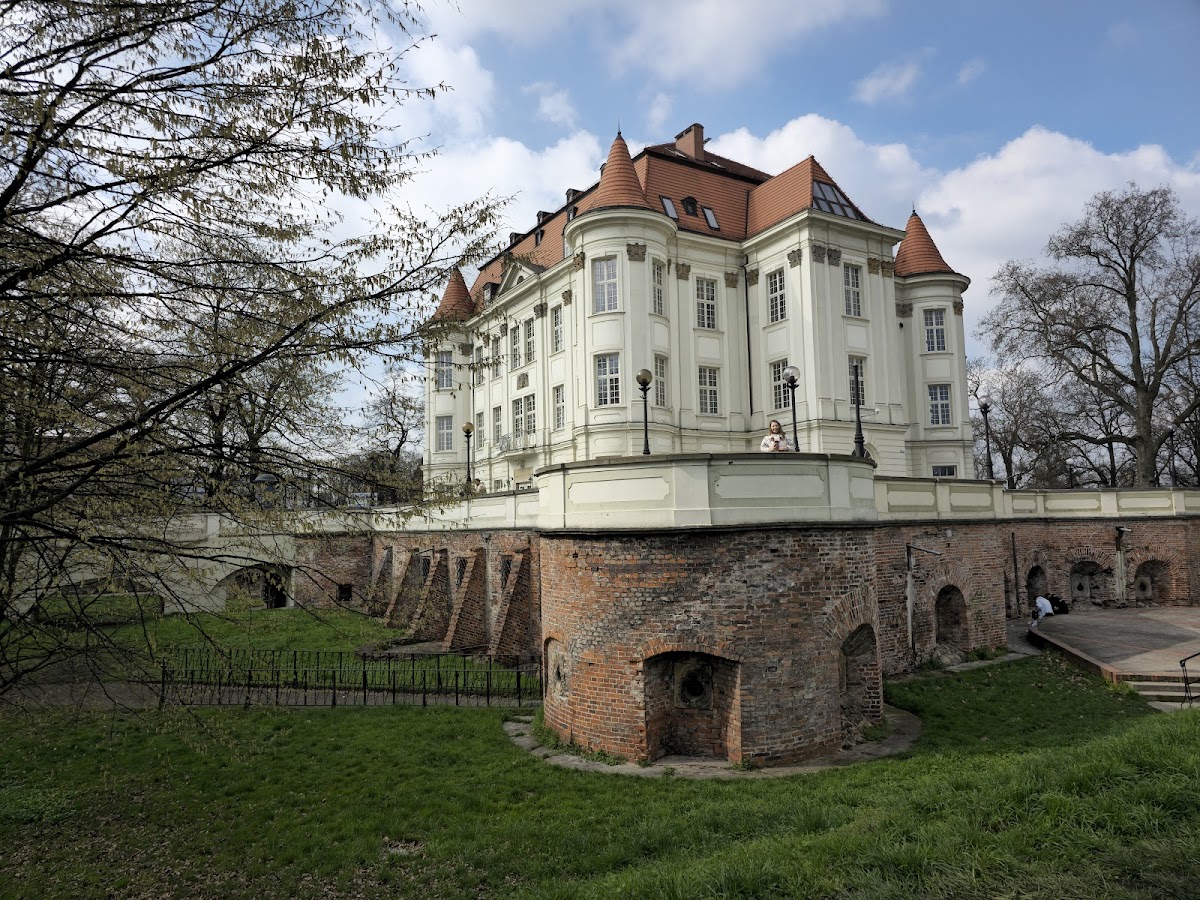
Leśnica Castle is a three-storey, cellarled, two-wing masonry building made of plastered brick. It is generally classified as Baroque and is conventionally called a castle, although it is also described as a palace. The building stands within a moat and terrace-forming bastion fortifications, while the associated historic park extends the palace-and-park complex beyond the immediate defensive enclosure.
Fortifications and earlier remains
Moat and bastions
The castle is surrounded by a moat and by bastions, which are projecting fortification platforms designed to support defensive fire. The terrace-forming bastion works retain loopholes, narrow openings intended for weapons. The 1420 defensive complex was enclosed by a moat, although parts of the moat were later filled during the Rococo refurbishment. Sections were uncovered again in 1836.
Cellars and casemates
Relics of the masonry castle mentioned in 1271 survive in the cellars. The site also includes casemates, vaulted fortified chambers used for defence or storage. Repairs to the cellars and casemates began after 1974, preserving elements associated with the castle’s earlier defensive phases.
Crenellated wall
In 1836, a pseudo-defensive wall with crenellations was erected after parts of the moat were excavated. Its battlement-like form belongs to the later appearance of the grounds rather than to the original medieval defensive complex.
Palace building and park
Main building
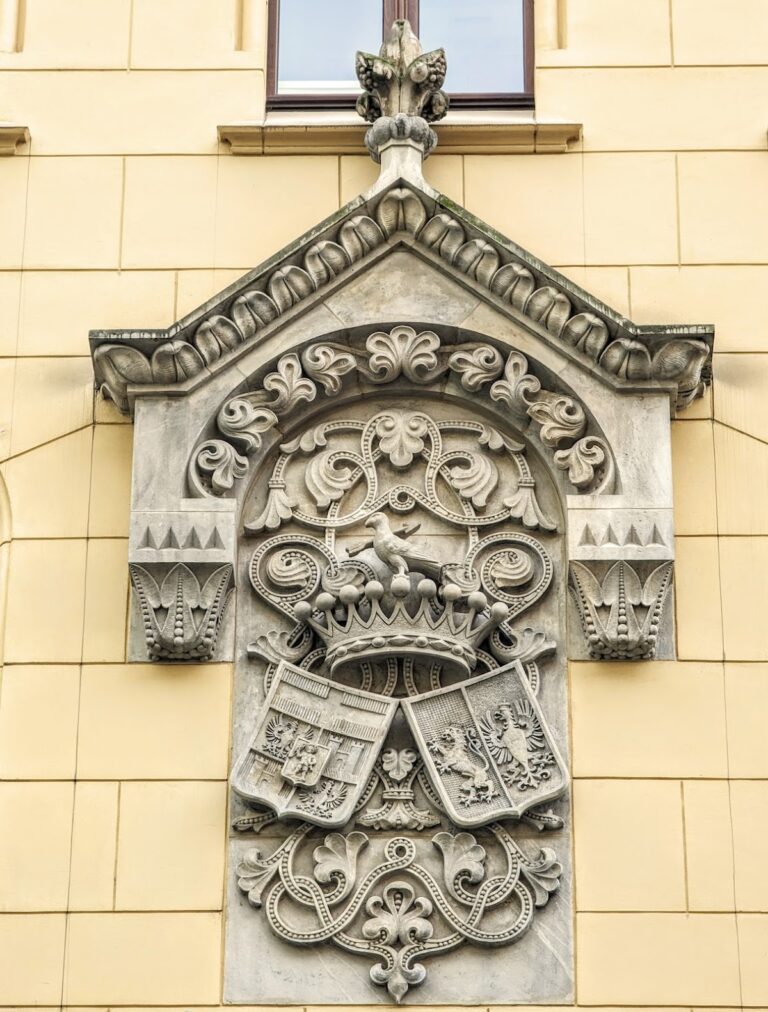
The main entrance is centrally positioned beneath a balcony with a metal balustrade. Above the first-floor balcony windows is the coat of arms of Baron Ludolf von Veltheim-Lottum, supported by two lions. The Baroque rebuilding of 1735–1740 unified the elevations and joined the earlier wings into one mass. The Rococo work of 1752–1757 transformed the interiors, while the later post-fire adaptation removed the historic interior fittings and decoration that had survived the 1953 fire.
Park and monument
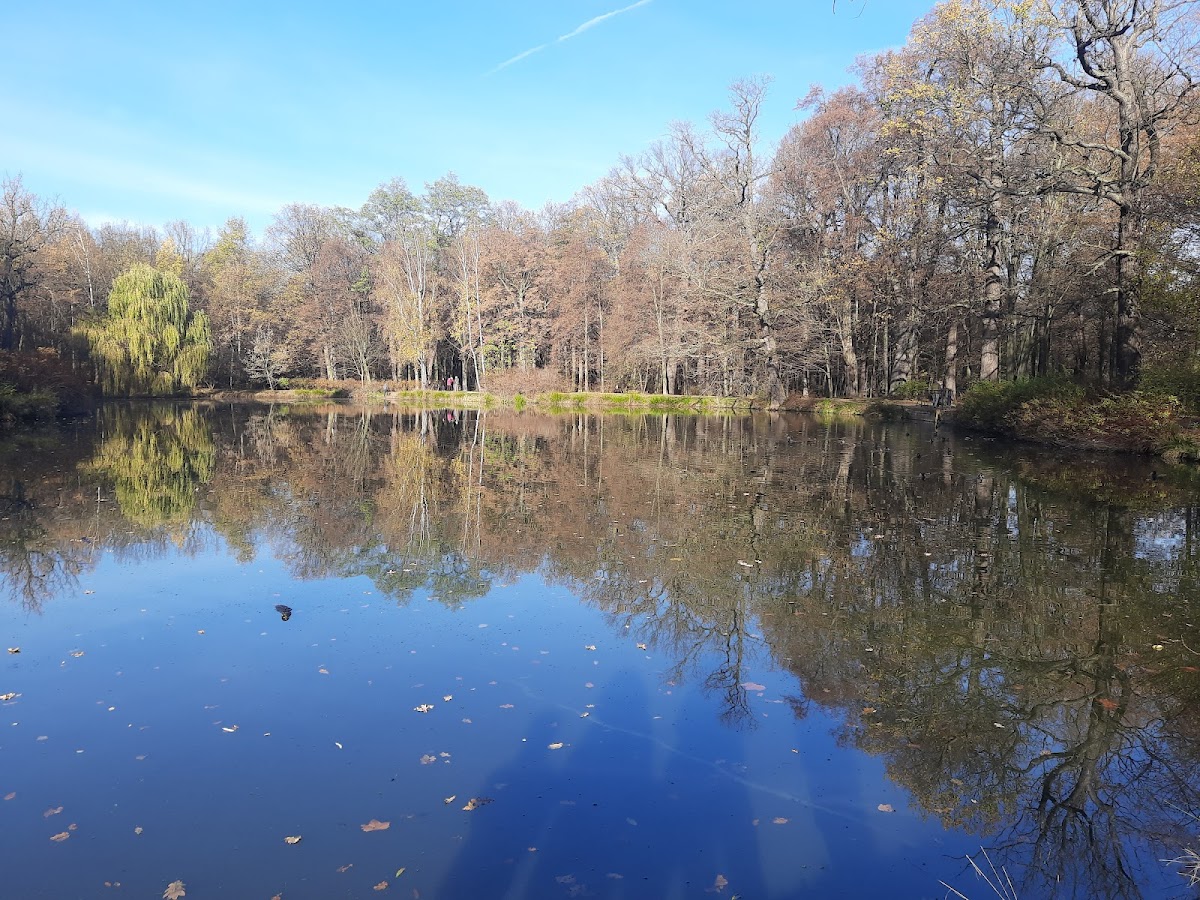
The grounds include a historic park created before 1800. A monument to the Virgin Mary and Saint John of Nepomuk stands on the route leading toward Środa Śląska, now Świętojański Square. Saint John of Nepomuk was a fourteenth-century Bohemian cleric venerated as a Catholic saint, especially in Central Europe.