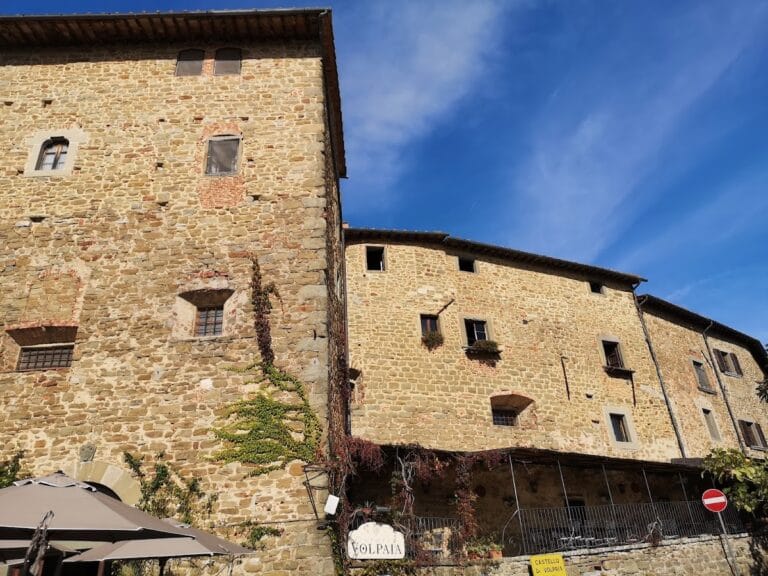
Castello di Brolio: A Tuscan Castle and Wine Estate
Site at a Glance
- Rating
- 4.6
- Popularity
- Medium
- Country
- Italy
- Primary era
- Medieval
- Eras represented
- Medieval, Early Modern, Modern
- Civilizations
- Grand Duchy of Tuscany, Holy Roman Empire, Italian, Republic of Florence
- Site type
- Domestic
- Remains
- Castle
On this page13 sections
History
Castello di Brolio is a historic castle and wine estate in Italy, near Gaiole in Chianti in Tuscany. Its earliest surviving core dates to the early eleventh century, while the complex combines medieval fortification with nineteenth-century Gothic Revival architecture. Held by the Ricasoli family for nearly 800 years, Brolio developed from a frontier stronghold into a major agricultural and wine-producing estate.
Early Estate and Medieval Lordship
The name Brolio derives from the Celtic or Gaulish term brogilo, which referred before the year 1000 to a wooded estate enclosed for domestic use, with a castle serving as its lord’s residence. The area belonged to the wooded Chianti landscape and formed part of a hunting reserve controlled by the Counts of Berardenga, the earliest known owners of Brolio, Monte Luco, and Avenano.
Tenth-century documents identify Marquis Bonifazio, son of Count Alberto, as lord of Brolio and its district. In 1009 he donated Brolio, together with the patronage of the parish church of San Regolo, to the Abbey of Florence. Emperor Henry II confirmed the donation in 1012, and Henry IV confirmed it again in 1074.
Brolio later became the property of the Florentine Ricasoli family. The earliest recorded public act issued by the family at its court of Brolio dates to February 1141, when Rodolfino di Rolando and his son Renuccino transferred land to the Abbey of Coltibuono.
Florentine and Sienese Frontier
After Brolio entered Florentine territory, the castle was heavily fortified with bastions and watchtowers. It served as the Republic of Florence’s final outpost on the Florentine-Sienese frontier, making it a strategically sensitive position within the military landscape of Chianti.
The Sienese captured Brolio in 1252, but the castle was returned to the Ricasoli family the following year after an armistice between Florence and Siena. In 1434 Antonio Petrucci of Siena entered the castle by deception and captured members of the Ricasoli family. Neri Capponi and troops sent by the Florentine Signoria, the governing council of the medieval and Renaissance Republic of Florence, forced Petrucci to surrender.
In 1452 forces allied with Siena and associated with the Crown of Aragon besieged Brolio and Cacchiano, but failed to take either site. On 27 August 1478, the Sienese began a particularly destructive bombardment. Florence sent the military commander known as the Anghiarino to lead the defence, but mortar fire brought down part of the walls. Brolio surrendered on 14 September. The castle was sacked, many houses were burned, and sections of the walls were demolished.
Residence, Estate, and Wine Production
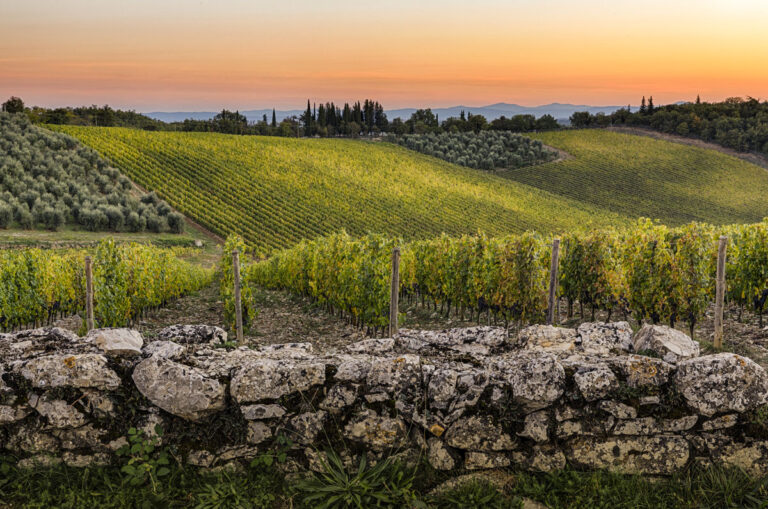
After Florence conquered Siena, Brolio was transformed from a fortress into a prestigious residence and an extensive agricultural estate. The redesign is attributed to Giuliano da Sangallo. Vine cultivation at Brolio is mentioned in documents from the beginning of the second millennium, and the estate later developed a wide reputation for its wines. In 1696 a shipment was sent from Livorno to Amsterdam. In 1722 the Duke of Norfolk requested monthly deliveries of “fifty or more cases of the true Chianti” from Brolio, and in 1773 Pietro Leopoldo of Lorraine described the estate as producing 1,000 barrels of excellent wine.
In 1829 Bettino Ricasoli, then about twenty years old, began managing Brolio personally. An Italian statesman who later served as Prime Minister of the Kingdom of Italy, he combined political work with extensive viticultural research. He tested varieties including Pinot, Cabernet, Grenache, and Carignano, but regarded the Brolio clones of Sangiovese as the most successful. Later replanting generally continued to use locally adapted plant material.
After years of experimentation, Ricasoli defined a blend for Chianti in 1874. A later formulation associated with him used 70 percent Sangiovese, 15 percent Canaiolo, and 15 percent Malvasia bianca. Nearly a century later, this blend inspired production regulations for Chianti Classico, the recognized wine designation for the historic Chianti area of Tuscany.
Gothic Revival and Modern Continuity
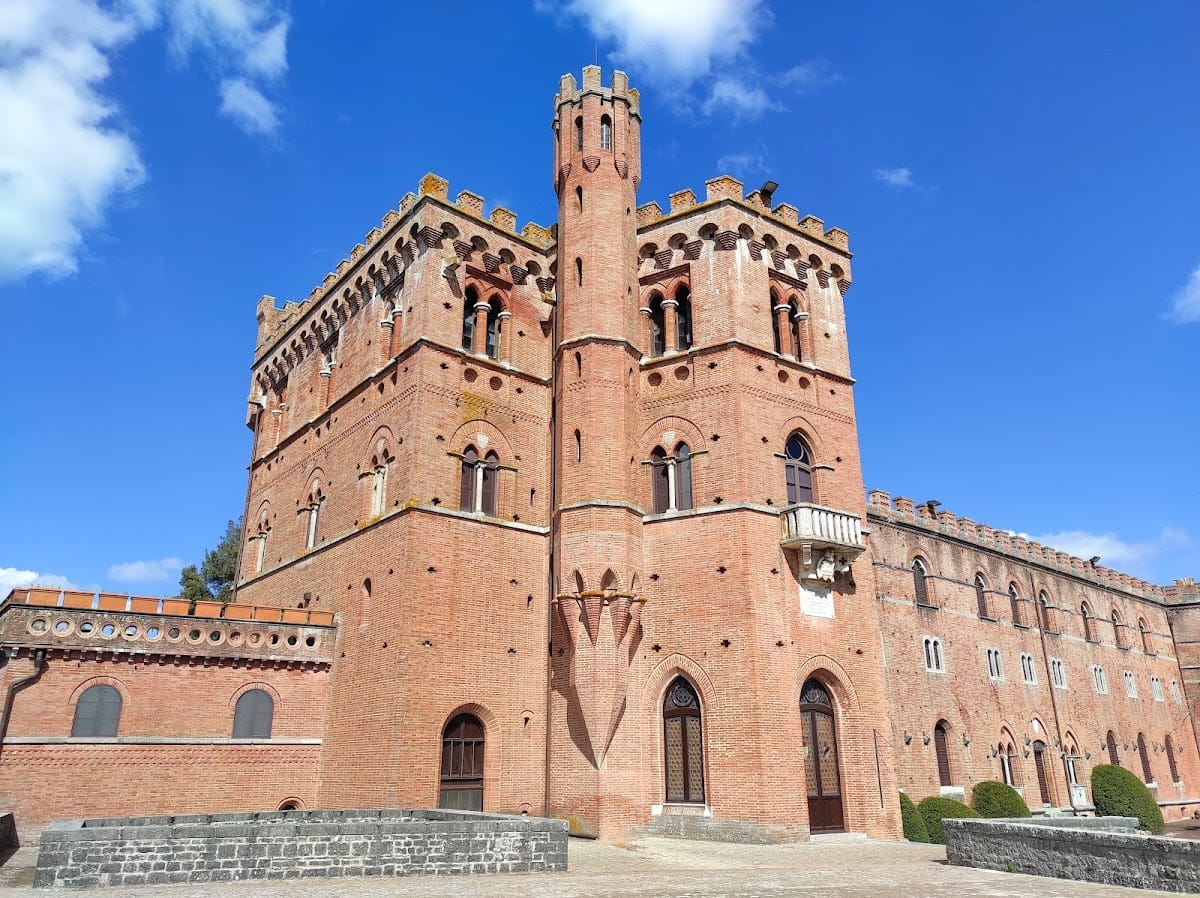
In 1835 Ricasoli commissioned the architect Pietro Marchetti to remodel the castle in the Gothic Revival taste. This nineteenth-century movement revived medieval Gothic forms. At Brolio, the work transformed the former fortress into an English-style manor, adding a later architectural layer to the medieval complex.
During the twentieth century, the Ricasoli family became increasingly prominent as wine producers and makers. In the 1940s, Brolio wines were exported to all continents, including destinations in the Dominican Republic, India, China, Saudi Arabia, South Africa, Guatemala, Costa Rica, and the then British African territories.
After approximately thirty years of foreign ownership, the estate was directed from 1993 by Francesco Ricasoli, the 32nd Baron of Brolio. Castello di Brolio is recognized as Italian national heritage.
Remains
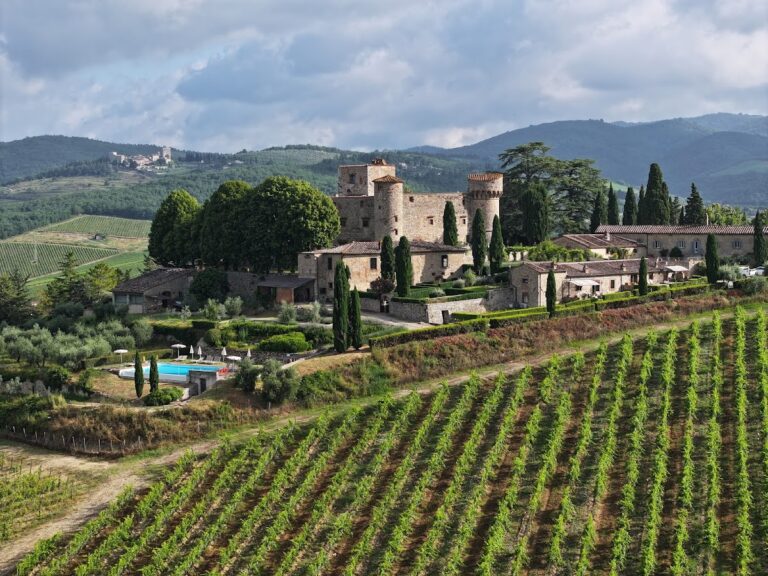
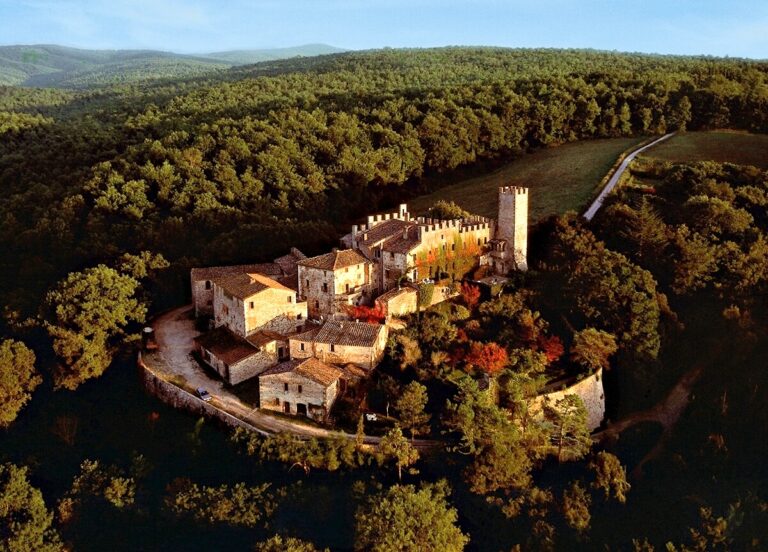
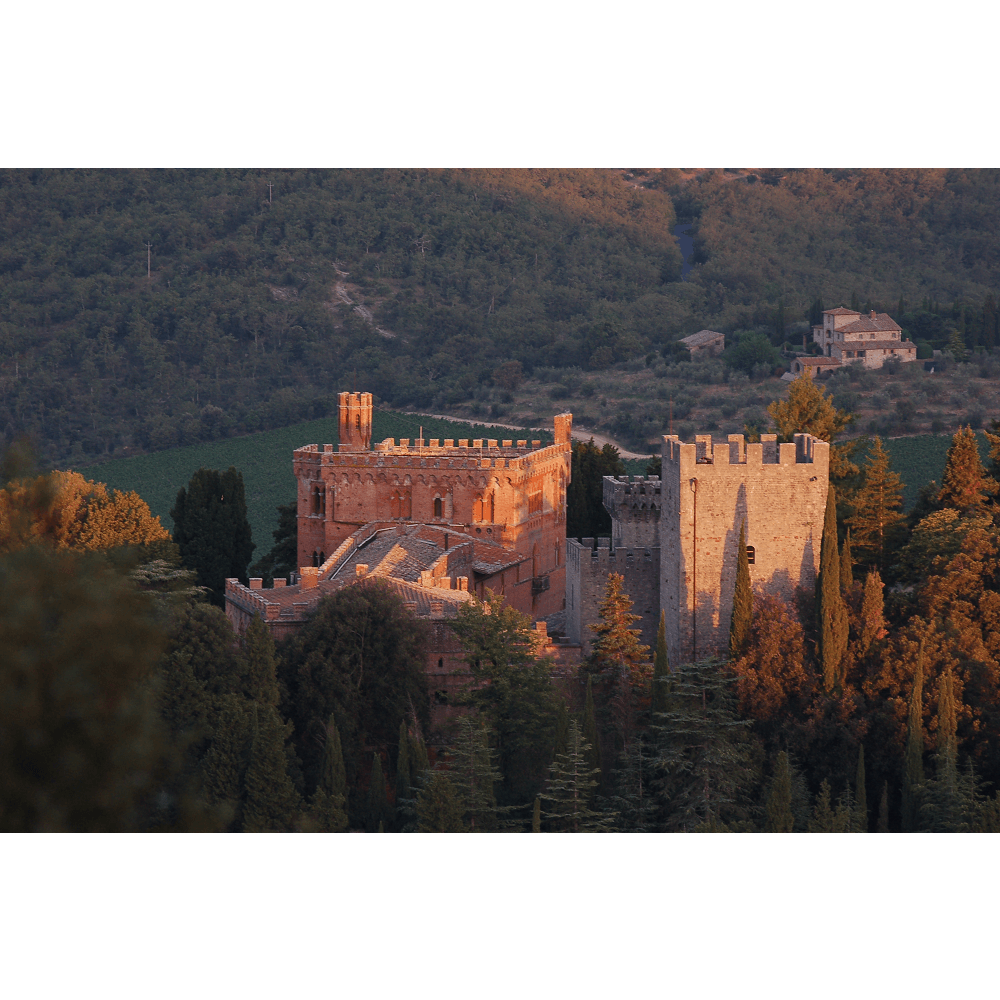
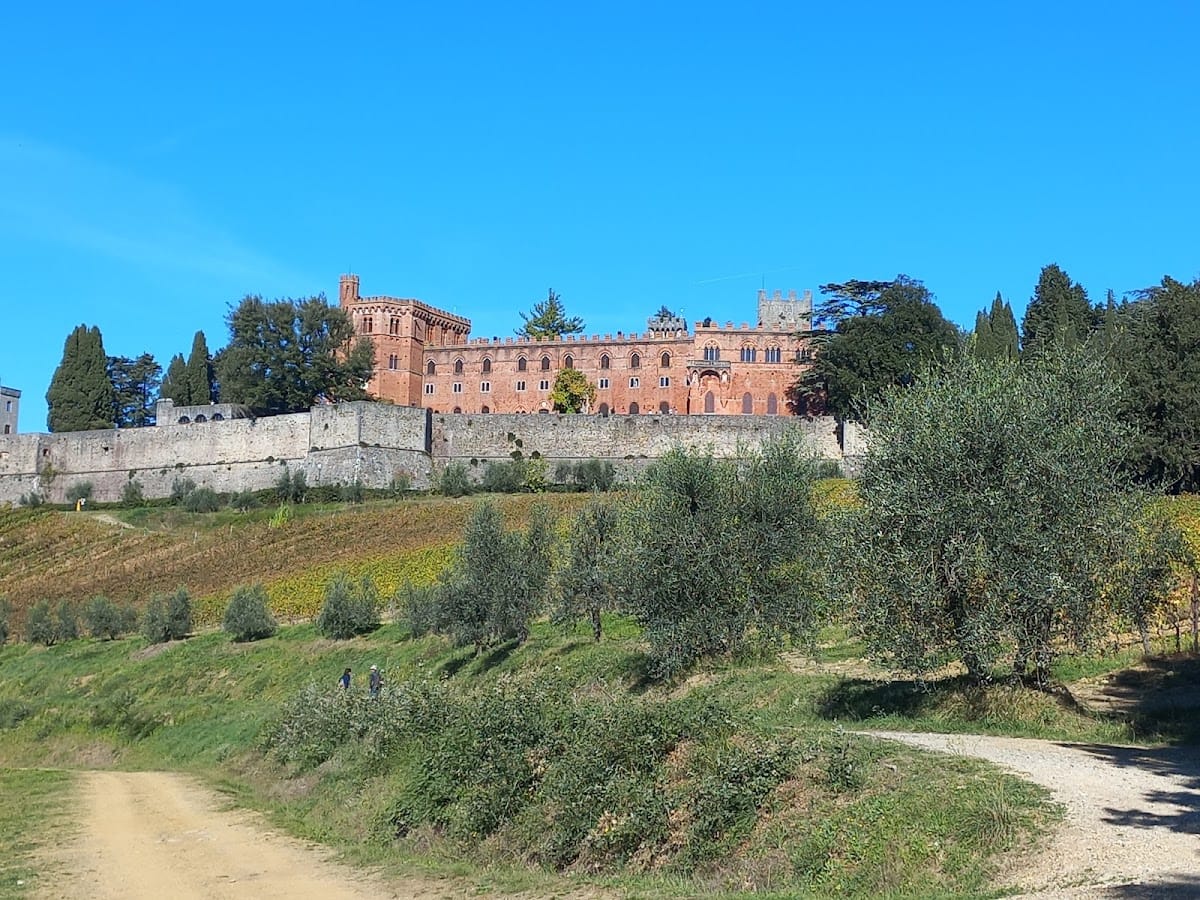
Castello di Brolio occupies the crest of a hill branching from a western spur of the high Chianti Mountains, between Monte Fienali and Monte Luco Berardenga. The Malena and Dudda streams flank the site, both flowing into the Arbia. The complex forms a rural castle, palace, and garden ensemble. Its medieval fortification follows a pentagonal base or plinth, above which stand the original castle and a larger brick palace.
Fortifications and Palace
Medieval Core
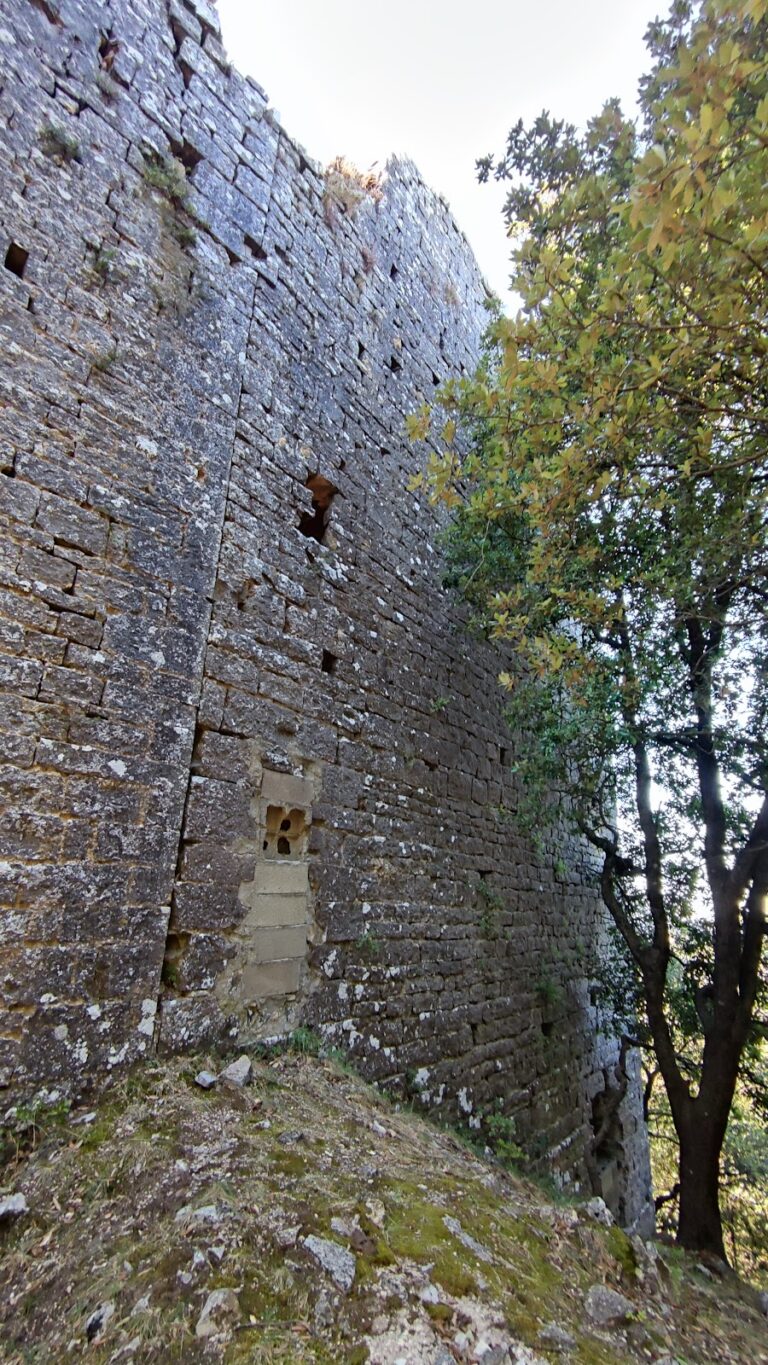
Only the base of the cassero, the main fortified core of an Italian castle, is identified as original to the castle itself. This central defensive element dates to the early eleventh century. The surviving walls represent medieval and Renaissance architecture, and the complex preserves a visible contrast between grey pietra serena sandstone, widely used in Tuscan construction, and brick.
Gothic Revival Castle
The Gothic Revival remodelling used brick as its principal material and introduced Tudor-style windows and crenellated turrets. These features were considered foreign to the local architectural tradition and distinguish the nineteenth-century manor from the earlier fortified fabric.
Gardens and Chapel
Historic Gardens
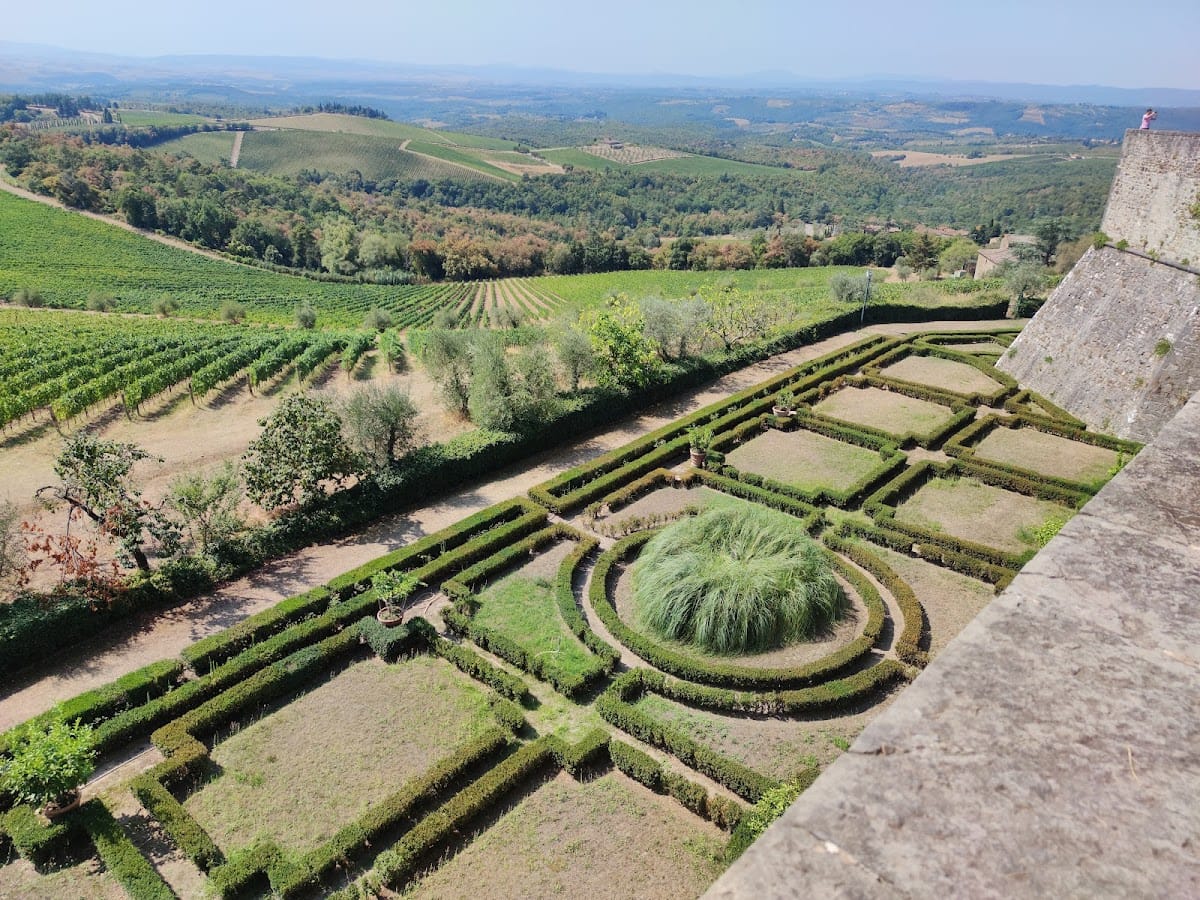
The grounds contain two historically distinct garden areas. A sixteenth-century Italian garden is arranged with boxwood hedges and paths, while a nineteenth-century Romantic park was commissioned by the botanist Simone Ricasoli. Imported botanical species were planted around the castle, including fir trees that have grown to approximately 30 to 40 metres in height.
Chapel
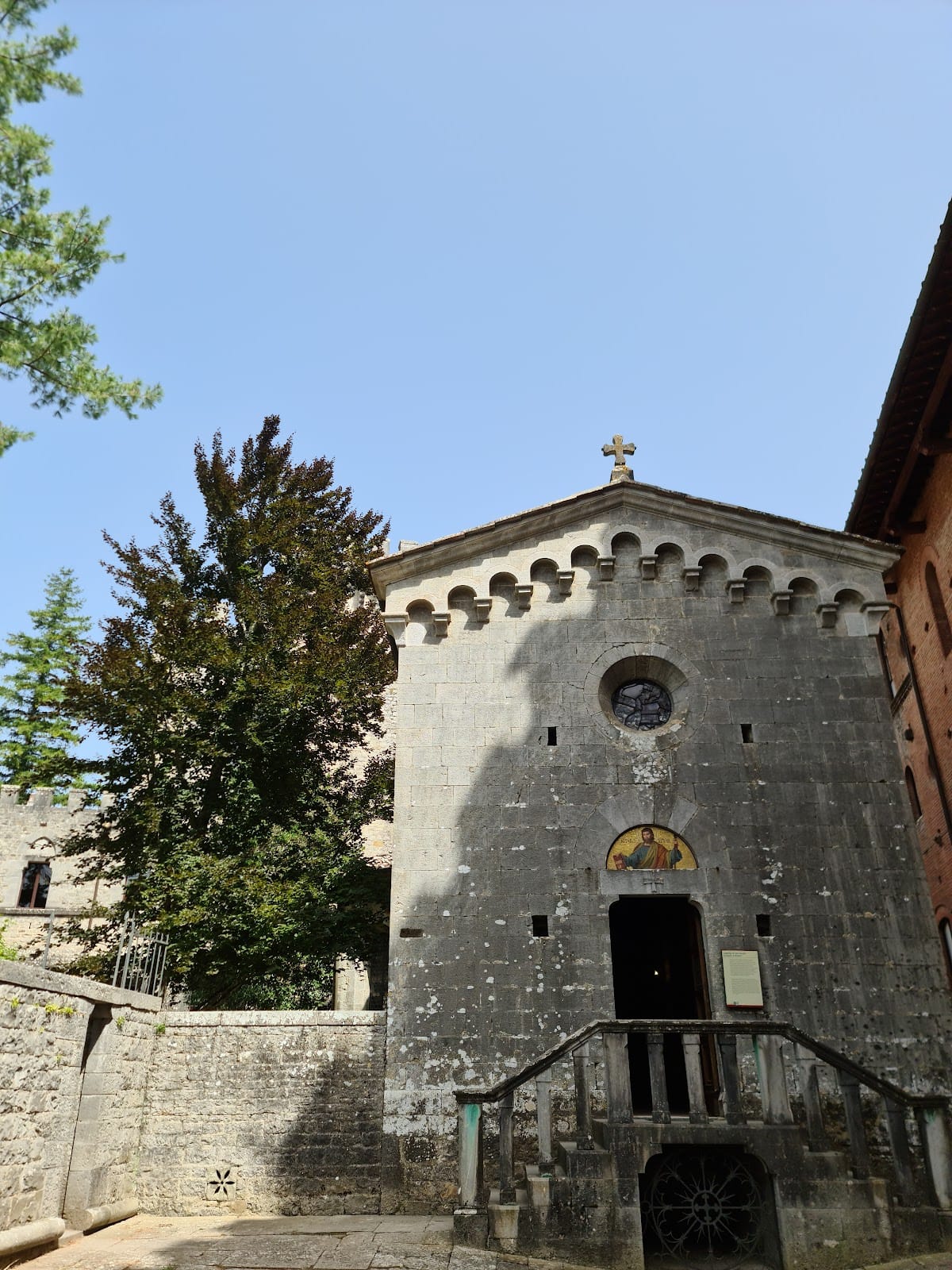
The chapel was renovated between 1867 and 1869. Its gabled facade is reached by a double stone staircase, and a mosaic of the titular saint fills the lunette above the portal. An inscription to the right of the entrance gives its foundation as 1348.
Inside, the chapel has a crypt containing burials of members of the Ricasoli family. The nave is divided into three bays with groin-vaulted ceilings. The altar area is decorated with mosaics made from 1874 by the Compagnia Venezia Murano, following designs by Alessandro Franchi.
Paintings and Preparatory Designs
The castle formerly housed a fourteenth-century polyptych by Ugolino di Nerio. This multi-panel altarpiece depicts the Madonna and Child between Saints Peter, Paul, John the Baptist, and John the Evangelist. Franchi’s preparatory designs for the chapel mosaics are also preserved in the castle.
Nearby sites