Castello del Catajo: A Monumental Villa and Castle in Italy



Site at a Glance
- Rating
- 4.6
- Popularity
- Medium
- Country
- Italy
- Primary era
- Early Modern
- External website
- Open
- Eras represented
- Medieval, Early Modern, Modern
- Civilizations
- Habsburg, Venetian
- Site type
- Domestic
- Remains
- Palace
On this page14 sections
History
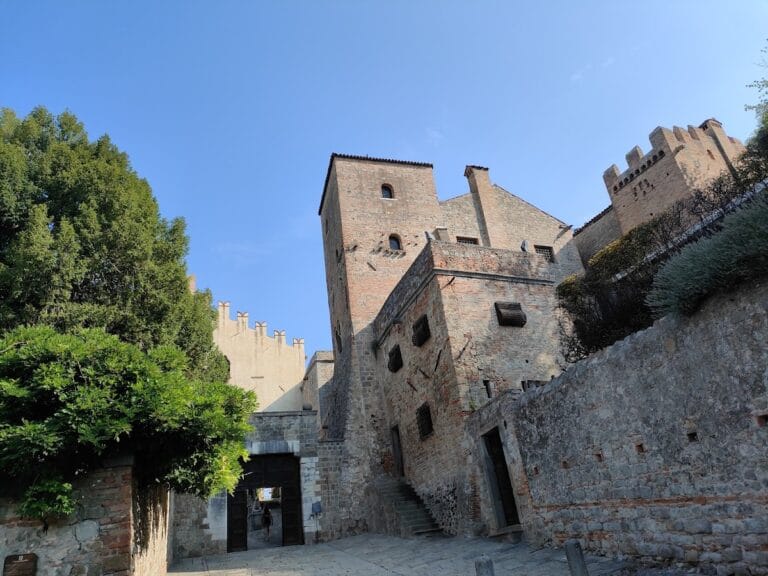
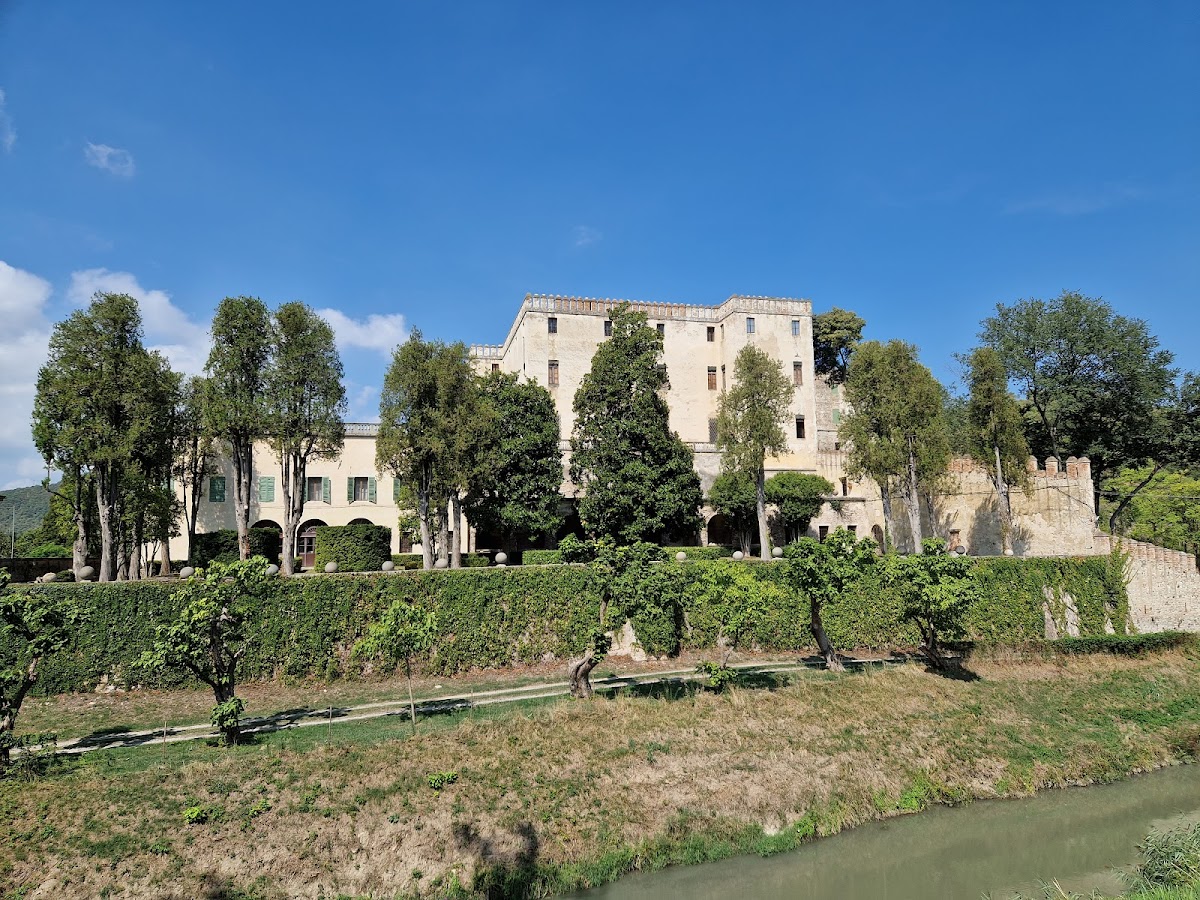
Castello del Catajo is a monumental complex in Italy at Battaglia Terme, near the Euganean Hills, developed by the Obizzi family as a hybrid of military castle and princely villa. Its principal Renaissance expansion took place between 1570 and 1573, giving the family a setting for defense, residence, leisure, ceremony, and public representation.
The Obizzi family and the earliest residence
The Obizzi were an Italian noble family described as Burgundian in origin. In 1007, Obicio I, a condottiere, or professional military commander, came to Italy while accompanying Emperor Henry II. After first settling in Lucca, the family moved into the territory of the Republic of Venice, where military careers, aristocratic patronage, collecting, and architectural display shaped their identity.
The earliest nucleus of the Catajo was the Casa di Beatrice, probably built between the late fifteenth and early sixteenth centuries as the summer residence of Beatrice Pio da Correggio. A woman of letters, Beatrice hosted an important literary salon at Ca’ sul Tajo. This earlier residence provided the foundation for the much larger complex later developed by the Obizzi.
The Renaissance expansion
In 1570, Pio Enea I Obizzi began enlarging the property to strengthen the family’s prestige. The new principal building, now called Castel Vecchio, was completed during the 1570s, with its main construction dated to 1570–1573. The design was traditionally attributed to Pio Enea I, although it is more probably associated with the architect Andrea da Valle.
Pio Enea I intended the Catajo to serve as a grand setting for guests from across Europe. Festivals, dances, and theatrical performances formed part of its representational purpose. The origin of the name remains uncertain. It is generally considered more likely to derive from “Ca’ Tajo,” possibly linked to the excavation of the Battaglia Canal, than from Catai, the medieval name for China. The name “howitzer” is also said to derive from Pio Enea Obizzi.
In 1571, Pio Enea I commissioned Giovanni Battista Zelotti, a painter associated with Paolo Veronese, to decorate the interior walls with the deeds of the Obizzi family. The resulting fresco cycle was among the earliest self-celebratory cycles of its kind in northern Italy and among the most important Renaissance villa cycles in the region.
Seventeenth- and eighteenth-century additions
During the seventeenth century, Pio Enea II Obizzi enlarged the complex with the Cortile dei Giganti and a small theater containing sixteen boxes. The theater was described as one of the earliest covered theaters in the Veneto. Tommaso Obizzi later added a large gallery for his museum. It housed extensive collections that were among the earliest of their kind to be opened to the public.
The Habsburg-Este period
The Obizzi family became extinct in 1803 with the death of Marquis Tommaso. The Catajo then passed to the Dukes of Modena and Reggio, the Habsburg-Este dynasty. Under Francis IV of Modena, the upper wing known as Castel Nuovo was built for the visit of Emperor Ferdinand I and Maria Anna of Savoy in 1838.
Francis V and his wife, Adelgonda of Bavaria, later transferred the Este court, exiled from Modena, to the Catajo. Because they died without children, the property passed to Archduke Franz Ferdinand of Austria, who used it for hunting. His assassination in Sarajevo in 1914 contributed to the outbreak of the First World War. The Catajo then passed to the last Austrian Emperor, Charles I, and his wife, Zita of Bourbon-Parma.
The changes of ownership brought the removal of the Obizzi armory, described as among the richest in Europe, along with collections of antiquities, musical instruments, and paintings. The antiquities included part of the Parthenon frieze. The armory was transferred to Konopiště Castle, while the musical instruments and paintings went to the Hofburg and the Kunsthistorisches Museum in Vienna.
Agricultural use and conservation
After the First World War, Italy received the Catajo as reparation for war damage. The property was sold to the Dalla Francesca family in the 1920s, with 1929 given as the specific date, and converted into an agricultural enterprise growing tobacco. This use continued until the 1970s.
The castle first opened to the public in 1994. Sergio Cervellin acquired it in 2016, when restoration began with the aim of recovering its earlier appearance. Restoration of the Cortile dei Giganti was completed in 2018 and revealed original seventeenth-century frescoes by Pietro Antonio Cerva and Ippolito Ghirlanda that had been covered in the nineteenth century. After two years of restoration, the private apartments on the second level of Castel Vecchio opened to the public for the first time in 2024. The Catajo remains privately owned by the Cervellin family and operates as a museum.
Remains
Complex and ceremonial spaces
The Catajo contains approximately 350 rooms and combines the earlier Castel Vecchio with the nineteenth-century Castel Nuovo. Its entrance portal, transformed by Tommaso Obizzi into a triumphal arch, leads into the Cortile dei Giganti. This monumental court served for theatrical performances and tournaments, including water tournaments, and its lower portion could be flooded. Opposite the entrance stands the Elephant Fountain, commissioned by Pio Enea II Obizzi in the second half of the seventeenth century. Its design joins references to Bacchus with an interest in the exotic.
External stairs begin in the courtyard and were built to allow visitors to ascend on horseback. The internal staircase exposes the building’s foundation on the living rock of the hill. This bedrock consists of trachyte, a fine-grained volcanic stone formed from lava in the Euganean Hills.
Castel Vecchio interiors
Zelotti’s fresco cycle
The piano nobile, the principal residential and ceremonial floor of an aristocratic building, contains Giovanni Battista Zelotti’s cycle of self-celebratory frescoes. Forty panels distributed among six rooms portray the saga, deeds, and historical events of the Obizzi family. In the large frescoed hall, a genealogical tree extends from the family ancestor Obicio I to Pio Enea I, the builder of the castle. Land and naval battles, together with episodes from the Crusades involving members of the family, appear on the walls beside captions in Italian and Latin.
The principal hall
The ceiling of the principal hall represents three forms of government. Democracy is associated with Rome, Aristocracy with Venice, and Monarchy with Religion. Around Democracy appear Avarice and Discord as causes of its fall. Venice is accompanied by Prudence, Opportunity, Concord, and Peace, while Monarchy is joined by Happiness, Good Fortune, Clemency, and Courage.
Later apartments and private chapel
Five further rooms on the same floor contain scenes of Obizzi family events and deeds, with allegorical decoration on their ceilings and above the doorways. The original plan called for paintings on the exterior walls, but those paintings have disappeared. The interior cycle was added after Zelotti was called to the castle in 1571.
The complex also contains a private family chapel in Neo-Gothic style. Built in 1838 for the visit of the Austrian emperors, it is constructed entirely of wood and decorated with vivid colors and gilded details. A stone associated with the murder of Lucrezia Obizzi is preserved at the castle. Her death became one of the most violent criminal cases in seventeenth-century Veneto and gave rise to a longstanding local legend concerning apparitions of her ghost.
Gardens, terraces, and park
Terraces reached from the great hall overlook the Euganean Hills, the gardens, and the park. The park includes a fishpond and centuries-old sequoias and magnolias, described as among the first American plants imported into Europe. The Catajo magnolia is approximately two centuries old. The Giardino delle Delizie contains an old rose garden restored in 2017, with historic roses dating from the sixteenth through the twentieth centuries.
Private apartments
The restored private apartments comprise thirteen rooms that formerly served as the owners’ daily living spaces. Their present appearance reflects the nineteenth century. Three rooms contain monochrome romantic landscapes painted in 1821 by the Venetian painter Marino Urbani.
Restoration revealed sixteenth-century frescoes attributed to Giovanni Battista Zelotti and seventeenth-century paintings by an unidentified artist. The recovered scenes include Apollo surrounded by the Muses, the Three Graces, and the Judgment of Paris. The spiral staircase linking the piano nobile with the apartments preserves sixteenth-century frescoes depicting polychrome marble, balustrades, and floral garlands.