Siklós Castle: A Medieval Hungarian Castle-Palace in Hungary
Site at a Glance
- Rating
- 4.7
- Popularity
- High
- Country
- Hungary
- Primary era
- Medieval
- External website
- Open
- Eras represented
- Medieval, Early Modern
- Civilizations
- Habsburg, Hungarian, Ottoman
- Site type
- Military
- Remains
- Castle
On this page18 sections
History
Siklós Castle is a medieval Hungarian castle-palace in Siklós, Hungary, first mentioned in 1294 and developed through successive medieval, Renaissance, Ottoman, and Baroque phases. Rising at the southern foot of the Villány Mountains, it became an important estate center and residence for several major Hungarian noble families.
Medieval origins and noble rule
The settlement appears in an 1190 charter under forms including Suklos and Soklos. The earliest castle was probably built by descendants of Gyula of the Kán kindred, a medieval noble clan whose members claimed descent from a common ancestor. Gyula had served as palatine, one of the highest-ranking officers of the medieval Hungarian kingdom, and his family held estates in southern Baranya from the twelfth century.
The castle emerged during the major period of stone-castle construction that followed the Mongol invasion of 1241. The Siklósi noble family, named after its estate, occupied the stronghold with its household and servants. Its defenses proved effective in 1315, when forces of the Kőszegi kindred failed to capture it.
In 1387, the Siklósi family opposed King Sigismund of Luxembourg, who declared its members disloyal and confiscated their castle and lands. After a brief succession of owners, Sigismund granted Siklós to the Garai family, one of the most powerful baronial houses in Hungary.
The Garai period
Siklós became closely connected with the political crisis of 1401, when rebellious Hungarian nobles detained Sigismund after first holding him at Visegrád. The nobles could not agree on his future, and Miklós Garai advised that the king should be restored to the throne. Sigismund later formed an alliance with Garai. The relationship was reinforced when Sigismund and Garai married two daughters of the powerful Cillei family.
By 1440, Siklós had a defensive system strong enough to resist the forces of János Hunyadi, a Hungarian military commander and regent who supported the camp of King Władysław I. After the Garai line became extinct in the late fifteenth century, the castle reverted to the Crown. King Matthias Corvinus, who ruled Hungary from 1458 to 1490, then granted it to his son John Corvin, Prince of Liptó.
Renaissance residence and Ottoman conquest
From 1494, the castle passed through the hands of András Both of Bajna and his brother, and it was sold in 1507. Imre Perényi subsequently became its owner under uncertain circumstances. The Perényi family occupied Siklós from the beginning of the sixteenth century, transforming it into a more comfortable Renaissance residence while modernizing its defenses and reorganizing the approach.
Imre Perényi and his second wife, Dorottya Kanizsai, spent much of their lives at Siklós. After Perényi died in 1519, Dorottya administered the estate. Her association with the castle remains part of its historical identity, and a commemorative statue of her stands in the gardens.
Sultan Süleyman the Magnificent’s army captured Siklós after a three-day siege in 1543. Ottoman rule placed the castle within the Ottoman military and administrative sphere for about 150 years, and Siklós served as an important military base. The period is associated with a mosque, the conversion of the Franciscan church for Muslim prayer, fountains, a hammam, or Ottoman bathhouse, and the settlement’s earliest water-supply system. The extent of Ottoman construction within the castle is not securely established. Human figures were probably removed from the chapel’s sculptural niches during this period because such representations were forbidden in Islam.
Habsburg recovery and later owners
Siklós was recovered in 1686 during the Habsburg campaign that recaptured Buda. Count Eneas Caprara, an imperial general, began enlarging the castle-palace, but the work stopped after his death. The Batthyány family completed the palace. Because its owners remained loyal to the emperor, the castle was not blown up. Its military importance declined after the Rákóczi War of Independence, an uprising against Habsburg rule, and its interiors were substantially remodeled in the Baroque style.
The Batthyány family owned the castle from 1828. In 1873, the Bratislava lawyer Lajos Benyovszky bought it, and his son, Count Móric Benyovszky, inherited it after his death. Móric served three times as lord lieutenant of Baranya County and was also a member of parliament. After Móric died, his widow, Lujza Benyovszkyné Batthyány, sold the castle to the military treasury.
War damage, restoration, and museum use
During the Second World War, the castle held British, American, and Polish prisoners of war and suffered severe damage. It remained without an owner for about a decade after the war. Archaeological investigation and restoration began in 1955, giving the complex its modern museum role. It later also contained a hotel and restaurant.
Partial renovation in 2009–2011 restored the eastern and southern courtyards. Following a later closure after Hungary’s political transition, the castle reopened at the beginning of the twenty-first century as a museum. It is now owned by the town of Siklós and is regarded as one of Hungary’s best-preserved and most architecturally unified historical monuments, with medieval, Renaissance, Baroque, and later changes still shaping its character. The chapel contains the burial of Count Kázmér Batthyány, foreign minister in the government of Lajos Kossuth. On 4 June 2008, the Hungarian National Bank issued a silver commemorative coin for Siklós Castle.
Remains
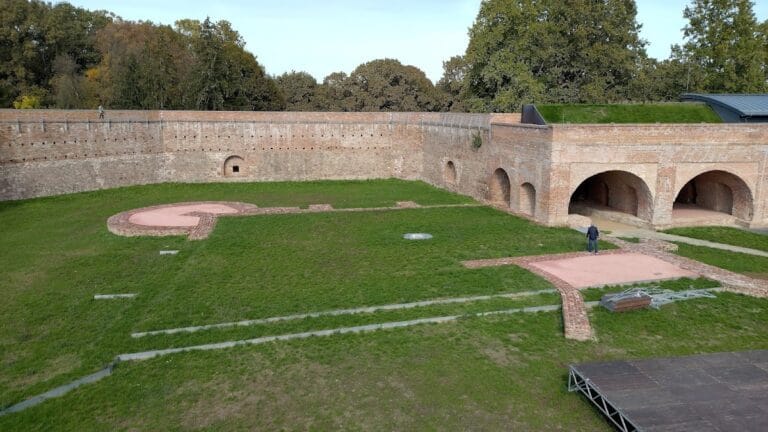
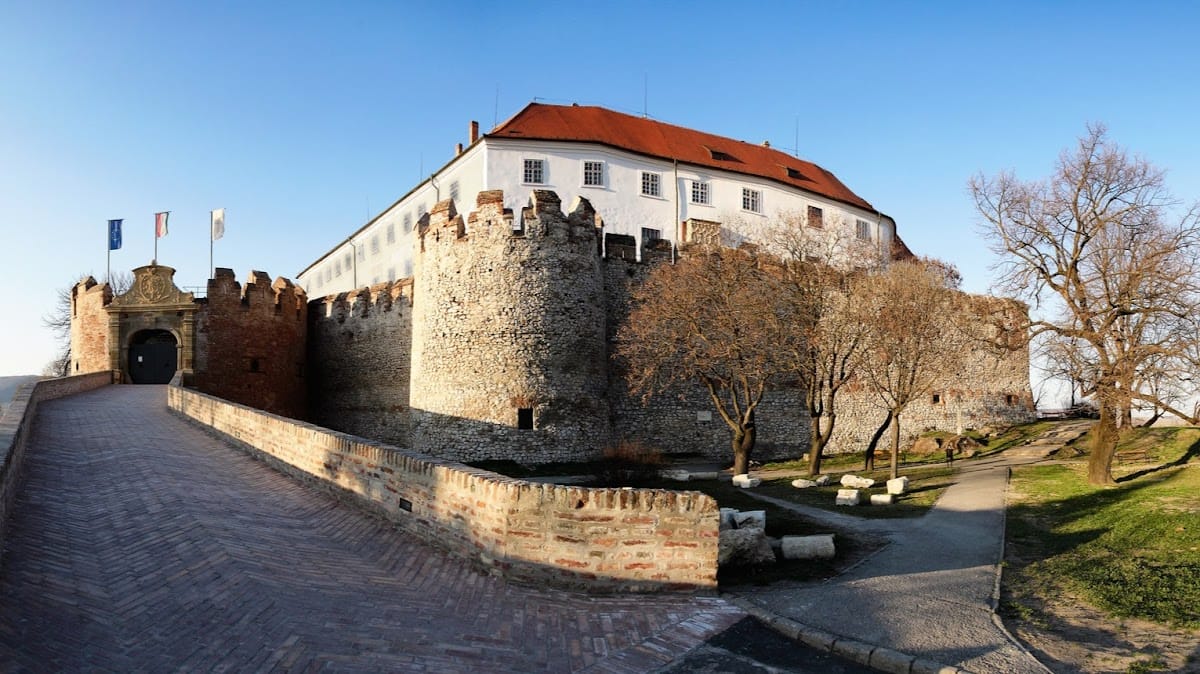
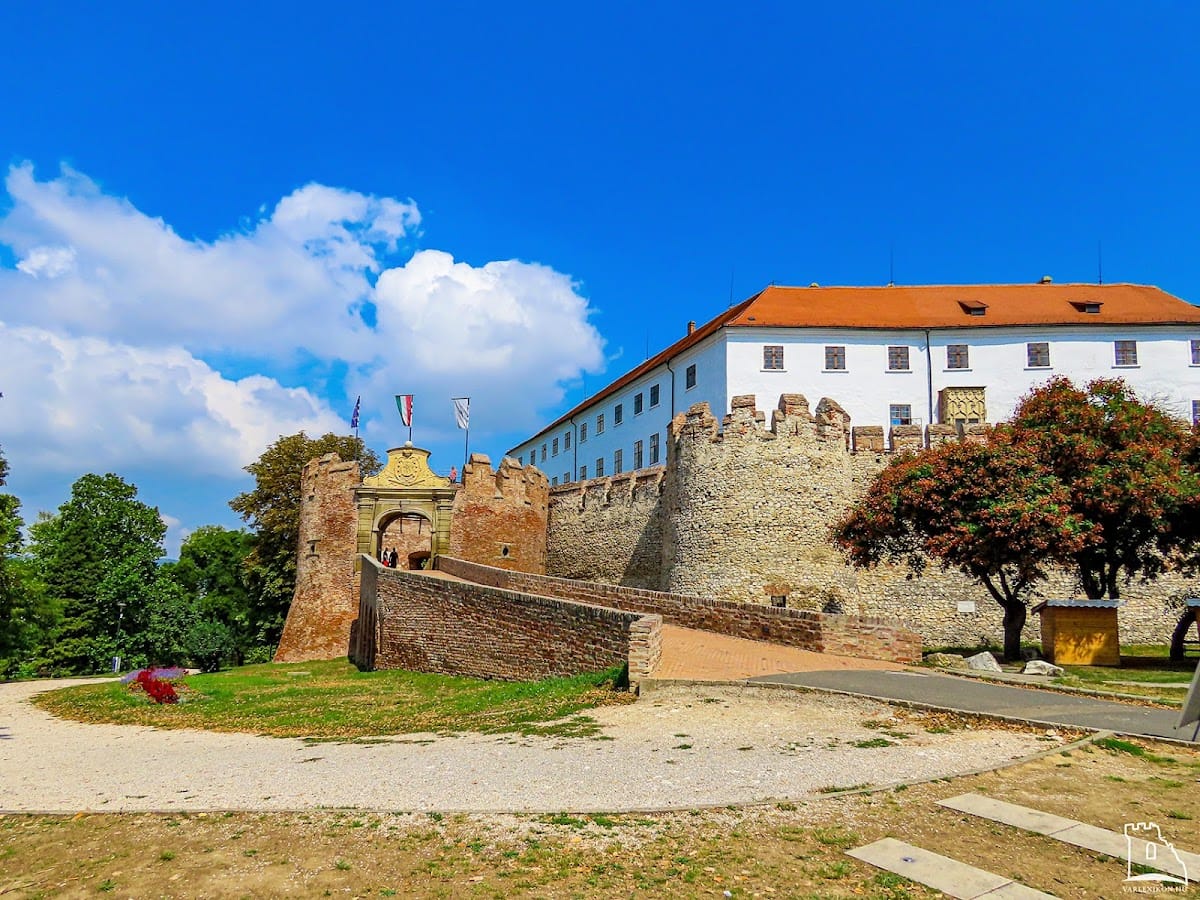
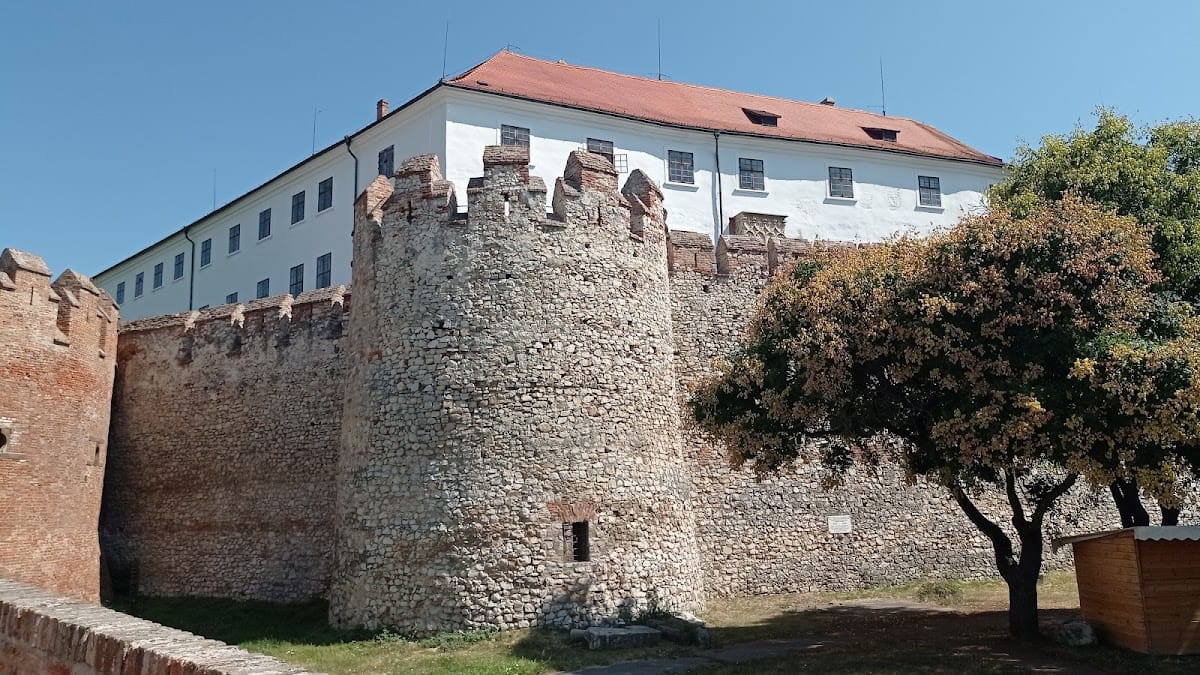
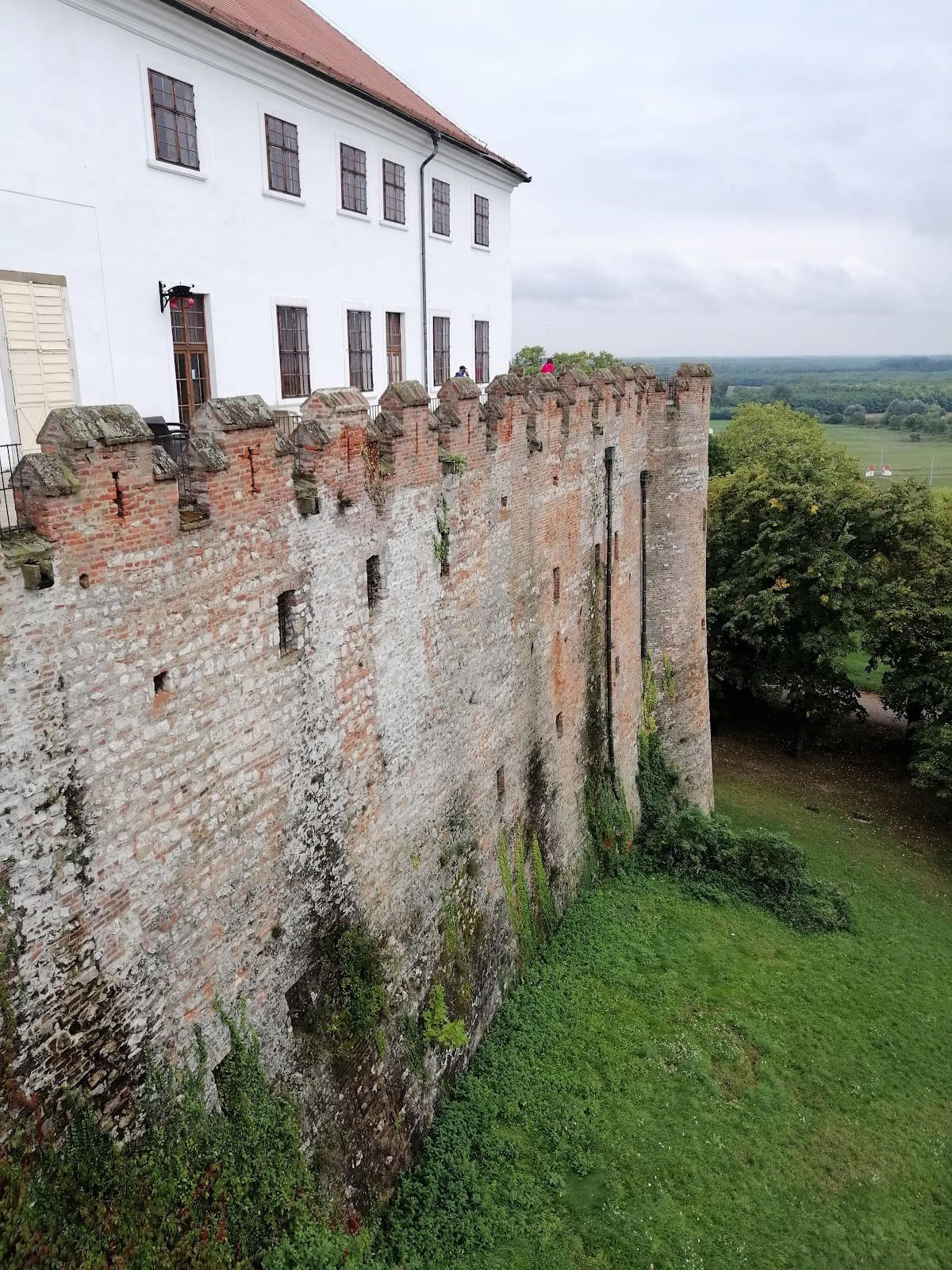
Siklós Castle occupies the central-southwestern part of modern Siklós and rises above the town center at an elevation of about 120 meters. A castle-palace forms the core of the complex. High crenellated walls, defensive works, semicircular towers, and bastions enclose the inner castle, while an outer castle district surrounds it. Successive owners enlarged the buildings and defenses, leaving a complex whose present appearance combines medieval fortification, Renaissance residential work, Ottoman-period alterations or associated features, and Baroque remodeling.
Medieval castle and chapel
Romanesque remains
The earliest surviving evidence lies in the basement of the southern residential wing. Four Romanesque splayed window openings and rows of timber ceiling beams belong to the early stone castle. Romanesque architecture is characterized by massive walls, rounded arches, and relatively small openings. These remains provide material evidence for an otherwise largely invisible phase of the castle’s development.
Gothic chapel
The principal surviving Gothic feature is the chapel, built and altered between the fourteenth and sixteenth centuries. It is a tall, single-nave space ending in a late Gothic sanctuary with curtain-arched windows and finely profiled openwork forms. Gothic architecture is a later medieval style associated with pointed arches, ribbed vaults, and elaborate tracery.
A Gothic window was found above the chapel entrance, whose opening bears the Garai family’s serpent coat of arms. Two patron’s niches, recesses associated with a church’s founder or chief benefactor, contain wall paintings from the first half of the fifteenth century. Human figures were probably removed from the sculptural niches during Ottoman rule.
Renaissance palace and defenses
Palace wings
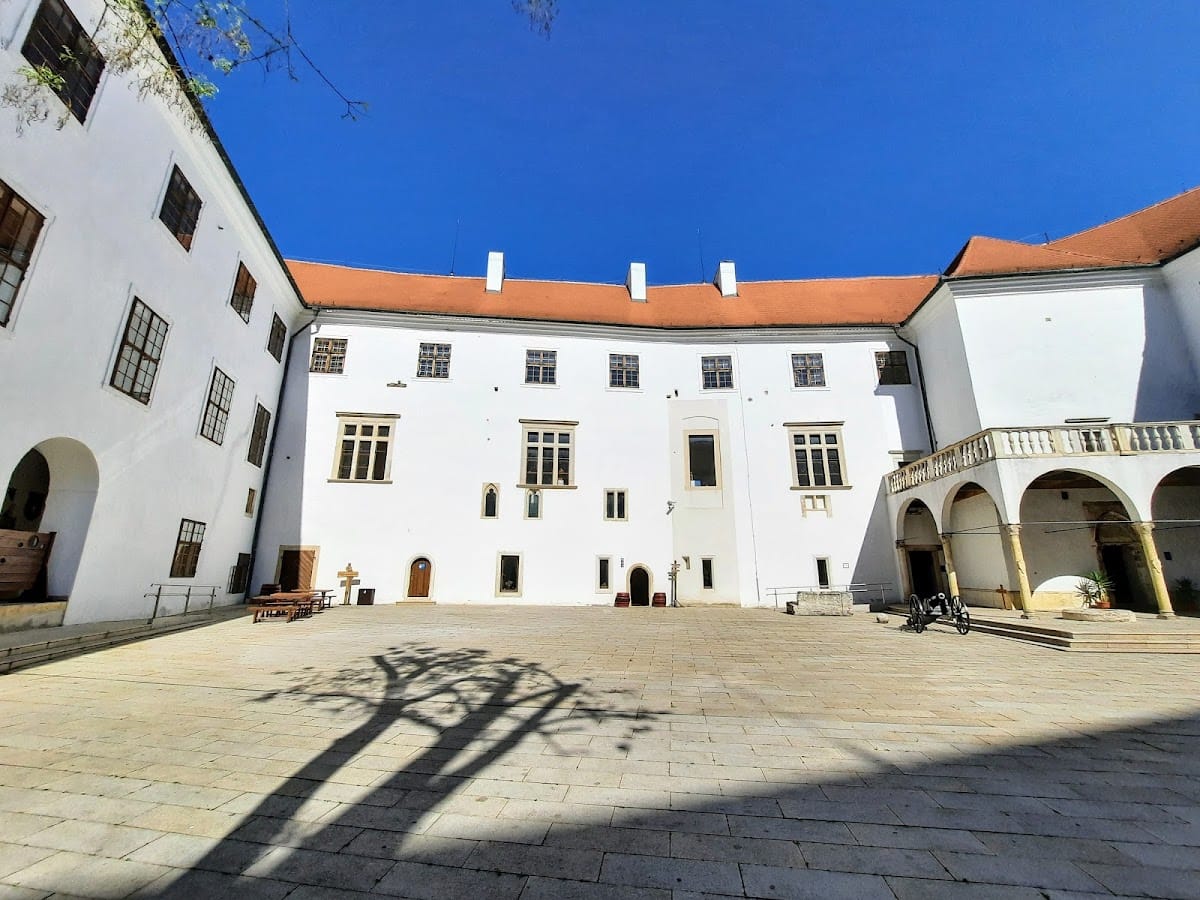
Under the Garais, new wings and levels were built around the courtyard, enclosing it on three sides and creating a large palace. The enlarged complex received an additional defensive ring and a defended space between the inner and outer walls. During the Perényi period, residential spaces were remodeled in the Renaissance manner, and Renaissance stone carvings were added. Imre Perényi’s coat of arms remains visible on a first-floor fireplace.
Entrance barbican
The entrance barbican, a fortified outer entrance structure, is an important Renaissance addition. A protected wall-walk extends above the barbican and the Kanizsai Dorottya Garden. Together with the castle’s walls, towers, bastions, and outer defenses, these elements reflect the modernization of Siklós’s resistance and military capacity during the Perényi period.
Religious and Ottoman-period features
Franciscan friary and church
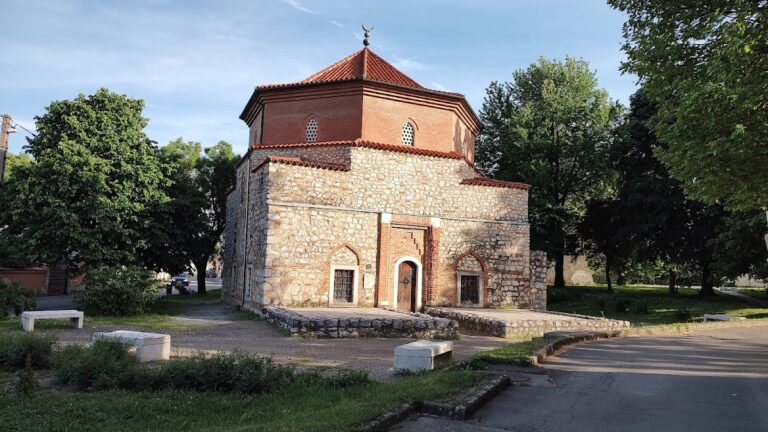
The complex includes the former Franciscan friary and church. During Ottoman rule, the church was used as a Muslim place of prayer, while a mosque was also associated with the period. These religious features form part of the physical remains connected with the castle’s long use under Ottoman control.
Museum interiors and collections
Eastern and northern wings
The eastern wing contains the Siklós Salon, a projection room, the wall-walk, the Spanish Bastion, the Bakó Géza private collection, the Gothic chapel, and the Kanizsai Dorottya Garden. The northern wing includes a terrace café, a historical panel, and a display of medieval torture instruments.
Southern wing
The southern wing contains a basement prison, a wine museum, and a wine shop. Its ground floor presents Renaissance furniture, including seventeenth- and eighteenth-century pieces. The first floor contains medieval weapons and military-history displays, paintings by Istókovits Kálmán and Simon Béla, the chapel gallery, and a loggia, an open-sided gallery or covered passage. The second floor presents castle history, disaster protection, and Serbian exhibitions.
The museum also includes a Captain Tenkes waxwork display, temporary fine-art exhibitions, and material on the history of Siklós. These collections occupy a castle whose surviving architectural fabric brings together the remains of its medieval origins, Renaissance transformation, Ottoman-era history, and later Baroque adaptation.
Nearby sites