Sinop Castle: Historic Fortress of Sinop, Türkiye
Site at a Glance
- Rating
- 4.4
- Popularity
- High
- Country
- Turkey
- Primary era
- Medieval
- Eras represented
- Iron Age, Medieval, Early Modern
- Civilizations
- Ancient Greek, Candarid, Genoese, Ottoman, Seljuk
- Site type
- Military
- Remains
- Castle
On this page10 sections
History
Sinop Castle is a historic fortress in Sinop, Türkiye, occupying the peninsula between the city’s inner and outer harbors. Its construction date is uncertain, with origins attributed either to immigrants from Miletus, an ancient Greek city and major center of Black Sea colonization, in the eighth century BCE or to a seventh-century BCE establishment intended to protect the city. Claims of a Hittite-period origin remain unconfirmed.
Early fortifications
In 72 BCE, Mithridates IV, king of Pontus, the Hellenistic kingdom centered in northern Anatolia, developed Sinop with a temple, theater, gymnasium, and palace. He also enclosed the city with defensive walls. The relationship between these walls and the later castle is not specified.
The fortress was repaired repeatedly during the Roman, Byzantine, and Anatolian Seljuk periods. The Anatolian Seljuks, a medieval Turkish dynasty that ruled much of Anatolia, added an inner castle to control the harbor and strengthened the defenses with towers and bastions, projecting fortified structures designed to protect the walls and provide flanking fire.
Seljuk, Isfendiyarid, and Ottoman phases
The Seljuks repaired and expanded the fortress between 1215 and 1218. Inscriptions dated to 1215 and 1218 name the commanders responsible for constructing the walls. The Isfendiyarids, a later Turkish ruling dynasty based in northern Anatolia, carried out further work in 1434, while the Ottomans repaired and enlarged the castle in 1451. Inscriptions from 1434 and 1451 record these later repairs and identify the commanders associated with the work.
The Genoese also improved the fortress. Sinop Castle was attacked repeatedly by Ukrainian Cossacks. The site was added to Türkiye’s UNESCO World Heritage Tentative List in 2013, and restoration began in 2019.
Remains
Fortifications and layout
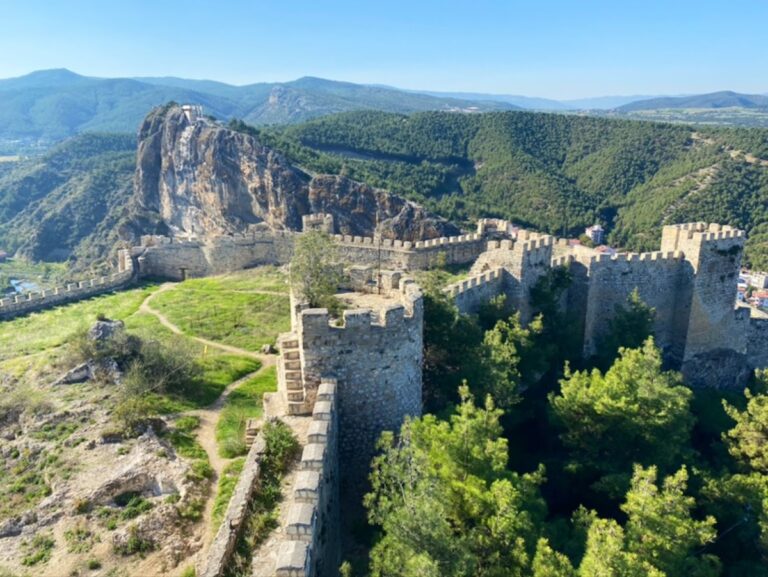
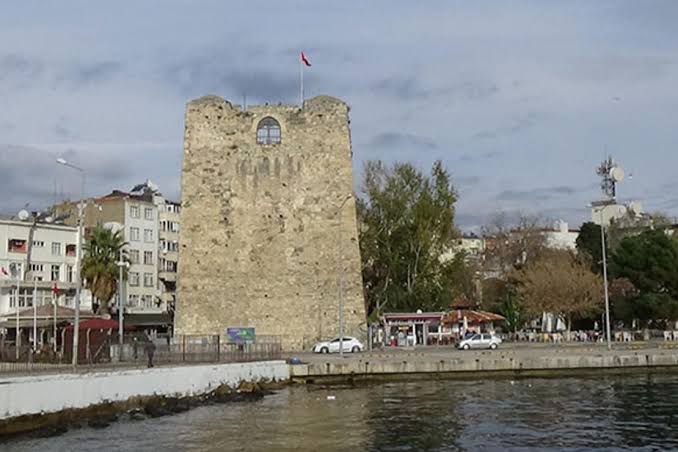
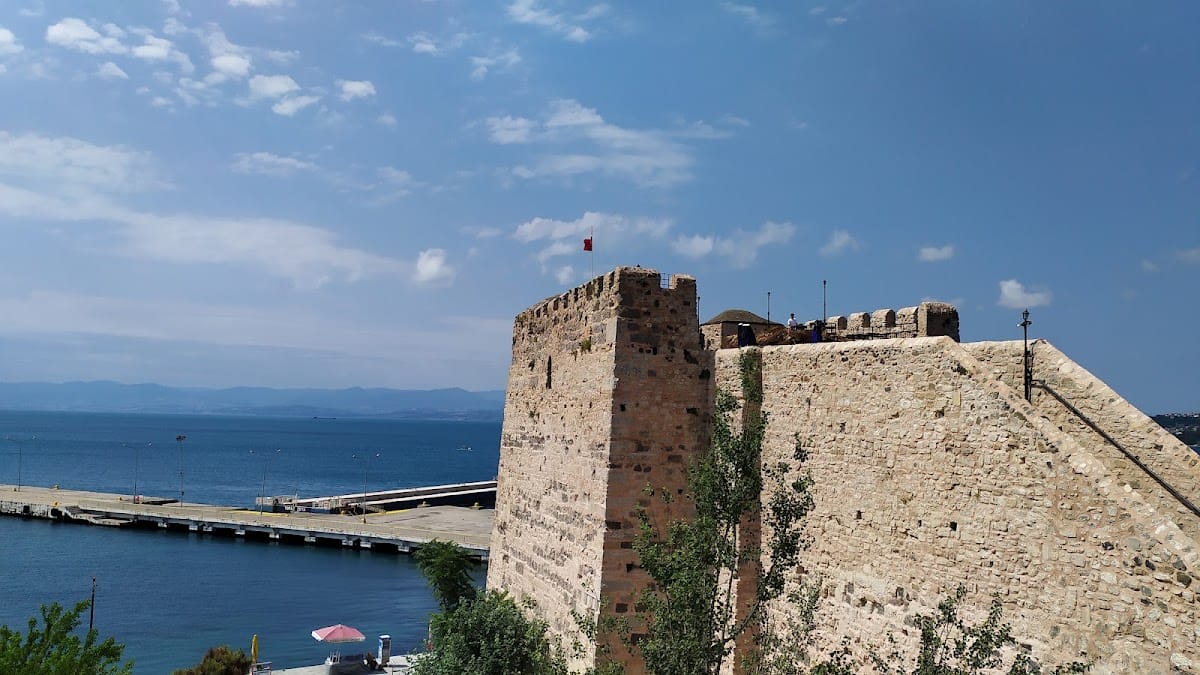
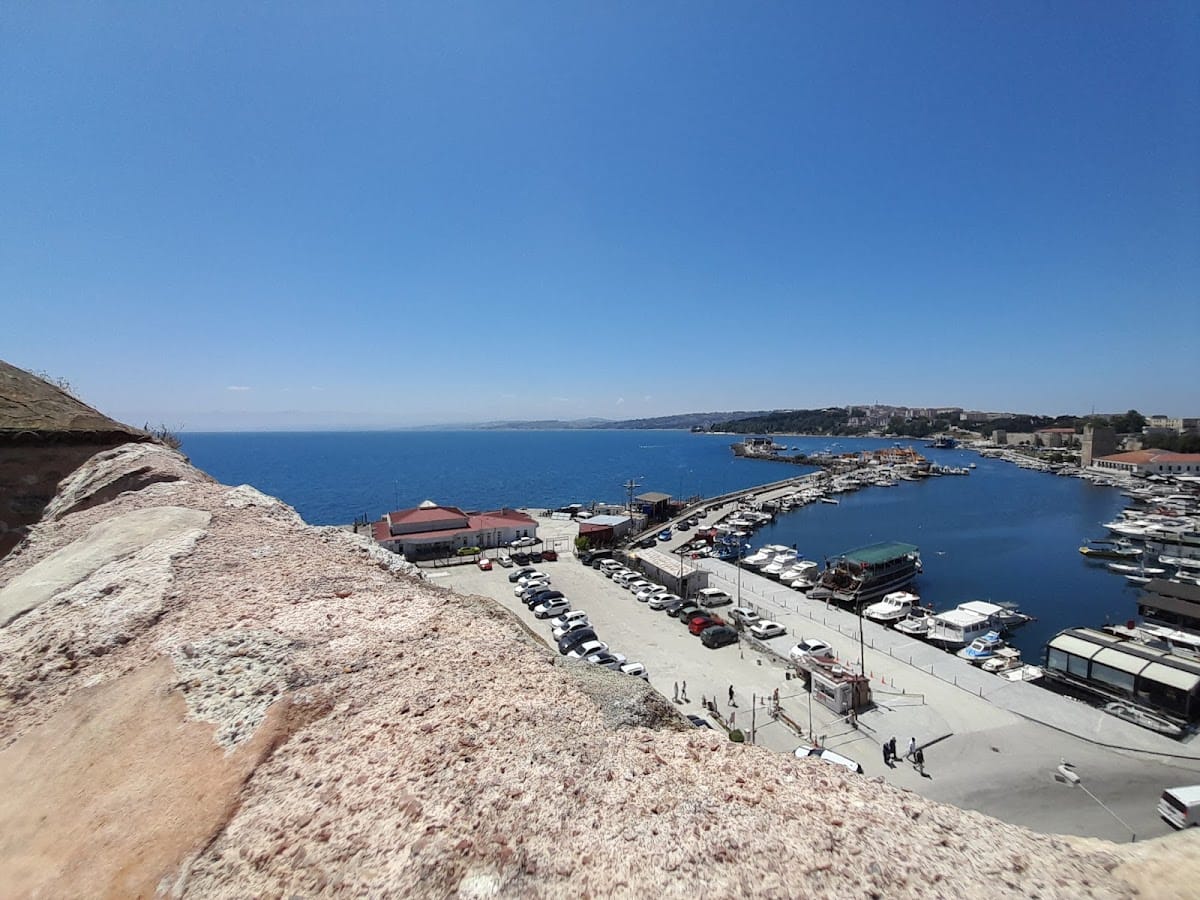
Sinop Castle occupies the southern part of the city and faces the inner harbor from the seashore. The fortress consists of two interlocking sections, with outer-castle and inner-castle areas arranged to the north and south. Its walls encircle the city and surround the Yalı and Kefevi neighborhoods.
Walls and bastions
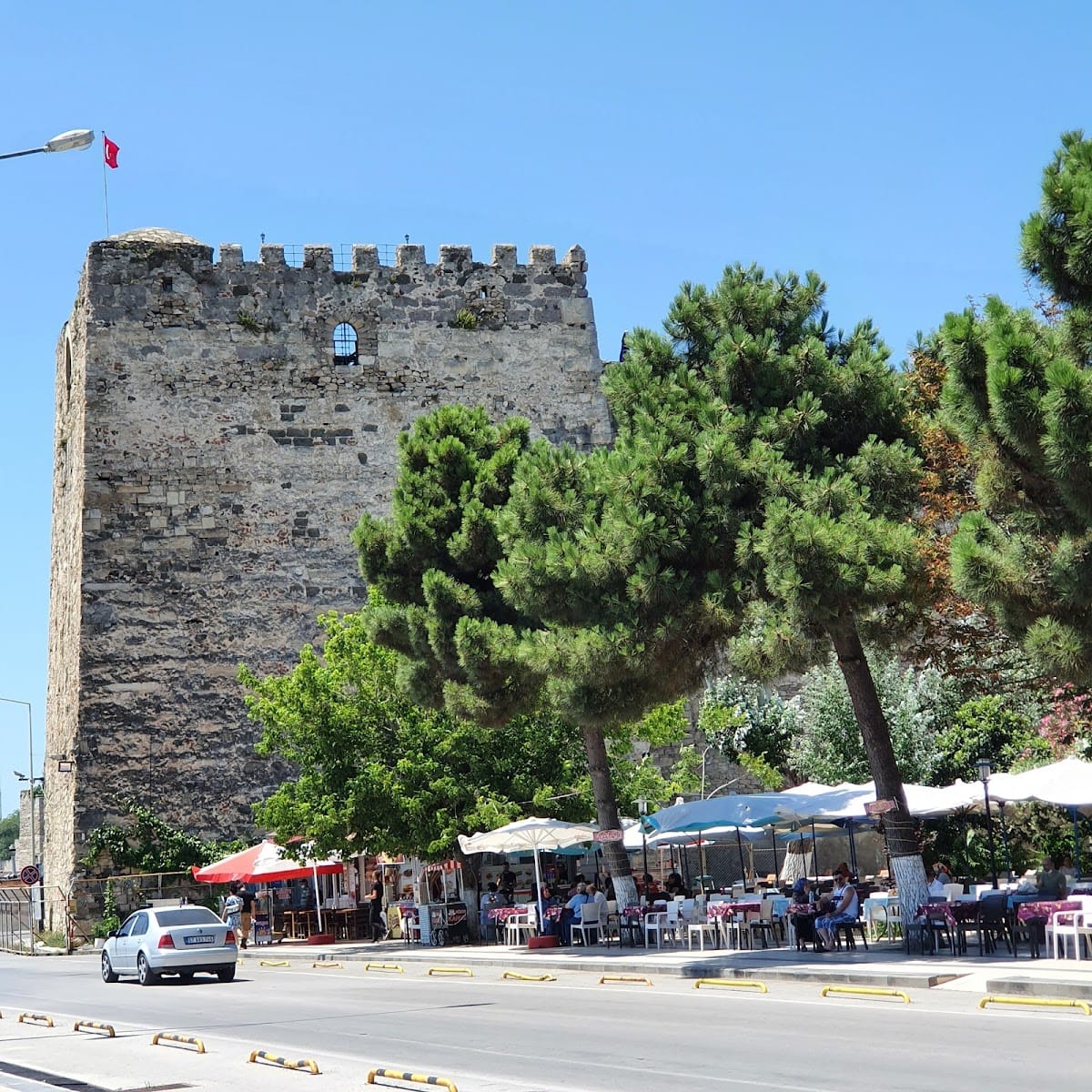
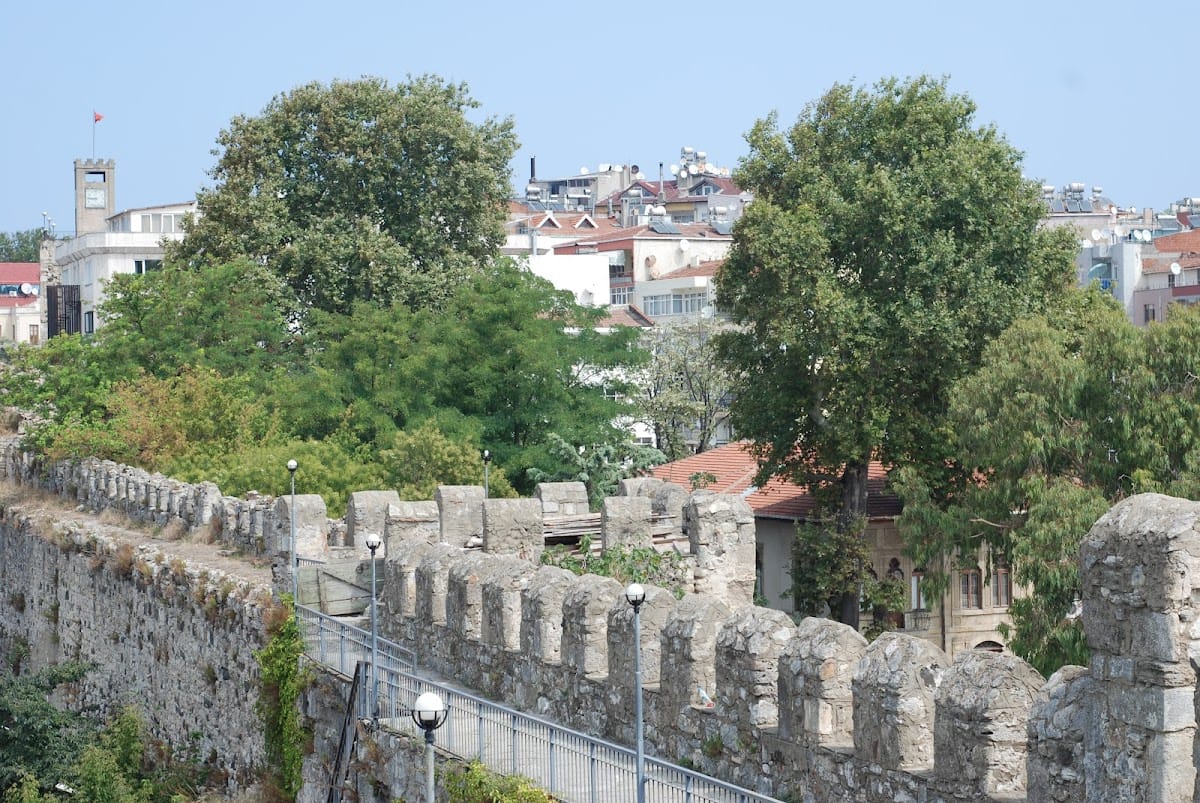
The fortifications extend for approximately 2,050 meters. The walls reach up to 25 meters in height and are about 3 meters thick. They were built from rubble stone, cut stone, and brick bonded with mortar. The bastions are approximately 8 meters wide and 25 meters high, and the Seljuk sultan Izz al-Din Kaykaus commissioned their construction during the repairs of 1215 to 1218.
The outer castle measures approximately 800 meters along its north side, 500 meters along the east, 400 meters along the south, and 270 meters along the west. These sections form the principal enclosure around the city’s fortified area.
Gates
The castle has two principal entrance gates, although other descriptions count four. Evliya Celebi identified six gates by name: the Sand Gate, Square Gate, Shipyard Gate, Janissary Gate, Tanners’ Gate, and Guild Gate. The outer castle also had a Sea Gate. Each gate is described as having two-leaf iron doors.
Inner castles and prison
Inner-castle areas
The southern inner castle covers approximately 9,500 square meters, while the northern inner castle covers approximately 16,875 square meters. Together, these enclosed areas formed the inner sections added to the wider defensive system.
Historic prison
Sinop’s historic prison stands within the castle complex, forming part of the surviving use of the fortified enclosure.