Kloster Ebernach: A Benedictine Priory and Care Institution in Germany
Site at a Glance
- Rating
- 4.4
- Popularity
- Medium
- Country
- Germany
- Primary era
- Early Modern
- Eras represented
- Medieval, Early Modern, Modern
- Civilizations
- Electorate of Trier, German, Holy Roman Empire
- Site type
- Religious
- Remains
- Monastery
On this page11 sections
History
Foundation and early endowment
Kloster Ebernach is a Catholic monastery and care institution at Sehl, near Cochem, on the Moselle in Germany. It was founded in 1130 as a Benedictine priory, a monastic house attached to a larger abbey, belonging to the Abbey of Laach, now Maria Laach. The monastery is dedicated to Mary, the Virgin Mary in Christian belief.
The priory began with a grant of land from the knight Johann von Evernach and his first wife, Mechthild. Their estate included fields, woodland, meadows and vineyard land, as well as hunting and fishing rights. The property was later bought back. After Johann’s death, his second wife, Mathilde, and their son Johann gave it to Laach again between 1163 and 1177.
A surviving copy of the first donation charter names the estate Evernacum. The place-name is thought to have Celtic roots, with a proposed development from Averniacum through Evernacum to German Evernach. The spelling Ebernach became established only in the late nineteenth century.
Expansion and dissolution
The priory remained prosperous in the seventeenth and eighteenth centuries. It acquired a neighboring wine estate and rebuilt the monastery in 1673. Further expansion followed in the eighteenth century.
On 9 June 1802, the priory was dissolved during the secularization of church property in German territories associated with Napoleon’s political and military expansion. Its holdings passed to Karl Boost, a physician in Cochem. His daughter inherited the estate and, before her death in 1881, left the former provost’s building to Cochem’s parish of St. Martin on condition that it establish a hospital there. The parish could not meet this condition. The Rhenish provincial administration then bought the estate and invited the Franciscan Brothers of the Holy Cross to run a care institution for men with intellectual disabilities.
Care institution and wartime years
Care began at Ebernach on 12 October 1887. The site has been associated with the Congregation of the Franciscan Brothers of the Holy Cross since that year. The congregation was founded in 1862 by Peter Wirth, known as Brother Jakobus, a lay brother, or non-ordained member of a religious community.
From 1937 to 1947, Ebernach housed the congregation’s German motherhouse. The buildings were modernized and new structures added. During the Second World War, the premises were repeatedly used for billeting and as a barracks, district auxiliary hospital, reserve military hospital, prisoner-of-war and forced-labour camp, workers’ accommodation, and a refugee and old-age home for people evacuated from Trier. They also served as a casualty collection point. In November 1944, the diocesan general vicariate occupied some rooms, and Cochem authorities took temporary quarters there near the end of the war. People from Cochem and Sehl sheltered in the monastery’s wine cellar during air raids.
In early May 1943, state authorities deported 199 residents with intellectual disabilities to the Kulparkow clinic near Lemberg, now Lviv. They were murdered there as part of Nazi policy targeting people with disabilities.
Postwar care
Since the war, Ebernach has continued to provide care for people with learning and intellectual disabilities. Its facilities have been adapted and expanded as needs changed.
Since 1 January 2026, Kloster Ebernach has belonged to the Alexians, a Catholic religious community historically associated with caring for sick and vulnerable people. Its work continues to include residential and employment arrangements for people with disabilities, both at the central site and in other locations.
Remains
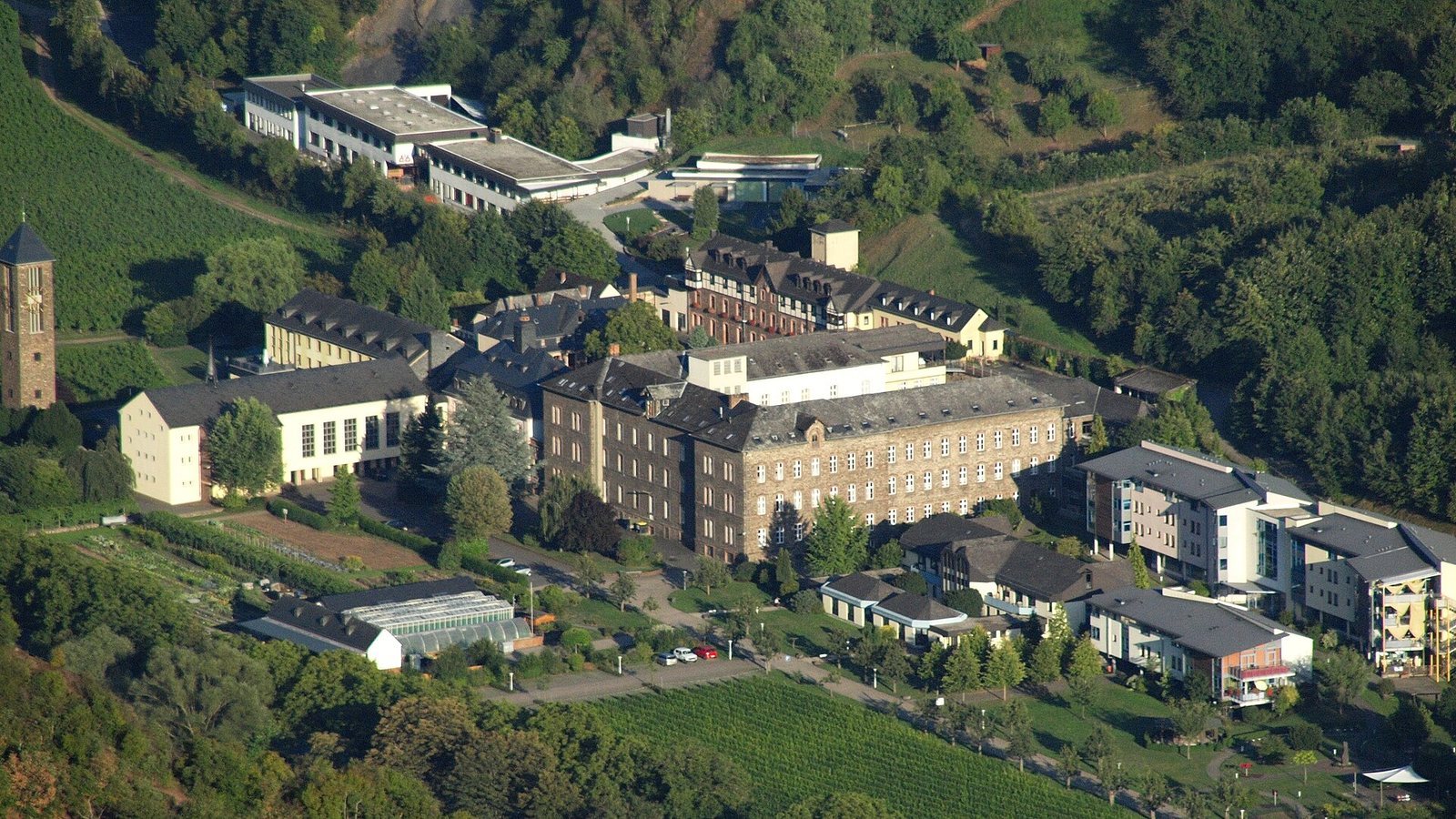
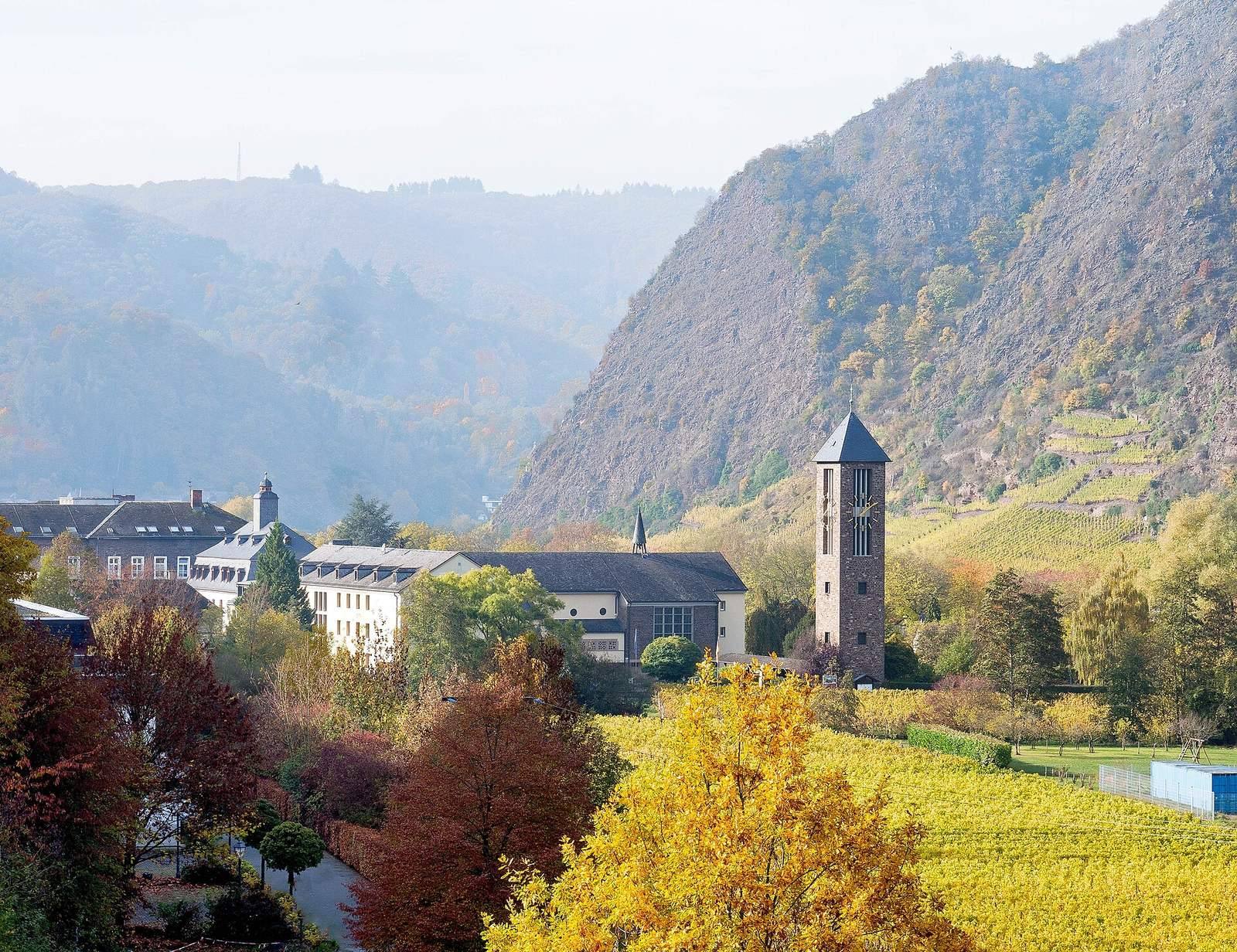
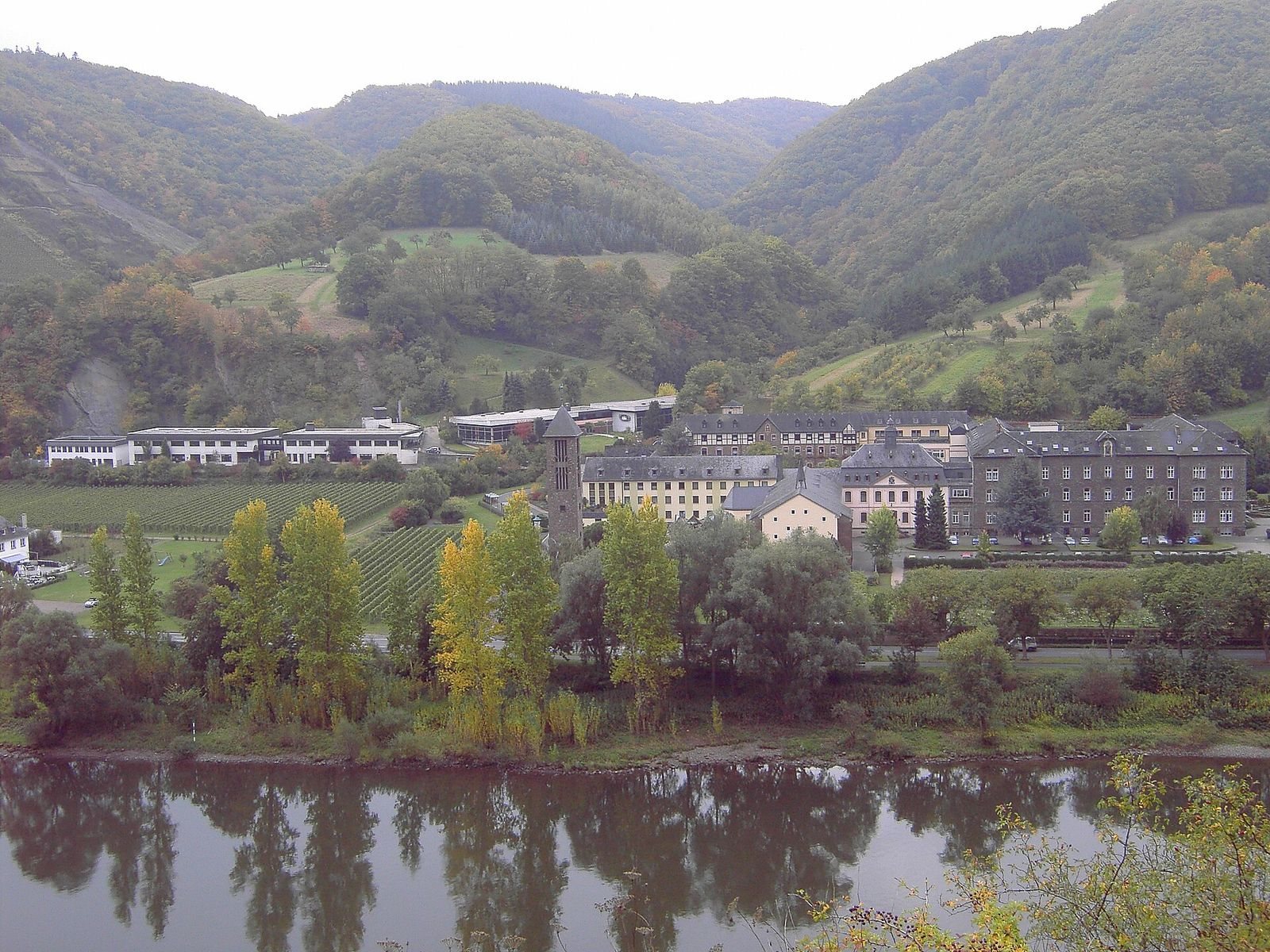
The surviving features include religious and administrative buildings, a chapel choir incorporated into a later extension, and a memorial between the church and bell tower. The estate is also associated with a vineyard and lies on the banks of the Moselle.
Religious and administrative buildings
Marian chapel choir
An earlier Romanesque chapel was demolished in 1434 to make way for a new chapel dedicated to Mary, consecrated in 1437. Its surviving choir has two vaulted sections with rib vaults, ceilings whose masonry is supported by projecting ribs. Sculpted bosses decorate the points where the ribs meet. The choir was incorporated into an extension built in 1956. A fifteenth-century Pietà, a depiction of Mary holding the dead Christ, is in the chapel.
Provost’s building
The representative provost’s building served as the residence or administrative quarters of a monastic official responsible for the priory or its estate. It belongs to the later expansion under Benedictine abbot Benedictus van der Eydt, who led the monastic community from 1731 to 1755. The building has a central projecting section and a mansard roof, whose steep lower slopes create space beneath the roof.
Wayside chapel
A wayside chapel was built at the site in 1676.
Memorial
The Franciscan Brothers erected a memorial in 2005 to commemorate the residents murdered at Kulparkow. It stands between the church and bell tower, with soil from Kulparkow mixed with soil from Ebernach beneath it.