Pilak, Tripura: A Hindu and Buddhist Archaeological Complex
Site at a Glance
- Popularity
- Medium
- Country
- India
- Primary era
- Medieval
- Eras represented
- Medieval
- Civilizations
- Unclassified
- Site type
- Religious
- Remains
- Sanctuary
On this page13 sections
History
Ancient setting and religious traditions
Pilak is an archaeological complex in Tripura, India, associated with both Hinduism and Buddhism. In the third century, the area formed part of Samatata, an ancient kingdom in Bengal. The region later came under the influence of the Gupta and Pala empires, major South Asian powers. Pilak’s artistic features also reflect connections with Arakan, in present-day Myanmar, and with indigenous traditions.
The archaeological remains are generally dated from the eighth through the twelfth centuries. The earliest finds date to the eighth or ninth century, while Pilak’s sandstone sculptures have also been associated with an artistic culture of the ninth through thirteenth centuries. Together, the material reflects the coexistence of Hindu and Buddhist traditions.
The Buddhist imagery is associated with Hinayana, Mahayana and Vajrayana traditions, as well as Theravada Buddhism. Hinayana is an older, often pejorative label for non-Mahayana Buddhist schools, and is not a precise synonym for Theravada. Mahayana and Vajrayana are Buddhist traditions, with Vajrayana associated with esoteric practices.
Rediscovery and archaeological work
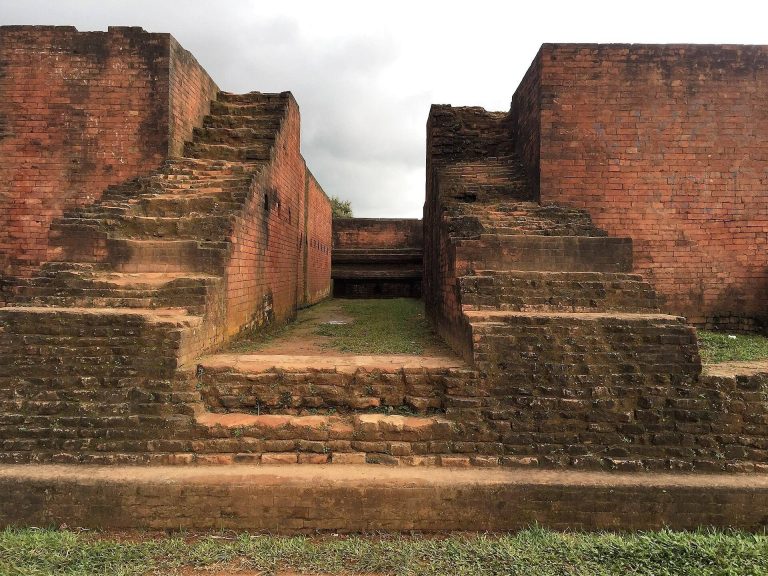
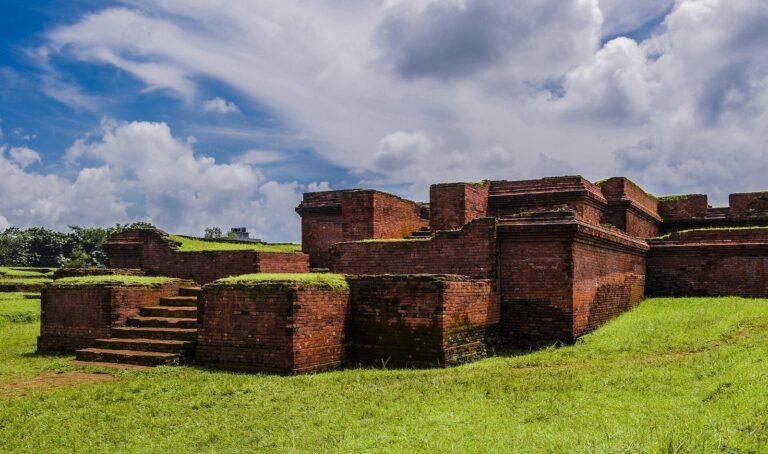
Pilak was rediscovered in 1927. Substantial excavations by the Archaeological Survey of India in the 1960s uncovered brick stupas, Buddhist monuments associated with worship or sacred remains. Later investigations at Jolaibari and other mounds brought to light Buddha statues and images associated with Mahayana Buddhism.
The Archaeological Survey of India has maintained the site since 1999. The Tibetan Buddhist religious leader the Dalai Lama visited Pilak in 2007.
Remains
Site layout and brick architecture
Archaeological landscape
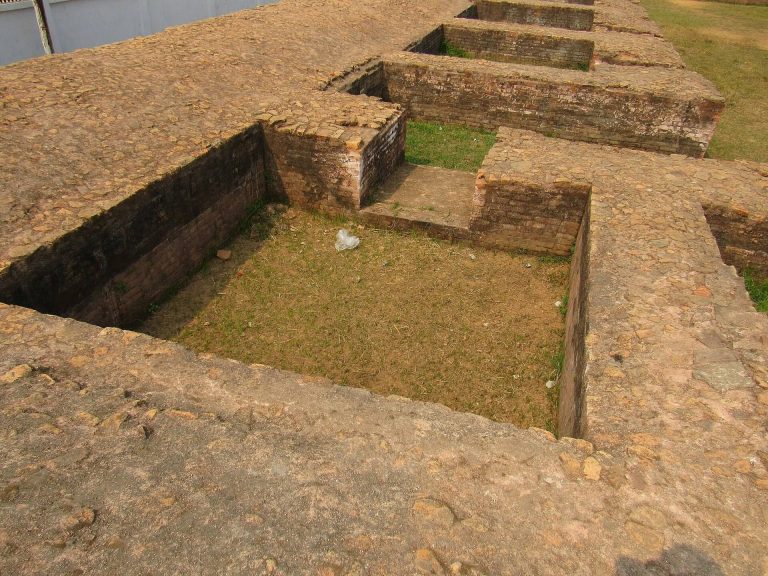
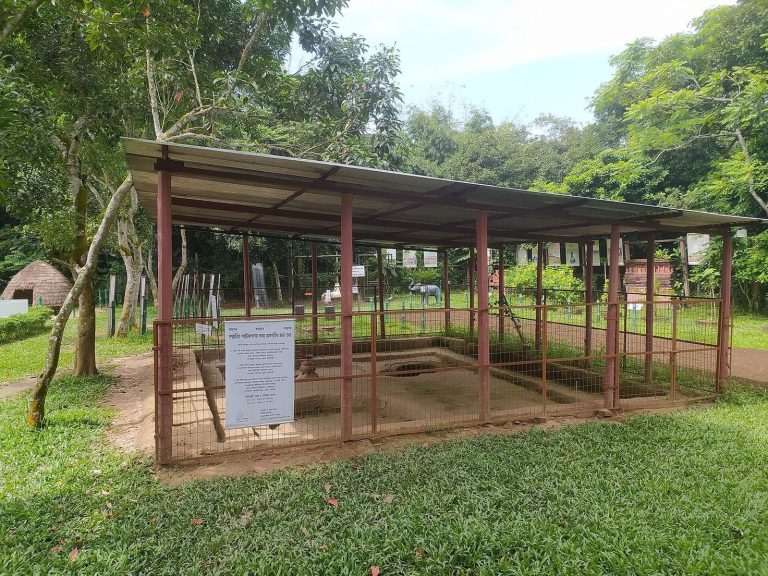
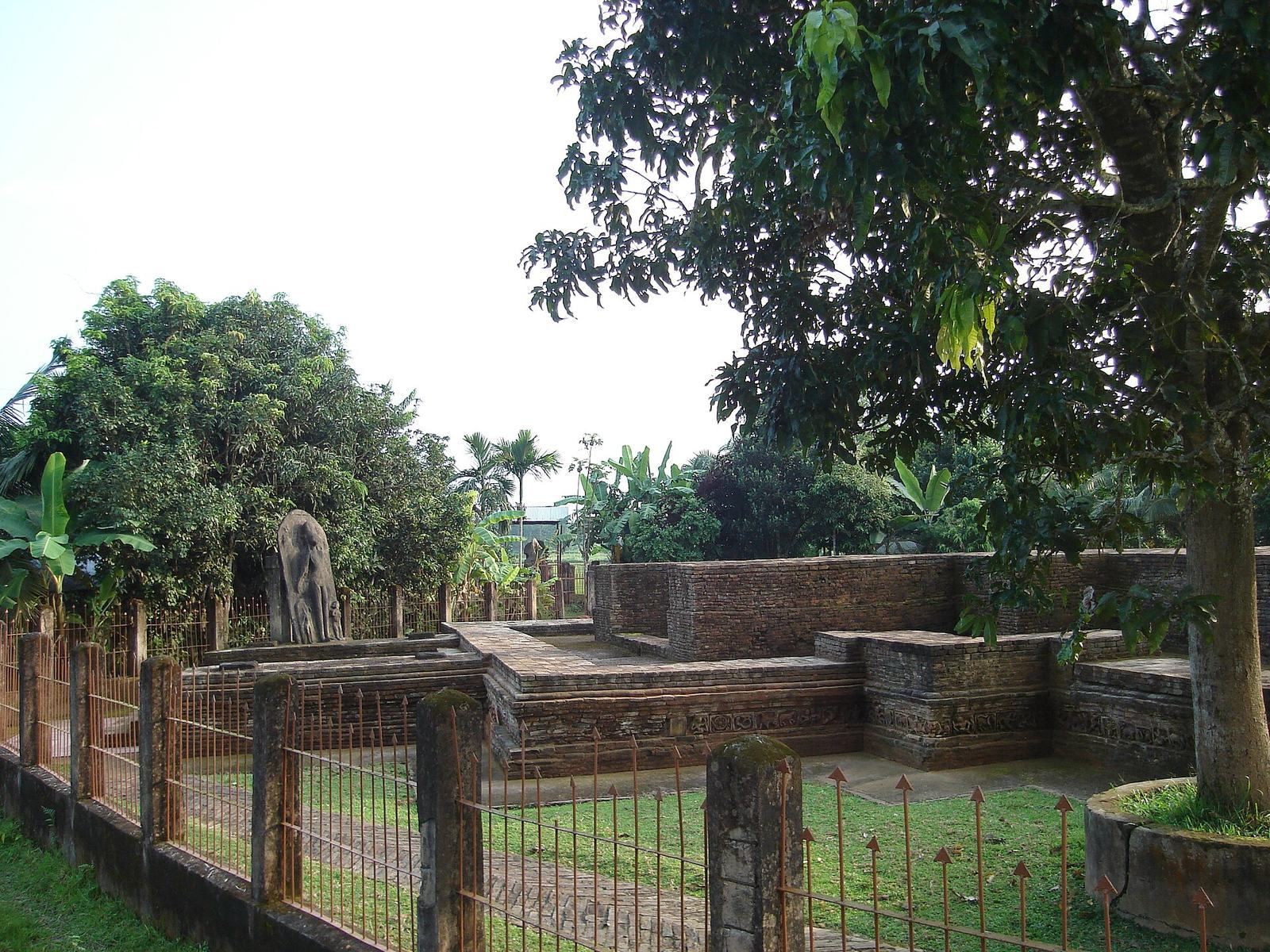
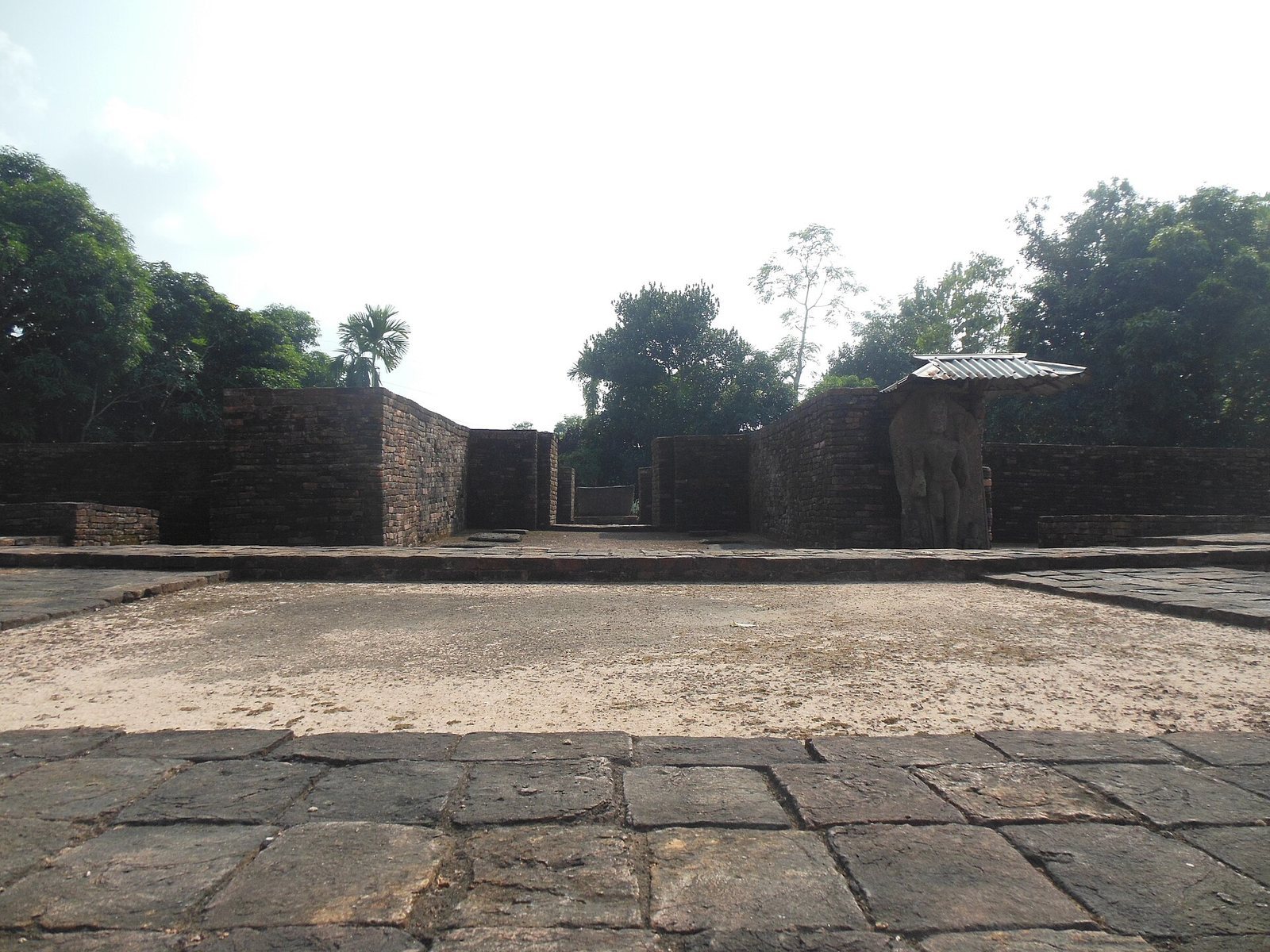
The archaeological area covers about 10 square kilometres in Jolaibari, South Tripura. It lies in a forested, sparsely populated setting about two kilometres south of the Muhuri River and near the Myanmar border. The complex includes findspots at Shyam Sundar Tilla, Deb Bari, Thakurani Tilla, Balir Pathar, Basudev Bari and Sagar Deba, among others. Brick remains occur across the area, and many statues and reliefs remain in place.
Sundari Tilla stupa
A stupa at Sundari Tilla dates to the eleventh century. Its architectural features have been compared with those of the Pala period in Bengal.
Sculpture and terracotta finds
Buddha and Avalokiteshvara images
An eighth-century stone slab depicts the Buddha standing upright, with the right arm visible and the left hand holding the edge of a garment. The head has close-curled hair and an oval ushnisha (raised cranial feature), carved in three dimensions. A small stupa appears on the slab’s left side. Pilak has also yielded large stone sculptures of Avalokiteshvara, a bodhisattva associated with compassion. A two-armed image of Avalokiteshvara from the site, along with other sandstone sculptures, is displayed at the Tripura Government Museum in Agartala.
Marichi image
An eighth- or ninth-century image represents Marichi, a Buddhist deity revered in Mahayana and Vajrayana traditions. The figure stands with one leg bent and the other extended, on a plain base. Marichi has three faces and six arms. The right hands hold an arrow, a vajra (ritual thunderbolt emblem) and an axe; the left hands hold a bow and leaf-shaped fan, while another makes a raised-index-finger gesture. The image is installed as an idol in a Hindu temple.
Chunda image
A sandstone sculpture of Chunda, a Buddhist goddess, dates to the eighth or ninth century. She has eighteen arms and sits cross-legged on a lotus pedestal. Her two principal hands bear a wheel-of-the-teaching emblem associated with Vajrasattva, a Buddhist deity especially important in Vajrayana practice, and a figure identified as Ghanathapani. Five meditative Buddhas, each with a halo, are carved above her. At a temple in Muhuripur, the sculpture is revered as Raja Rajeshwari, a Hindu goddess associated with Devi.
Other Hindu images
A large stone sculpture of Narasimha, a Hindu deity in man-lion form, has been unearthed at Pilak. The site has also yielded a fired-clay image of the Trimurti, the Hindu triad of Brahma, Vishnu and Shiva. A sculpture of Surya, the Hindu sun god, from the Sagardheba mound dates to the seventh through ninth centuries. It shows Surya riding a chariot drawn by seven horses and is installed at the Rajesvari Ashram temple in Muhuripur.
Terracotta plaques and seals
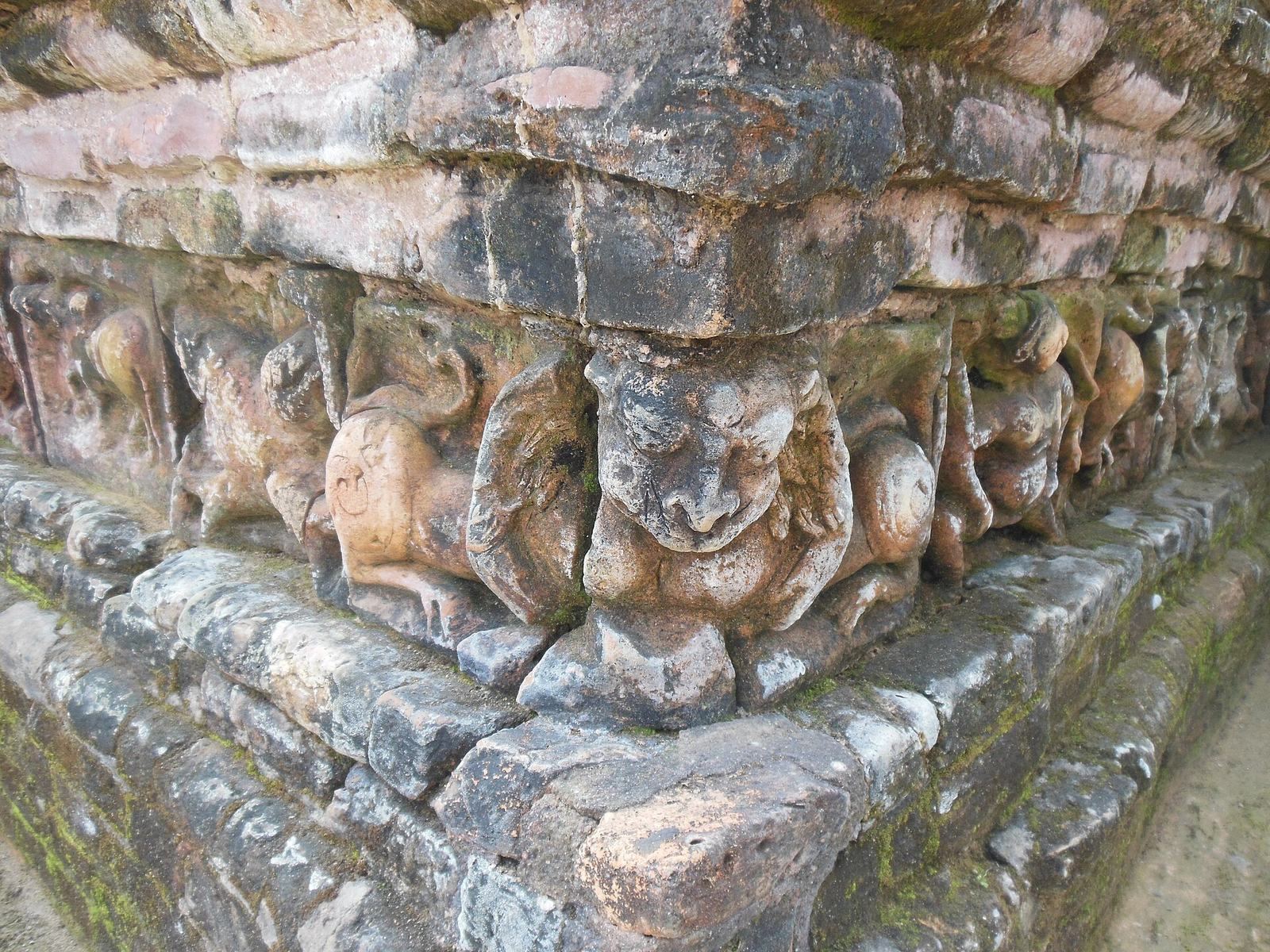
Pilak has yielded numerous terracotta plaques, statues and inscribed terracotta seals. The seals depict very small Buddhist stupas. In Tripura, worship is directed to the seal itself rather than to the miniature monument shown on it.