Providence Church: A Lutheran Church in Heidelberg
Site at a Glance
- Rating
- 4.5
- Popularity
- Medium
- Country
- Germany
- Primary era
- Early Modern
- Eras represented
- Early Modern, Modern
- Civilizations
- Electoral Palatinate, German, Grand Duchy of Baden, Holy Roman Empire
- Site type
- Religious
- Remains
- Church
On this page10 sections
History
Foundation and congregation
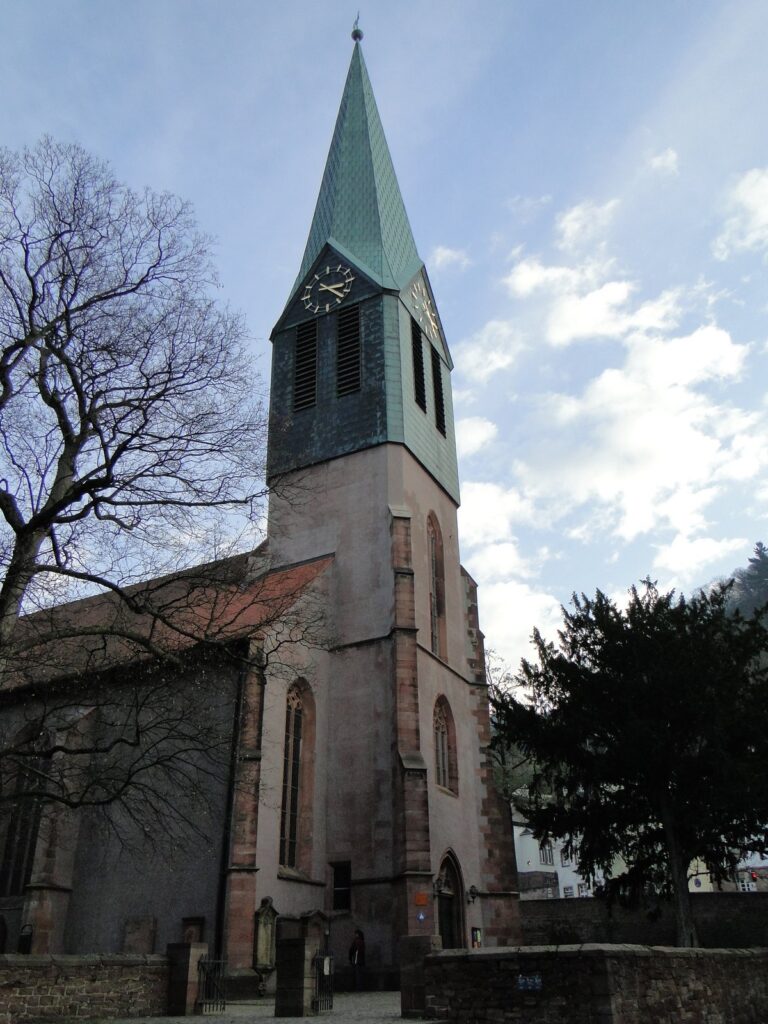
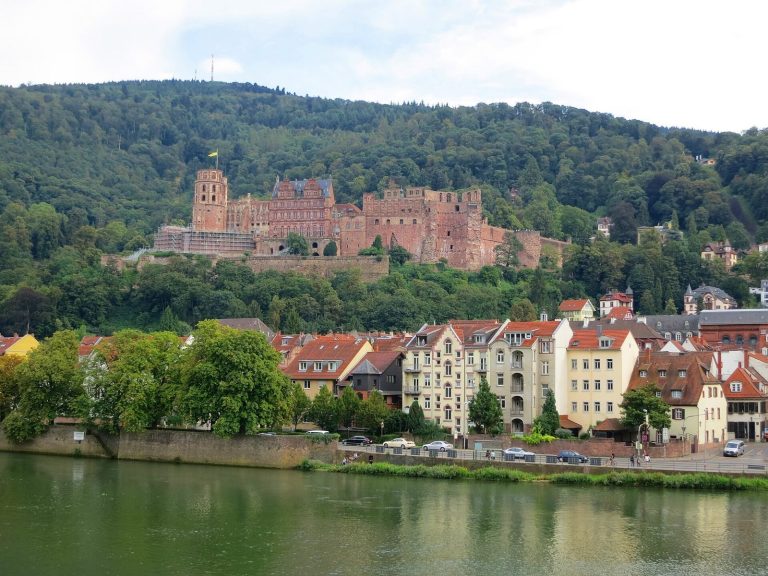
Providence Church is a Lutheran church on Hauptstrasse in Heidelberg, Germany, built between 1659 and 1661 for the city’s Lutheran congregation. Architect Theodor Reber designed it on the site of a former electoral garden, at the initiative of Charles I Louis, Elector of the Palatinate, a prince entitled to participate in choosing the Holy Roman Emperor. The church took its name from his motto, Dominus providebit, meaning “The Lord will provide.”
Heidelberg was predominantly Calvinist, part of the Reformed Protestant tradition. The Lutheran congregation worshipped at Providence Church, while the Reformed congregation used the Church of the Holy Spirit. These arrangements continued until the Lutheran and Reformed churches in Baden united in 1821.
Fire and rebuilding
The Great Fire of 1693 destroyed the church during the War of the Palatine Succession, a European conflict fought from 1688 to 1697 and also known as the Nine Years’ War. Providence Church was rebuilt between 1715 and 1721 under construction supervisor Johann Jakob Rischer.
Later alterations and rebuilding
In 1852, workers removed the choir gallery and transferred the Baroque organ to the north gallery. Architect and church-building inspector Hermann Behagel remodelled the interior between 1878 and 1885 in the Neo-Renaissance style, which drew on Renaissance forms. The University of Heidelberg donated two choir windows in 1886 to mark its 500th anniversary. The church was rebuilt after World War II.
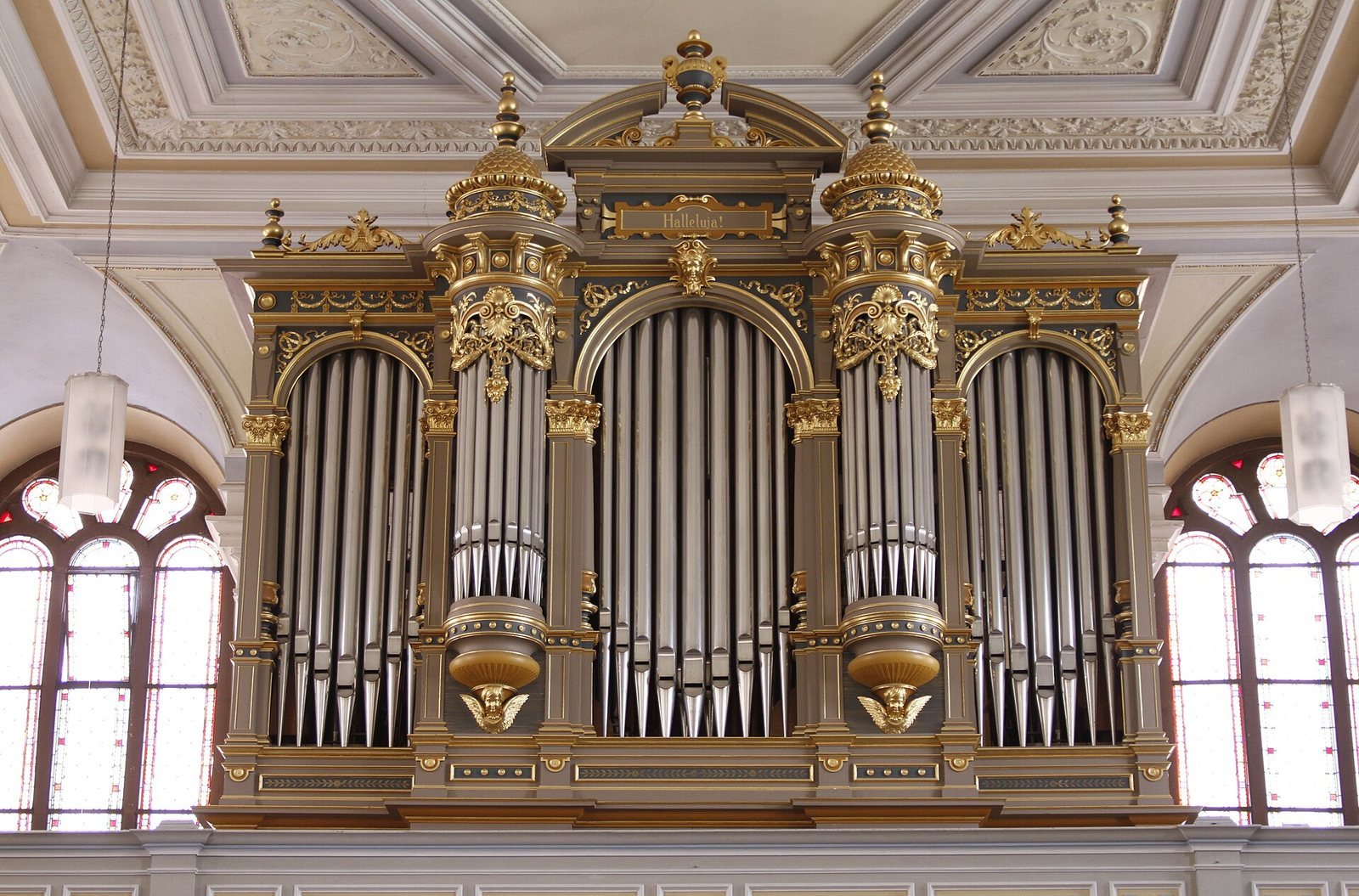
Heidelberg’s oldest surviving organ originated as an instrument built by Matthias Burkard in 1885. G. F. Steinmeyer & Co. remodelled it in 1928, changing its action, or operating mechanism, to a pneumatic system that used air pressure. The mechanism was electrified in 1946, when 16 of Burkard’s original stops, which control sets of pipes, remained. In 1986, Gebr. Link built a new instrument behind the historic case, reusing old pipework as far as possible.
Remains
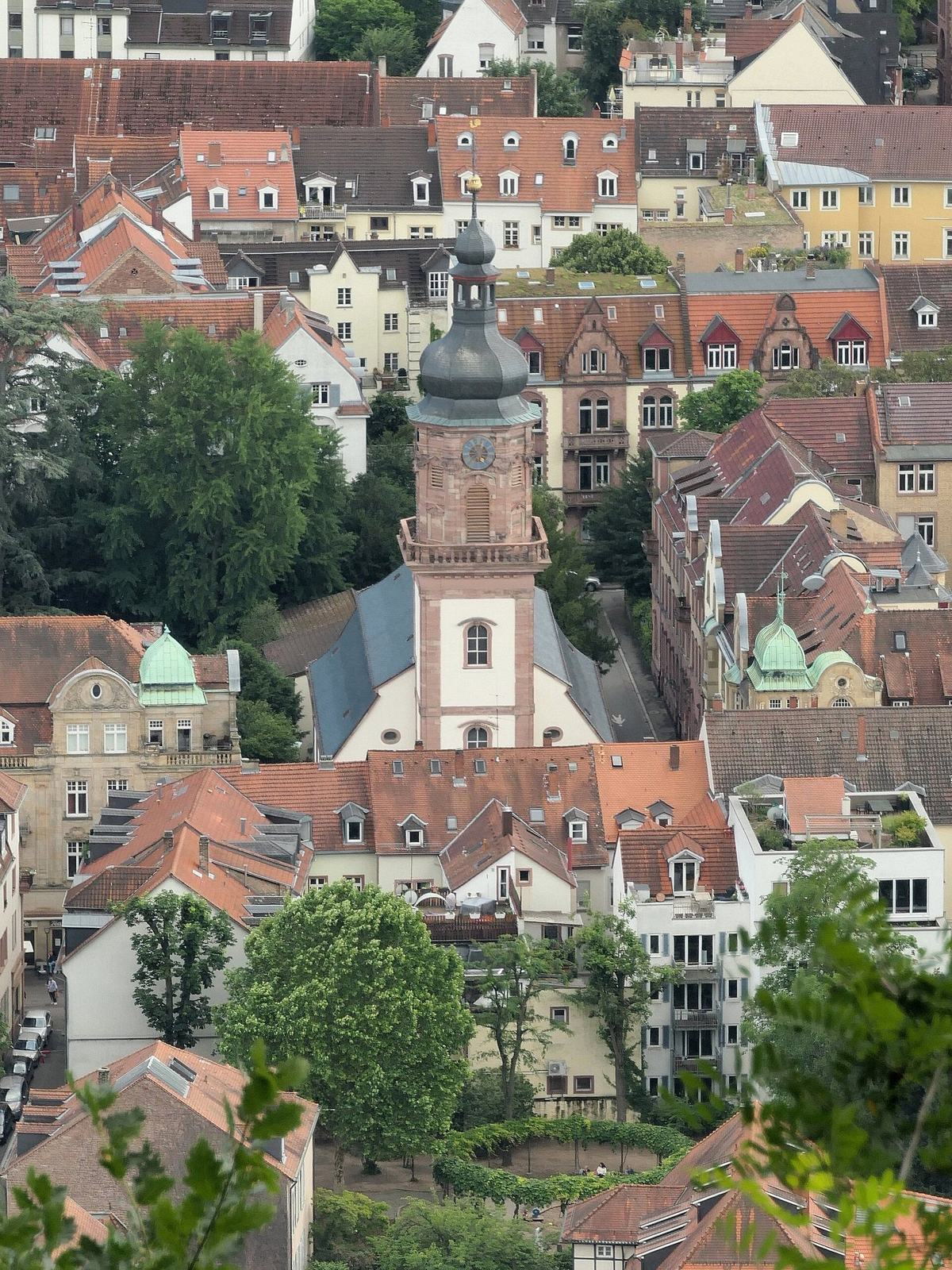
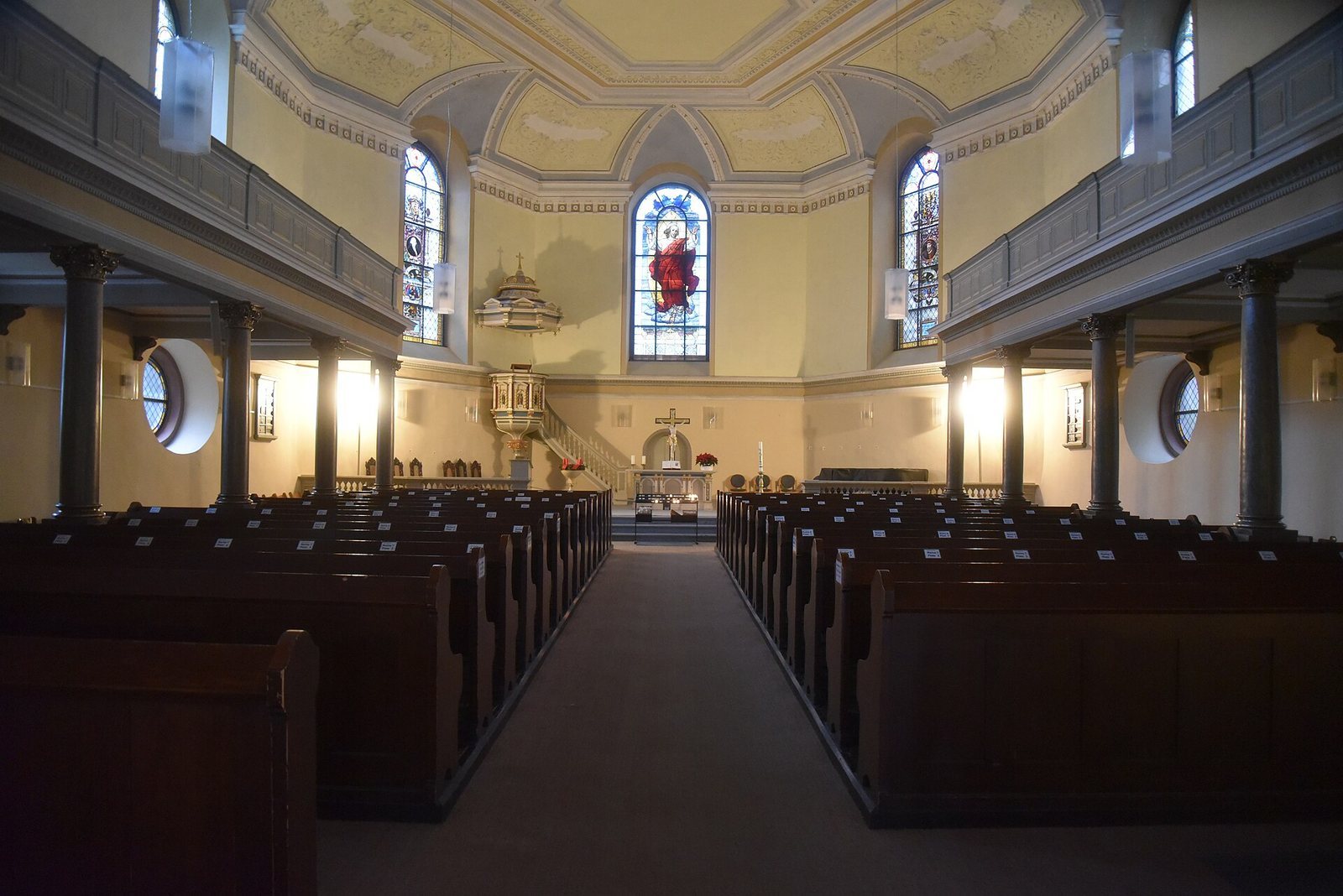
Providence Church is a single-nave hall church, built without side aisles. Its exterior combines white-plastered walls with a tower at the north end, while the interior has galleries and a distinct choir area.
Nave and exterior
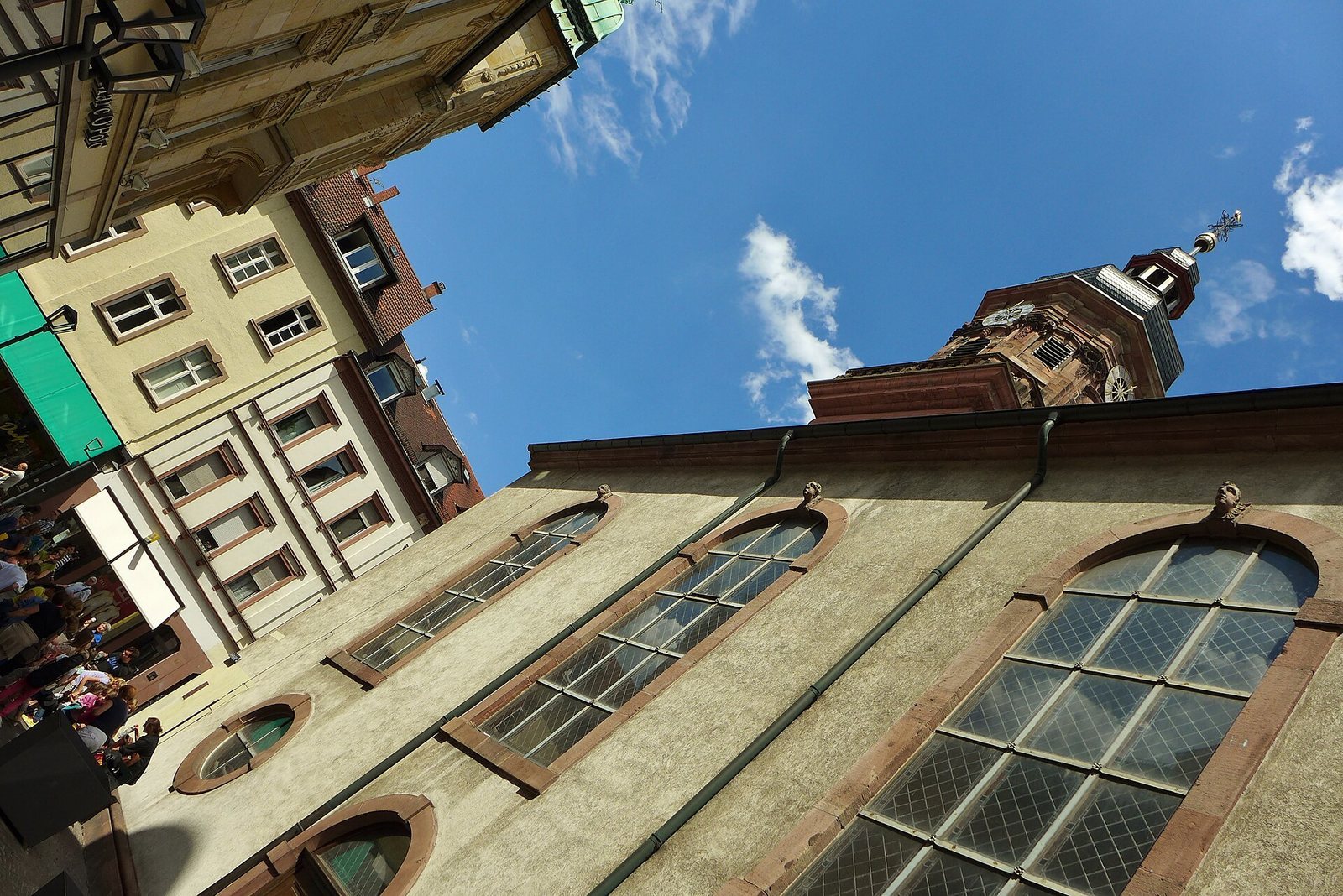
The white-plastered exterior walls have round-arched windows, with oval openings set across the wall beneath them. The walls and north gable survived the 1693 fire. The windows originally had post-Gothic tracery, decorative stonework framing or dividing an opening; this survives on the north gable. The nave windows also retain keystones carved with angels’ faces. In 1698, the roof was remade as a slate-covered mansard roof, with two slopes on each side and a steeper lower slope.
North tower and bells
A tower was added at the church’s north end between 1717 and 1721. Its lower three storeys have white-plastered surfaces and a cornice. Above them, an ornamented octagonal bell chamber of red sandstone is enclosed by a balustrade. Curved, domed slate roofs top the bell chamber and the lantern above it; a ball, cross, and weathercock crown the spire. The tower holds five bells cast in Heidelberg by Friedrich Wilhelm Schilling in 1955. Their pitches are f′, as′, b′, des″, and es″.
Interior
Galleries, choir, and windows
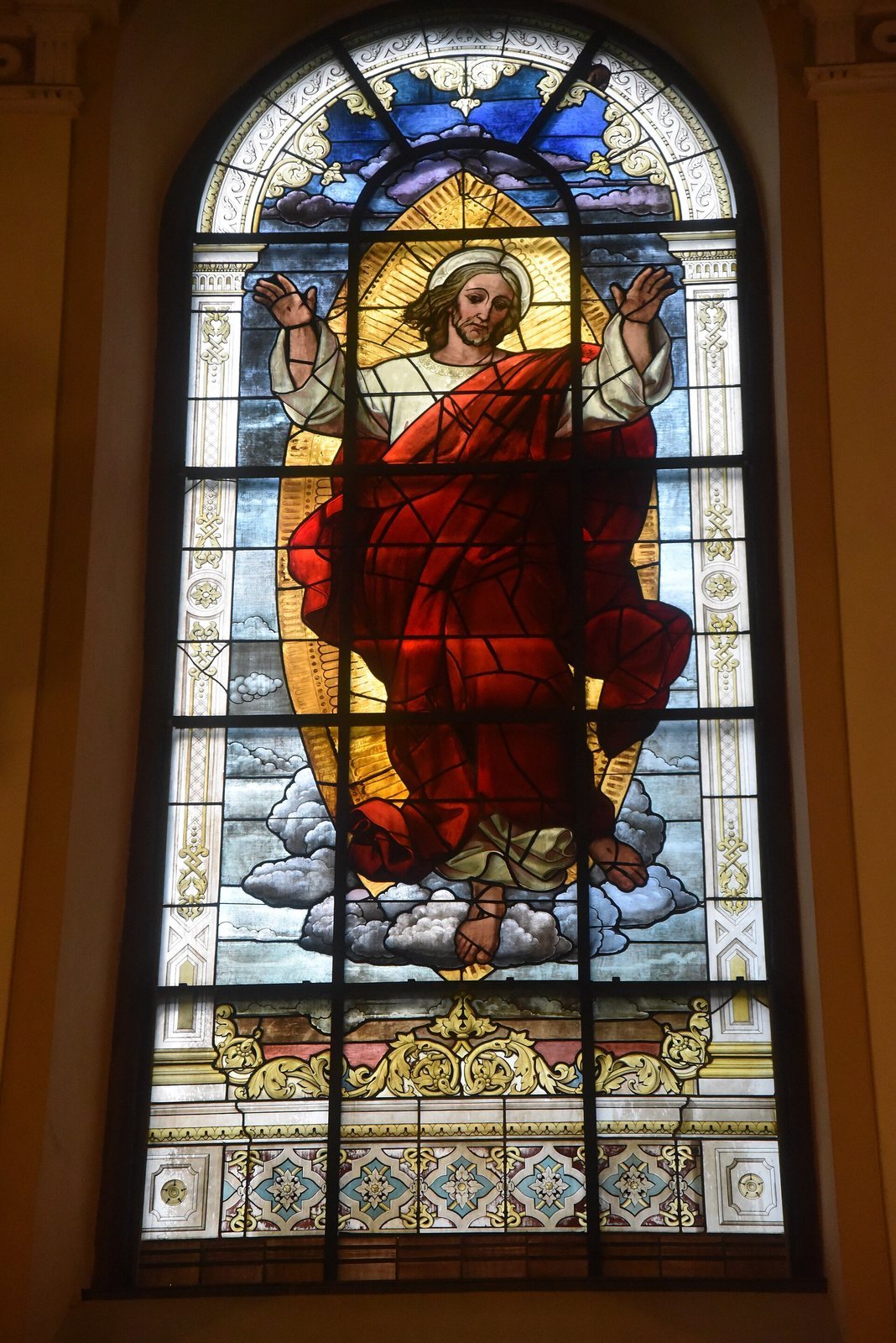
Single-storey galleries run along three sides of the interior and are arranged symmetrically around its central axis. Steps and a balustrade set apart the choir, the area containing the altar and pulpit. A stucco ceiling was added during Behagel’s remodelling. The central choir window, placed where the organ had previously stood, shows Christ giving a blessing in the Nazarene style, a nineteenth-century movement devoted to religious subjects and the revival of earlier Christian art. It is likely to have come from the workshop of Heidelberg glass painter Heinrich Beiler the Elder. The two side windows depict Grand Duke Charles Frederick on the left and Elector Otto Henry on the right.
Organ
The organ has 41 stops on three manuals, or keyboards, and a pedalboard played by the feet. Its key action is mechanical and its stop action electric. Couplers link the manuals or connect them to the pedal; the instrument has couplers II/I, I/P, and II/P, but none for manual III. It also has 128 registration-memory combinations and swell controls for manuals II and III, operated by hand or foot. Its tuning pitch is A = 440 Hz.