Temple of Hera at Mon Repos: An Archaic Greek Sanctuary
Site at a Glance
- Popularity
- Medium
- Country
- Greece
- Primary era
- Iron Age
- Eras represented
- Iron Age
- Civilizations
- Ancient Greek
- Site type
- Religious
- Remains
- Temple
On this page8 sections
History
The Temple of Hera at Mon Repos, also called the Heraion, was a sanctuary built by ancient Greeks around 610 BC in ancient Korkyra, within the area now known as Palaiopolis in Greece. It was regarded as a major temple and one of the earliest examples of Archaic Greek architecture, a Greek building tradition spanning the eighth through sixth centuries BC. Hera was a major goddess in ancient Greek religion.
Early sanctuary and rebuilding
A sanctuary occupied the site by the early seventh century BC. By the end of that century, a major building stood alongside subsidiary structures and an enclosed sacred precinct. A fire destroyed the temple in the fifth century BC. The sanctuary was then rebuilt and enlarged, and a new temple was constructed in the fourth century BC.
Destruction and reuse
During the Byzantine and Venetian periods, the sanctuary was looted and its stones taken for use in other buildings. The later temple was eventually destroyed.
Excavation and study
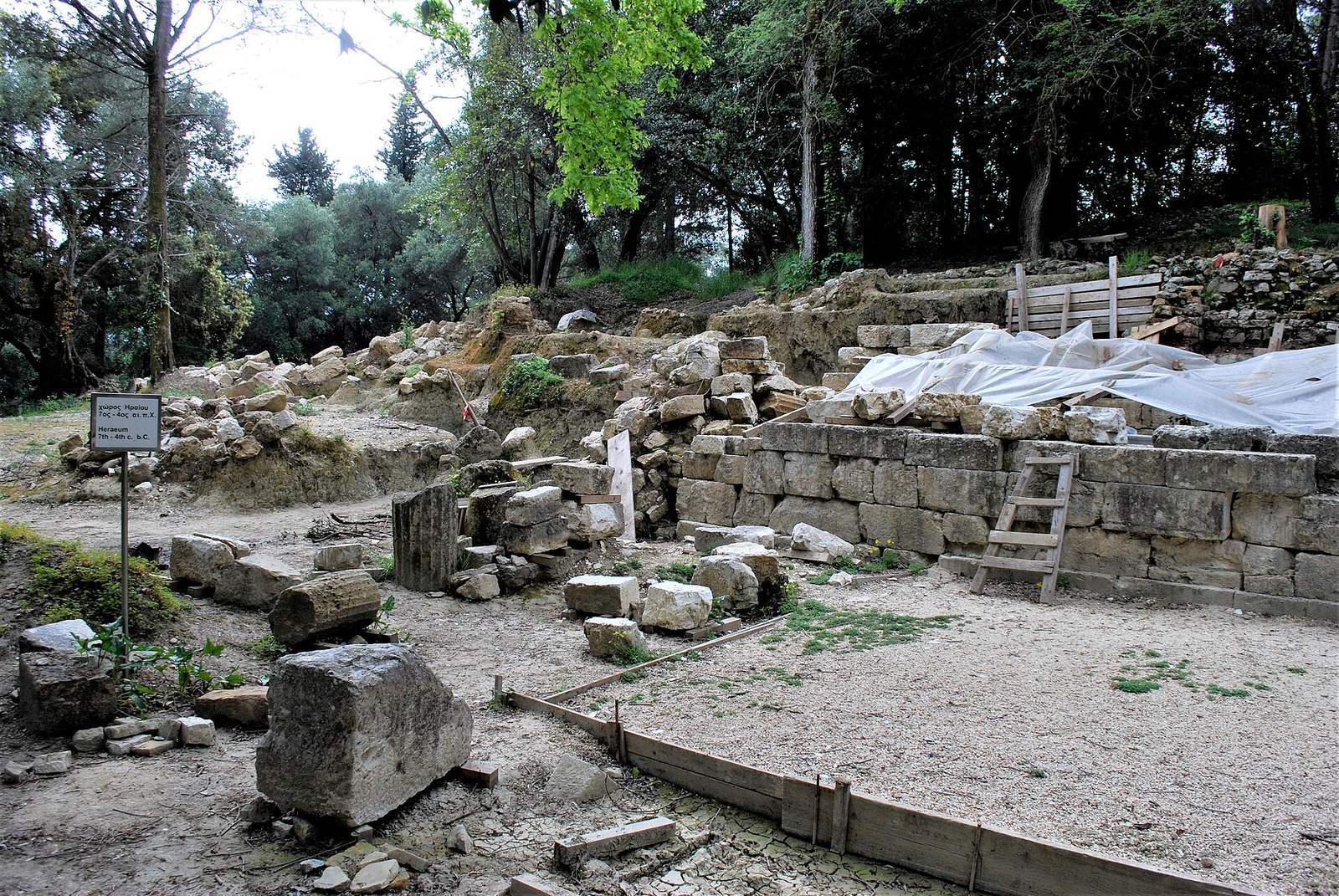
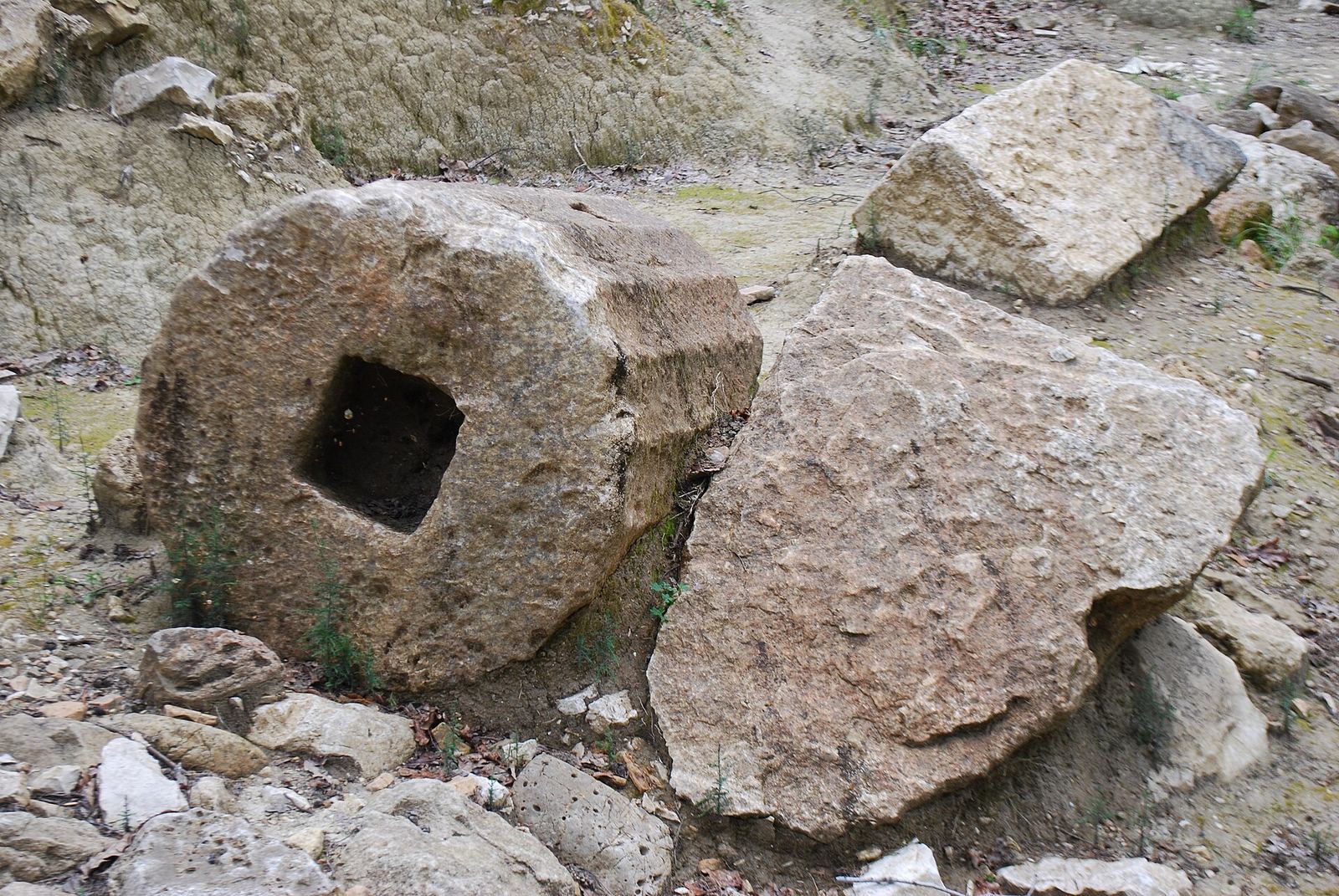
Workers opening a road on Analipsis Hill uncovered the carved stone tops of columns, prompting the German archaeologist Wilhelm Dörpfeld to carry out a brief excavation in 1914 for the German Archaeological Institute. Greek archaeologists Giorgos Dontas and Petros Kalligas resumed and broadened the work in July 1962. Excavations continued until 1967, and the archaeologists published seven reports on their findings. The Digital Archaic Heraion Project has undertaken to digitize architectural fragments and produce a three-dimensional virtual reconstruction of the temple.
Remains
Hilltop precinct
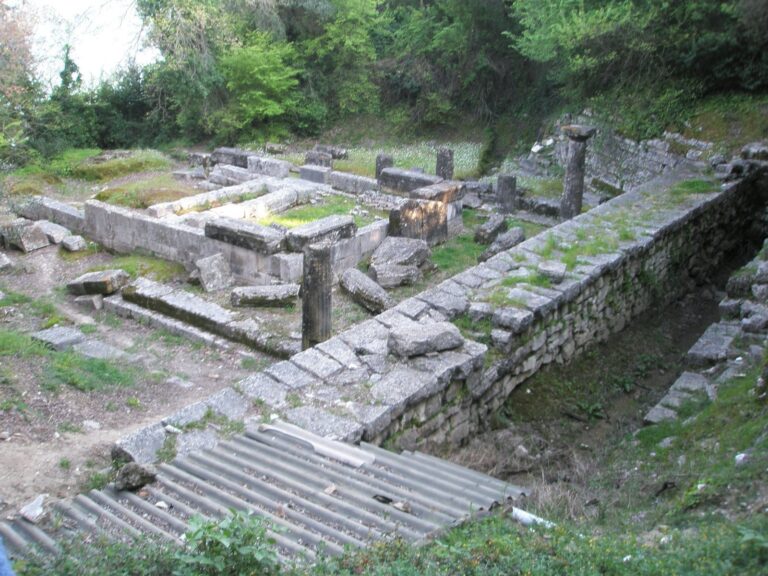
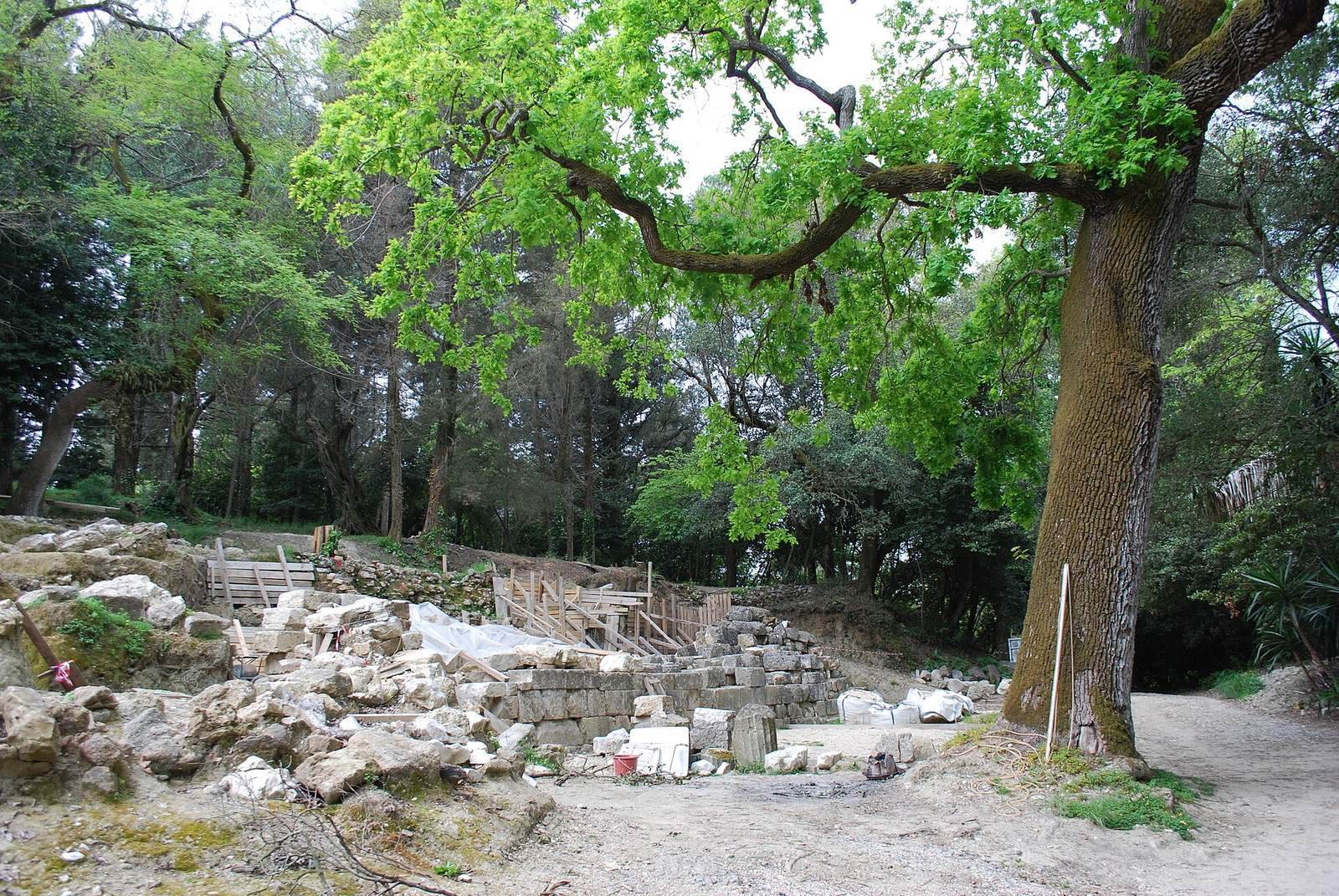
The sanctuary occupied the summit of Analipsis Hill, at the western edge of Mon Repos and northwest of Kardaki Temple. It lay about 700 metres southeast of the Temple of Artemis in Corfu. From its elevated position, the sanctuary was clearly visible to ships approaching or passing the waterfront of ancient Korkyra. Excavations traced sections of the sacred precinct’s enclosing wall, some of which reached considerable height. The site’s archaeological layers had been thoroughly disturbed. A modern road destroyed the temple’s western and southern sides, while dense vegetation hindered excavation to the northwest.
Roof sculpture
Large terracotta figures decorated the roof, including lions, images of Gorgon heads, and female figures known as Daidala maidens, a type of archaic Greek figure. Artisans painted the sculptures in vivid colours and drew on myth traditions from across the Mediterranean. The lions formed projecting elements at the roof edge above the walls, and spouts in their mouths drained water from the roof. The decoration was elaborate, and the roof construction was ambitious for its time.
Excavated fragments
Architectural fragments recovered during excavation are held at the Archaeological Museum of Corfu.