Saint George Cathedral, Novi Sad: The Principal Episcopal Church of the Eparchy of Bačka
Site at a Glance
- Rating
- 4.9
- Popularity
- High
- Country
- Serbia
- Primary era
- Early Modern
- Eras represented
- Early Modern, Modern
- Civilizations
- Austria-Hungary, Austrian Empire, Habsburg, Habsburg Austria, Hungarian
- Site type
- Religious
- Remains
- Cathedral
On this page11 sections
History
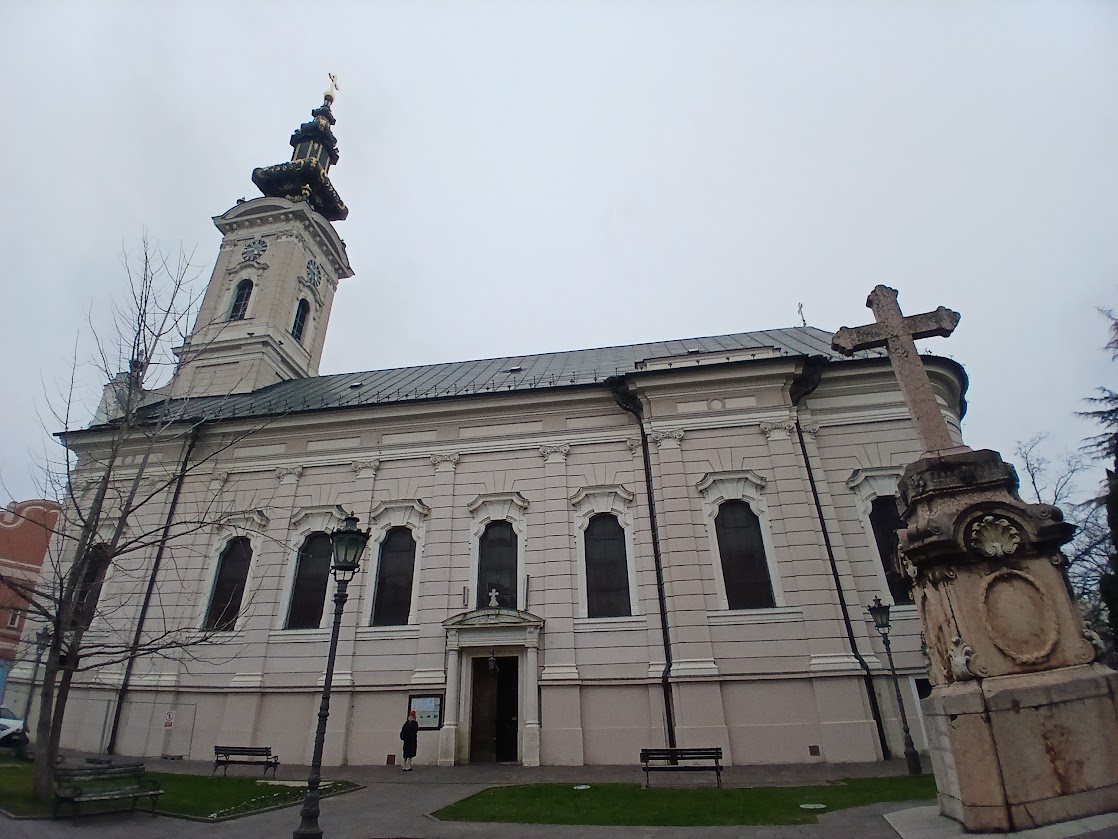
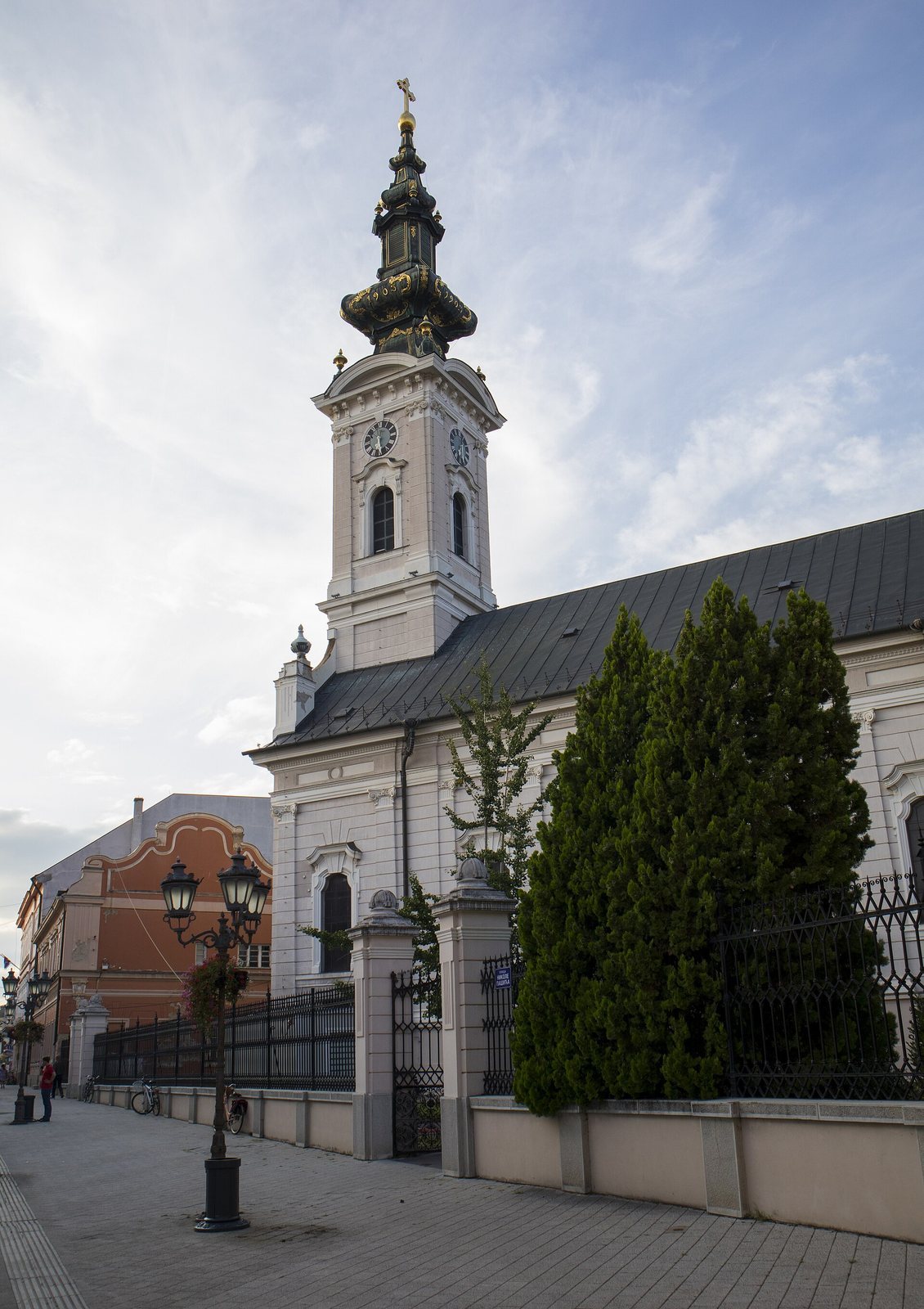
Saint George Cathedral in central Novi Sad, Serbia, is the principal episcopal church of the Serbian Orthodox Church’s Eparchy of Bačka, a diocese. Dedicated to Saint George, a Christian martyr venerated as a saint, its main building phase dates to 1734–1740. The brick church is Neo-Baroque, a later revival of Baroque forms. Locally called the Cathedral Church, it stands beside the bishop’s residence, with the Serbian Orthodox parish house and Jovan Jovanović Zmaj Gymnasium nearby.
Early church and nineteenth-century rebuilding
A smaller church stood on the site by 1720, before a substantial building phase established the cathedral’s early form. During the Hungarian Revolution of 1848–1849, bombardment from Petrovaradin Fortress badly damaged the church: its tower was destroyed and its façade collapsed. Restoration followed between 1851 and 1853, guided by plans from a builder in Pest.
Twentieth-century rebuilding and conservation
After further deterioration, the church council approved a major rebuilding campaign in 1902. A Budapest architect designed the work, which was completed by Easter 1905 and gave the cathedral its present appearance. Since 2000, a major conservation and restoration campaign has continued. The cathedral is protected in Serbia as a cultural monument of great importance.
Remains
The brick cathedral has a Neo-Baroque design and a single nave, the church’s main body, with projections along its long walls and a three-sided apse, a projecting area at the end of a church, to the east. A tall bell tower rises above the western front. The early eighteenth-century arrangement was largely retained in the rebuilding of 1902–1905, while the façade decoration was renewed.
Exterior and churchyard
Façades and tower
The main façade has three entrances shaped like porticoes, roofed porches supported by columns, each topped by a triangular tympanum, a decorated panel within a pediment or arch. Pilasters, flattened columns attached to a wall, and a high base with projecting moulded bands articulate the exterior. On the western front, a triangular panel and a shallow-arched panel sit below the tower’s bulb-shaped roof. The rebuilding of 1851–1853 added a tower and more nave windows, and new bells from Budapest were installed at that time.
The Theophany Cross
The Theophany Cross, also known as the Votive Cross, is a rose-coloured marble monument in the churchyard. Theophany is the Eastern Orthodox feast of Christ’s baptism; “votive” refers to a vow or offering. Dating to the eighteenth century, the monument includes a cross about half a metre tall and is regarded as Novi Sad’s oldest surviving monument. It was damaged during the 1848 revolution and restored in 1867 with financial support from Marija Trandafil. In the 1950s it was moved from the corner of what are now Zmaj Jovina and Miletićeve streets to its present location.
Interior decoration
Stained glass and painted surfaces
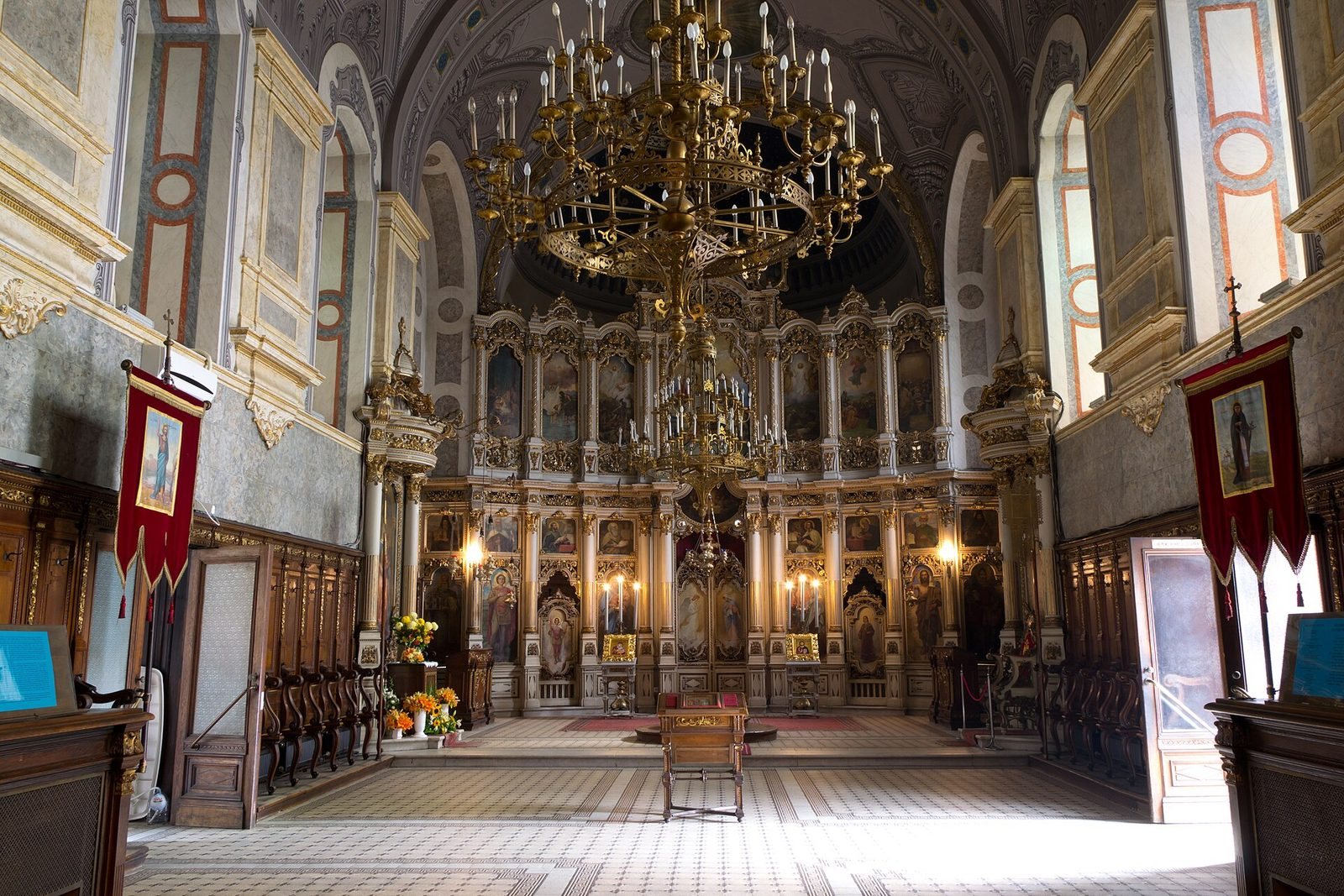
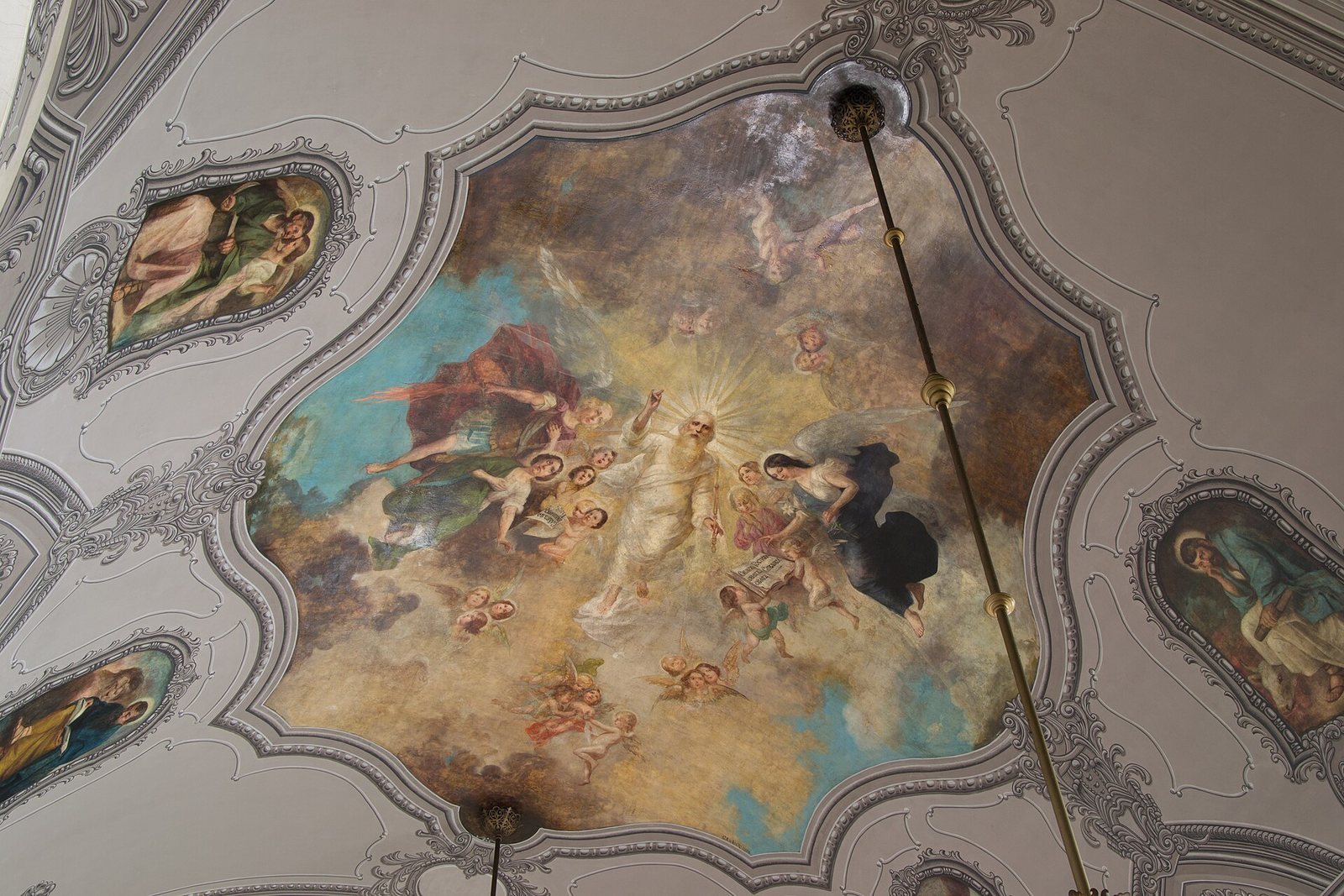
Installed in 1905, the stained-glass windows were made by Budapest artist Imre Zseller. They show saints and historical figures with their traditional attributes, set among abundant Baroque-style ornament. In 1904, Stevan Aleksić painted the church’s curved ceiling surfaces and the upper part of the western wall above the choir.
Iconostasis and icons
The present iconostasis, a screen of icons separating the sanctuary from the main church, has a carved structure made by the Budapest workshop of Retej and Benedek. Between 1903 and 1905, Paja Jovanović painted its 33 icons, wall ornamentation, and two large throne icons depicting Saint Sava and the Virgin Mary. The throne paintings are regarded as among his finest works for churches. An earlier iconostasis, painted for the cathedral by Jovan Klajić, was later transferred to the Church of the Holy Spirit in Čenej.
Paintings above the singers’ stands
Paintings above the two singers’ stands depict the crowning of Stefan the First-Crowned, Serbia’s first crowned king, and Saint Sava, a Serbian Orthodox leader and brother of Vukan and Stefan, reconciling the two brothers.