St Bartholomew-the-Less: A Hospital Church in the City of London
Site at a Glance
- Rating
- 4.6
- Popularity
- Medium
- Country
- United Kingdom
- Primary era
- Medieval
- Eras represented
- Medieval, Modern
- Civilizations
- British, English
- Site type
- Religious
- Remains
- Church
On this page7 sections
History
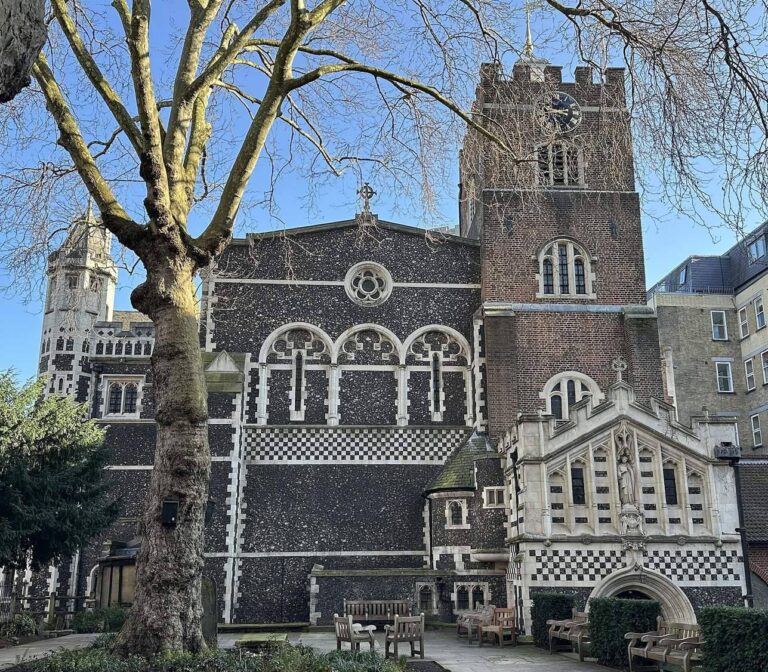
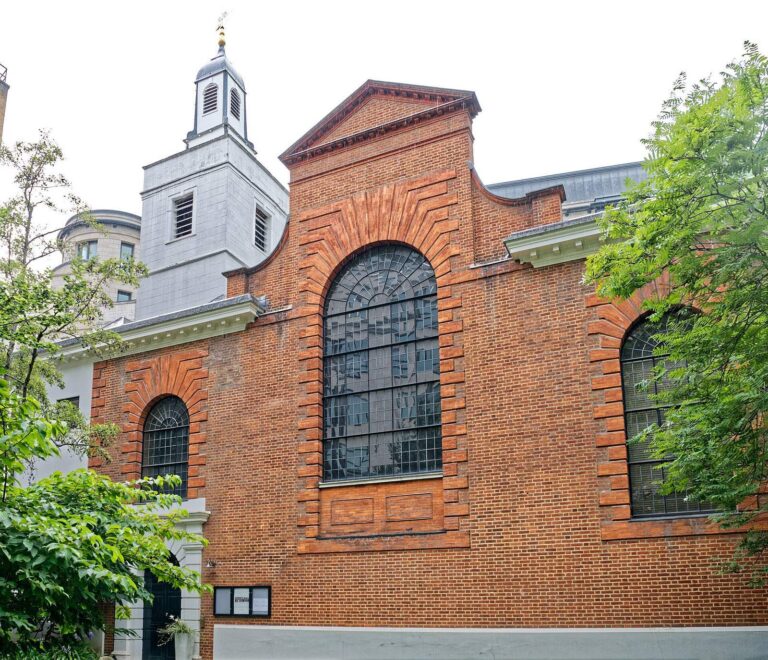
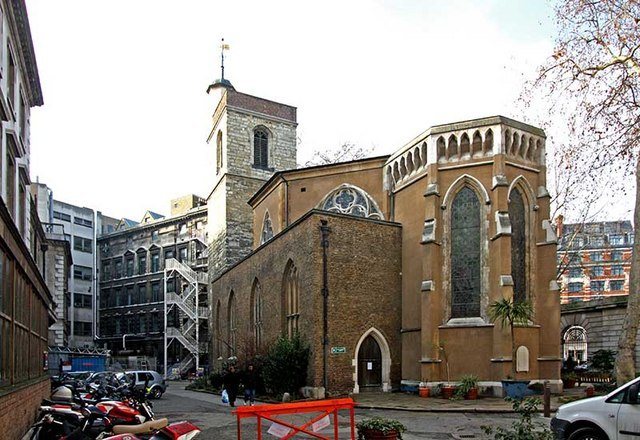
St Bartholomew-the-Less is a church within St Bartholomew’s Hospital in the City of London, United Kingdom, and the latest church in a succession reaching back to a chapel founded nearby in 1123. The Chapel of the Holy Cross moved to its present site in 1184. Rahere, an English courtier who became an Augustinian canon and religious founder, is identified as the church’s founder. The chapel was established around the time of the priory, a religious house governed by a prior, whose church is now St Bartholomew the Great. Both churches are dedicated to Bartholomew the Apostle; “the Less” distinguishes this church from its larger neighbour. Its architecture includes English Gothic and Gothic Revival forms.
From Catholic chapel to parish church
Until 1534, the church was Roman Catholic and associated with the Canons Regular of Saint Augustine, clergy who lived in a religious community under Augustine’s rule. Under Henry VIII, whose break with Rome and dissolution of religious institutions transformed England’s religious establishment, the hospital was dissolved and later refounded by the king. The former Catholic chapel became an Anglican parish church for people living within the hospital precincts. It is now a Church of England church in the Anglo-Catholic tradition, which retains elements of historic Catholic worship and practice.
The church is also associated with the Haberdashers’ Company, whose nearby premises are at Haberdashers’ Hall in West Smithfield.
War damage and protection
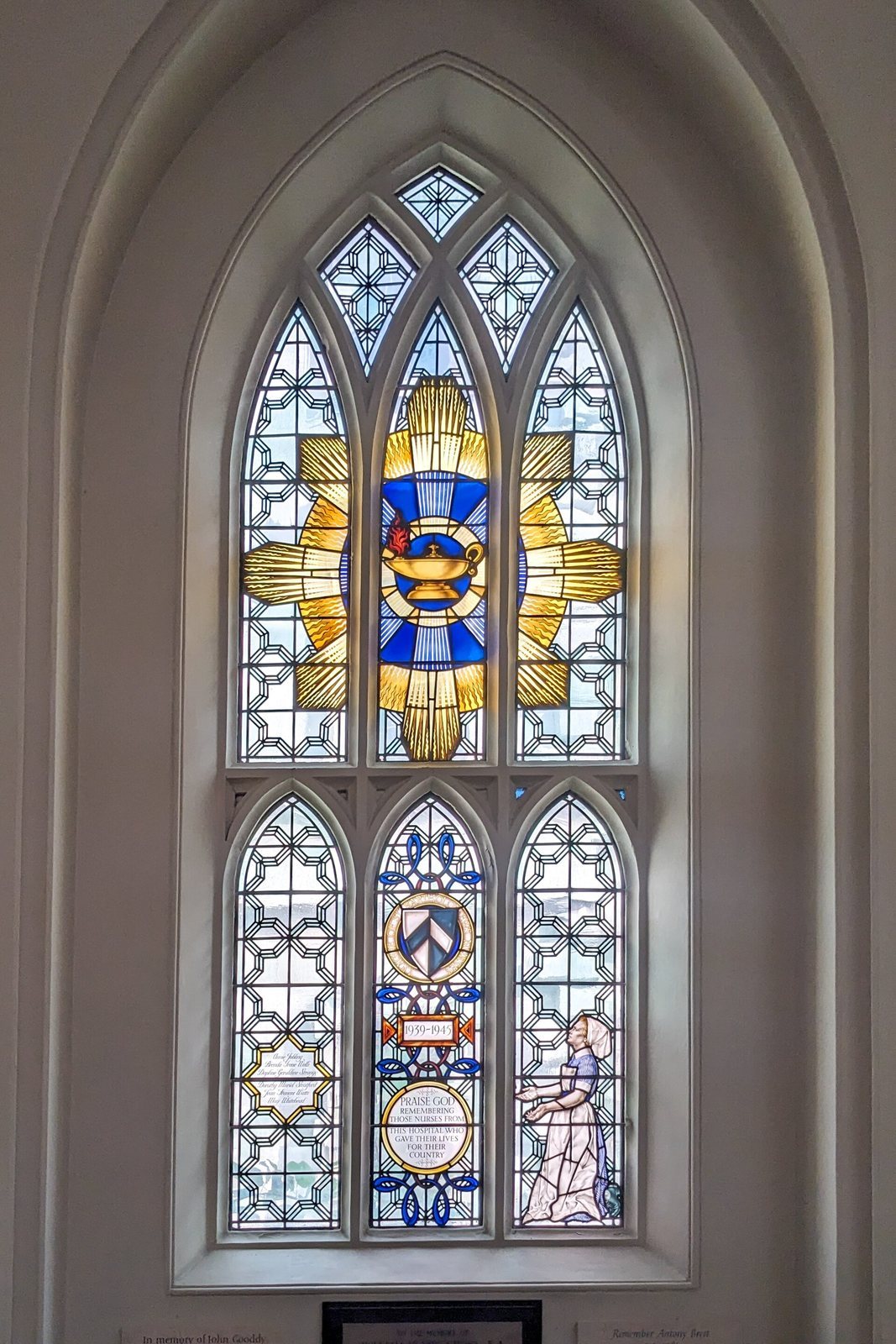
The church sustained bomb damage during the Blitz, the German bombing campaign against Britain in 1940–41. The damage was repaired, and the church had reopened by 1951. It was designated a Grade II* listed building, a category for buildings of particular importance, on 4 January 1950.
Church of the united benefice
On 1 June 2015, St Bartholomew-the-Less became a chapel of ease in the parish of St Bartholomew the Great. A chapel of ease serves worshippers but is not the principal parish church. Before the change, the Rector of St Bartholomew the Great also served as Priest-in-Charge of the Less, which had its own parochial church council and churchwardens. The two parishes were dissolved and replaced by the united benefice of Great St Bartholomew, placing both churches under one incumbent. Their former parish areas now form one boundary, with a single council and group of churchwardens responsible for both buildings. St Bartholomew the Great is the parish church, and the Less is its chapel of ease.
Remains
The church preserves the medieval chapel’s outer walls around an interior arranged as an octagon within a square plan. Its surviving fabric brings the medieval structure together with later rebuilding.
Medieval exterior and bells
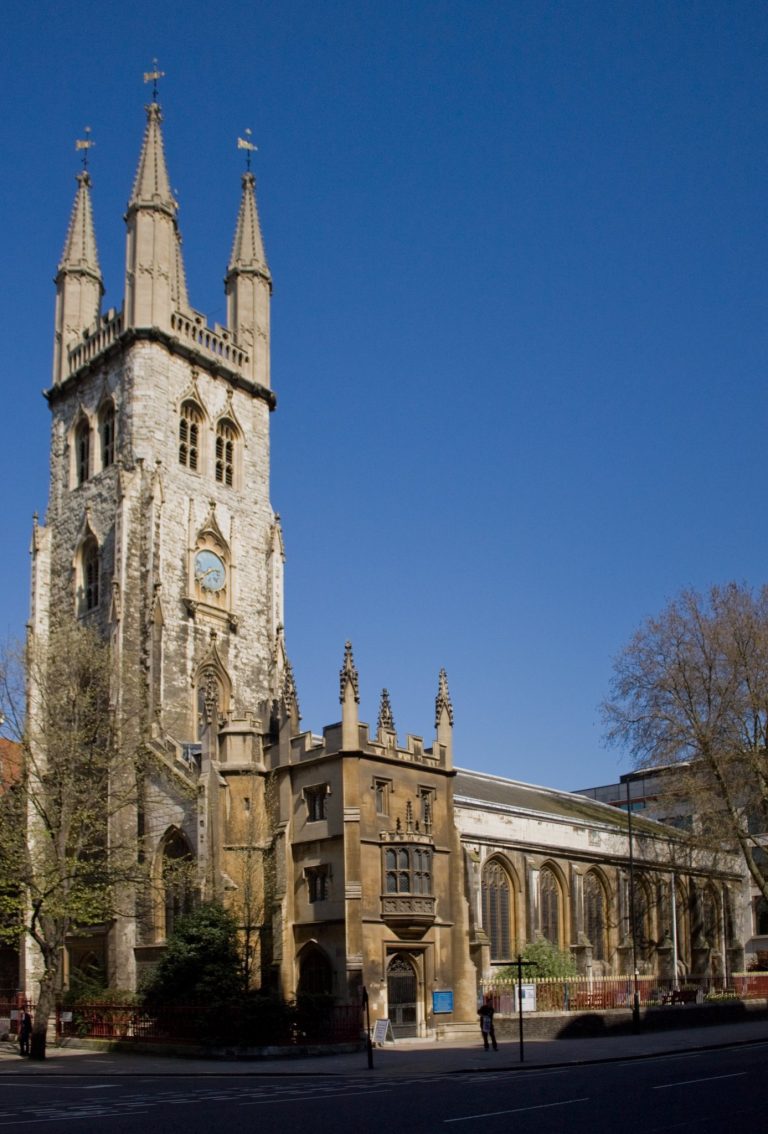
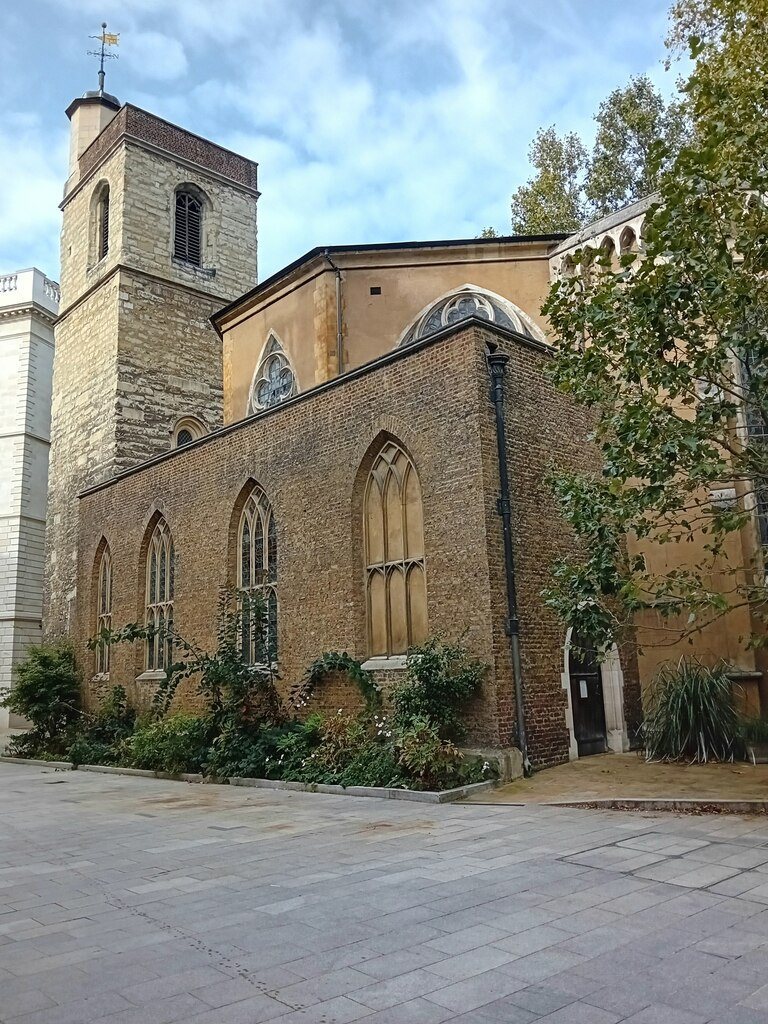
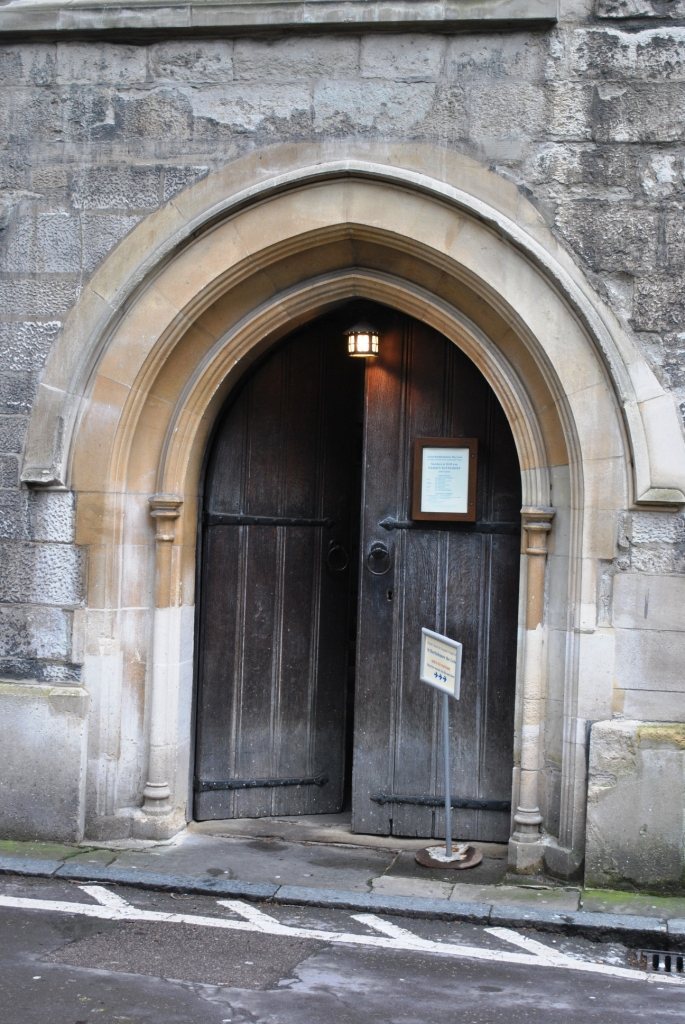
The tower and west façade date from the fifteenth century. Of the church’s three bells, two date from 1380 and 1420. They hang in an original medieval bell frame considered the oldest in the City of London.
Octagonal interior
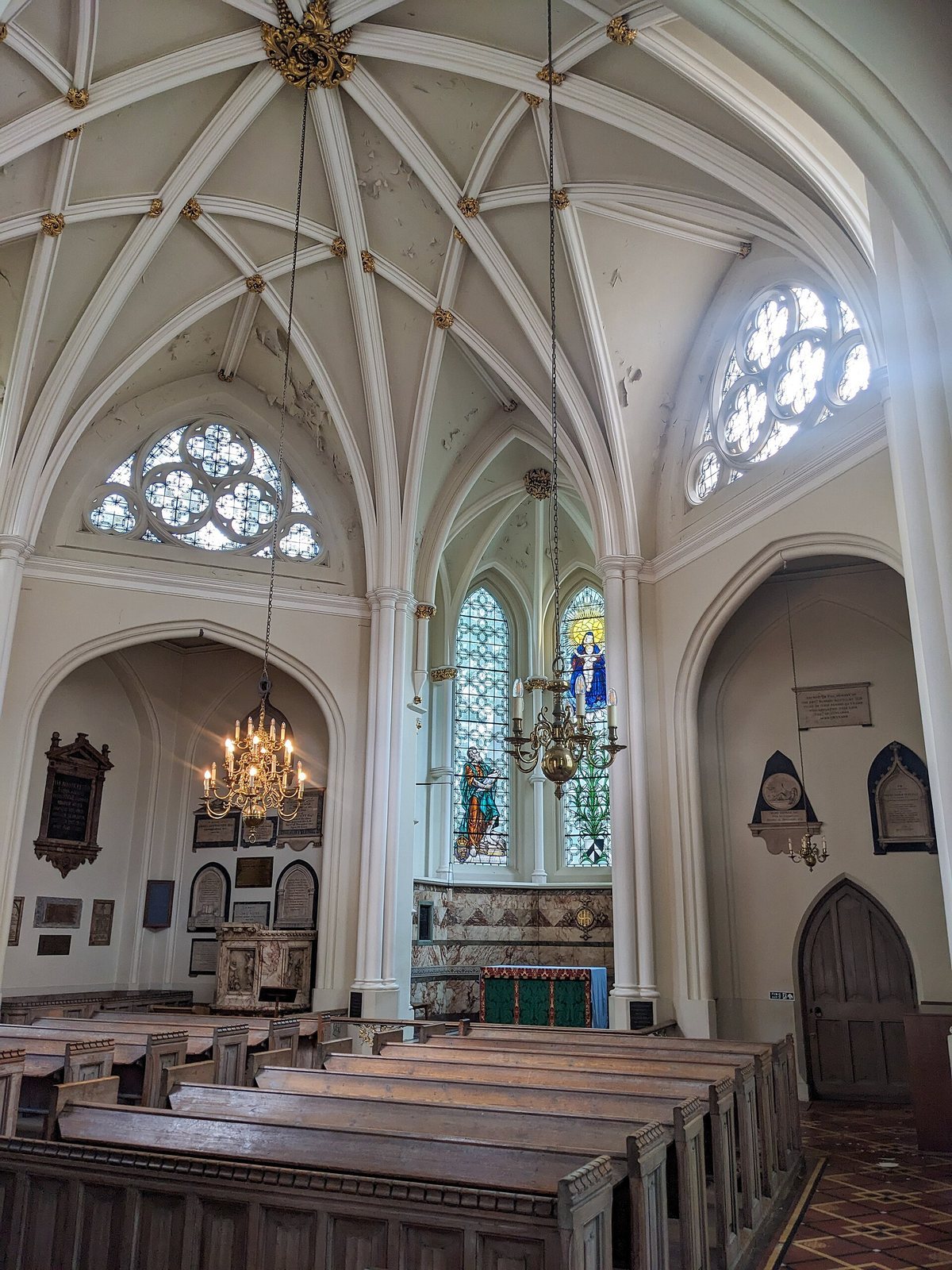
In 1793, George Dance the Younger designed an octagonal interior within the medieval chapel’s outer walls. Its timber construction soon suffered from dry rot. In 1823, under Thomas Hardwick’s supervision, it was replaced by a stone construction with an iron ceiling, and the architectural detailing was changed. The interior’s octagonal Gothic vault, an arched ceiling, fits within the square plan through open triangular chapels at the corners. High lunette windows, which are semicircular, and a clerestory, a high section of windows above lower walls, bring light into the interior.