Berwick Town Hall: A Neoclassical Civic Building in Berwick-upon-Tweed
Site at a Glance
- Rating
- 4.5
- Popularity
- Medium
- Country
- United Kingdom
- Primary era
- Early Modern
- Eras represented
- Early Modern, Modern
- Civilizations
- British
- Site type
- Civic
- Remains
- Town Hall
On this page9 sections
History
Berwick Town Hall is a neoclassical municipal building in Berwick-upon-Tweed, United Kingdom, opened in 1760. It replaced an earlier civic building on the same site and became a centre of local government and justice.
The tolbooth and the rising of 1715
The town hall’s predecessor was a tolbooth, a historic civic building used for municipal and judicial purposes and sometimes as a prison. The tolbooth dated from the late thirteenth century, was rebuilt in the late sixteenth century, and underwent another rebuilding in 1669.
In October 1715, during the Jacobite rising, an attempt to restore the Stuart dynasty to the British throne, the mariner Lancelot Errington and his nephew were held in the tolbooth after Errington captured Lindisfarne. They escaped through a tunnel and were later pardoned.
Construction and municipal use
Work on the new hall began at its western end in 1754 under local builder Joseph Dodds. Samuel and John Worrell designed the building in the neoclassical style, and its eastern end was completed before it opened. The hall housed municipal administration and the Court of quarter sessions, periodic courts that handled local judicial and administrative matters.
Preservation and continued civic use
After the Second World War, the borough council considered demolishing the hall. Architect Sir Albert Richardson led a campaign against this, and the building was extensively refurbished instead. Berwick-upon-Tweed Borough Council used it as its headquarters and meeting place until the council was abolished in April 2009. It subsequently became the meeting place of Berwick-upon-Tweed Town Council. The building is Grade I listed, with its designation dated 1 August 1952.
Remains
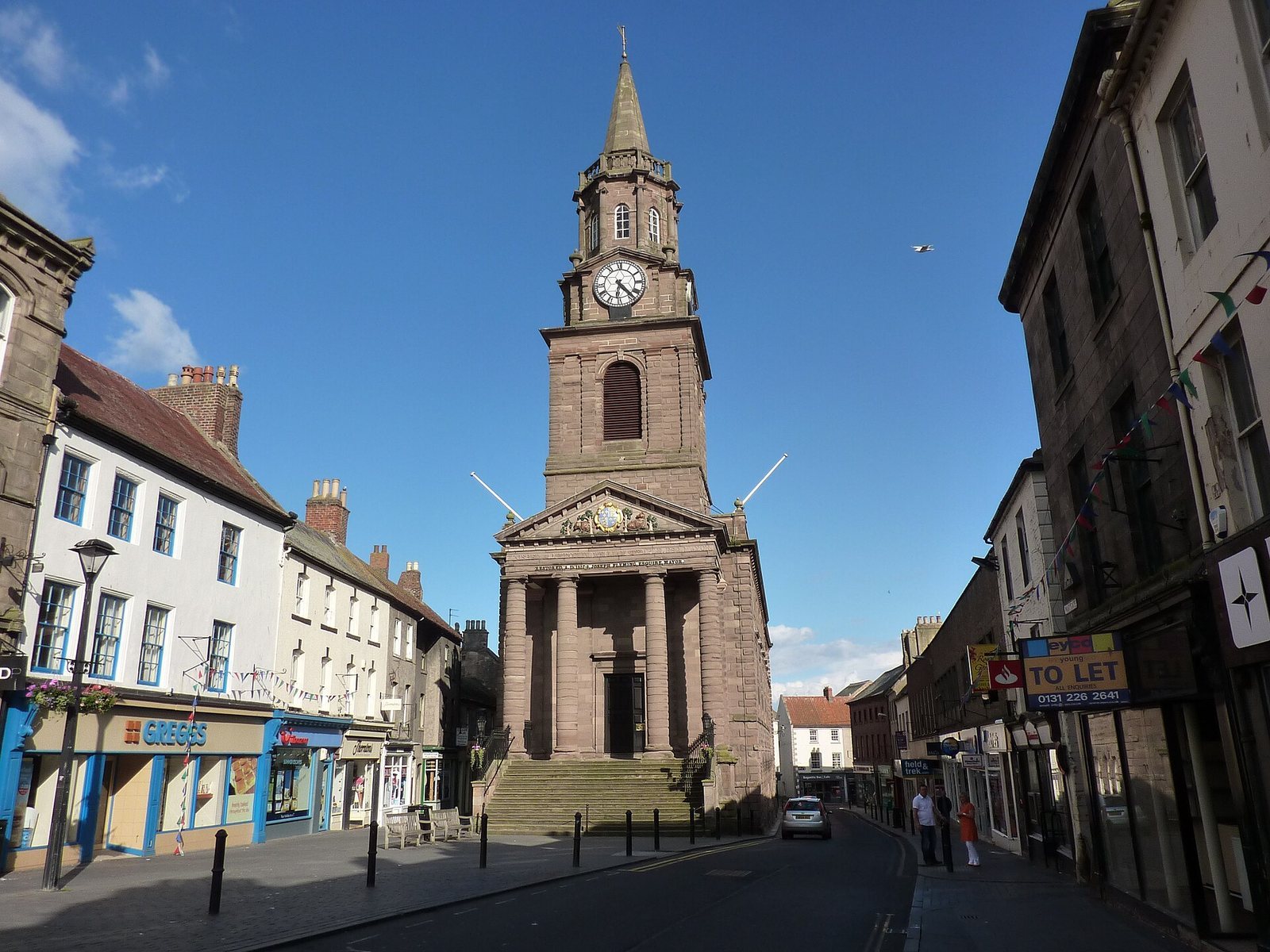
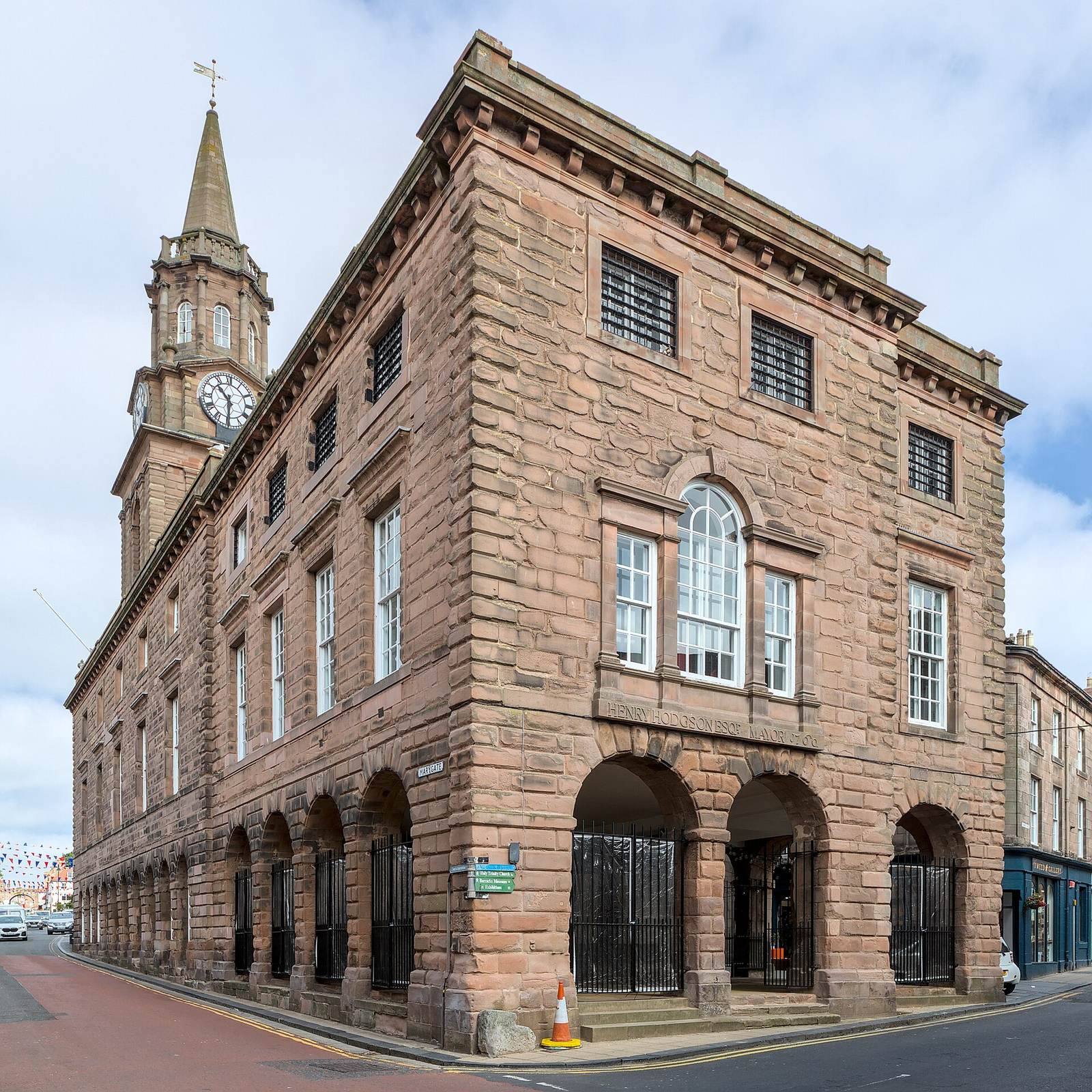
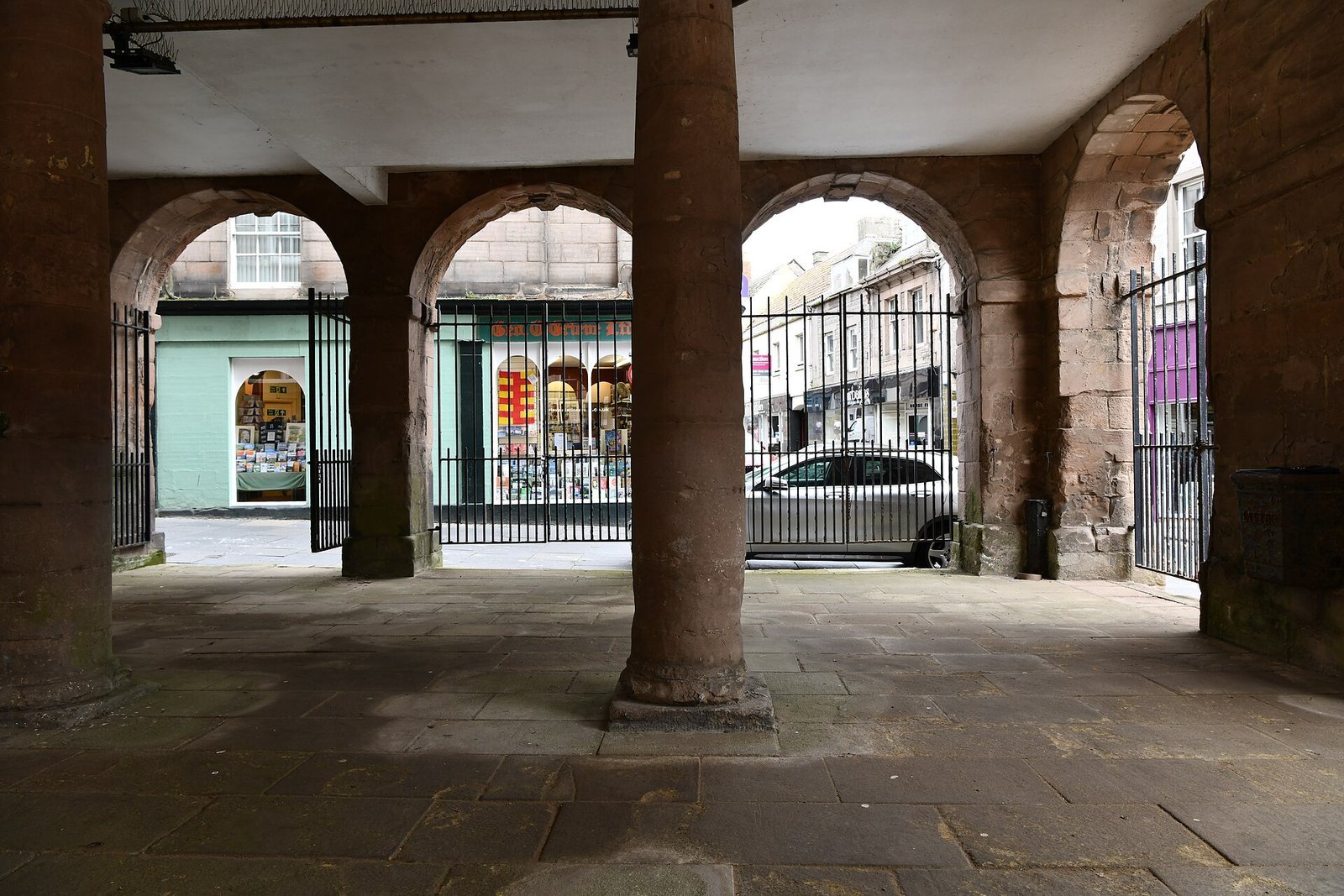
The neoclassical hall faces west along Marygate, with a symmetrical frontage centred on its entrance and tower. Its principal civic rooms are on the first floor, above a basement level; an open area lies beneath the eastern end.
Exterior
West frontage
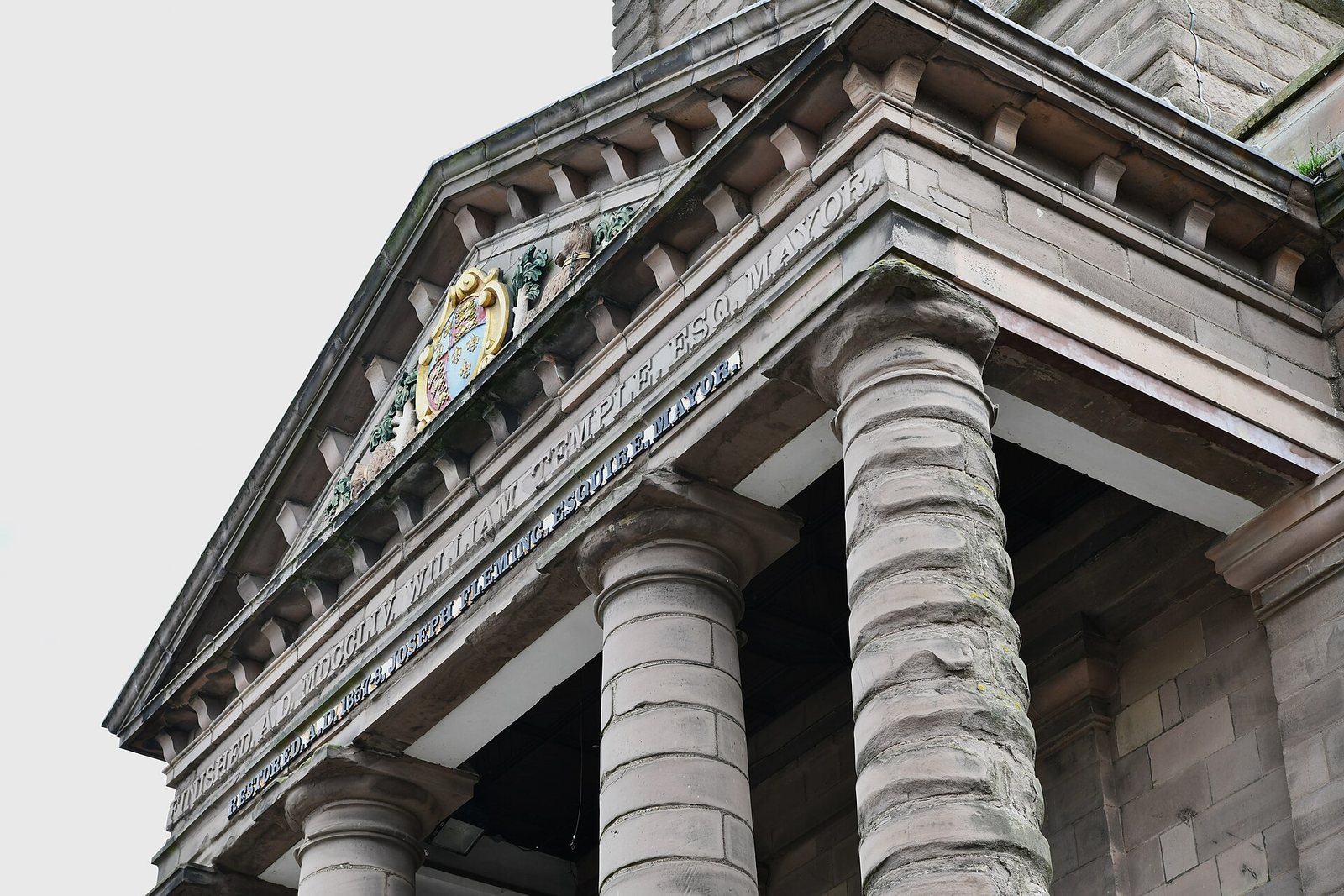
Steps lead to a four-column portico, a roofed entrance supported by columns. The columns follow the Tuscan order, a plain form of classical design. Above them, a frieze, or horizontal decorative band, records the building’s completion in 1754 and names William Temple as mayor. A pediment, the triangular upper section, displays the borough’s coat of arms. Architectural historian Nikolaus Pevsner described the portico as Vanbrughian, referring to its bold, monumental character associated with the architect Sir John Vanbrugh.
Tower, clock and bells
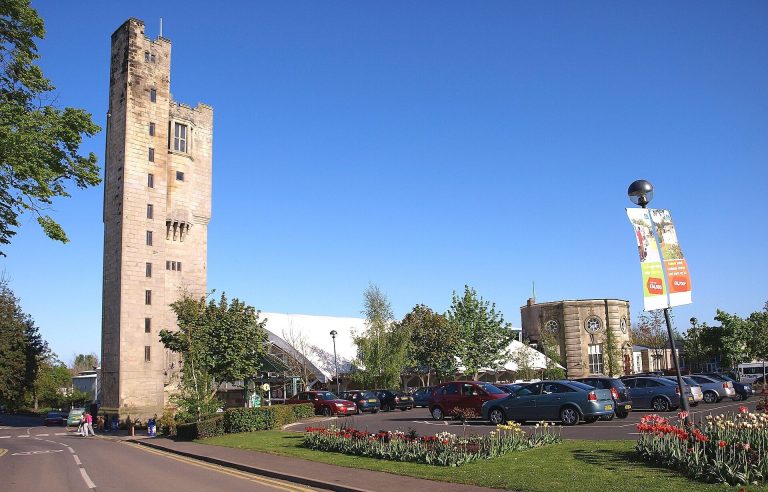
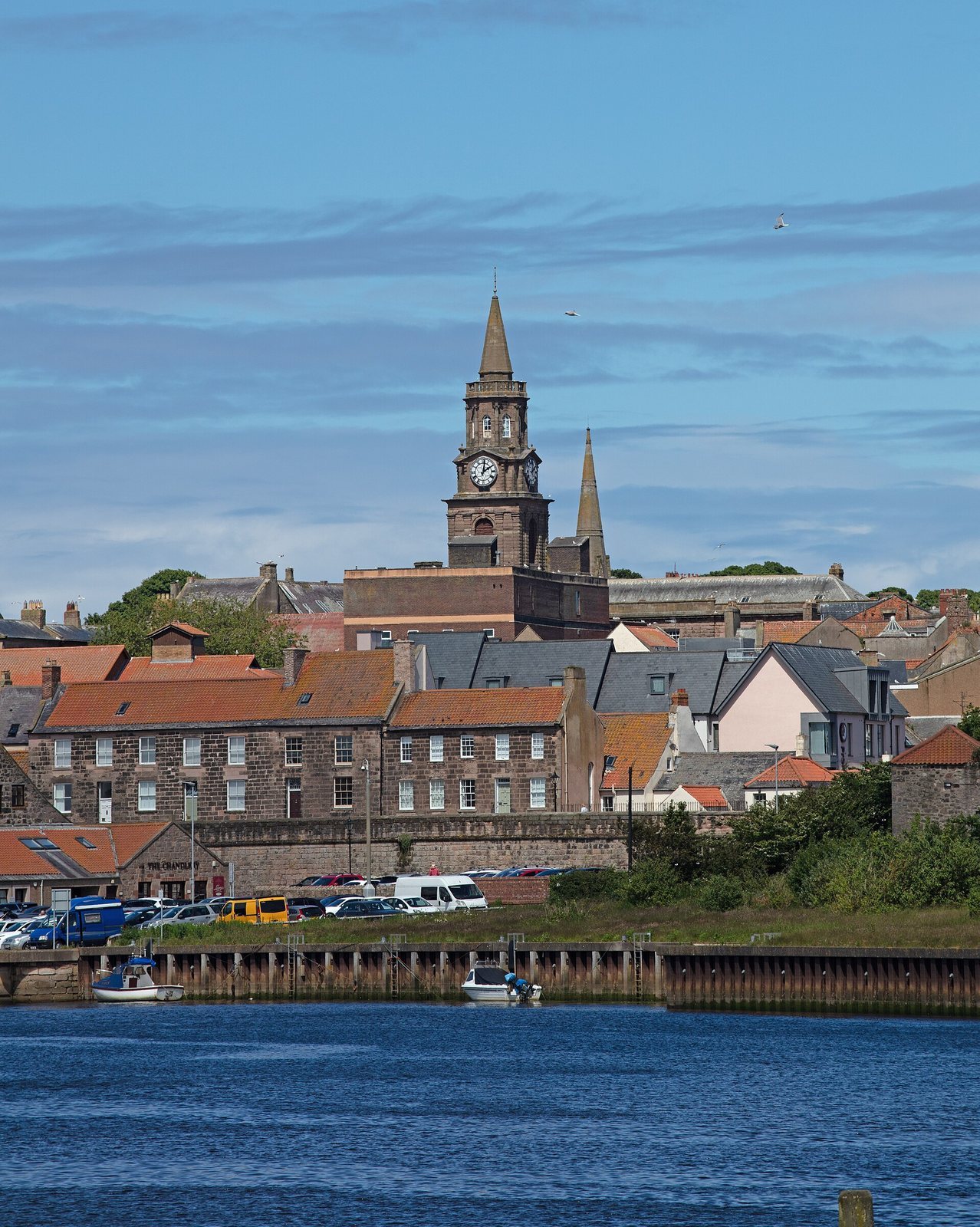
A 150-foot (46-metre) belfry and clock tower rises above the portico and carries a weather vane. Its design resembles that of St Martin-in-the-Fields in London. In 1754, bells from the former tolbooth were recast into a ring of eight by Thomas Lister and Thomas Rach of London, and installed with a clock that chimed the quarters on three bells. The tower has a separate curfew bell as well. Lester and Pack of the Whitechapel Bell Foundry cast the tenor, third, fourth and treble bells in 1754, then the fifth and sixth in 1759. Charles Carr of Smethwick cast the second and curfew bells in 1894, and Mears and Stainbank of the Whitechapel Bell Foundry cast the seventh in 1901. Charles Potts supplied a new tower clock in 1947; it plays the Westminster Quarters, a sequence of chimes associated with the clock at the Palace of Westminster.
Interior
The first-floor assembly hall has a Venetian window at its eastern end, a three-part window with a larger central opening and narrower side openings. The same floor contains a council chamber, a committee room and offices. Prison cells occupied the top floor, while shops took up much of the basement. A weekly egg-and-butter market used the open space below the hall’s eastern end. The interior also contains a portrait of Robert Home, a town clerk in the mid-nineteenth century, painted by Scottish portraitist Daniel Macnee.