Ponte Valentino: A Roman Bridge on the Via Traiana
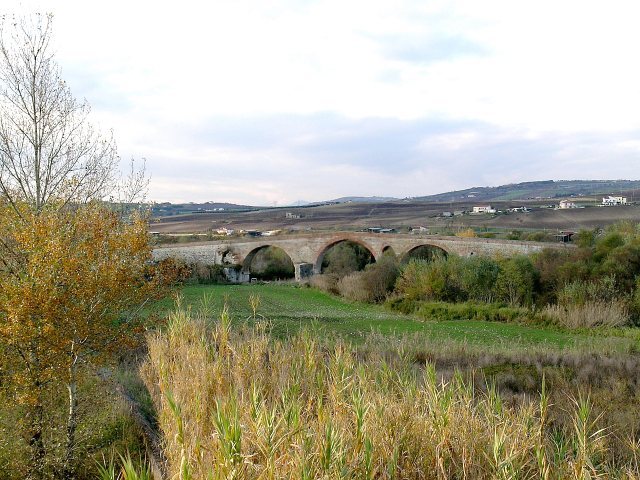
Site at a Glance
- Rating
- 4
- Popularity
- Very Low
- Country
- Italy
- Primary era
- Medieval
- Eras represented
- Classical, Medieval
- Civilizations
- Roman
- Site type
- Infrastructure
- Remains
- Bridge
On this page8 sections
History
Ponte Valentino is a Roman-origin bridge near Benevento, Italy, that carried the Via Traiana across the Calore River shortly before it joined the Tammaro. The road was an imperial route associated with Emperor Trajan (AD 98-117), and the bridge is linked to its construction in the early second century. Surviving Roman masonry suggests the work may have renovated an older bridge, possibly dating to the Augustan period, the rule of Rome’s first emperor, Augustus (27 BC-AD 14), rather than replaced it with a new structure.
The church of Saint Valentine
An eighth-century church dedicated to Saint Valentine, an early Christian martyr, stood near the bridge. It appears in an act of Romuald II, the Lombard duke of Benevento, in 723, and is mentioned again in 745 and 774. An important market was held there. The bridge probably took its name from the church, and medieval chronicles by Falcone Beneventano and Pietro Diacono also call it the Bridge of Saint Valentine. The alternative suggestion that Flavius Valens, a fourth-century Roman emperor, built or rebuilt the bridge is considered unlikely.
Rebuilding and later history
The bridge was rebuilt repeatedly, and its overall appearance is attributed to the medieval period. By the late eighteenth century, the Italian historian and antiquarian Lorenzo Giustiniani described it as a ruin. It remained part of the provincial road network until structural failures in autumn 1916. In 1917, the central arch and the arch beside the right bank collapsed; both were rebuilt to match their previous form.
Ponte Valentino forms part of the UNESCO World Heritage property Appian Way: Queen of Roads, in the segment known as the Trajanic Appian Way from Beneventum to Aequum Tuticum.
Remains
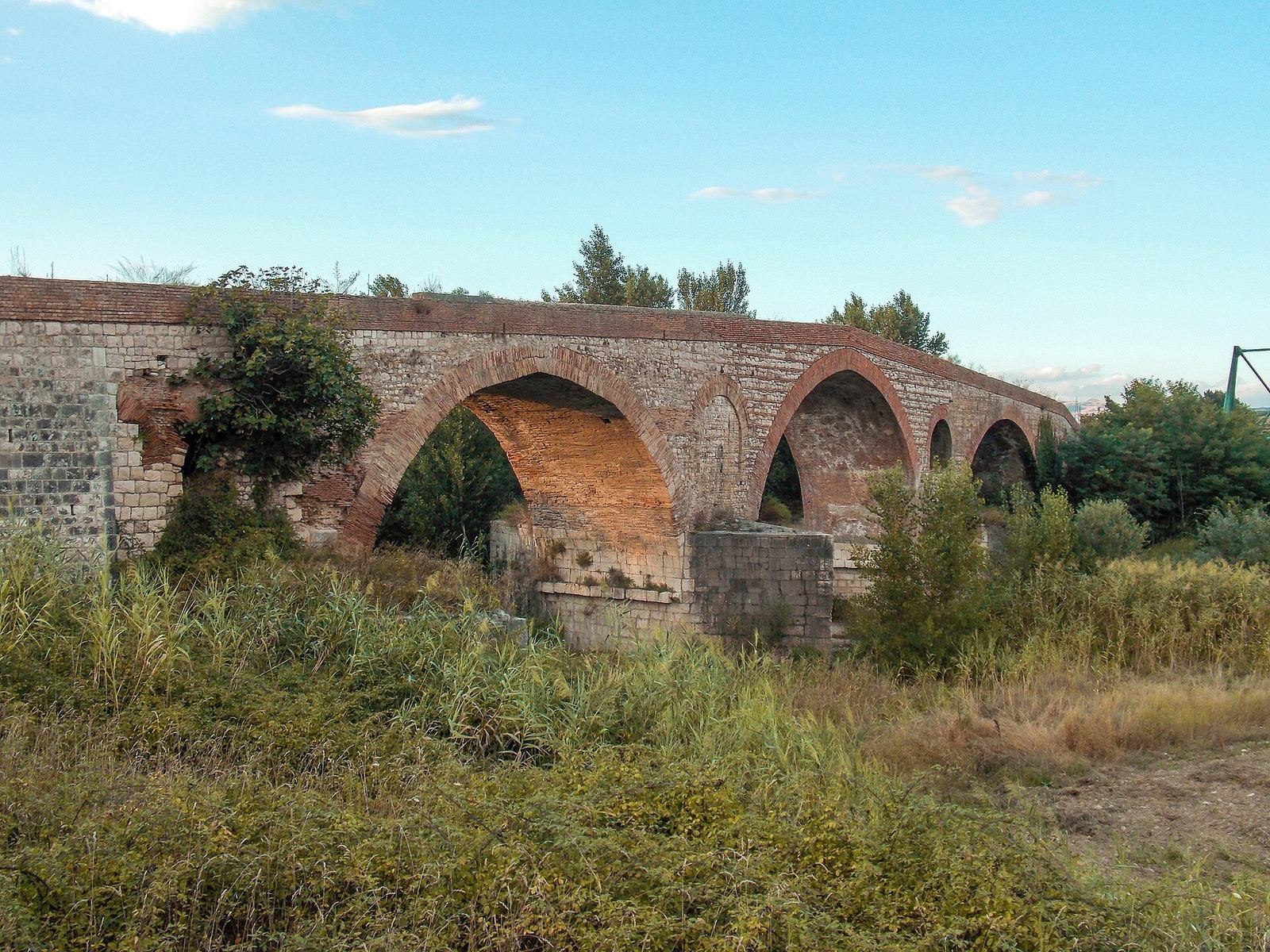
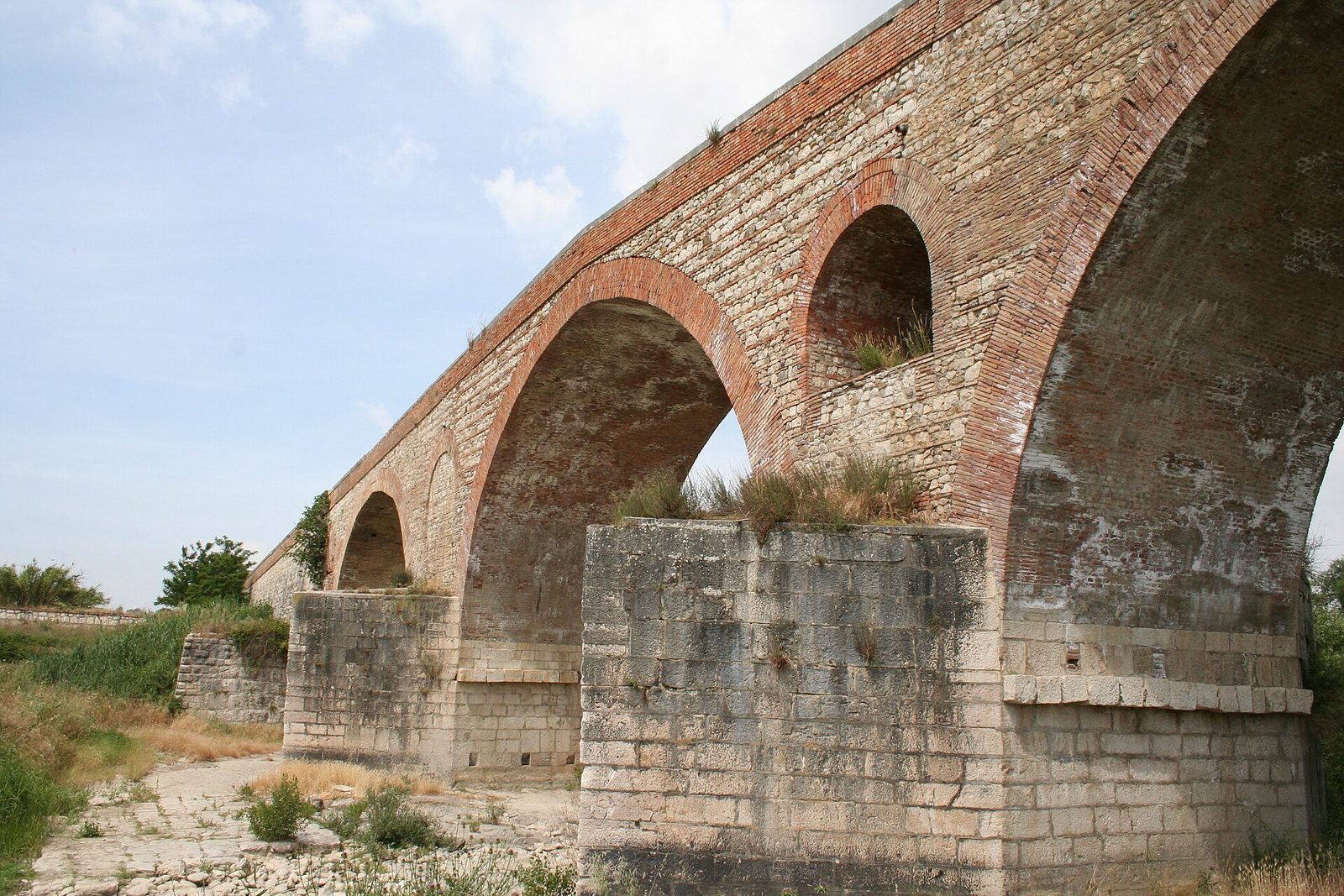
The bridge is no longer in use, and the Calore, since diverted, now flows beside it. Its surviving structure has a humpback profile and three semicircular arches. It measures about 80 metres from bank to bank, with a roadway roughly 6.5 metres wide. The central arch spans 18 metres, while each of the other two spans 16 metres.
Bridge form and construction
The arches are brick, set between two piers faced with squared limestone blocks. Each pier has triangular projections on both sides to divide the water around it. Two openings above the piers reduce the weight of the masonry above; the opening nearest the left bank is blocked. Limestone laid in courses with brick forms the masonry above the arches, while the parapets are entirely brick.
Abutments and inner structure
Before the 1916 damage, the facing of the abutments included large, roughly squared blocks, except on the upstream side of the right-bank abutment. Behind the facing lay another masonry layer and then an earth core. Some of these remains can still be made out.
Left-bank pier and arch platform
A further pier near the left bank, built of smaller blocks and marked by its water-dividing projections, is also attributed to the Roman period. The limestone-slab platform at the base of the arches is likewise considered Roman.
Inscription of Trajan
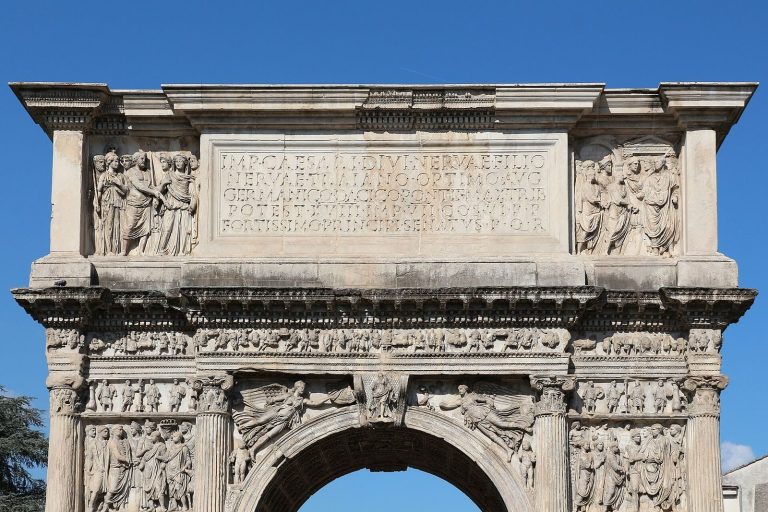
In 1985, a marble slab was found in the Calore riverbed, 60 metres downstream from the bridge. Measuring 162 by 133 centimetres, it is the largest of six identified celebratory inscriptions for Trajan along the Via Traiana, and the only one made of marble. Intended to adorn bridges along the road, the inscriptions praised imperial generosity. The slab’s lettering grows smaller across its surface, and its text gives Trajan’s imperial titles and says that he paid for the road and bridges from ancient Beneventum (Benevento) to Brundisium (Brindisi). Its exceptional size may relate to Ponte Valentino’s position as the route’s first large bridge after the much smaller Ponticello. The slab is now displayed at the Roman Theatre of Benevento.