Church of the Assumption of Mary in Irrsdorf: A Gothic Roman Catholic Church
Site at a Glance
- Rating
- 4.8
- Popularity
- Low
- Country
- Austria
- Primary era
- Medieval
- Eras represented
- Medieval, Early Modern, Modern
- Civilizations
- Holy Roman Empire, Prince-Archbishopric of Salzburg
- Site type
- Religious
- Remains
- Church
On this page11 sections
History
Early church and the 1408 building
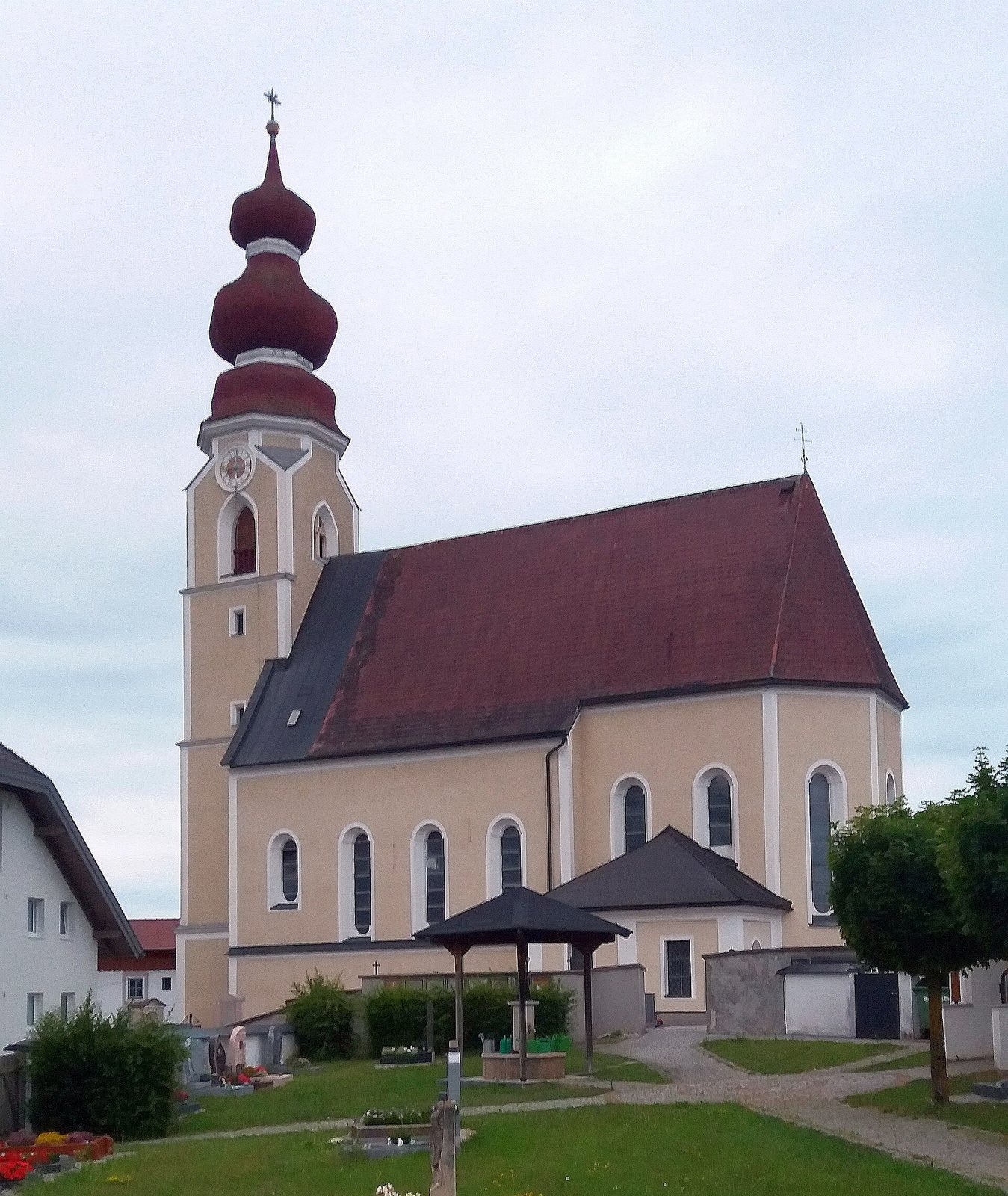
The Church of the Assumption of Mary in Irrsdorf is a Roman Catholic church in Austria, built in the Gothic style under Perchtold, parish priest of Straßwalchen, and consecrated on 18 April 1408. Irrsdorf, formerly known as Ursisdorf, appears in records from the eighth century, during the tenure of Oportinus, head of Mondsee Abbey. A church is said to have stood there at that time.
The church is a dependent church associated with the parish of Straßwalchen. It belongs to the Köstendorf deanery, an administrative grouping of parishes, within the Archdiocese of Salzburg. Its patronal feast is the Assumption of Mary, the Catholic belief that Mary was taken body and soul into heaven, celebrated on 15 August.
Later changes
The church was refurnished between 1684 and 1714. Renovations followed in 1928 and from 1955 to 1957. Until around the turn of the twentieth century, the building stood largely apart from Irrsdorf’s small farming settlement; by the 1950s, it was at the settlement’s edge.
Remains
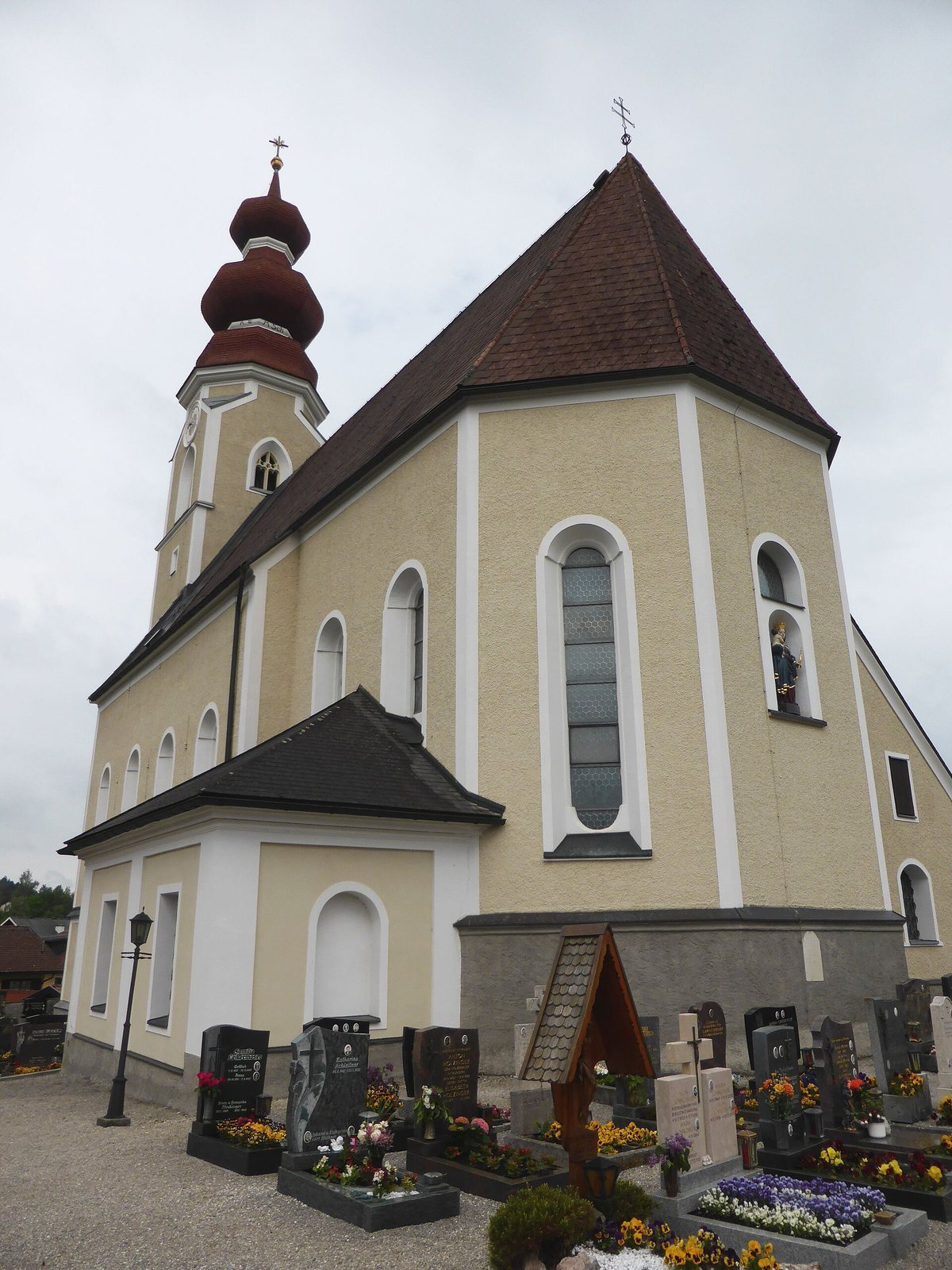
The church is a tall, single-nave Gothic building, with one main worship space and a narrower choir set back from the nave’s side walls. Its tower dates to 1749. A wall encloses the cemetery around the church. At the cemetery entrance on the southeast stands a shrine containing a Pietà, a depiction of Mary mourning or holding the dead Christ. Another shrine, west of the church, is built into the cemetery wall as a chapel-like niche and serves as the Herzog burial place.
Interior and furnishings
Carved doors
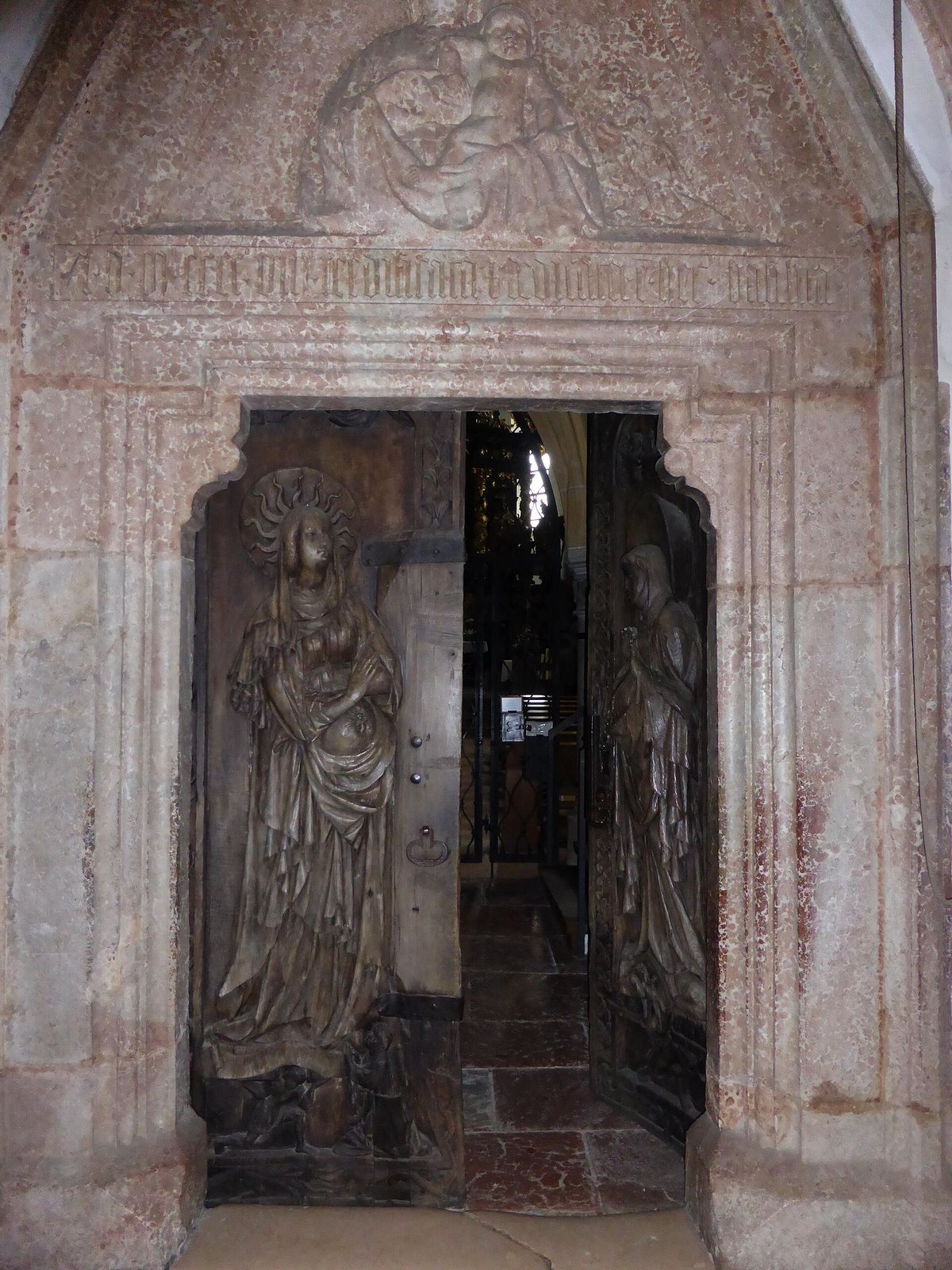
The carved door leaves date to 1408. They depict the pregnant Virgin Mary and Saint Elizabeth, the mother of John the Baptist, with their bellies exposed.
Marian altar
A Marian altar made around 1520 once formed part of the church’s furnishings. Four relief panels from the side facing worshippers on Sundays survive and are now held by the Salzburg Museum. The panels gave an unidentified artist the conventional art-historical name Master of Irrsdorf.
High altar and other Baroque furnishings
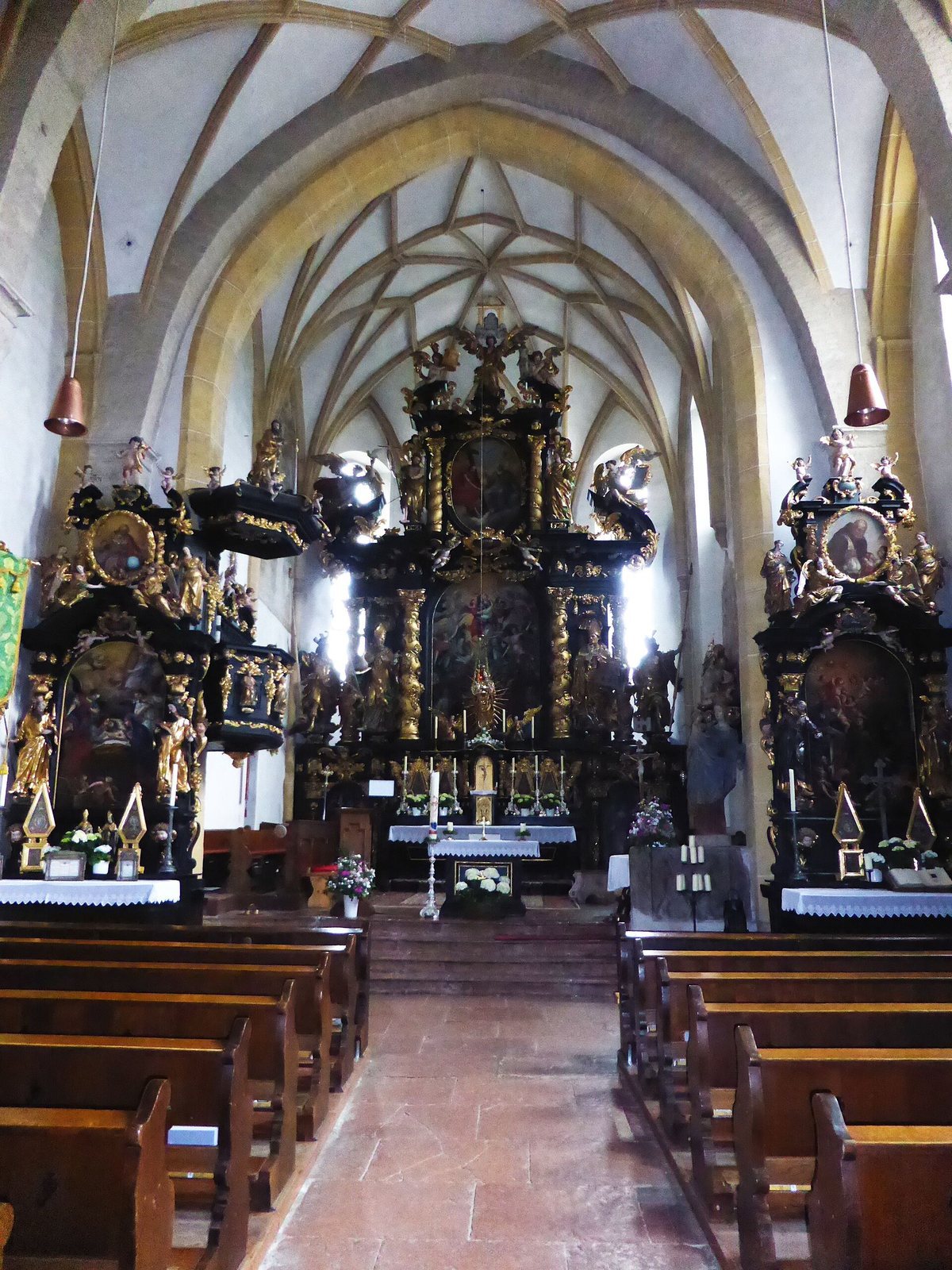
The high altar was made between 1682 and 1684. Meinrad Guggenbichler carved its figures and ornament, Martin Mayr of Mondsee made its wooden framework, Matthias Wichelhamer painted its finish, and Johann Friedrich Pereth created its two altar paintings. Guggenbichler also made much of the church’s other furnishings, including the side altars in 1689.
Altar in St Leonard’s Chapel
The altar in St Leonard’s Chapel dates to 1714. Saint Leonard was a Frankish hermit venerated as a Christian saint.
Organ
The Johann Pirchner firm of Steinach am Brenner built the organ in 1988. Two folding doors can cover its visible front, giving it the appearance of a winged altarpiece.
Roman tomb relief
A Roman tomb relief depicting a cavalryman is preserved inside the church.