Cannae: An Ancient Settlement and Battlefield in Italy
Site at a Glance
- Popularity
- Very High
- Country
- Italy
- Primary era
- Classical
- Eras represented
- Stone Age, Bronze Age, Iron Age, Classical, Medieval
- Civilizations
- Byzantine, Roman
- Site type
- Settlement
- Remains
- Town
On this page15 sections
History
Cannae, now identified with Canne della Battaglia, was an ancient settlement near Barletta, Italy. It developed from prehistoric occupation into a Roman river-trading settlement and later a medieval bishopric. Its name is best known for the battle fought there in 216 BC, when Hannibal defeated a larger Roman army.
Early settlement and Roman rule
People lived in the Ofanto valley from the late Stone Age. Settlement appears to have been especially dense between about 5000 and 4000 BC, when the river supported fishing, hunting and cultivation. Bronze- and Iron-Age communities also occupied the area, including sites near Canne Fontanella and San Mercurio hill. A village arose at Cannae between the sixth and fourth centuries BC.
Under Rome, Cannae became a vicus, or small settlement, and a river trading post serving nearby Canusium, probably under that city’s authority. Pliny the Elder included it among Apulia’s municipia, towns incorporated into Rome’s civic system. Its residents were called the Cannenses. Archaeological finds suggest that trade may have continued as late as the fourth-century reign of Emperor Julian.
The Battle of Cannae
The battle took place on 2 August 216 BC during the Second Punic War, the conflict between Rome and Carthage in which Hannibal led Carthaginian forces in Italy. The Roman commanders were the consuls Lucius Aemilius Paullus and Gaius Terentius Varro. Hannibal won by using a double envelopment, an attack that closes in on both flanks of an opposing army. Estimated losses were about 70,000 Romans and 6,000 Carthaginians; Paullus was killed.
The settlement had been destroyed the previous year, but its fortress survived and held grain and other supplies. After wintering at Geronium, Hannibal captured Cannae in early summer and seized the stores. He occupied the fortress and camped nearby. Roman commanders, under orders to seek a decisive battle, first established a camp some distance away. Varro then brought the army closer, setting up a large camp south of the Ofanto and a smaller one downstream on the opposite bank.
On the day of battle, Varro crossed the river with the main force and joined the troops from the smaller camp. The Romans faced south. Hannibal also crossed the Ofanto and placed his left wing beside the river, opposite the Roman cavalry on the right. This arrangement has been used to support a reconstruction on the river’s northern bank. However, the Greek historian Polybius and the Roman historian Livy describe the Romans facing south and the Carthaginians north, with a southeast wind carrying dust toward the Romans. That orientation is difficult to reconcile with a northern-bank battlefield.
The precise location remains disputed. A northern-bank proposal places the fighting within a broad river bend, although the available ground there may have been too restricted. Another proposal locates the battlefield south of the river toward Canusium, where the plain is narrow between the hills of Cannae and Canusium. The ancient battle took place on a plain.
Later Roman and medieval phases
In 89 BC, during the Social War, a conflict over the rights and citizenship of Rome’s Italian allies, Roman general Cosconius fought Trebatius, leader of the Samnites, at Cannae. The settlement appears to have remained a fortress. After the fall of the Western Roman Empire, it suffered destruction during the invasions of the period. In 547, during the Gothic War, Ostrogothic troops under King Totila destroyed the town.
Cannae recovered gradually and gained importance after Muslim forces destroyed Canosa in 872. It then became a diocese, a territory administered by a bishop. On 1 October 1018, Norman forces hired by Apulian rebel leader Melo of Bari fought the Byzantines under governor Basilio Boioannes. The invading force included Lombards as well as Normans, and the Byzantines prevailed. Under Byzantine rule, the eastern continuation of the Roman Empire, Cannae experienced its greatest period of prosperity.
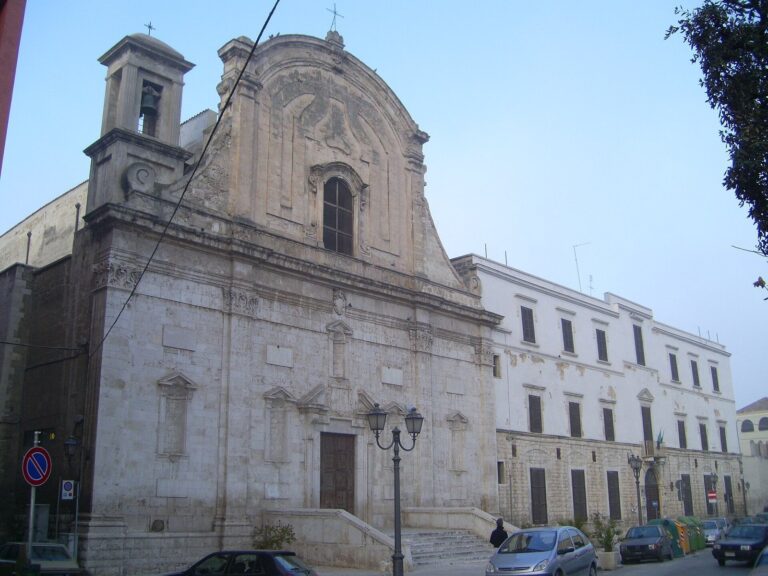
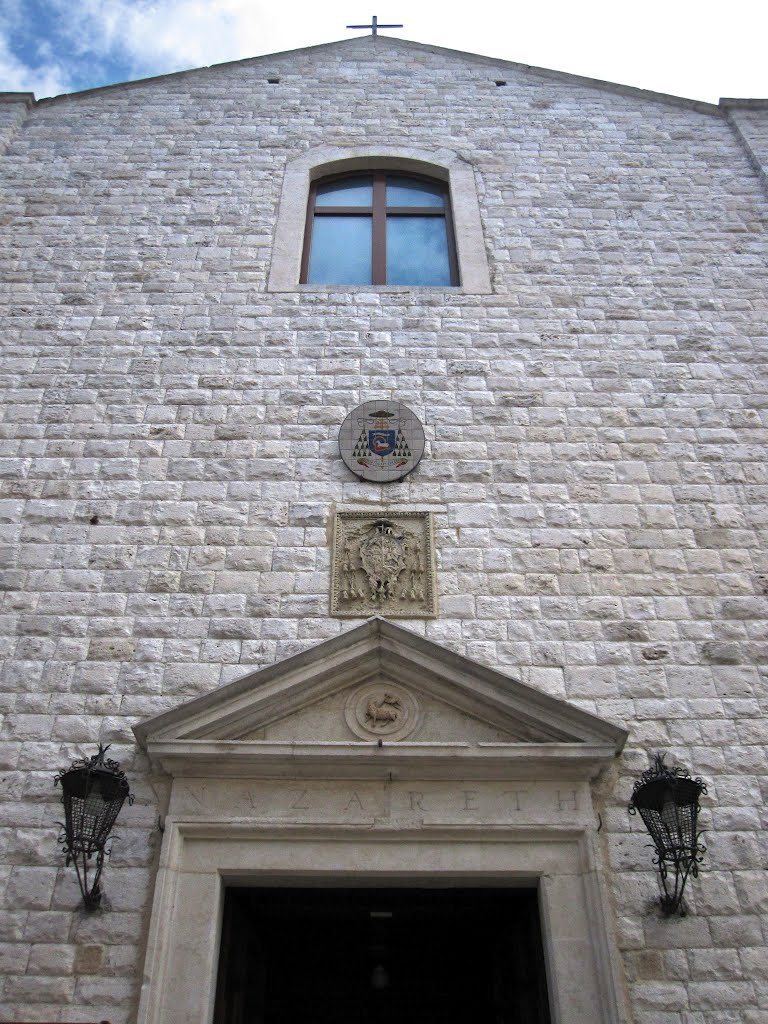
After Cannae came under Norman control, the Norman ruler Robert Guiscard destroyed it in 1083 in retaliation for a revolt led by his nephew, Baron Ermanno. The cathedral and bishop’s residence survived that destruction. The town did not recover: inhabitants gradually moved to nearby Barletta, and Cannae had ceased to exist as a settlement by 1276. In 1303 Charles II of Anjou annexed its territory, first to Canosa di Puglia and then to Barletta. People from Cannae settled in Barletta’s San Giacomo district, where an eleventh-century church stood. In 1456 the bishopric was joined to the see of Nazareth, whose bishops resided in Barletta, ending Cannae’s religious life. Its former diocese is now a Latin Catholic titular see, which preserves the title without a resident bishop.
Remains
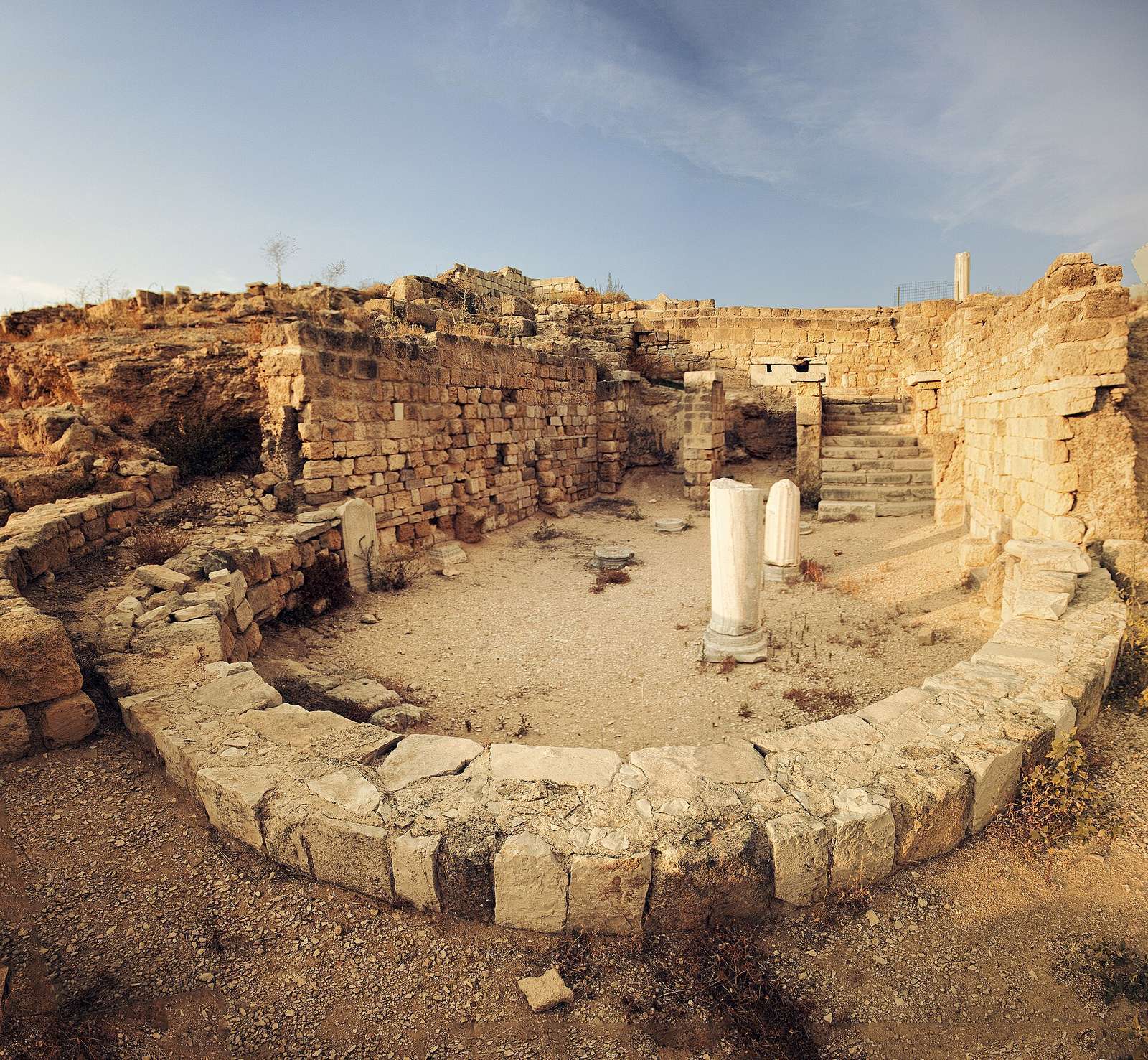
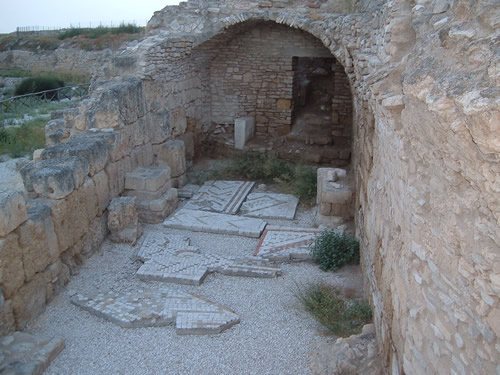
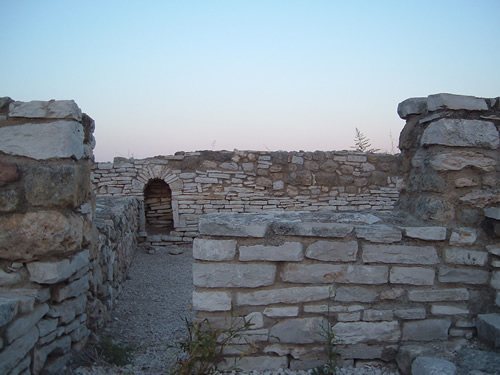
The archaeological site occupies Monte di Canne, the hill on the southern bank of the Ofanto. Its remains include prehistoric and early settlement traces, substantial parts of the Roman town, and ruins of the medieval town within the citadel. The ancient bridge Pons Cannarum and San Lazzaro hill lay between Cannae and the territory of Barletta.
Prehistoric and early settlement remains
Caves, dwellings and burials
Neolithic caves, pottery, statues and megalithic walls form part of the evidence for early occupation around Cannae. Natural caves and shelters cut into the rock were used as dwellings in the Ofanto valley, including near San Mercurio hill. Bronze- and Iron-Age burial pits and hut foundations have been found at Canne Fontanella and San Mercurio. At Fontanella, excavations also revealed huts, food-storage silos and sections of continuous wall, possibly belonging to enclosures or the foundations of early stone houses. Bronze-Age settlements are also known along the river’s northern bank at Pozzo di Canne, Canne Fontanella and Madonna del Petto.
The menhir
A large upright stone, or menhir, found during excavations in 1938 has corners oriented toward the east. It has been interpreted as possibly connected with ancient solar beliefs, as a boundary marker associated with the Greek hero Diomedes and Daunian territory, or as a funerary monument. The surrounding archaeological landscape also includes remains of an Apulian village and a necropolis.
Roman and medieval remains
Roman town
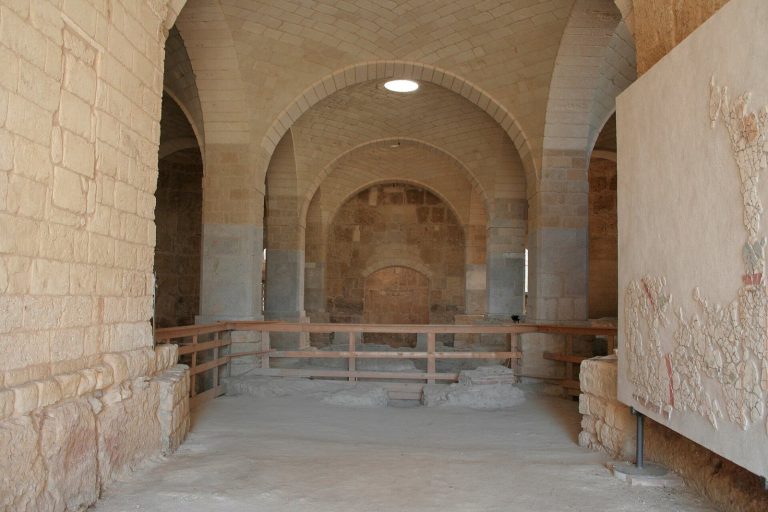
Substantial remains of the Roman settlement include part of its wall, streets and buildings along them. These traces survive on the hill occupied by the ancient town.
San Mercurio thermal complex
Investigations between 2002 and 2005 at the thermal complex on San Mercurio hill revealed a cistern and an associated water system.
Medieval citadel
The citadel contains ruins of the medieval town, reflecting Cannae’s later period of settlement.
Collections and associated features
Antiquarium
The Antiquarium at Canne della Battaglia presents material from the area’s prehistoric, classical and Apulian-Greek periods through medieval times. Its collection includes bronze and amber ornaments, grave goods, ceramics, roof-tile ornaments called antefixes, inscriptions and Byzantine coins. It also holds geometric-painted Daunian-Peucetian vases, associated with ancient peoples of Apulia, dated to the fourth and third centuries BC and recovered from Cannae’s burial grounds.
Rural structures and battlefield tradition
Masseria Canne, a former rural farm complex, now stands in ruins. Nearby, the Fountain of San Ruggero dates to the twelfth century and has an entrance portal from the seventeenth century. The nearby locality of Paolo Stimolo is linked to a tradition that Hannibal raised the Paulus Tumulus there as the original tomb of the Roman consul Paullus. Inscribed stone fragments were found among the rubble of an abandoned well in the locality in 1738.