The Church of St Nikita the Martyr in Kostomłoty: A Neo-Uniate Parish Church
Site at a Glance
- Rating
- 4.9
- Popularity
- Low
- Country
- Poland
- Primary era
- Early Modern
- Eras represented
- Early Modern
- Civilizations
- Polish–Lithuanian Commonwealth
- Site type
- Religious
- Remains
- Church
On this page7 sections
History
Foundation and changing rule
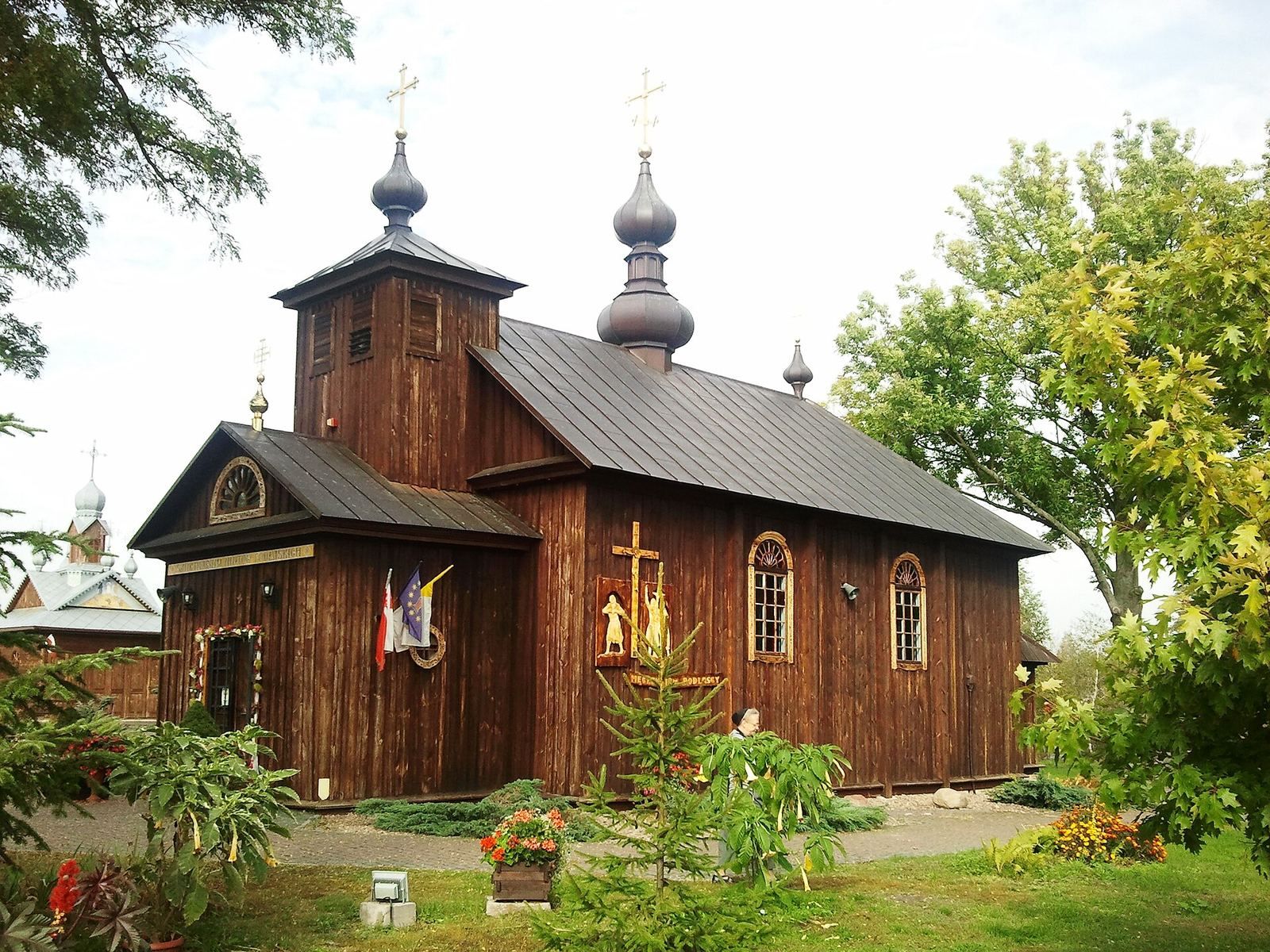
The Church of St Nikita the Martyr in Kostomłoty is a wooden Byzantine-Slavonic rite Catholic parish church in Poland, built in 1631 as a Uniate church. The Union of Brest, agreed in 1596, brought some Eastern Christian communities into communion with the Roman Catholic Church while allowing them to retain their Eastern rites. After the partitions of Poland, Kostomłoty first came under Austrian rule and, from 1815, formed part of the Kingdom of Poland, established after the Napoleonic Wars. In 1852, the church was repaired at the expense of Józef Łoski, then the owner of Kostomłoty.
Orthodox use and the parish dispute
Following the formal abolition of the Union of Brest in 1875, the church was converted to Orthodox use. It served Orthodox worship until 1927, apart from a brief period of abandonment in 1916. At the request of local residents, Bishop Henryk Przeździecki issued a decree restoring the Uniate parish in 1927. The church’s ownership was disputed by Uniates and Orthodox Christians during the decade. That year, the Orthodox hieromonk Nifont (Niedźwiedź), a monk ordained as a priest, established a separate, unofficial Orthodox pastoral station in Kostomłoty.
Restoration and later life
Repairs took place in 1927–1930 and again in 1938. Before the Second World War, nine successive parish priests served in Kostomłoty, all of them formerly Orthodox clergy. Father Aleksander Przyłucki cared for the church from 1940 to 1969, followed by Father Roman Piętka. After the war, a storm destroyed the tower, which was restored in 1953. The church entered the register of protected historic monuments in the Lublin Voivodeship on 22 March 1966.
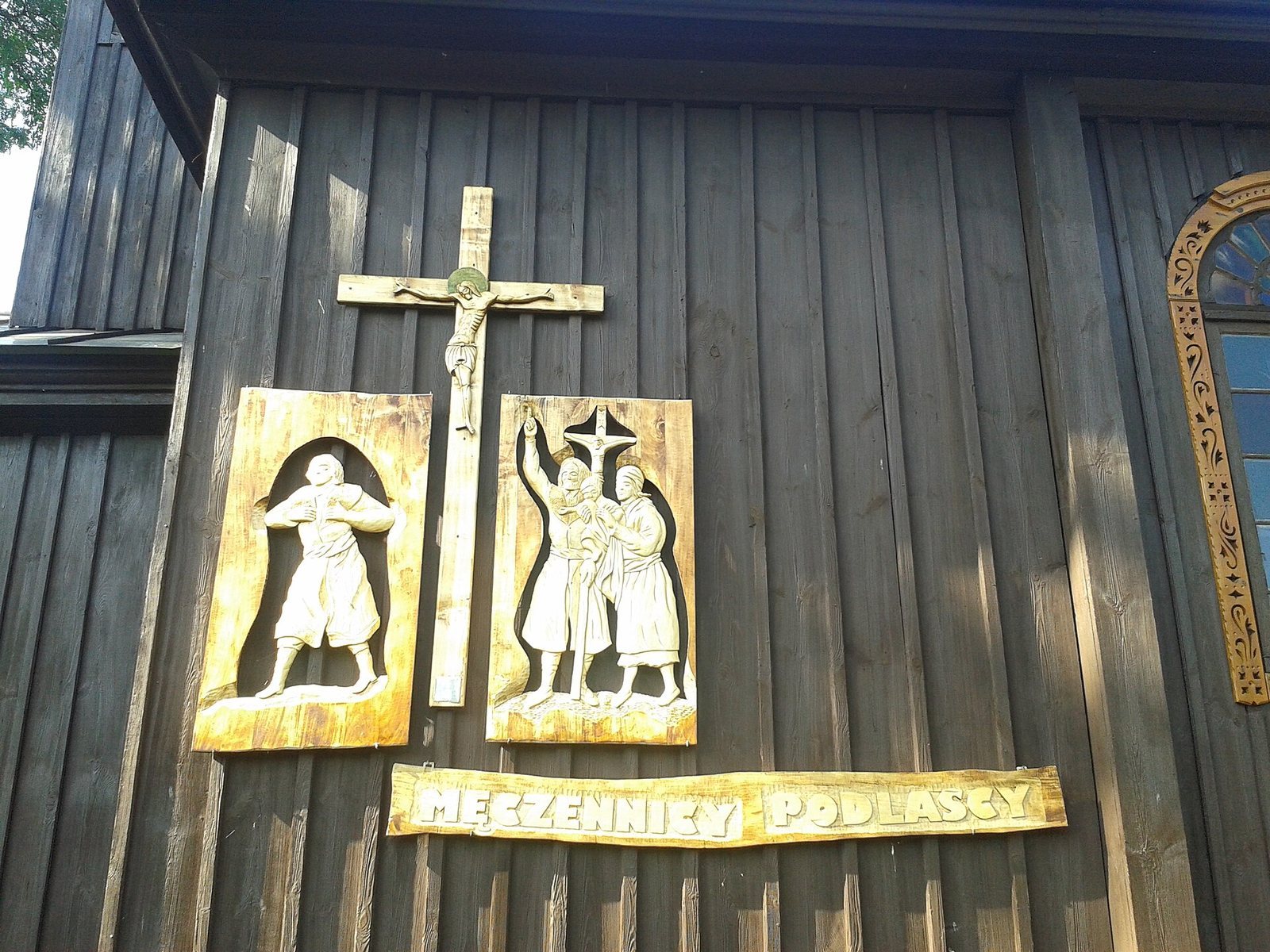
The church belongs to the Catholic Church of the Byzantine-Slavonic rite, an Eastern Christian tradition using Byzantine worship and Slavonic liturgy, and serves a Neo-Uniate parish, part of the later revival of Eastern-rite Catholic communities. Since 1998, it has been a sanctuary of the Podlasie Uniates. An associated ecumenical centre holds retreats for Christians of different denominations.
Remains
Building and layout
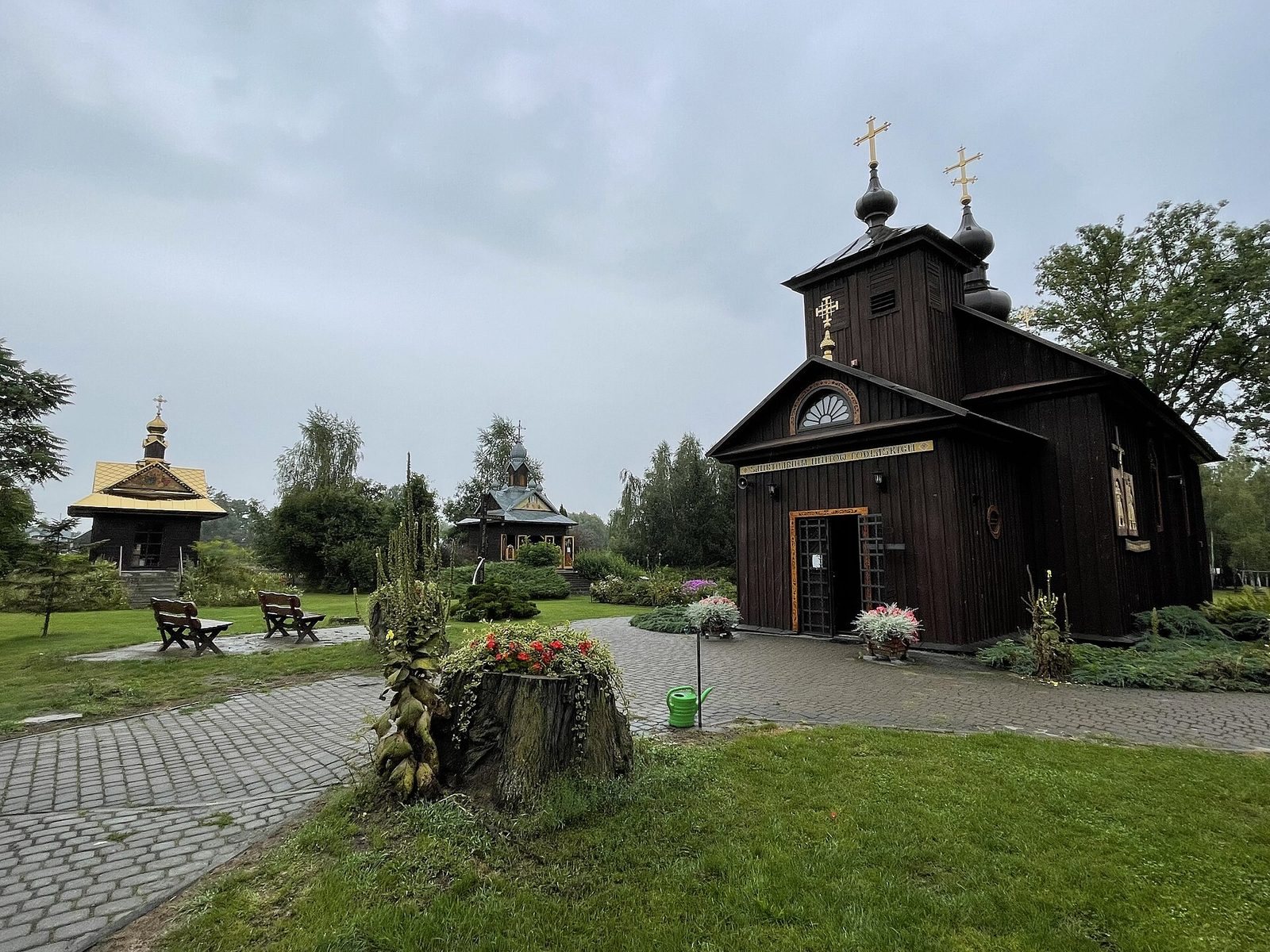
The wooden church has an east-facing rectangular plan and a single-space interior. Its log construction uses horizontal timbers, and the roof has one ridge. At the eastern end, the chancel, the area around the altar, closes on three sides. A four-sided tower rises above the vestibule and carries a single cupola-like roof turret. The windows are semicircular, apart from round openings in the chancel and rectangular ones in the adjoining sacristy, a room for liturgical objects and vestments.
Interior and sacred objects
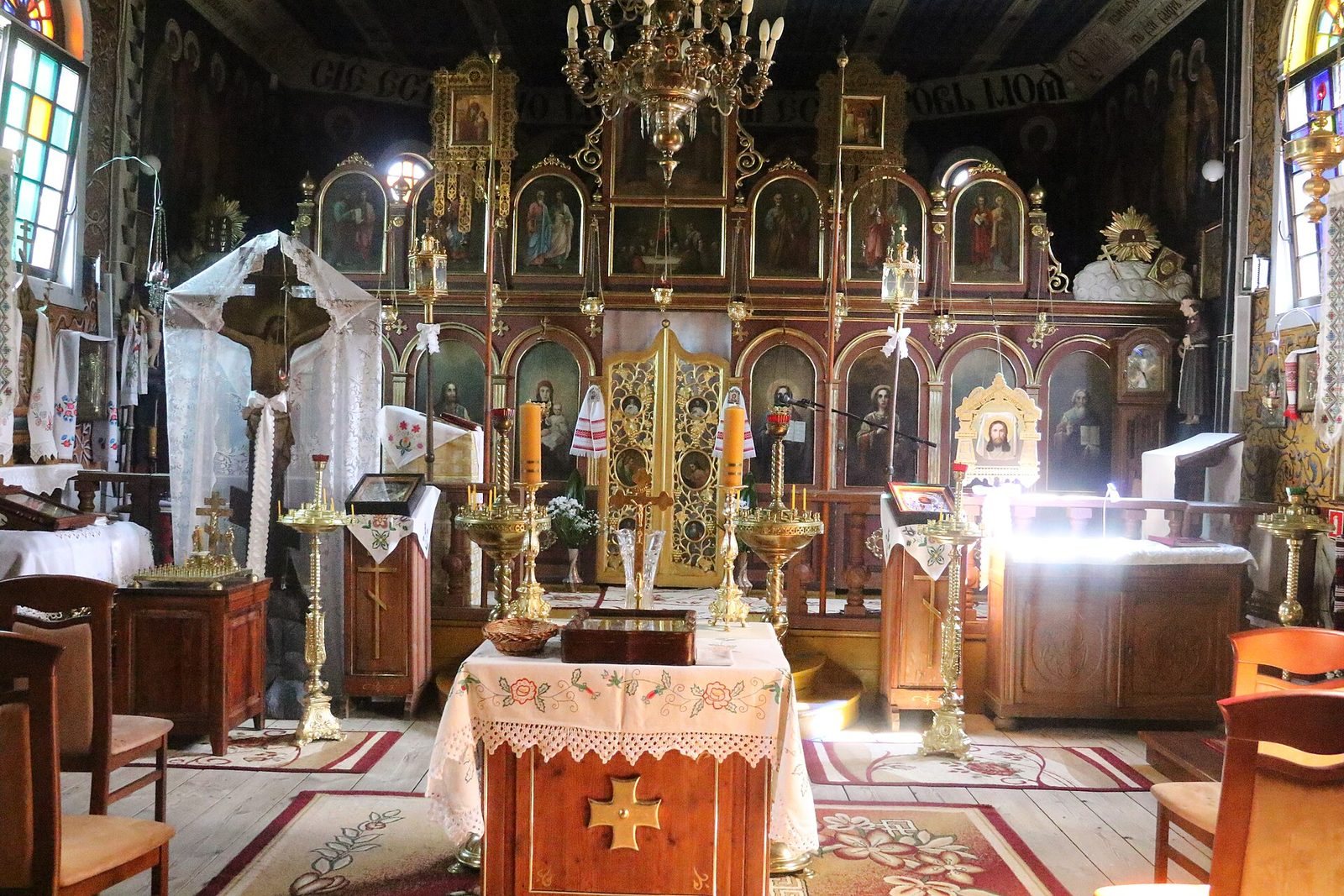
The interior preserves an eclectic iconostasis, a screen of icons separating the sanctuary from the main worship space, arranged in two tiers. Its royal doors, the central entrance to the sanctuary, date to the eighteenth century; a liturgical book from 1767 is also kept here. An icon of St Nikita dated 1631 shows the saint surrounded by fourteen scenes from his life. Chweda Jackowa of Pryłuki funded it with her husband and sons. The church also holds around a dozen processional icons and images of the Ilyinsk Mother of God, Christ Pantocrator, the Deesis (an icon group centred on Christ), the Mother of God with the Child, Saints Cyril and Methodius, Saint Onuphrius, three apostles, the Mother of God of Kazan, the Mother of God in the Eleusa type (Mother and Child shown close together), the Dormition of the Mother of God, the Risen Christ, Saint Nicholas, and Saints Constantine and Helena. Relics of Wincenty Lewoniuk and his twelve companions, the thirteen Eastern-rite Catholics known as the Pratulin Martyrs who were killed in 1874, receive special veneration at the church.