Daskalio: An Early Bronze Age Settlement in the Cyclades
Site at a Glance
- Rating
- 5
- Popularity
- Very Low
- Country
- Greece
- Primary era
- Bronze Age
- Eras represented
- Bronze Age, Medieval
- Civilizations
- Unclassified
- Site type
- Settlement
- Remains
- Town
On this page11 sections
History
Early Bronze Age settlement
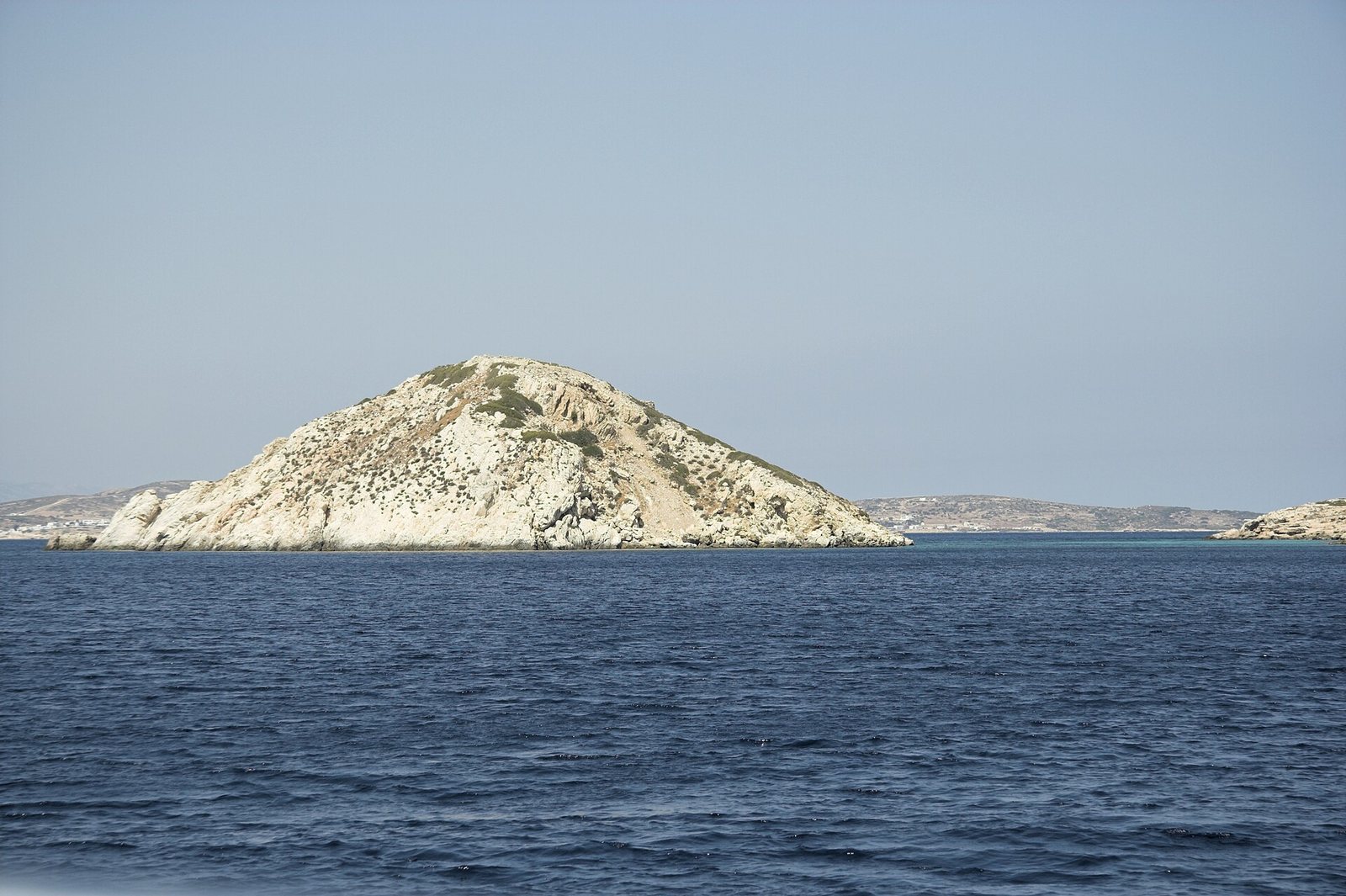
Daskalio is a small, uninhabited islet in the Cyclades of Greece, about 80 metres west of Keros. From about 2800 to 2300 BCE, Daskalio and neighboring Keros formed one of the major centers of the Keros-Syros culture, an archaeological phase of the Early Bronze Age in the Cyclades. Geoarchaeological analysis indicates that sea level was then about 2.5–5 metres lower than today, suggesting that Daskalio was connected to Keros.
The settlement’s occupation continued through three phases, from the Keros-Syros culture to the end of the Early Cycladic period, the Bronze Age culture of the Cyclades. This continuity differed from the interruption experienced at other settlements after the Kastri phase, a later Early Cycladic phase. Activity at those sites resumed after about 200 years, around the time Phylakopi, an archaeological site on Melos, rose in importance.
During the Kastri phase, approximately 2500–2200 BCE, people moved from Kavos, an archaeological area on Keros opposite Daskalio, to Daskalio’s more defensible position. The estimated population was 100–200, more than Keros could supply, suggesting that Daskalio was among communities specializing in maritime trade. Its inhabitants produced obsidian blades through the full sequence of manufacture, worked marble, and smelted copper. Obsidian is volcanic glass used to make sharp-edged tools. Daskalio is also thought to have been a religious center, with shrines and votive offerings, objects dedicated in religious practice.
Medieval occupation and archaeological investigation
Medieval ruins on Daskalio were noted by the mid-nineteenth century. A chapel on the summit, probably dating to the thirteenth century, remained in use until the eighteenth century. In 1963, archaeologist Christos Doumas explored the islet and identified the chapel foundation, house foundations, and a fortification wall.
In autumn 1963, Doumas and archaeologist Colin Renfrew surveyed Daskalio and collected surface finds. During 1967 rescue excavations at nearby Kavos, directed by Photeini Zapheiropoulou, the summit of Daskalio was examined briefly. From 2006 to 2008, the Cambridge Keros Project excavated Daskalio and Kavos in partnership with the University of Cambridge, the Cyprus Institute, and the Ephorate of Antiquities of the Cyclades, a Greek antiquities authority for the island group. Metalworking workshops dated to about 2500 BCE were identified in 2018.
Remains
The islet measures about 200 by 120 metres, covers approximately 0.015 square kilometres, and rises to 30 metres. Its steep slopes give it a conical form, and its vegetation is sparse. The Early Bronze Age settlement covered about 0.7 hectares. Buildings and workshops occupied extensive terraces supported by retaining walls, shaping the islet’s pyramidal profile.
Early Bronze Age settlement
Terraces and water systems
Houses and workshops stood on the terraces. At the lower levels, a complex arrangement of water channels and drainage served the settlement. This system is among the oldest known in Europe.
Summit building
A central building at the summit measured 16 by 4 metres and was the largest known building of its period. Its masonry used marble and schist, a rock that splits into layers, materials suited to forming smooth, straight walls. Neither stone occurs on Daskalio or Keros, and both were probably brought from Naxos or Schinoussa. Large quantities of marble are specifically associated with quarrying on Naxos.
Pottery and other finds
Pottery
Numerous pottery sherds, or fragments, belong to the Keros-Syros type. Storage vessels account for just under half of the pottery; other pieces come from small liquid containers, small lidded containers, vases, bowls, frying pans, and basins. Kastri pottery occurs in a higher deposit and makes up less than one per cent of the sherds, probably reflecting imports rather than local production. A later group, associated with the end of the Early Cycladic period, was probably brought from Santorini.
Objects and plant remains
Finds associated with the site include intentionally broken statues, about 1,500 imported stone disks, and about 700 imported white pebbles. Soil samples contained remains of grapes, olives, figs, almonds, emmer wheat, and barley, probably brought from more fertile areas.
Medieval remains
The chapel foundation lies at the summit, alongside house foundations and a fortification wall. These features form the surviving evidence of the islet’s medieval occupation.