Porte Horloge de Vire: A Medieval City Gate and Belfry
Site at a Glance
- Rating
- 4.4
- Popularity
- Medium
- Country
- France
- Primary era
- Medieval
- Eras represented
- Medieval, Early Modern, Modern
- Civilizations
- French
- Site type
- Military
- Remains
- Gate
On this page9 sections
History
The Porte Horloge de Vire is a thirteenth-century city gate in France that served as the principal entrance through Vire’s medieval walls. After the Norman invasions, Vire became an important stronghold of the dukes of Normandy. William the Conqueror, then duke of Normandy and later king of England, strengthened the town’s defenses. His son Henry I Beauclerc, also king of England and duke of Normandy, later built a castle with two enclosures and a keep; only the keep’s ruins survive.
Medieval gate and town defenses
Known earlier as the Porte Gastinel, the gate was built in the thirteenth century. It was Vire’s main entrance through the walls, with other gates serving the western and southern approaches.
Belfry and public clock
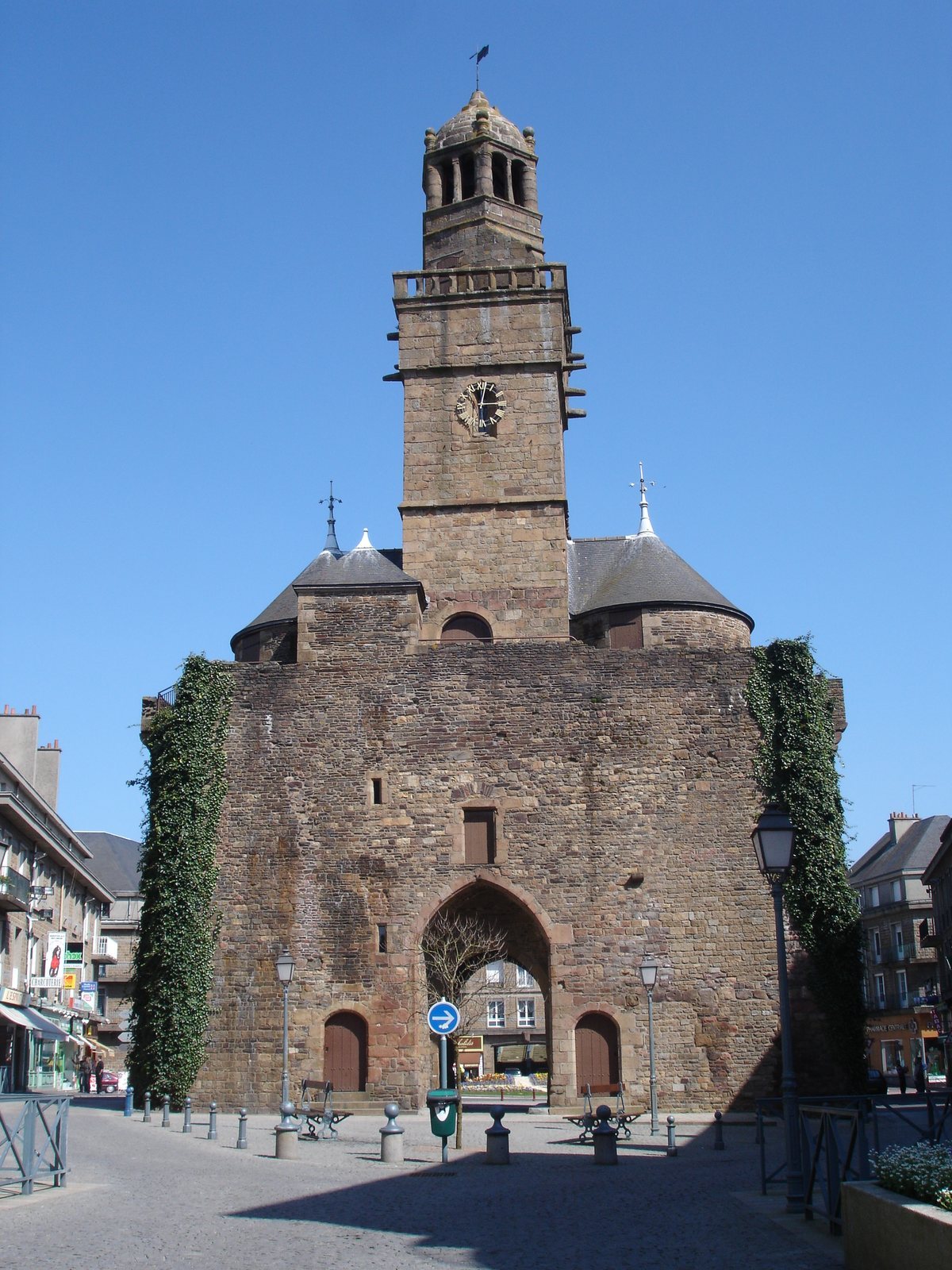
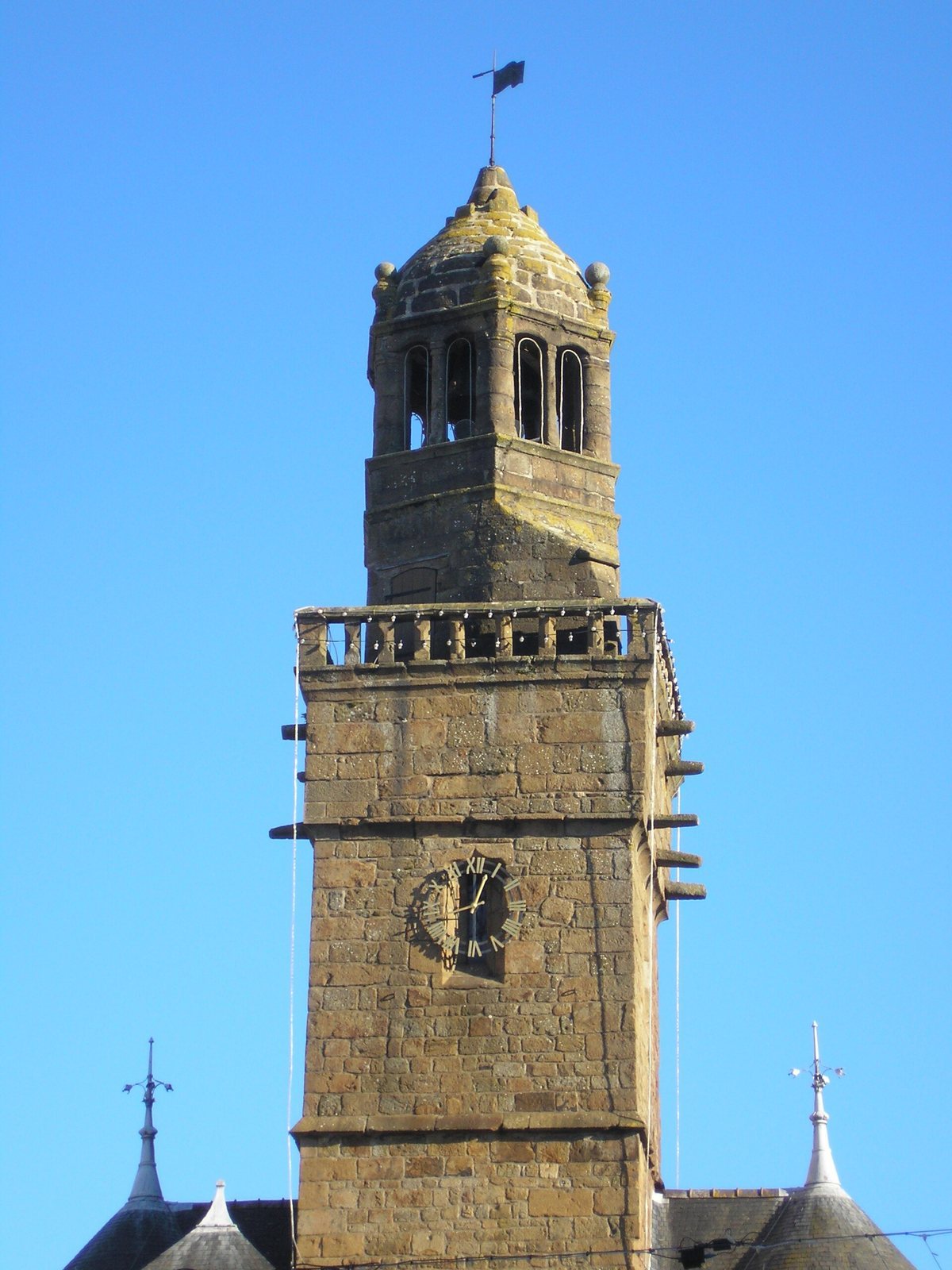
In 1480, the gate was raised by one level and converted into a belfry, a tower for bells that may also house a public clock. The town’s burghers supported the change as an expression of Vire’s strength and independence, and to provide a clock and bell for public use. A small turret also served as a lookout.
A clock and bell were installed in 1499. In the nineteenth century, two quarter-hour bells were added and the clock was replaced.
Wartime damage and rebuilding
The gate was classified as a historic monument in 1886. In June 1944, after the Allied landings in Normandy, bombardments destroyed 93 percent of Vire. The gate suffered comparatively limited damage, but its tower crowns and conical roofs required full restoration during postwar rebuilding. The 1499 bell and the replacement clock were destroyed.
A memorial to those killed in the 6 June 1944 bombardment was inaugurated on 6 June 1960.
Remains
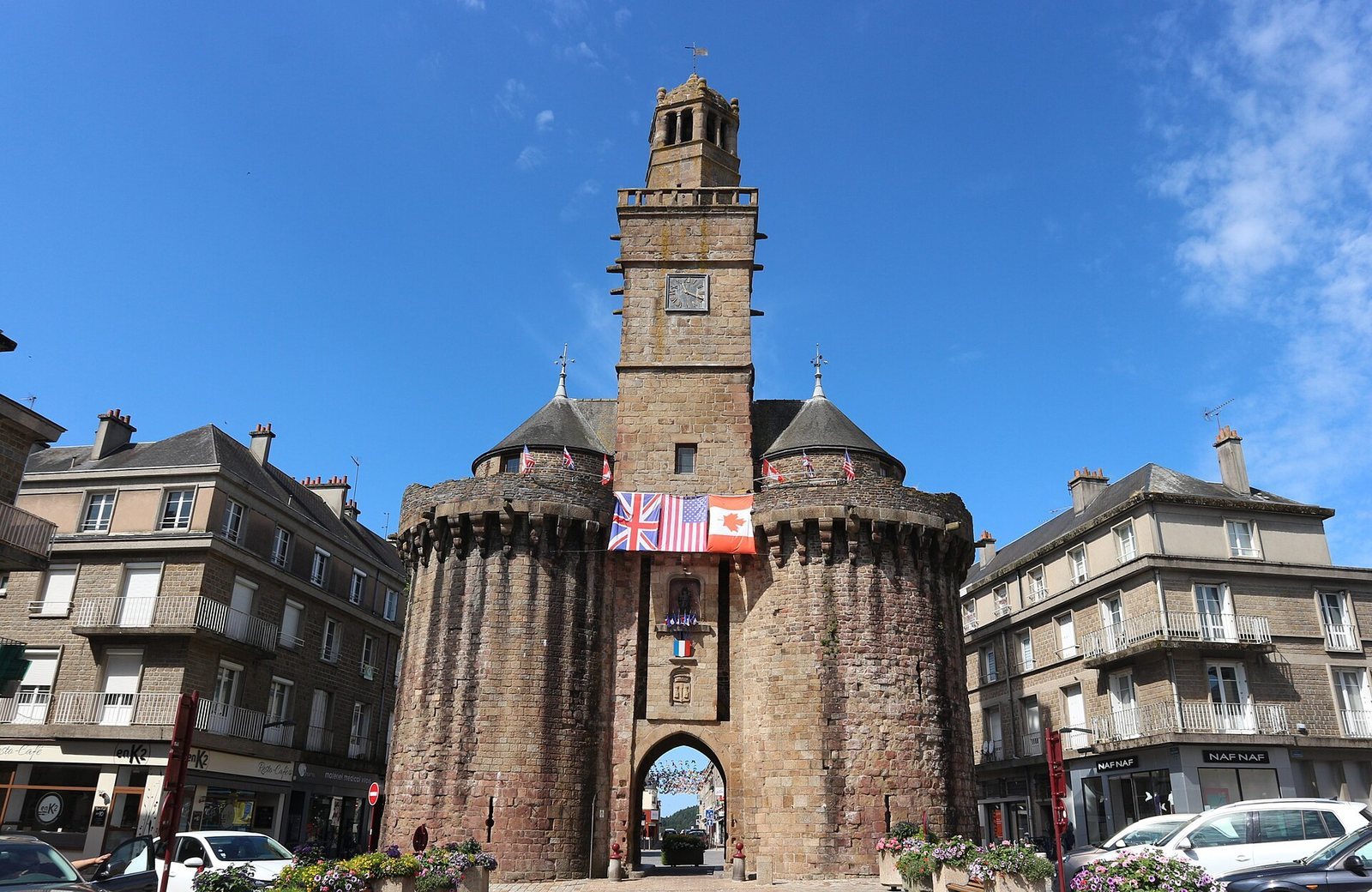
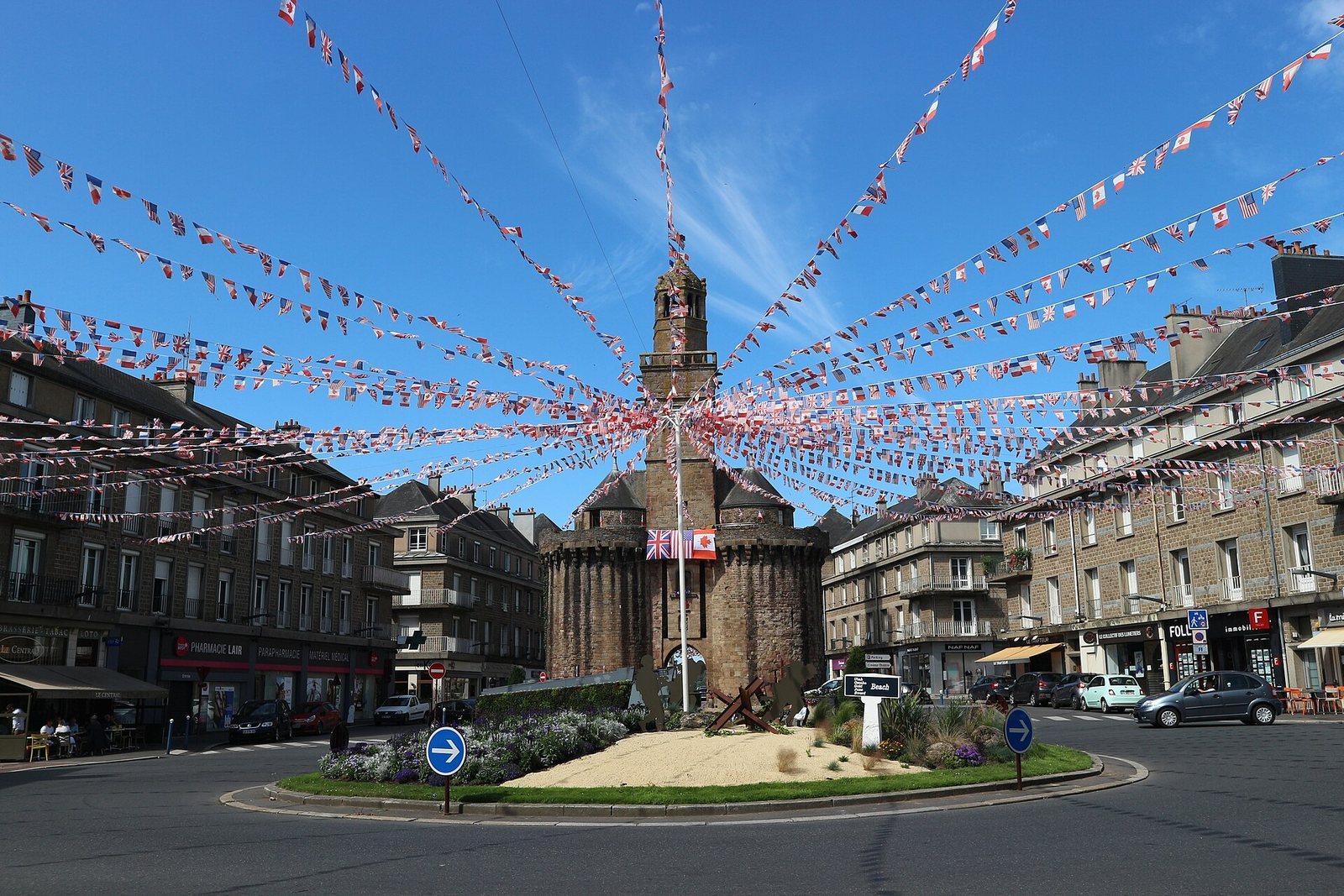
The gate stands 33 metres high and is flanked by two large round towers. Its masonry combines rubble granodiorite from the south of the region with hornfels from the north; the tower itself is built entirely of granodiorite.
Passage and defenses
Before postwar rebuilding, Rue Saulnerie ran beneath the gate. A moat in front of it measured about seven metres across and five metres deep. A drawbridge with lifting arms, a portcullis (a heavy gate that slides vertically), and a two-leaved door defended the entrance. The area beneath and around the gate is now pedestrianized as Place du 6-Juin.
Towers and upper structure
The original gate was surmounted by a large square tower that rose to its first row of gargoyles. The belfry was added above it, and during the Renaissance the upper structure received a balustrade and a hexagonal lantern. The round towers have machicolations, projecting openings used to defend the base of a wall or tower. From the top, guards could observe the surrounding countryside, where fields are divided by hedges or banks, watch the approaches to Vire, and warn of attacks.
Eastern facade
On the eastern side, a statue of the Virgin stands in a niche above the pointed arch, between the grooves for the drawbridge. Beneath it, an inscription reads, “Mary, protect the town.” Vire’s arms below show a red shield with an inverted silver arrow between two silver towers. Black lines mark the towers’ stonework, and their openings are red.
Memorial in the south tower
The memorial to the victims of the 6 June 1944 bombardment is located on the ground floor of the south tower.