The Avenue of Sphinxes: A Processional Road between Karnak and Luxor Temples
Site at a Glance
- Rating
- 4.7
- Popularity
- High
- Country
- Egypt
- Primary era
- Bronze Age
- Eras represented
- Bronze Age, Classical
- Civilizations
- Egyptian
- Site type
- Infrastructure
- Remains
- Road
On this page9 sections
History
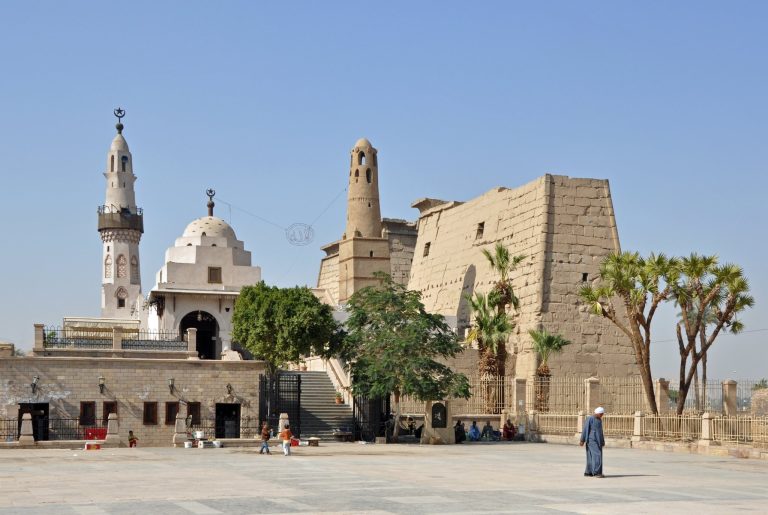
The Avenue of Sphinxes is a processional road linking Karnak Temple and Luxor Temple in present-day Luxor, Egypt. Construction began during the New Kingdom, an era of ancient Egyptian history, and was completed in the Late Period under Nectanebo I, a pharaoh of the 30th Dynasty who ruled from 380 to 362 BCE. The route is also known as Rams Road.
Religious use and burial
The road is associated with the 18th Dynasty and Hatshepsut, a woman who ruled as pharaoh, as well as with the Opet festival, an ancient Egyptian religious celebration associated with Thebes. Processions of the gods used the route. Priests were required to perform rites twice a year, for a harvest festival and for a celebration marking the king’s accession.
Sand gradually covered the road over subsequent centuries. A description from 1809 gave its length as 2,000 metres and counted more than 600 sphinxes. In 1893, nearly a kilometre was visible at Karnak, while the section at Luxor lay below the groundwater level and could not be excavated.
Rediscovery and restoration
Egyptian archaeologist Mohammed Zakaria Ghoneim found eight statues near Luxor Temple in 1949, revealing the first trace of the road at Luxor. Excavations uncovered 17 more from 1958 to 1961 and another 55 from 1961 to 1964, within an area about 250 metres long.
The route was fully traced between 1984 and 2000, though uncovering it was difficult and required demolition to clear its course. A development and restoration project began in 2007, paused in 2011, resumed in 2017, and continued through 2021.
Remains
Route and paving
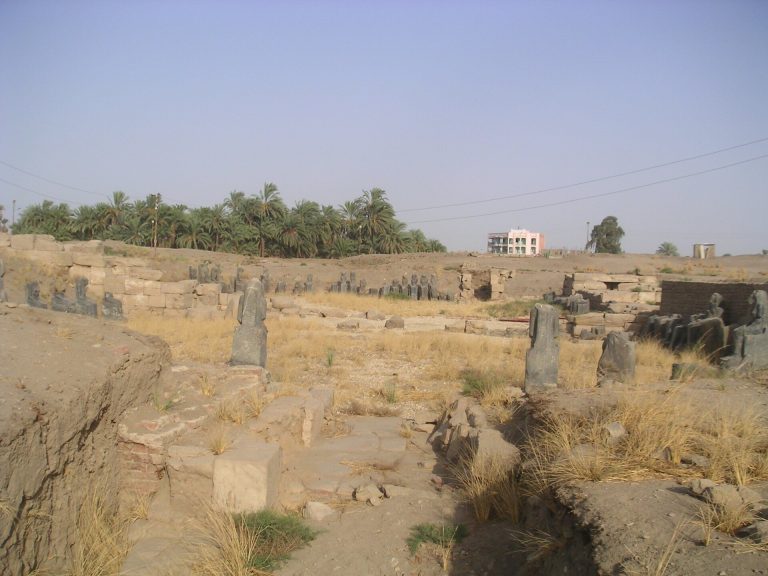
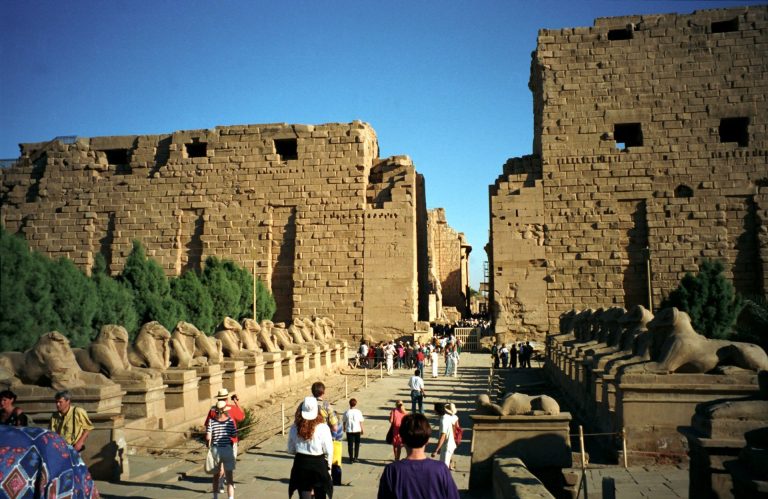
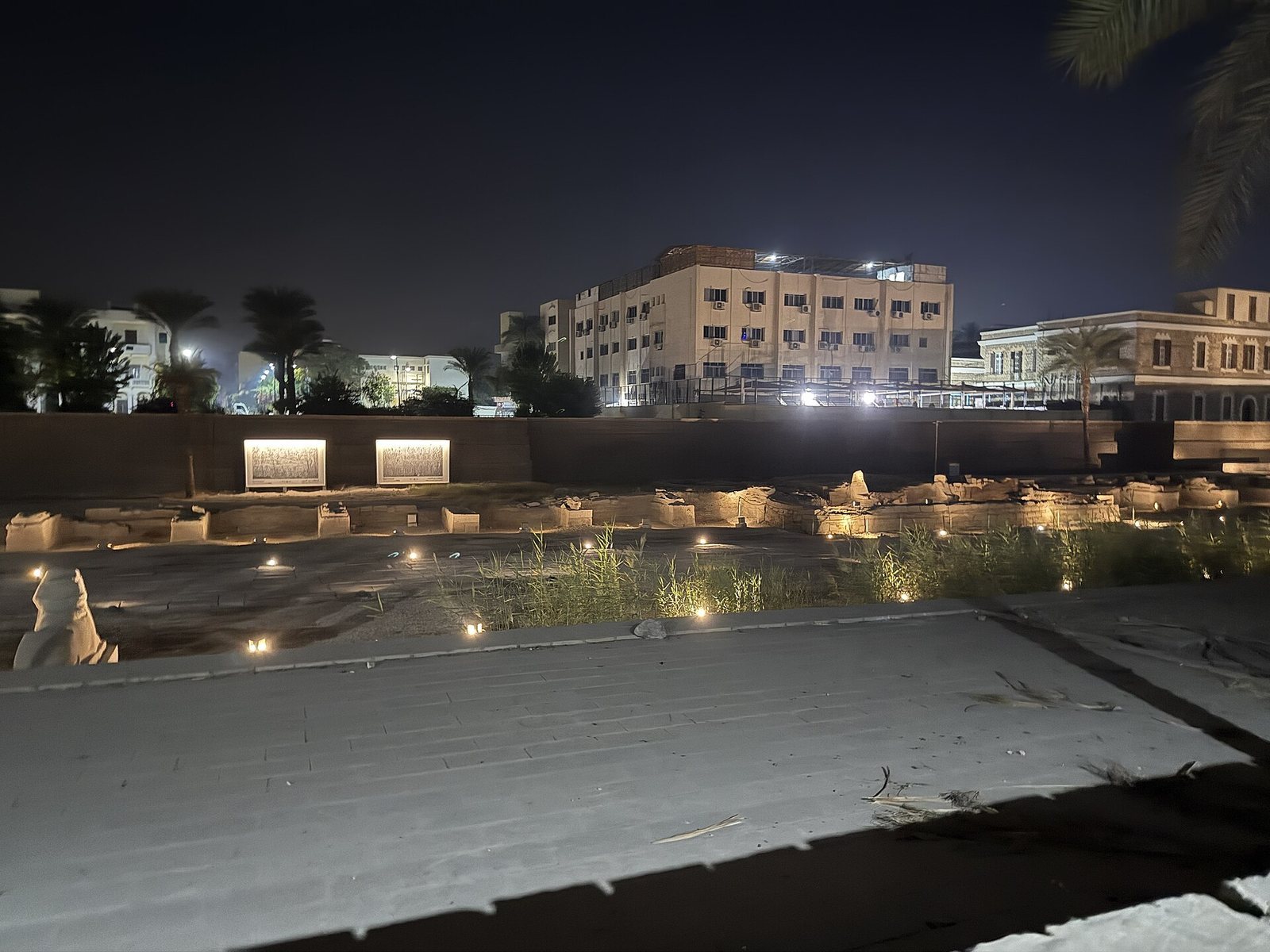
The avenue extends for 2.7 kilometres and is about 250 feet wide. A stone-paved central way runs between rows of sandstone statues on both sides, connecting Karnak Temple with Luxor Temple.
Sculpted forms
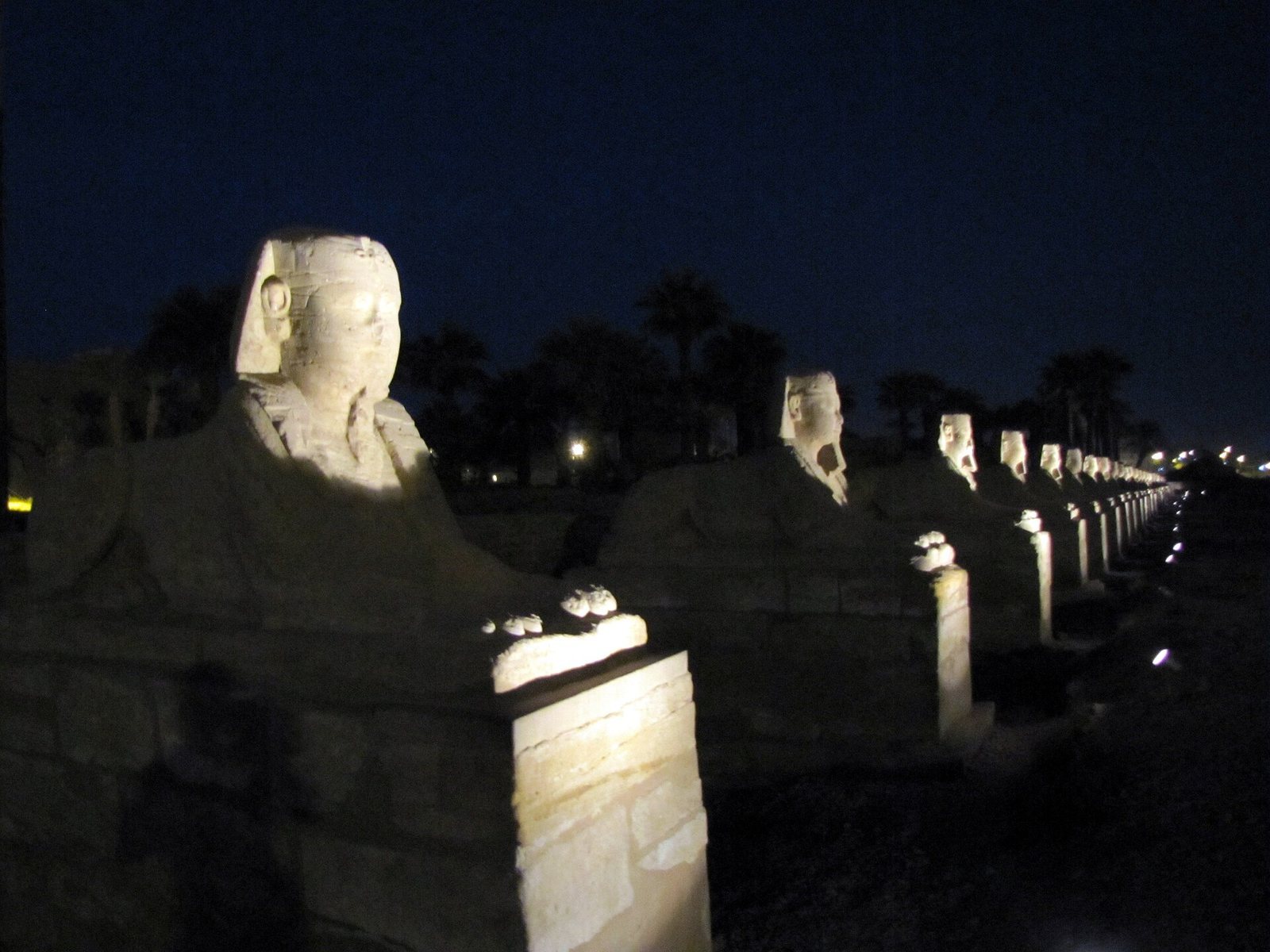
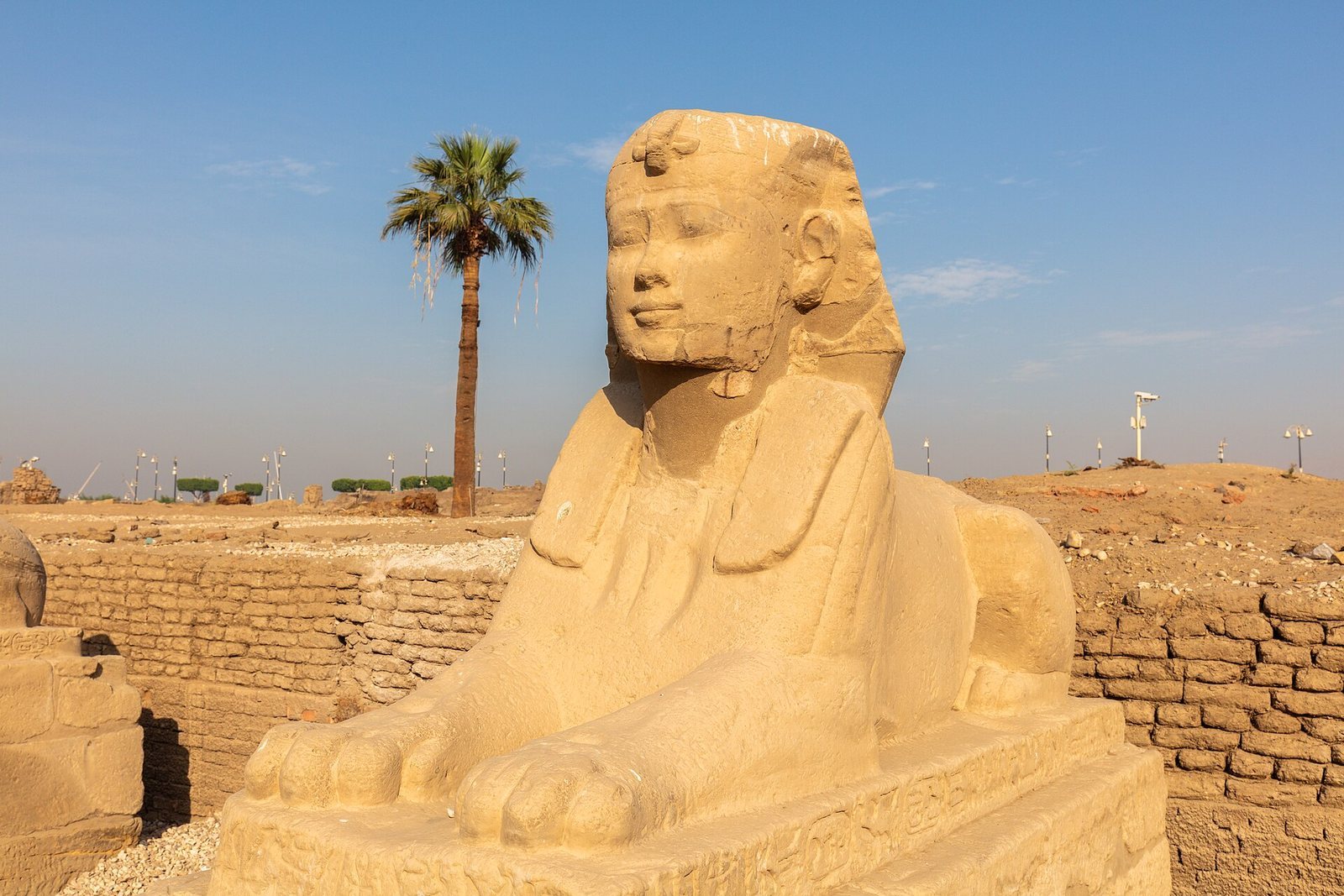
The statues take three forms: sphinxes with human heads and lion bodies, lions with ram heads, and full ram figures. The 2021 count comprised 1,057 figures, of which 807 were sphinxes and 250 had ram heads.
Ram-headed lions
Ram-headed lion figures line a stretch of about 300 metres between Karnak Temple and the Precinct of Mut, a temple enclosure within the Karnak complex associated with the goddess Mut. They were erected during the reign of Tutankhamun.
Full ram figures
Full ram statues were made in a more distant area during the reign of Amenhotep III and later transferred to the Karnak complex.
Sphinxes
The sphinxes extend for about a mile in the direction of Luxor Temple. Their human heads and lion bodies distinguish them from the avenue’s ram-headed figures.