Wellington Church: A Neoclassical Presbyterian Church in Glasgow
Site at a Glance
- Rating
- 4.4
- Popularity
- Medium
- Country
- United Kingdom
- Primary era
- Modern
- Eras represented
- Modern
- Civilizations
- British
- Site type
- Religious
- Remains
- Church
On this page6 sections
History
Wellington Church is a Neoclassical Presbyterian church in Glasgow, Scotland, United Kingdom, built between 1883 and 1884 for the United Presbyterian Church. Its design draws on ancient Greek and Roman architecture, a style favoured by that denomination.
Congregational beginnings
The congregation began in 1792 as an Anti-Burgher body, part of a Scottish Presbyterian tradition that opposed the religious clause in a civic burgess oath. It joined the United Secession Church in 1820 and became part of the United Presbyterian Church of Scotland in 1847. In 1828, the congregation opened a church on Wellington Street in central Glasgow.
Move to Gilmorehill
By the 1880s, the Wellington Street church had become too small. The congregation commissioned a new building on Gilmorehill, at the junction of Southpark Avenue and University Avenue. The move followed the University of Glasgow’s relocation from the city centre to the area in the preceding decade. The United Presbyterian Church had no parish boundaries, and congregations of the denomination sometimes relocated. The new church opened on 11 October 1884; the Wellington Street building was later demolished.
Denominational and present-day use
In 1900, the United Presbyterian Church joined the Free Church of Scotland to form the United Free Church of Scotland. The current congregation, Glasgow: Kelvin West Parish Church of Scotland, arose from the union of the former Wellington congregation and Kelvinbridge Parish Church. It owns and worships in the building, serves parts of Hillhead, Woodlands, Kelvinbridge and Maryhill, and belongs to the Presbytery of Glasgow, a regional governing body of the Church of Scotland.
Wellington Church received Category A listing in 1966, Scotland’s highest listed-building category for structures of special architectural or historic importance. In 2022, an arrangement was made with the University of Glasgow to use the church’s sanctuary as a lecture theatre during university terms.
Remains
Exterior and interior features
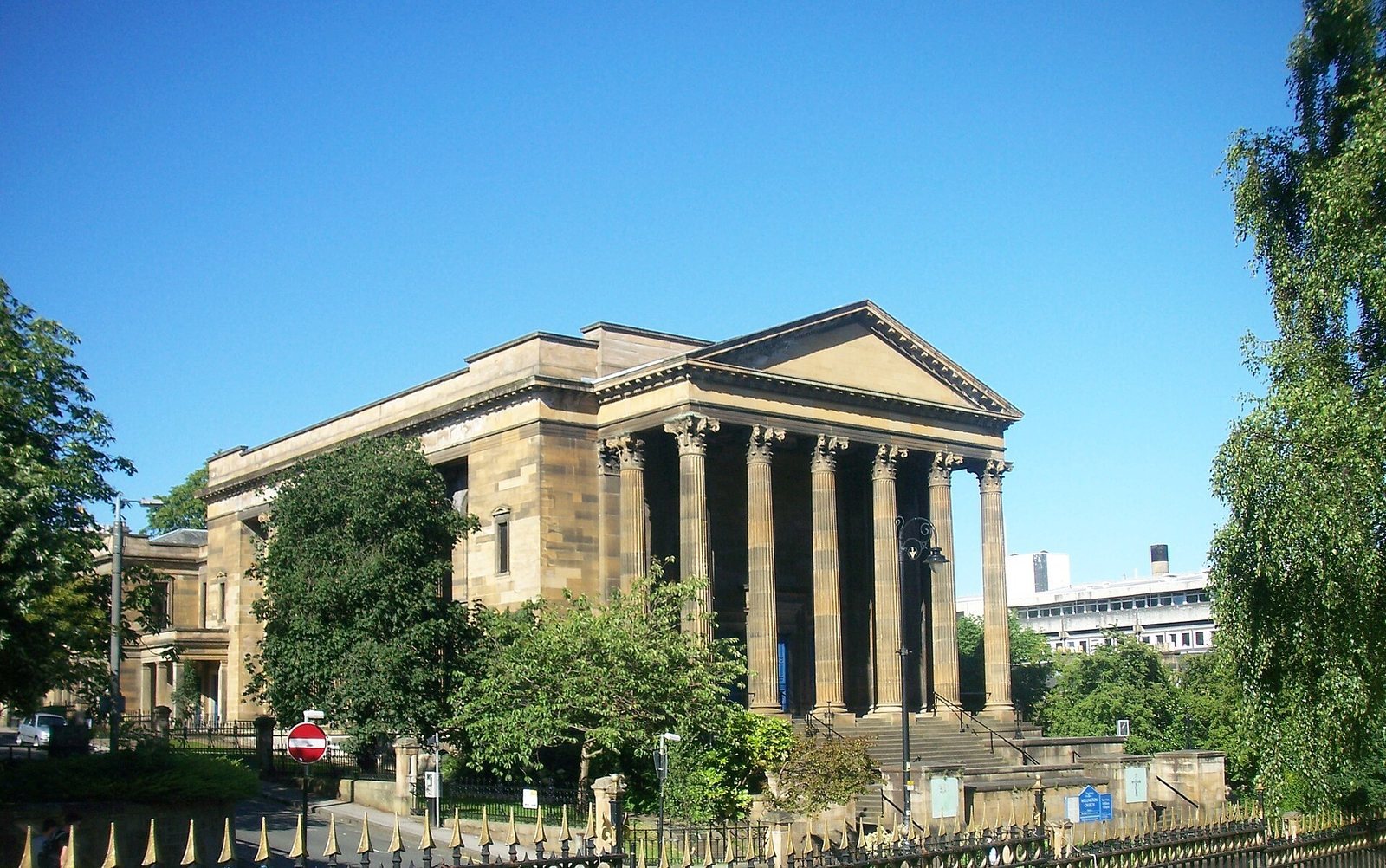
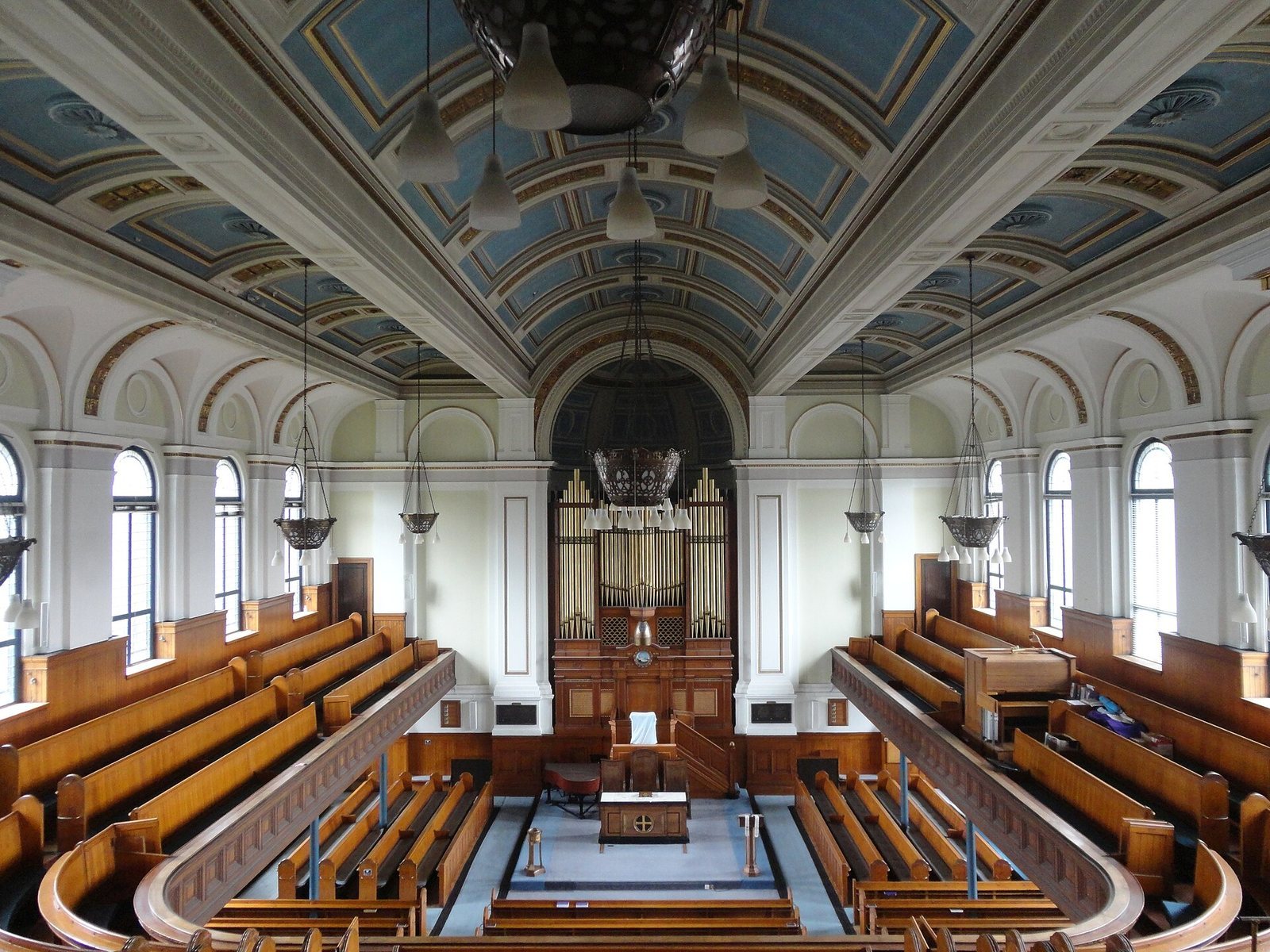
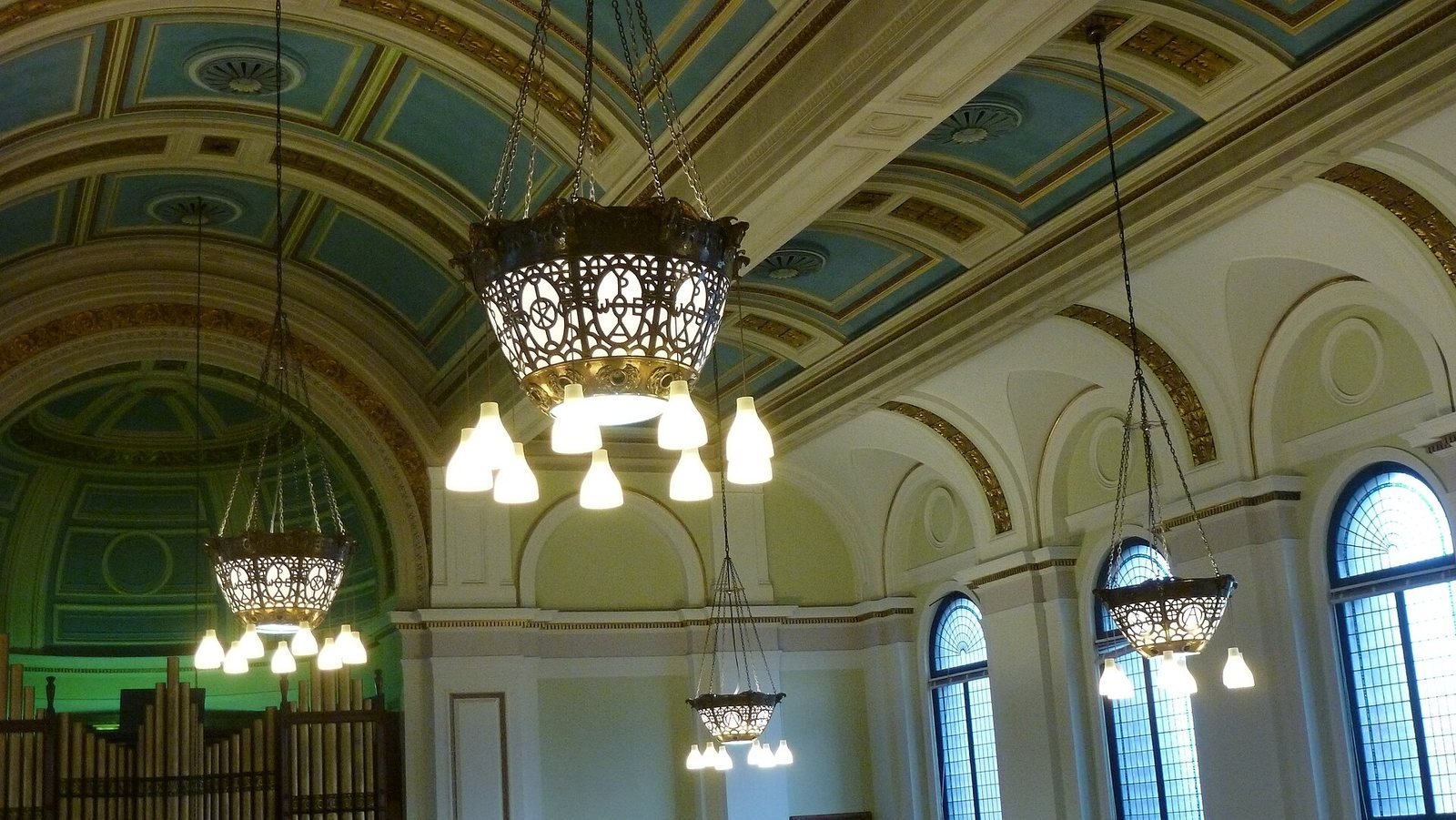
The church stands where University Avenue meets Southpark Avenue, opposite the University of Glasgow’s main building, the Gilbert Scott Building. Its south-facing front projects as a portico, or columned entrance porch, supported by six Corinthian columns with elaborately ornamented capitals. A plain horizontal frieze sits beneath a band of small, tooth-like blocks and the triangular pediment that crowns the front. The three entrance portals have sculpted friezes and projecting cornices. Rows of Corinthian columns extend along the sides, while flattened, column-like pilasters frame the gallery’s round-arched arcade, a series of arches. The original Forster and Andrews pipe organ remains in use for concerts and recitals.