Roman Forum of Brescia: The Civic Center of Brixia
Site at a Glance
- Rating
- 4.7
- Popularity
- Medium
- Country
- Italy
- Primary era
- Classical
- Eras represented
- Classical
- Civilizations
- Roman
- Site type
- Civic
- Remains
- Forum
On this page12 sections
History
The Roman Forum of Brescia was the principal public square of Brixia, at present-day Brescia, Italy. It took its definitive form in the first century AD under Vespasian, founder of the Flavian dynasty, and served as the center of the city’s economic, social, and political life.
Early settlement and Roman reorganization
Finds from excavations at Palazzo Martinengo Cesaresco Novarino indicate activity in the area at least as early as the Iron Age. Under the Cenomani, a Celtic people of northern Italy, Brixia was probably a small settlement at the foot of Cidneo Hill. Rome took control in 196 BC, apparently without major changes to the city’s urban plan. During the Augustan period, the era of Augustus, Rome’s first emperor, the first forum was established, probably in a simple form.
The Flavian building campaign
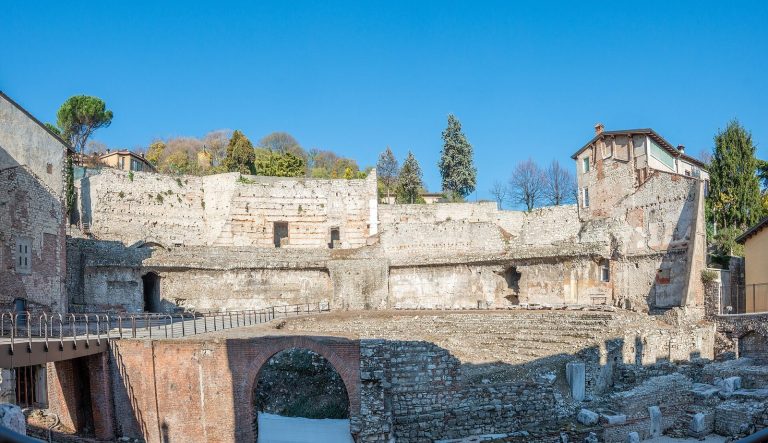
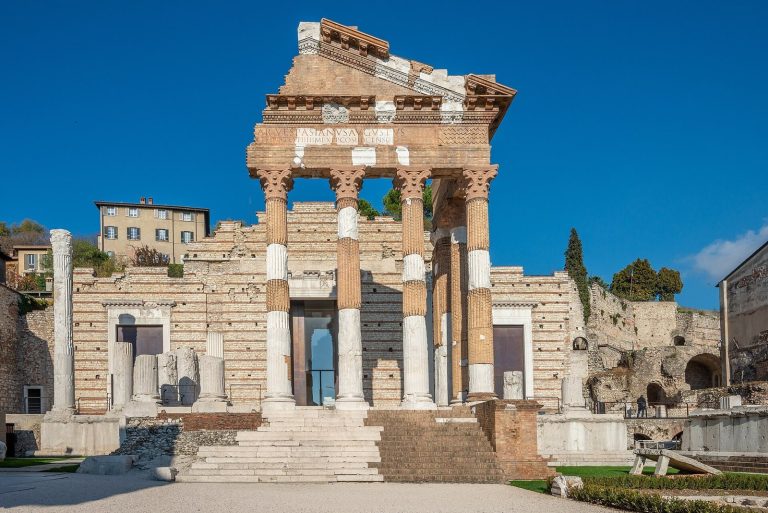
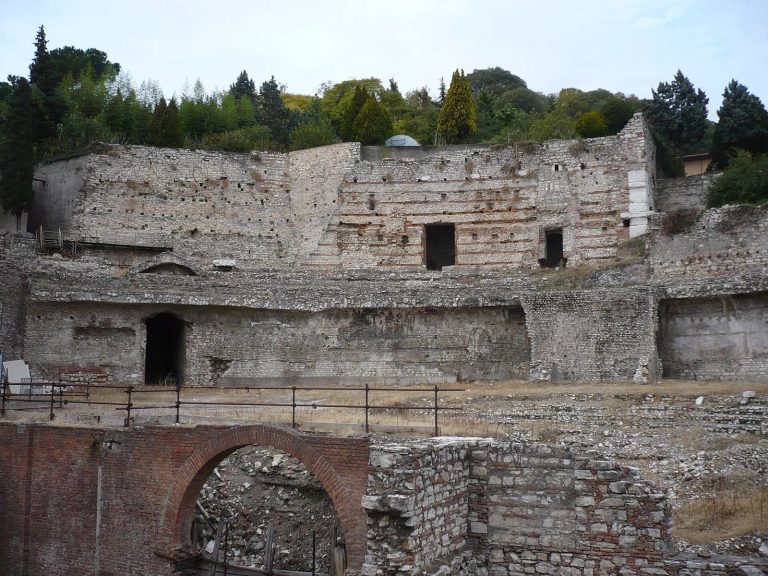
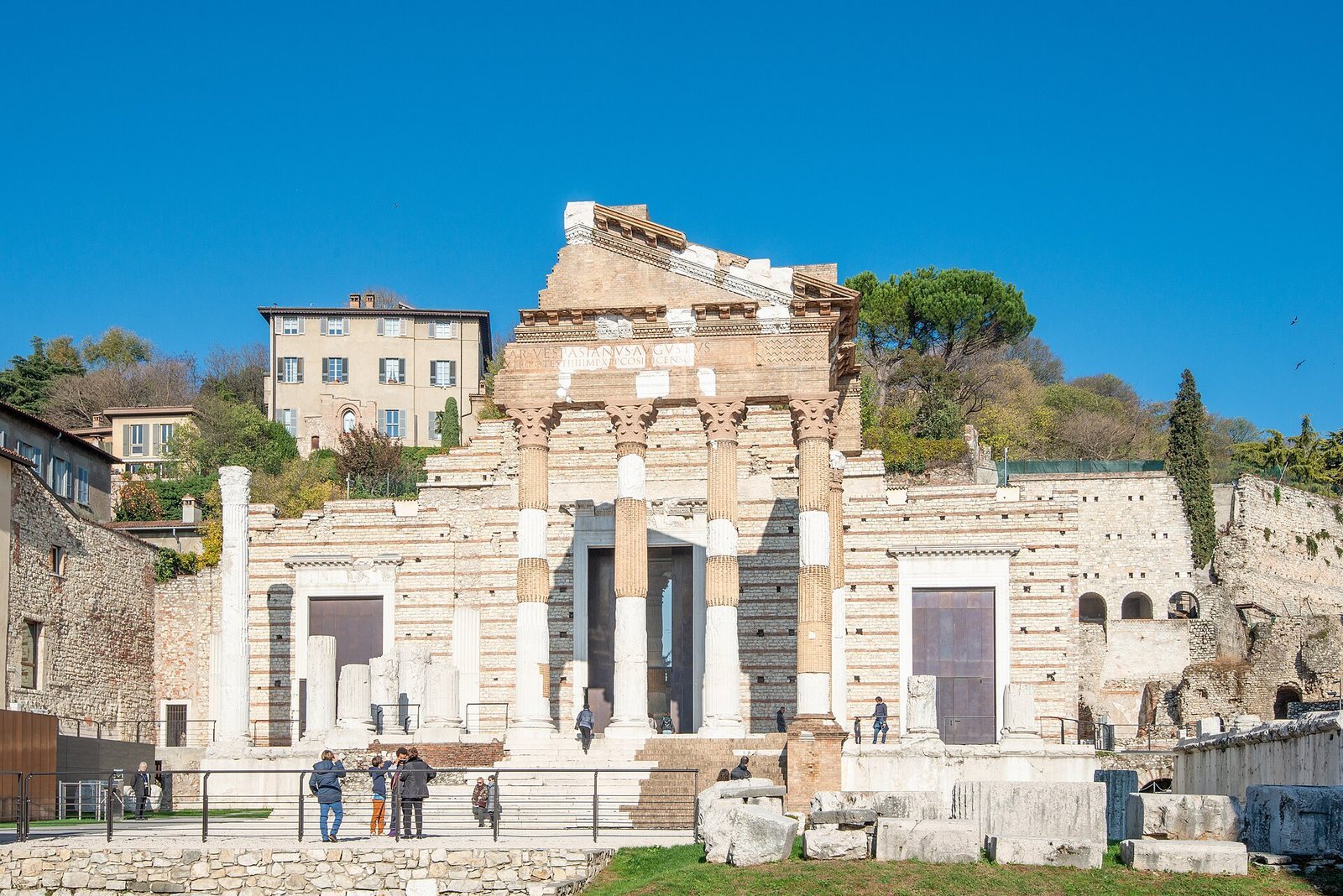
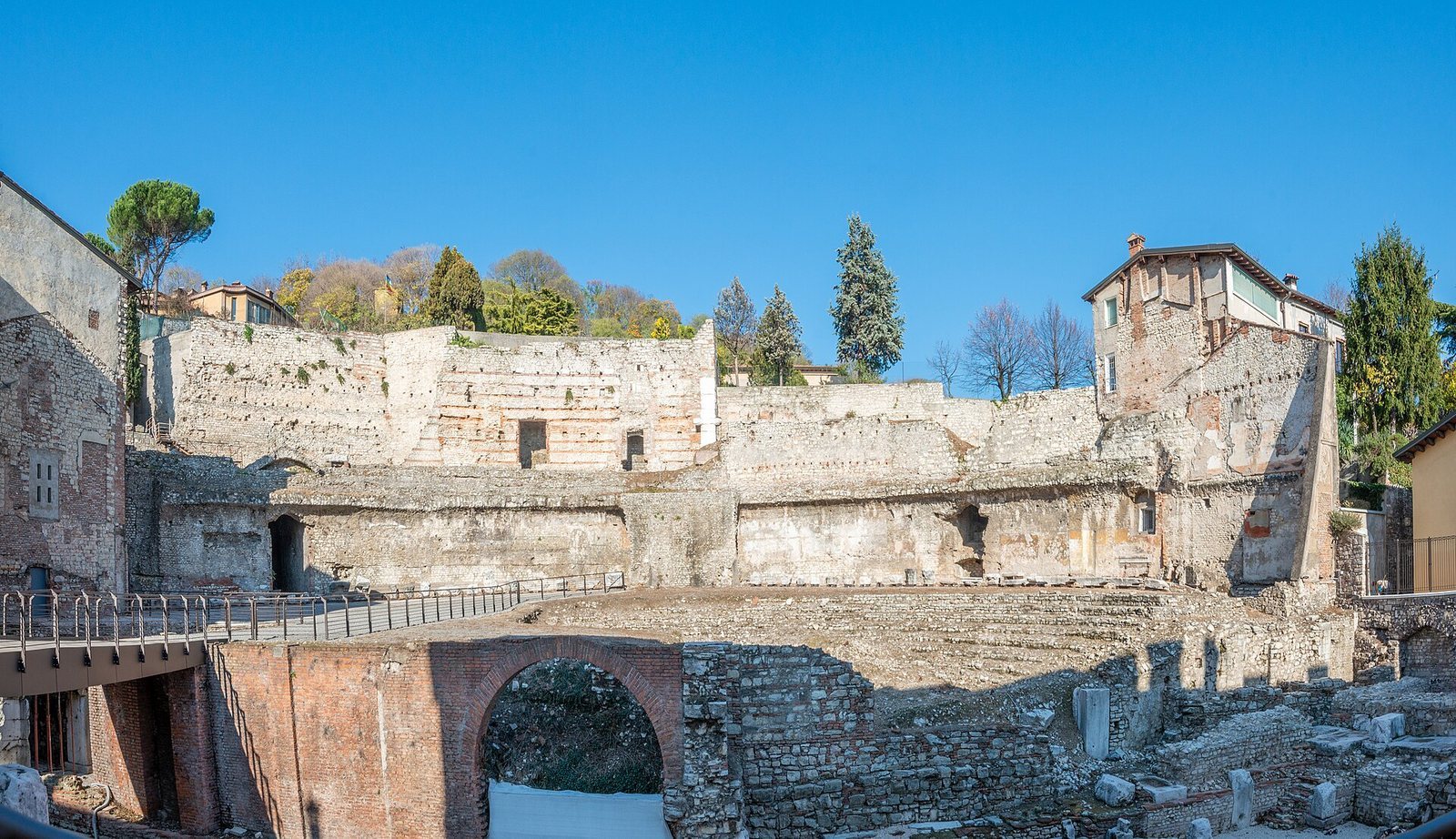
Under Vespasian, an intensive program of construction gave the forum its lasting monumental layout. The Republican temple was replaced by a Capitolium, the principal temple in a Roman civic center. A large basilica, a public hall for civic activities, was built along the south side, and porticoes connected the sides of the square. On the west, a bath complex replaced an earlier house; a theater was constructed to the northeast.
Later history and heritage
After Roman rule ended and invasions began, the forum gradually lost prominence. Later buildings reduced the open area, but the place continued to serve an urban role. Today’s Piazza del Foro follows much of the ancient square’s footprint.
The monumental archaeological complex forms part of the UNESCO World Heritage serial property Longobards in Italy: Places of Power. The Longobards were a Germanic people who established a kingdom in Italy in the early Middle Ages. The property’s designation excludes the civil basilica, the baths beneath Palazzo Martinengo Cesaresco Novarino, and the remains of the east portico.
Remains
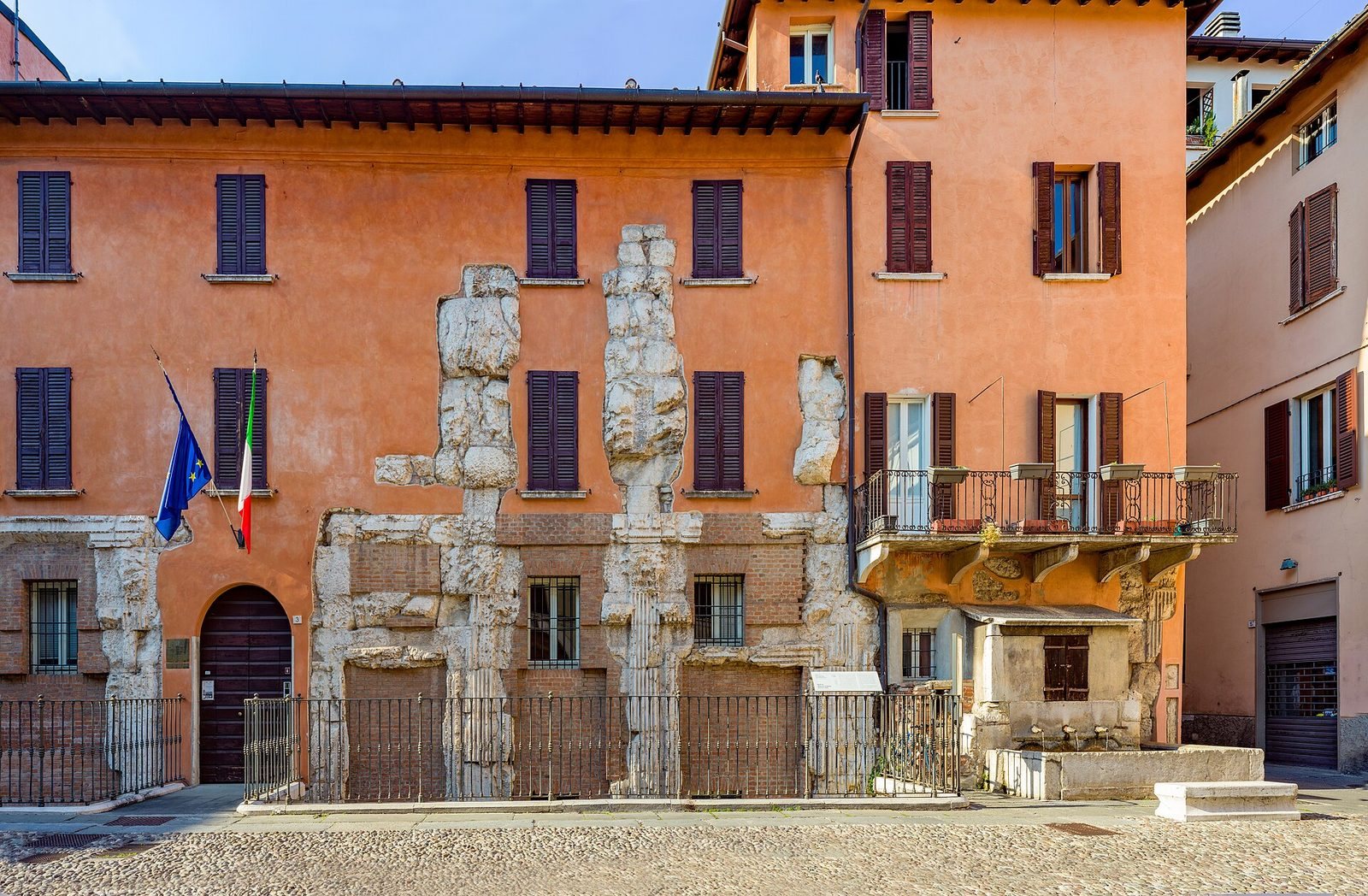
The Flavian forum was a rectangle about 40 metres wide and 120 metres long, with colonnaded porticoes along its eastern and western sides. Piazza del Foro follows much of the ancient plan. Remains of most buildings that faced the square have been uncovered in spaces outside or beneath the modern buildings around it.
Porticoes
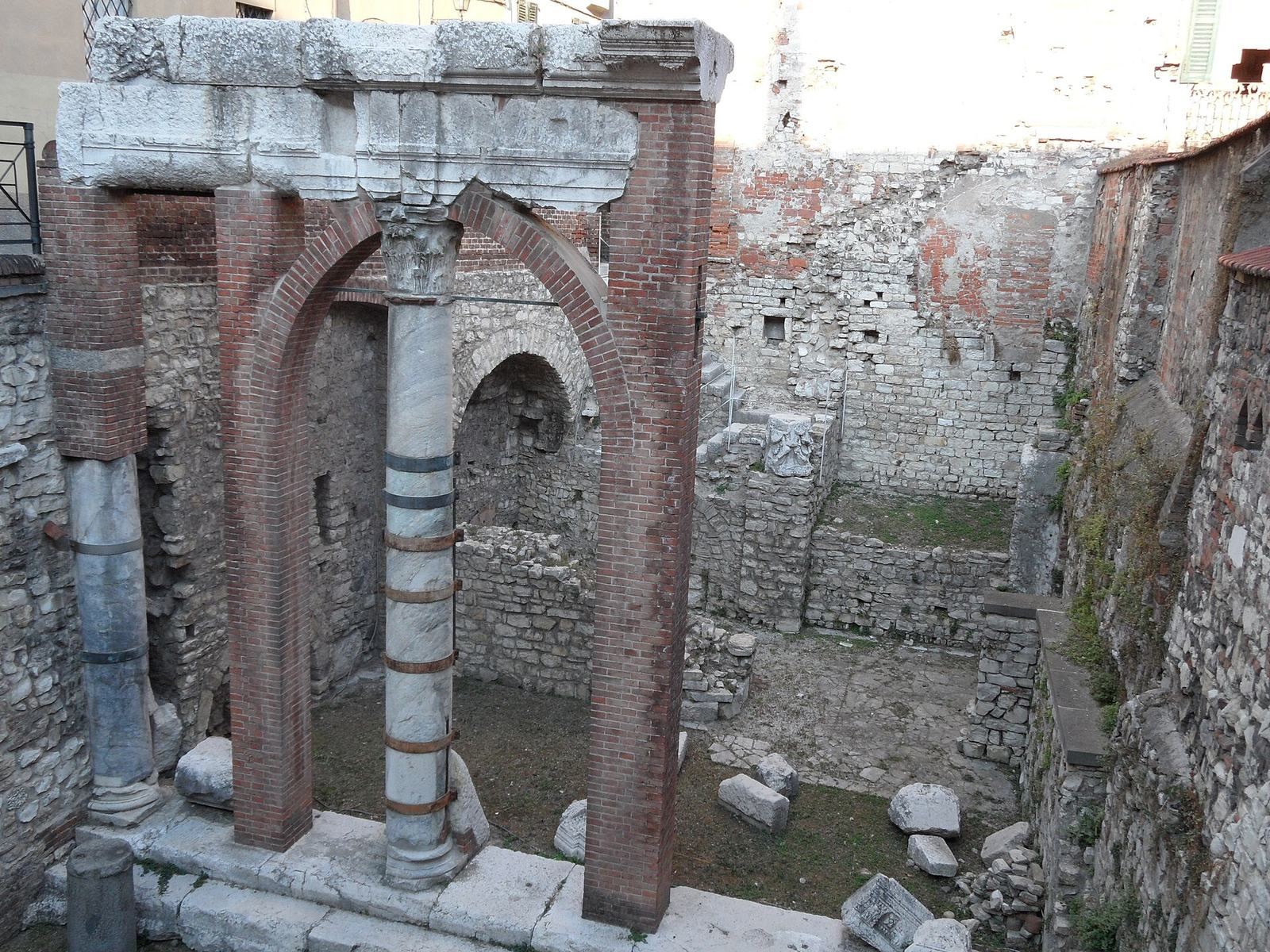
The east and west porticoes ran north to south and joined the basilica at their ends. Commercial buildings stood beneath them, set back from the columns to leave a passage between the shops and the colonnade. The height of surviving columns indicates that these buildings reached at least two storeys. The porticoes crossed the decumanus maximus, Brixia’s principal street, at right angles and apparently continued toward the temple above the road before turning to meet its rear.
Temple and access
The Capitolium
The Capitolium occupied the north end of the square, in a commanding position. Remains also survive from the Republican temple it replaced. Access involved the decumanus maximus, which passed in front of the temple at an intermediate level. One stairway descended from the road to the square, while another rose toward the temple. The upper ascent probably had two flights divided by a landing, with a fountain on each side; remains of the fountains’ operating mechanisms may survive.
Other buildings around the square
Civil basilica
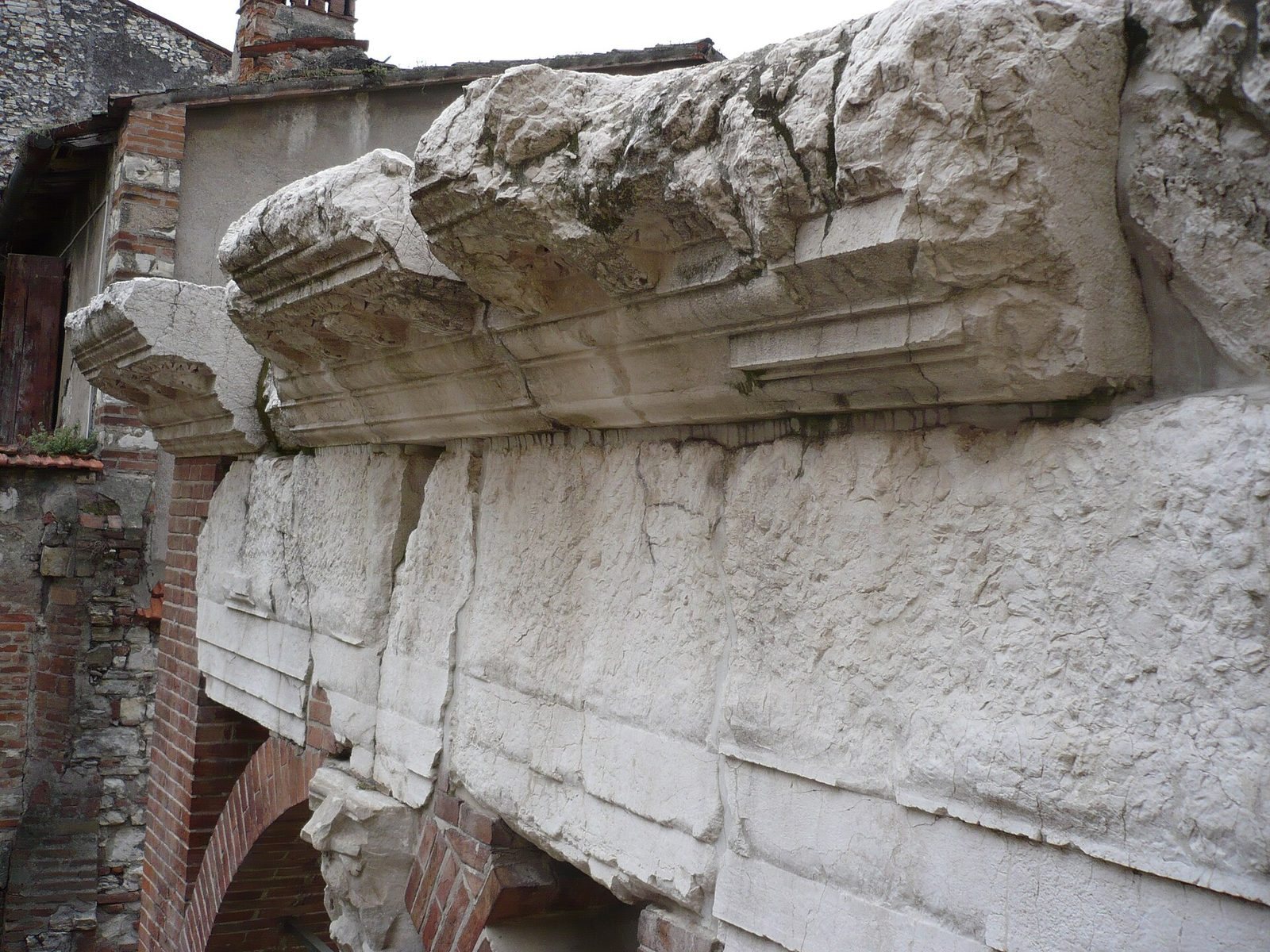
The basilica occupied the south side of the forum. This large colonnaded public building had three large openings and stone decorative elements.
Bath complex
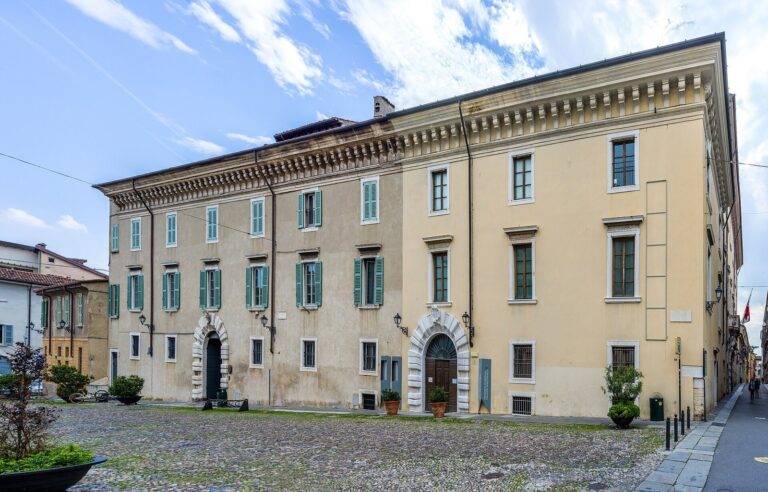
A substantial bath complex stood on the west side and was built during the Flavian period. It replaced and partly reused an earlier house from the Augustan era. The remains lie beneath Palazzo Martinengo Cesaresco Novarino.
Theater
The theater was situated northeast of the Capitolium.