Saint-Louis de la Salpêtrière: A Catholic Hospital Chapel in France
Site at a Glance
- Rating
- 4.5
- Popularity
- Medium
- Country
- France
- Primary era
- Early Modern
- Eras represented
- Early Modern, Modern
- Civilizations
- French
- Site type
- Religious
- Remains
- Chapel
On this page16 sections
History
Foundation and the First Chapel
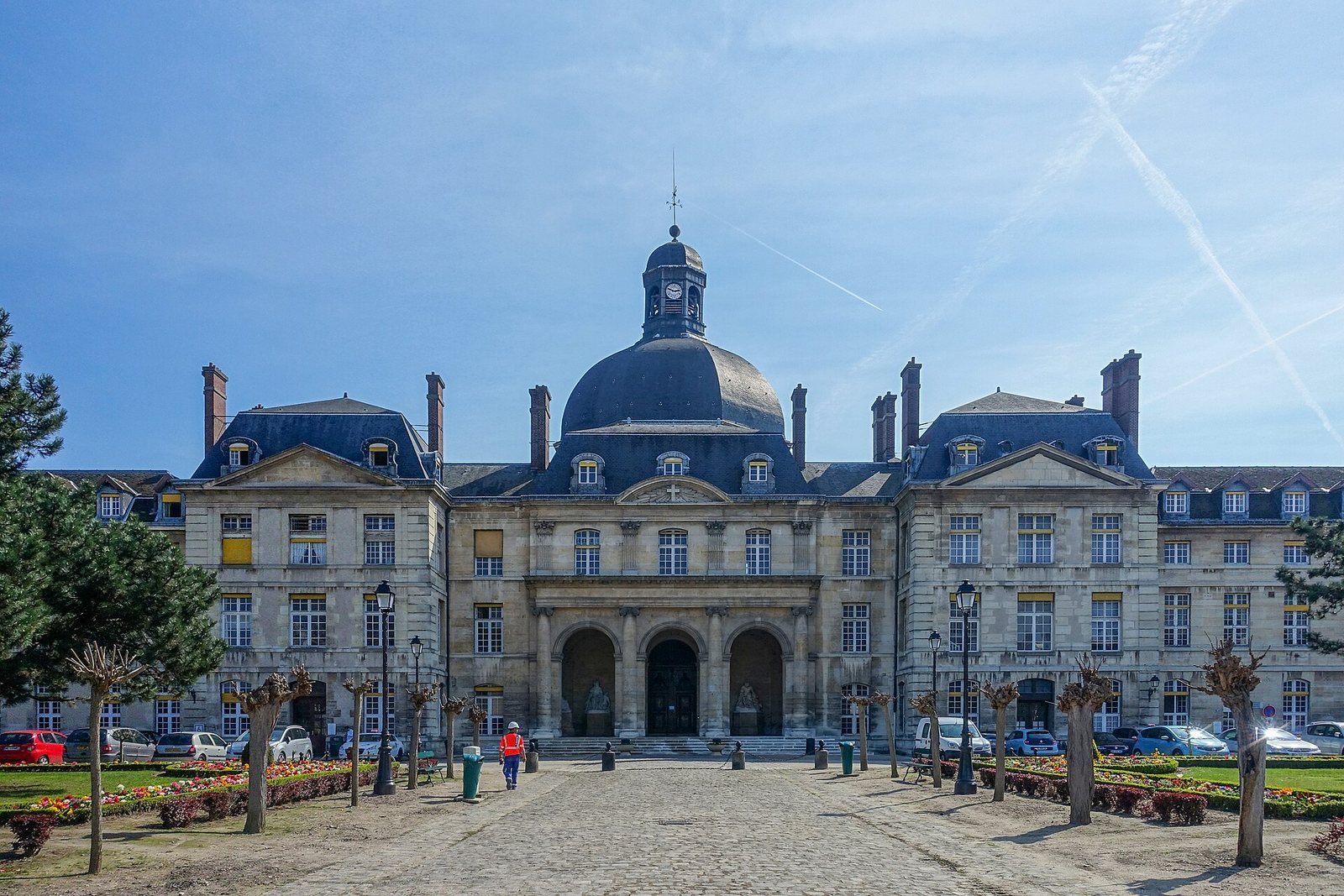
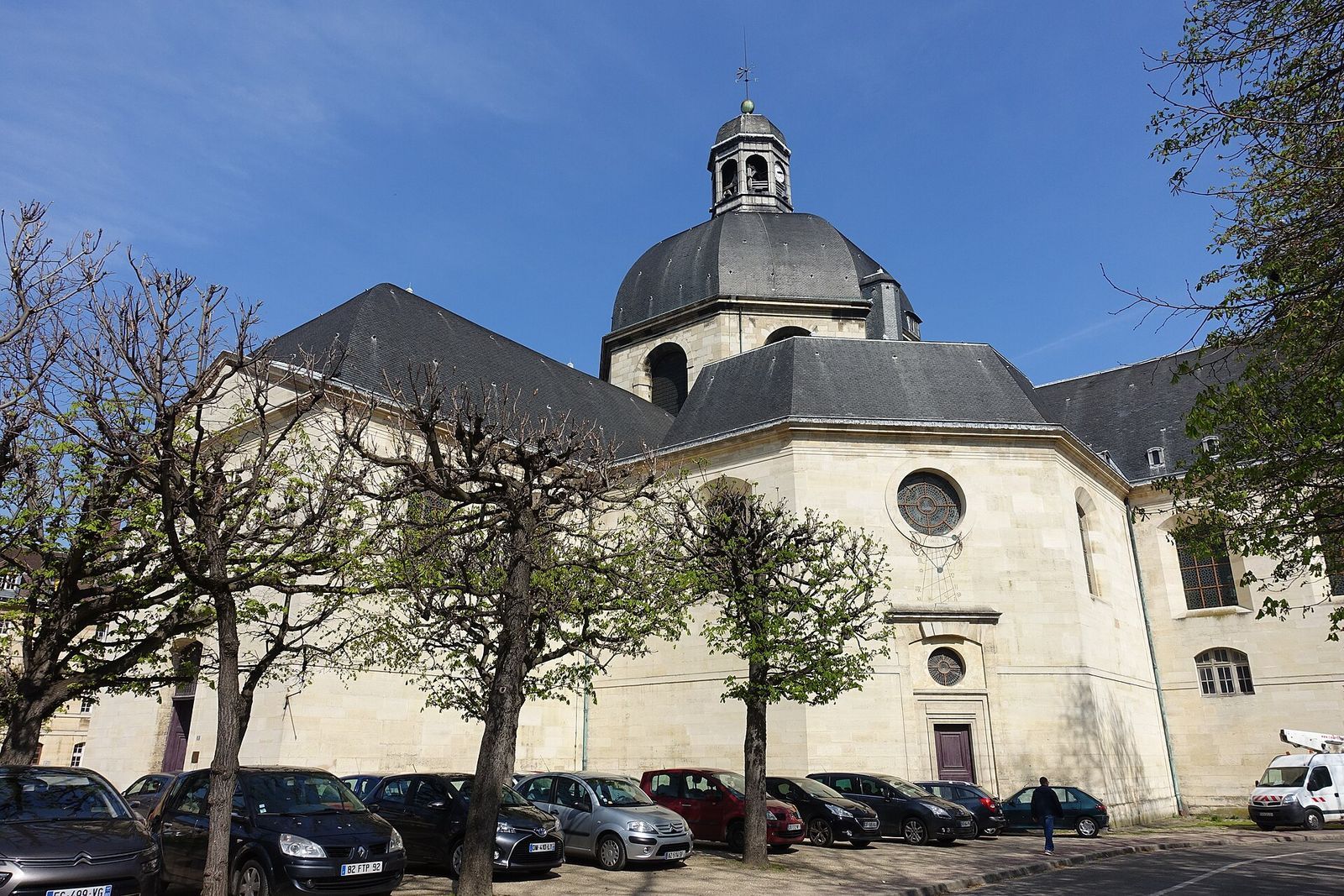
Saint-Louis de la Salpêtrière is a Catholic chapel within the Salpêtrière hospital complex in France and belongs to the Archdiocese of Paris. Built chiefly between about 1670 and 1678, it replaced an earlier chapel and has a classical-style façade. Its dedication honors Saint Louis, the thirteenth-century French king Louis IX, who was later canonized.
The Salpêtrière institution was founded in 1636 with a chapel dedicated to Saint Denis. Buildings on the site had previously been used under Louis XIII to make cannon gunpowder; they were abandoned by 1650. A chapel appears on Jean Boisseau’s plan of 1648. In 1659, Bossuet delivered a formal speech praising Saint Paul there, and in 1675 Fléchier celebrated the funeral of the Duchess of Aiguillon.
Louis XIV began developing the hospital complex in 1656 to serve the growing number of impoverished people arriving in Paris. It brought together a hospital, an institution for people with mental illness, accommodation for older people, an orphanage, a prison, and a chapel.
Royal Commission and Construction
In December 1669, Louis XIV commissioned a new chapel because the Saint Denis chapel was too small for the hospital’s needs. Louis Le Vau designed it under the supervision of royal official Jean-Baptiste Colbert. Le Vau died on 11 October 1670, before construction began, and architect Libéral Bruant continued the work using his plans. Cardinal Mazarin was a major donor.
Building began around 1670, and the chapel was largely complete by 1678. Its sacristy, a room used for church services and their preparation, was finished only in 1776.
Revolution and Later Use
In 1793, during the French Revolution, the chapel was converted into a stable and granary. Two years later, physician Philippe Pinel, an early reformer of care for people with mental illness, had patients at the Salpêtrière released from chains and treated as patients rather than criminals.
The chapel returned to religious use after the Revolution. Its high altar was dedicated on 26 May 1812. Following a long period of neglect, it again became a place of worship and also hosted exhibitions and concerts. It has been protected as a French historic monument since 1976.
Remains
Plan and Interior
Greek-Cross Plan
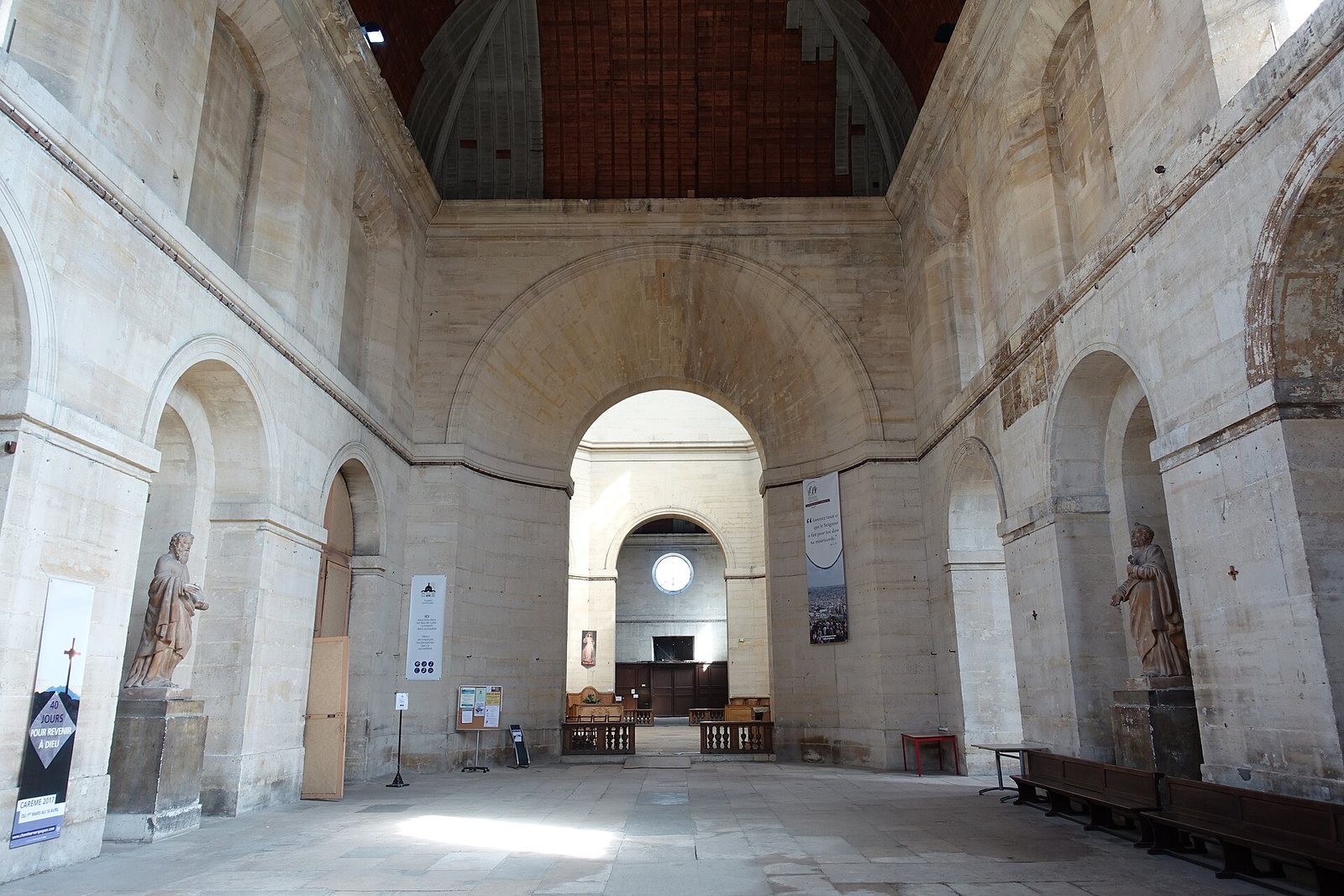
The chapel stands between wings of the hospital complex and has a Greek-cross plan, with four arms arranged around a central space. The arms are known as the main nave, the Lassay nave, the truncated nave, and the Mazarin nave. Four chapels occupy the spaces between them.
Central Dome
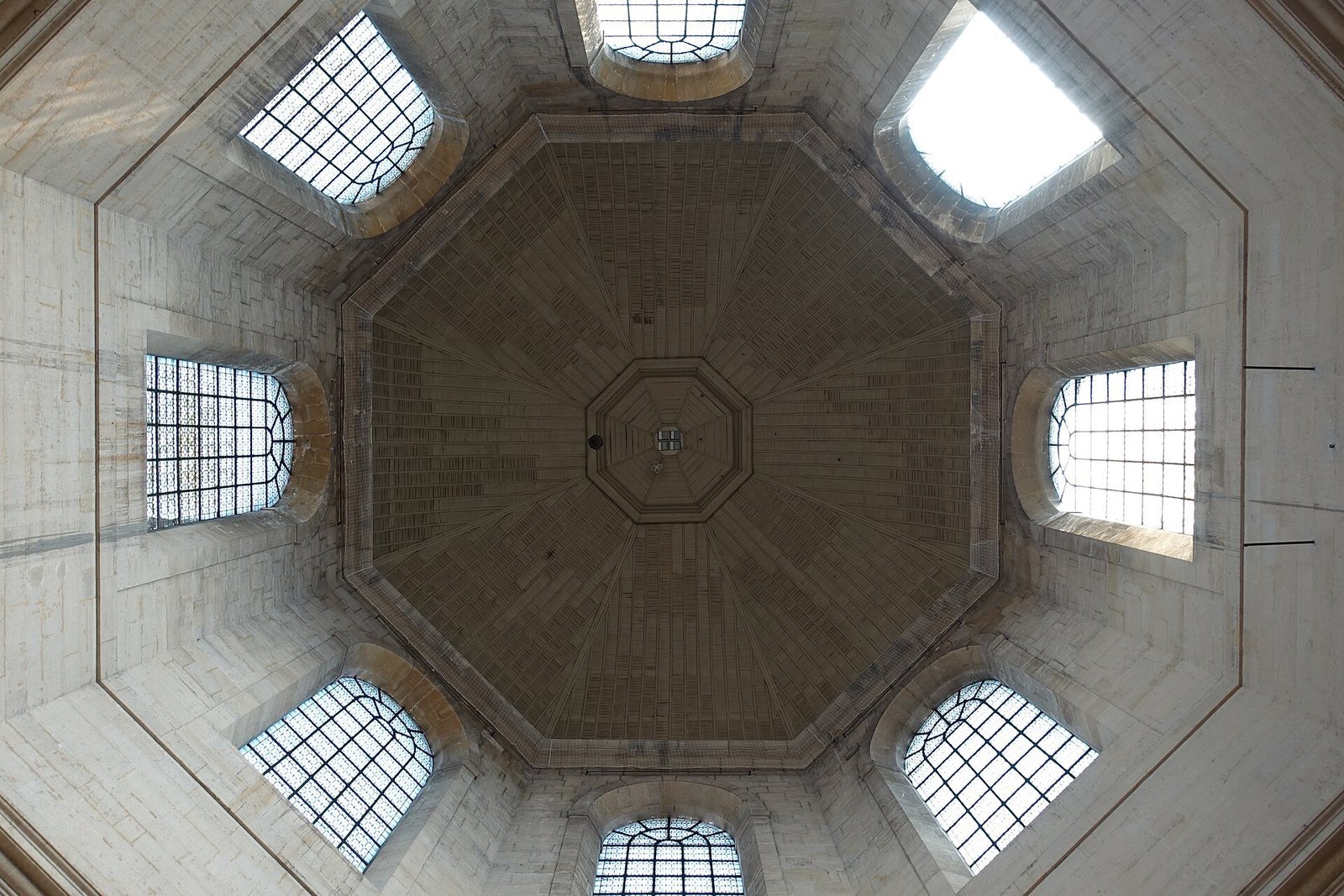
An octagonal dome rises above the central space to a summit 52 metres high. It is covered with tiles and topped by a lantern, a raised structure. Eight clear-glazed windows and a circular opening, or oculus, at the summit bring light into the interior.
Chapels and High Altar
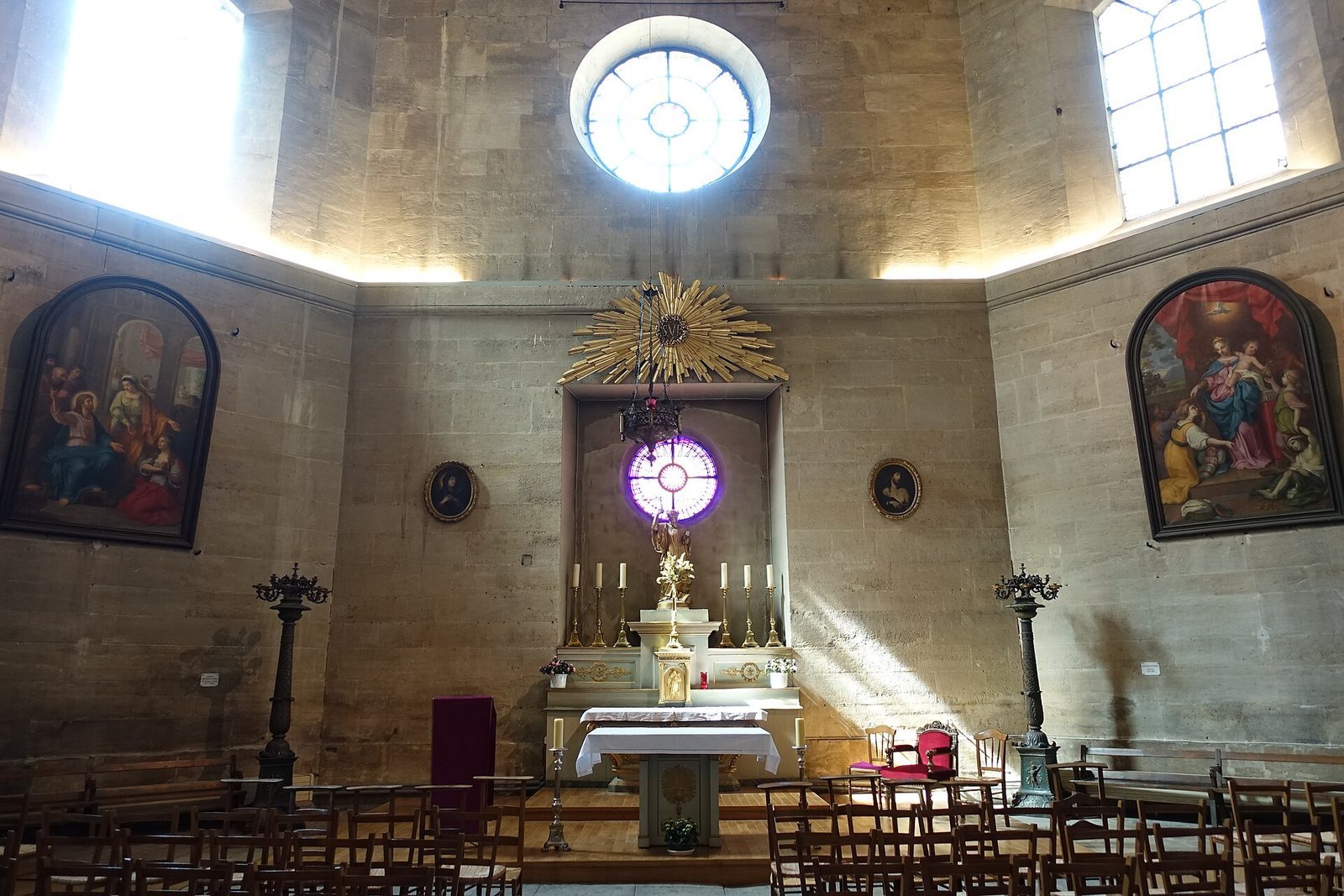
The four chapels are dedicated to Saint Vincent de Paul, the Good Shepherd, the Virgin Mary, and Saint Genevieve. Their arrangement allowed different groups receiving care, including impoverished people, blind people, sex workers, and people considered incurable, to attend services separately. The high altar is in the arm opposite the main entrance, which is shorter than the other three. Made in 1812 from elements of different earlier periods, it remained at the crossing, where the arms meet, until 1975.
Façade and Sculpture
Classical Façade
The façade has two levels. A porch with three arched openings forms the lower level, with the openings divided by Ionic columns, using a classical column style. Above, shallow wall projections resembling columns, called pilasters, have Corinthian-style tops. They frame a curved pediment, the crowning feature above the façade.
Porch Sculptures
Two large sculptural groups by Antoine Etex decorate the porch. The central work, Cain Struck by Divine Anger, shows Cain condemned to wander the world with his children after killing Abel. It brought Etex fame at the 1833 Paris Salon and led to a commission for two of the three principal sculptures planned for the Arc de Triomphe.
The group on the left, made in 1852, depicts Paris appealing to God for mercy for people suffering from cholera. The scene is associated with the Paris epidemic of 1853.
Art and Organs
Paintings and Sculpture
The chapel of the Virgin contains a life-size wooden sculpture, painted in several colors, of Mary mourning Christ; it dates from the eighteenth century. The chapel’s paintings include Jean-Baptiste Lesueur’s Christ with Saint Mary and Martha and works by Jacques-Augustin-Catherine Pajou. The Death of Joseph, attributed to Hubert and dated 1725, is also among the artworks. The chapel includes a sanctuary dedicated to Mother Teresa.
Main Organ
The main organ stands on a wooden gallery against the inner wall of the entrance arm. Attributed to Brieu and dated 1789, it has a case dating from the eighteenth and nineteenth centuries. It was enlarged toward the end of the eighteenth century, reconstructed by Antoine Suret in 1861, and rebuilt by Erwin Müller in the 1970s. A rear secondary section was added during the nineteenth-century enlargement.
The instrument has mechanical playing action, three manuals (keyboards), a pedal, and 31 stops, which select groups of pipes. Couplers link sections of the organ and connect them with the pedal.
Organ in the Chapel of Saint Vincent de Paul
A smaller pipe organ stands in the chapel of Saint Vincent de Paul. Built around 1860 by an unidentified builder, it has four stops.