Nagonoyama Kofun: An Ancient Burial Mound in Japan
Site at a Glance
- Rating
- 4
- Popularity
- Medium
- Country
- Japan
- Primary era
- Classical
- Eras represented
- Classical, Medieval, Early Modern
- Civilizations
- Yamato
- Site type
- Burial
- Remains
- Burial Mound
On this page8 sections
History
Nagonoyama Kofun is an ancient burial mound in Japan and part of the Osu group. It is thought to date to the middle or later fifth century, and was originally built in a south-facing, keyhole-shaped form. Nearby mounds are associated with Futagoyama, Hinode Shrine, and Fuji Sengen Shrine.
Temple Grounds and Public Parks
During the Edo period (1603–1868), the rear garden of a Zen temple was created on the site. Work on the garden removed the mound’s projecting front section, and the remaining part became incorporated into the temple grounds.
After the temple was abolished in 1872, Aichi’s first prefectural park opened on the land in 1879. When Tsuruma Park opened in 1909, the prefectural park’s functions moved there and the original park closed. Part of the site passed to Nagoya City in 1910, and a smaller municipal park opened in 1914.
A spring on the former temple grounds was celebrated as one of the three famous waters of Owari-Nagoya and continued to supply household water after the temple’s abolition. It was filled in during the Showa period (1926–1989). In February 2022, the park was redeveloped and renamed Nagonoyama Kofun Park.
Remains
The Mound
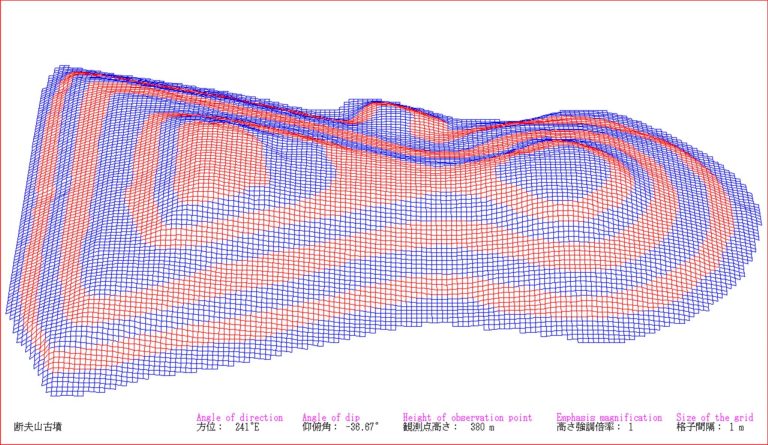
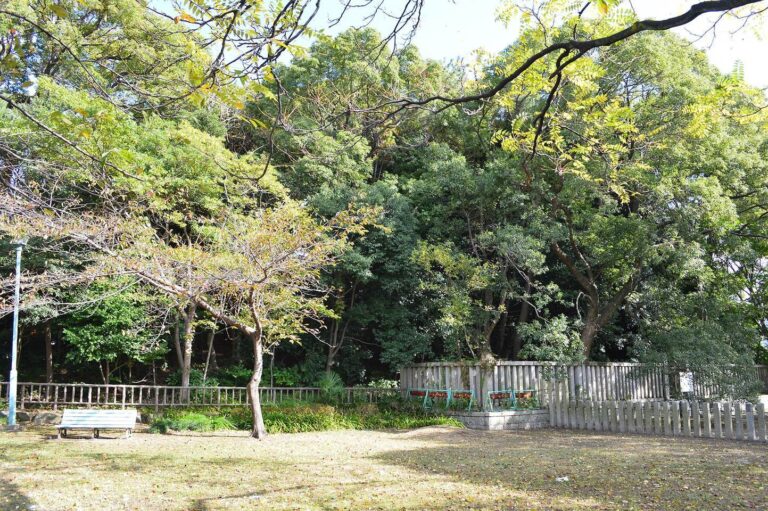
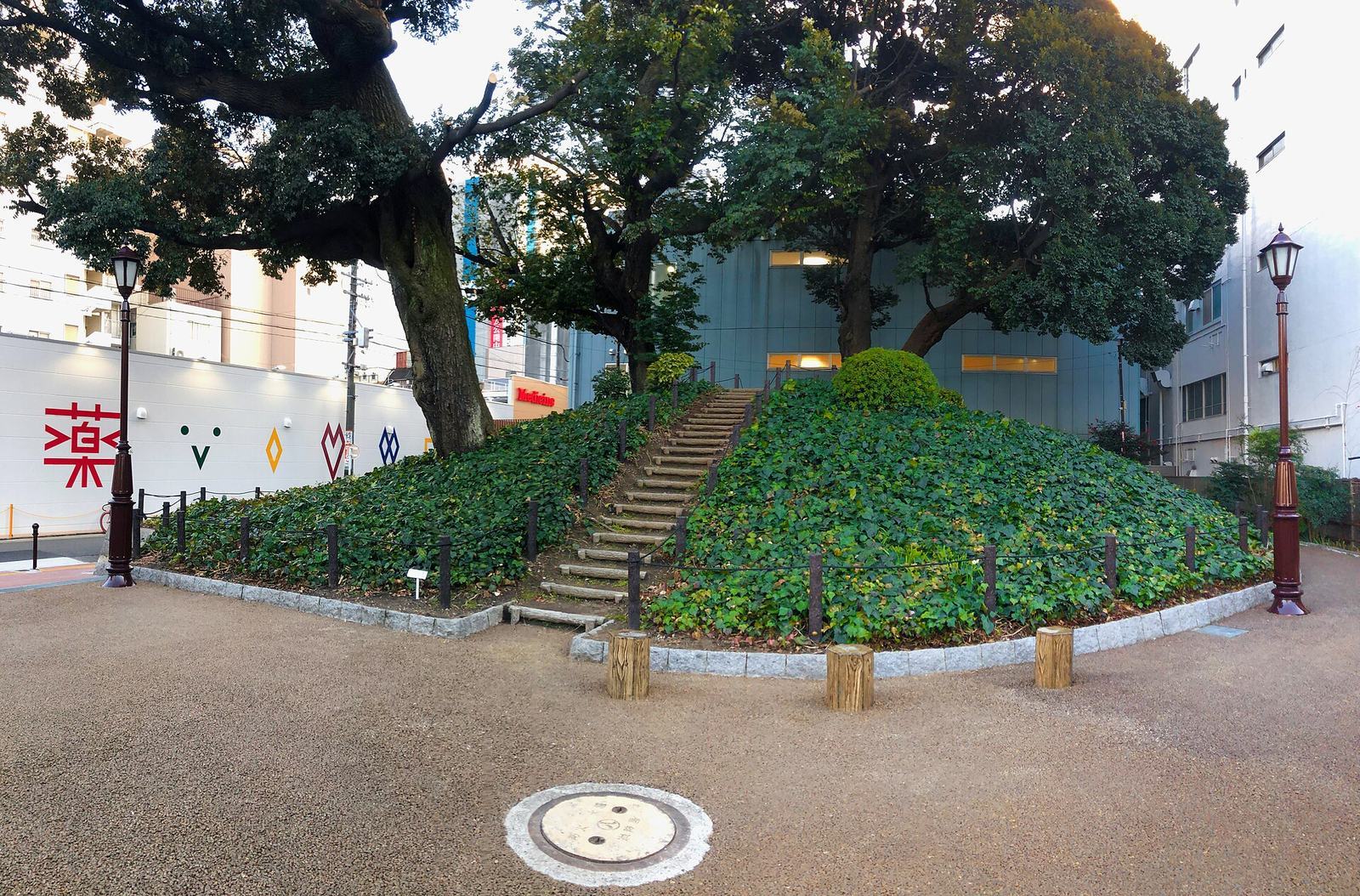
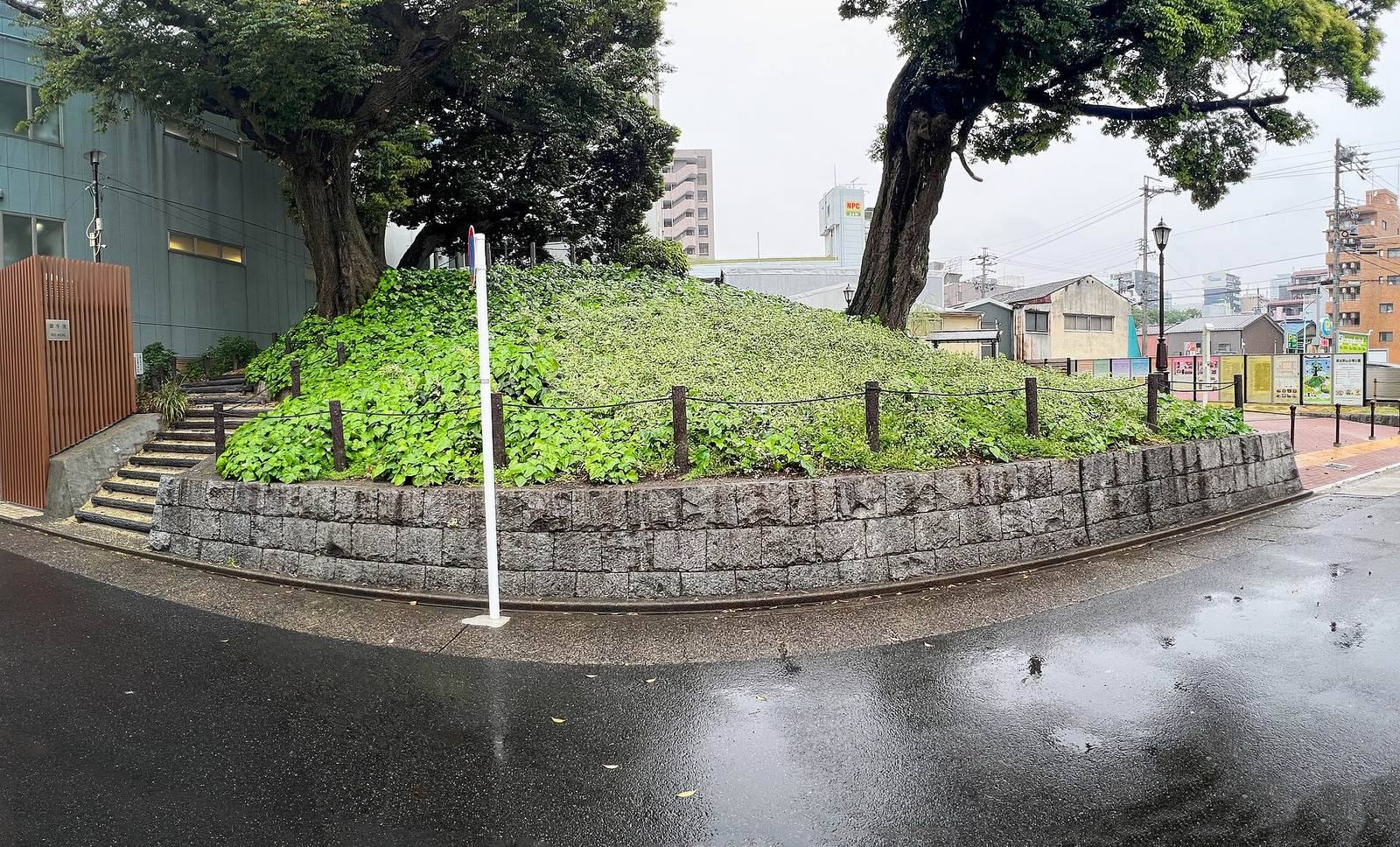
The surviving mound is the circular rear part of the original tomb. It measures about 22 metres across and 3 metres high, and buildings surround the site on three sides. Excavation indicates that earth was later added over an earlier circular mound, reshaping the surviving feature.
The 1995 Mound Trench
In January and February 1995, a trench 1–1.2 metres wide and 9 metres long was dug from the summit toward the northern slope. Excavation reached 60 centimetres by hand, then about 1.5 metres in the northern half by machine. At two deeper spots, mixed medieval and early-modern layers continued to 2 metres, with soil from the Kofun period beneath. This period of Japanese history is conventionally dated from about the third to the seventh century.
The 1991 Roadside Investigation
Work beside the road in December 1991 encountered soil disturbed after the Second World War to a depth of about 1.8 metres. Beneath it were pottery fragments from the Meiji era (1868–1912) and Taisho era (1912–1926).
Finds
The 1995 excavations recovered fragments of smoked roof tiles, mountain tea bowls, medieval pottery, and Haji ware plates, an ancient Japanese pottery, from medieval or early-modern layers. The Kofun-period layer contained a fragment of Sue ware, another type of ancient Japanese pottery, and several cylindrical haniwa fragments. Haniwa are clay objects associated with burial mounds. A single haniwa fragment was also collected near the surface during the 1991 investigation. The excavation finds are held by the Nagoya City Museum. A lidded, footed Sue ware jar with a short neck is traditionally said to have been found on the mound’s southern side, in the former front section, during the creation of the temple garden. It is preserved at nearby Fuji Sengen Shrine.
Spring Monument
A monument that once stood at the spring’s location was moved into the park at residents’ request as part of the park’s renewal.