Saint-Martin Church of Sartrouville: A Romanesque Parish Church
Site at a Glance
- Rating
- 4.3
- Popularity
- Medium
- Country
- France
- Primary era
- Medieval
- Eras represented
- Medieval, Modern
- Civilizations
- French
- Site type
- Religious
- Remains
- Church
On this page17 sections
History
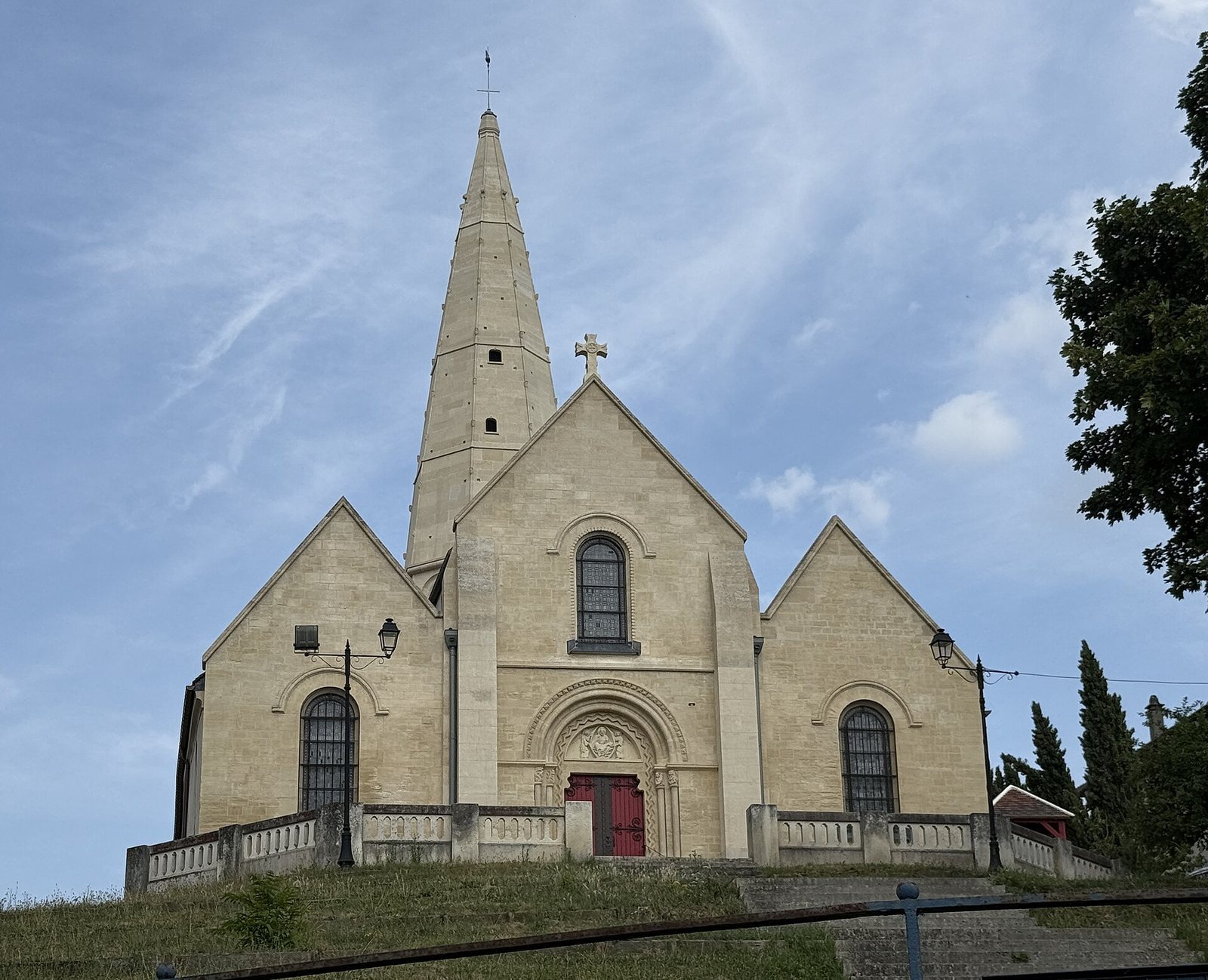
Saint-Martin Church of Sartrouville is a Roman Catholic parish church in Sartrouville, France, within the Diocese of Versailles, the Catholic Church’s territorial jurisdiction. It serves a local parish community and is dedicated to Martin of Tours, a fourth-century bishop revered as a saint. The church is Romanesque, a medieval European architectural style, and its construction is dated to 1009.
Foundation and medieval development
Robert II the Pious, king of France from 996 to 1031, probably initiated the project. He donated about twenty houses to the nearby monastery at Argenteuil, a religious community living under a shared rule. Work on the church continued into the fourteenth century. The parish marked its thousandth anniversary in 2009.
The Hundred Years’ War
During the Hundred Years’ War, a series of conflicts between France and England from 1337 to 1453, the Dauphin, the French heir to the throne, destroyed the church’s bell tower. The Dauphin later became Charles V. Bell towers in Île-de-France were demolished to keep English troops from using them as landmarks. Saint-Martin’s tower was rebuilt in 1369.
The French Revolution
During the French Revolution, the political upheaval in France from 1789 to 1799, the parish priest, Finet, swore an oath to the Constitution in January 1791. He withdrew it in May, choosing to remain faithful to his religious principles. Claude Duval, a former vicar of Sartrouville, was killed on 3 September 1792 during the September Massacres, a wave of killings that included many priests.
Later history and conservation
A rectory was built in 1865 and became the Museum of Sartrouville Traditions and Trades in 1989. In 1902, phylloxera, a pest that damages grapevines, devastated Sartrouville’s vineyards. Competition from wine-producing regions elsewhere in France further discouraged replanting.
The church was listed as a historic monument on 6 June 1933. The statue The Charity of Saint Martin received historic-monument classification in 1965, and the statue of Christ in 1969. A new renovation cycle began in 2022.
Remains
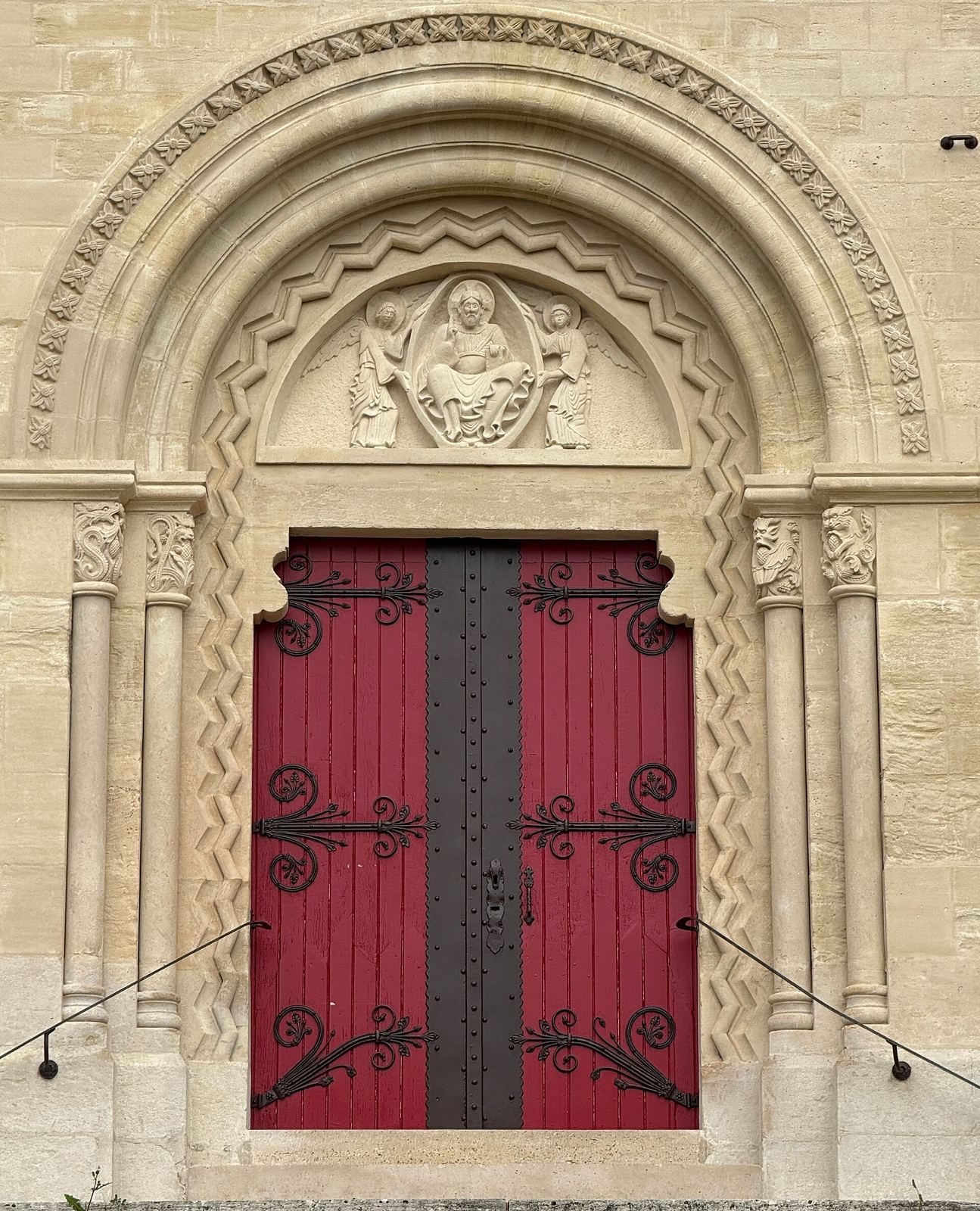
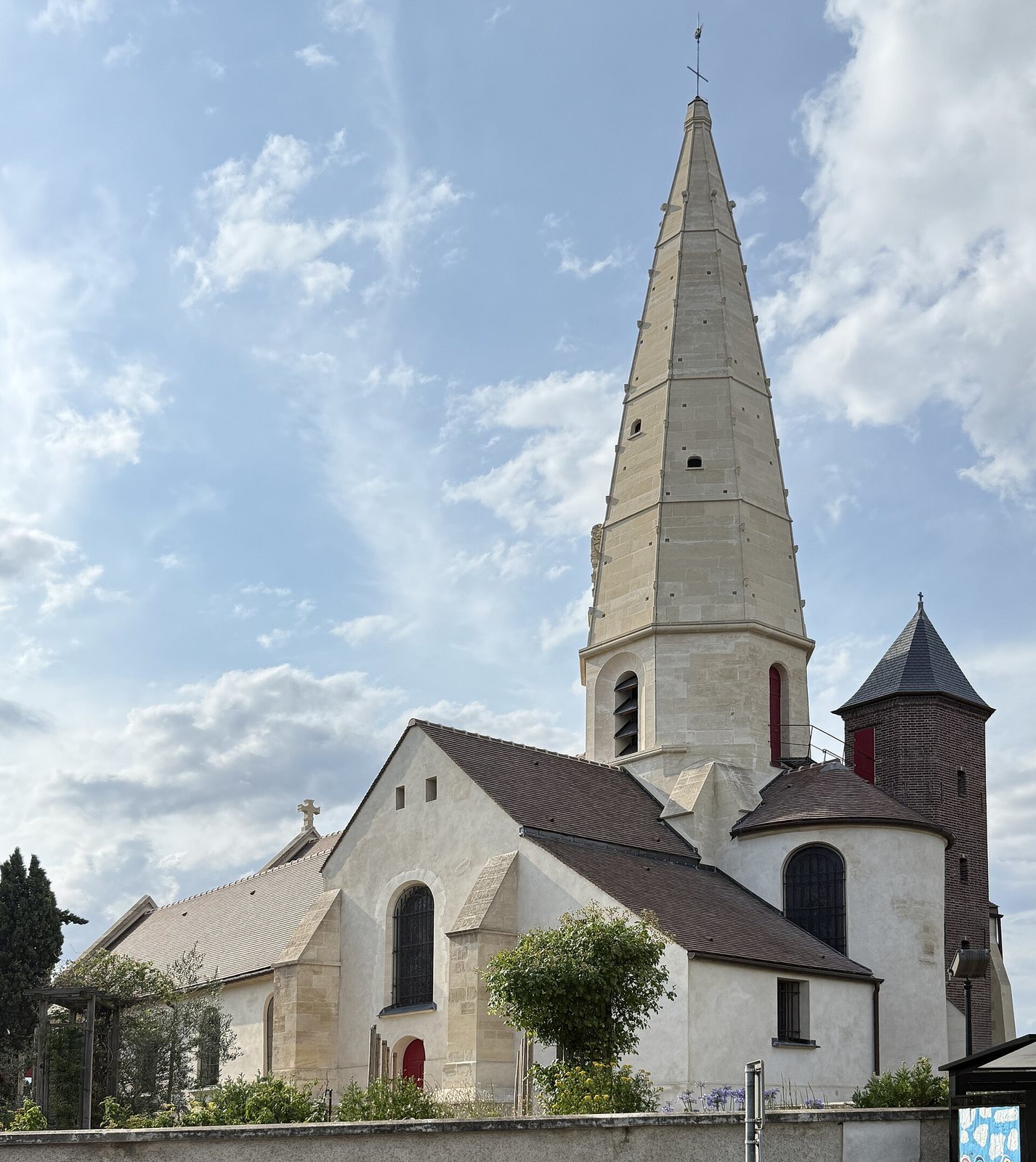
The Romanesque church stands on a hill in Sartrouville’s Vieux Pays district, overlooking the town and the Seine valley. It is at Place du Champ de Mars, where Rue Jean-Mermoz, Boulevard de Bezons, and Route de Cormeilles meet. Its surviving features include a stone bell tower, sculptures, stained-glass windows, and cultivated vines in front of the church.
Bell tower
A medieval stone spire rises above the octagonal stone bell tower, which stands over the transept, the crosswise section intersecting the main body of the church. It is the only octagonal stone bell tower in Île-de-France.
Sculptures and memorial
The Charity of Saint Martin
This sixteenth-century wooden, polychrome statue, painted in several colors, shows Martin on horseback cutting his cloak to give to a poor man. The horse turns its head toward him. The same subject appears in other churches in Île-de-France as sculpture, stained glass, and fresco.
Christ bound with ropes
A wooden, polychrome statue in the north arm of the transept portrays Christ bound with ropes during the events leading to his crucifixion.
Claude Duval memorial
A devotional plaque near the south side of the church and the choir honors Blessed Claude Duval. In Catholic usage, “Blessed” is an honorific for someone formally recognized for public veneration.
Stained glass
Nave windows
Windows line both sides of the nave, the main body of the church. On the left when entering through the central door, a window showing The Baptism of Christ by Saint John the Baptist stands beside the baptismal font, followed by a window depicting Saint Teresa of Ávila. Both date to 1868. Jean-Baptiste Lefevre donated the baptism window, while M. Mallard, a member of an old Sartrouville family, gave the Teresa window.
Choir windows
Windows in the choir show Saint Martin sharing his cloak with a poor man and Saint Vincent, the patron saint of winegrowers. Their similar execution suggests they may be the work of the same stained-glass maker, Mena.
Church grounds and vines
Rectory site
The rectory occupies the ground of the former cemetery that once surrounded the church.
Vines
The vines in front of the church are the last cultivated vines in Sartrouville, retained by tradition. Nineteenth-century local varieties included Gamay noir, Meunier, and Morillon. In 2021, aging vines were renewed and the planted area grew from 5,200 to 7,000 square metres.