Martinikerk in Doesburg: A Late Gothic Church Dedicated to Saint Martin
Site at a Glance
- Rating
- 4.3
- Popularity
- Medium
- Country
- Netherlands
- Primary era
- Medieval
- Eras represented
- Medieval, Modern
- Civilizations
- Dutch, Holy Roman Empire
- Site type
- Religious
- Remains
- Church
On this page12 sections
History
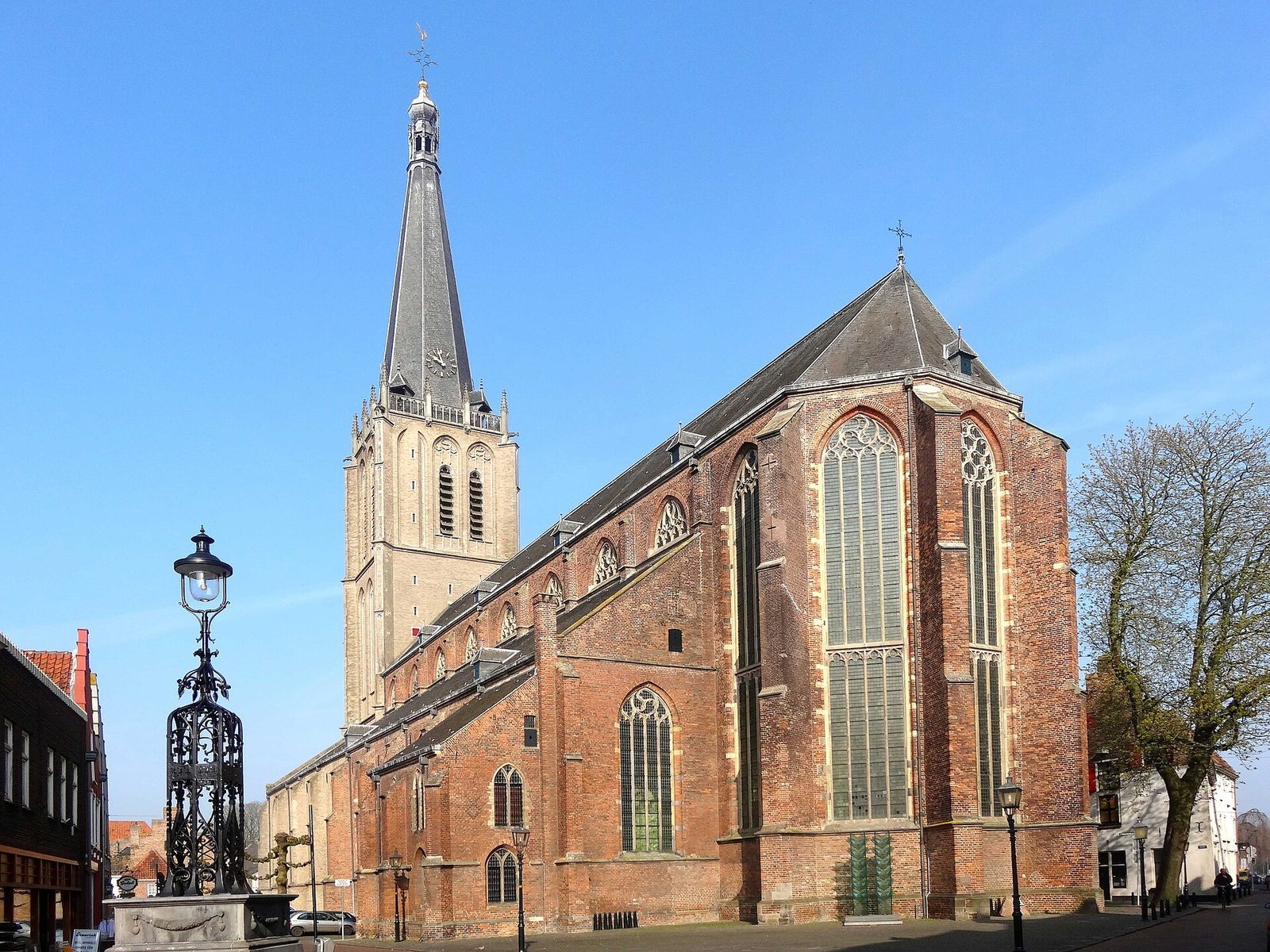
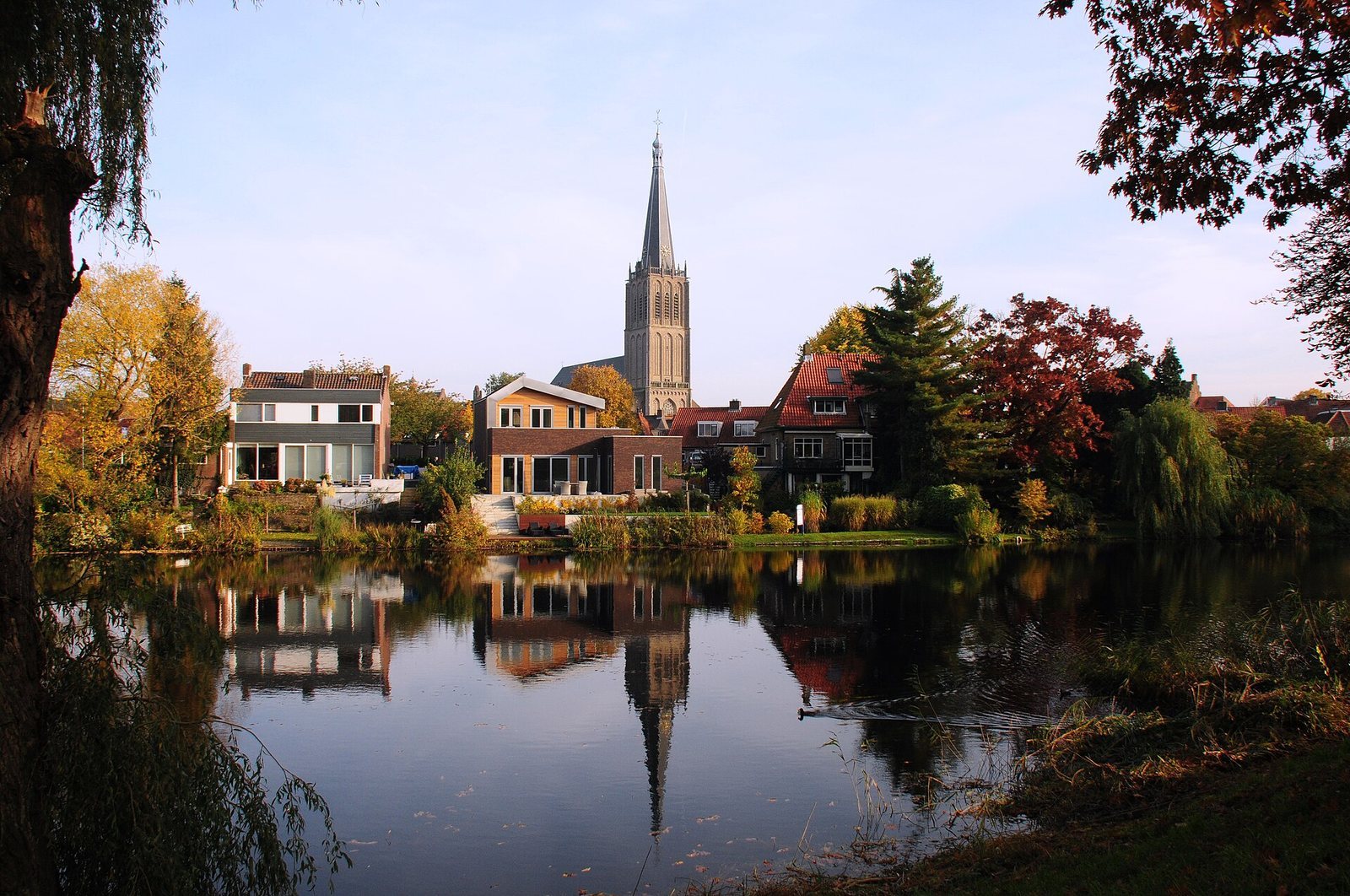
The Martinikerk is a late Gothic basilica in central Doesburg, Netherlands, dedicated to Saint Martin, a fourth-century Christian bishop venerated as a saint. A basilica has a long central nave and side aisles, and the church’s architecture belongs to the Lower Rhine Gothic style, a regional form of Gothic associated with the Lower Rhine. Its form developed chiefly in the fifteenth century. The church’s scale and rich finish reflect Doesburg’s former importance as a Hanseatic town, part of a commercial association of northern European towns.
Predecessor and fifteenth-century church
A Romanesque church stood on the site by 1285, but a flood destroyed it in 1340. The present church was built in Doesburg’s centre, and its form took shape mainly during the fifteenth century. Its tower was completed around 1430.
Fires and religious change
A major fire damaged the church in 1483, after which it was rebuilt in its former form. Lightning caused another serious fire in 1547, and a further vault collapse followed in 1552. Doesburg adopted the Reformation in 1586. This sixteenth-century movement led to the establishment of Protestant churches across much of Europe. The church thereafter was also commonly called the Reformed Church, while remaining dedicated to Saint Martin.
War, restoration, and later use
In 1672, French troops set fire to the tower during the Dutch War, a conflict between France and the Dutch Republic and its allies. Lightning caused another fire in 1717. In 1783, the church became the first in the Netherlands to receive a lightning rod.
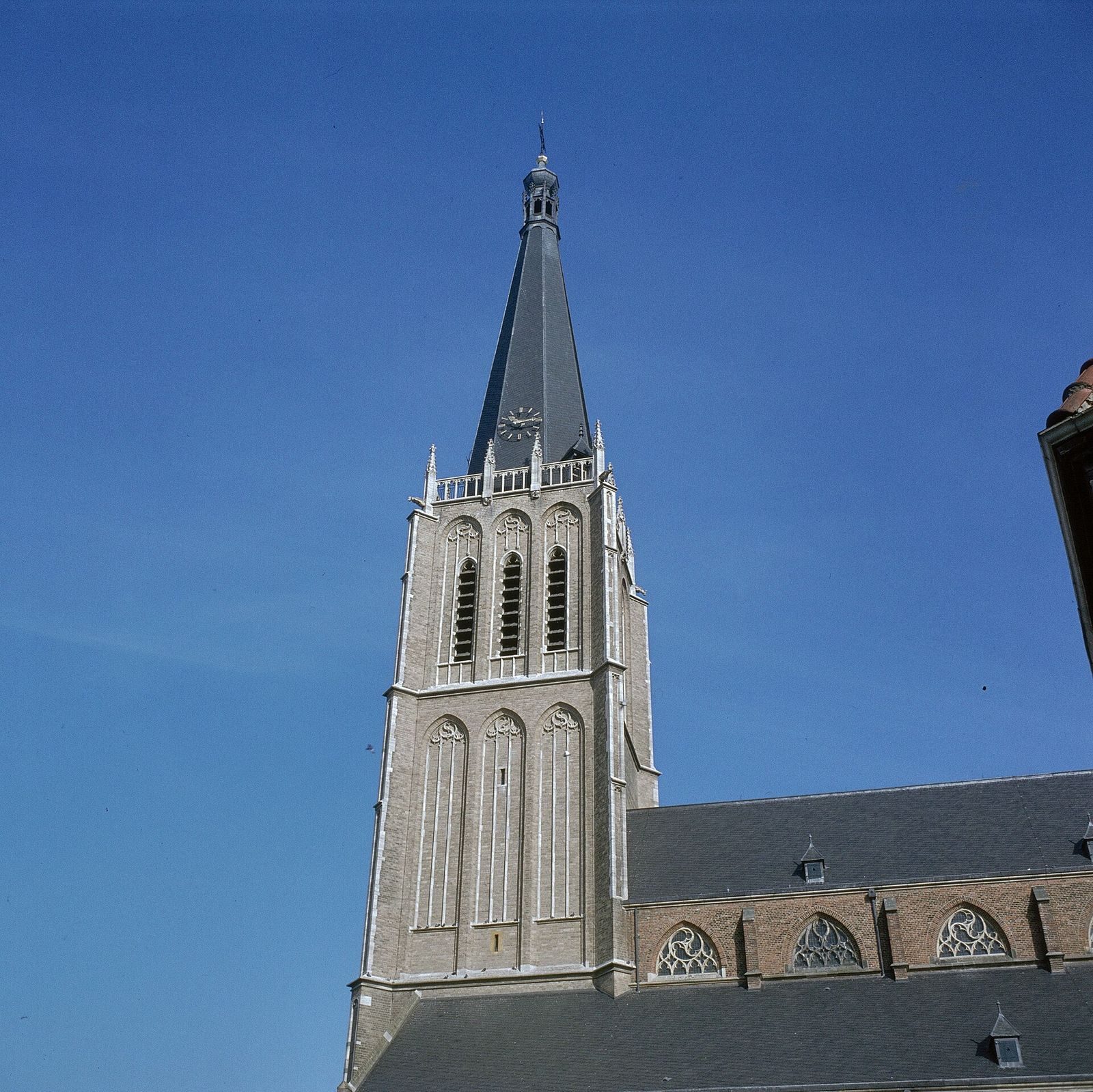
Restoration work carried out from 1919 to 1930 was followed by severe wartime destruction. On 15 April 1945, retreating German troops blew up the tower. The west part of the church was destroyed, and the remainder suffered heavy damage. A Van Gelder organ and much of the seventeenth-century furnishings were lost. The tower was reconstructed by 1965, and restoration of the whole church was completed in 1972. The building was designated a Dutch national monument in 1966.
Later, the church began hosting events and rentals alongside regular worship to help meet the costs of maintaining the building. An adaptable redesign placed facilities including toilets, a kitchen, shop, and cloakroom in an enclosed basement. The building also houses the Doesburg Silver Museum.
Remains
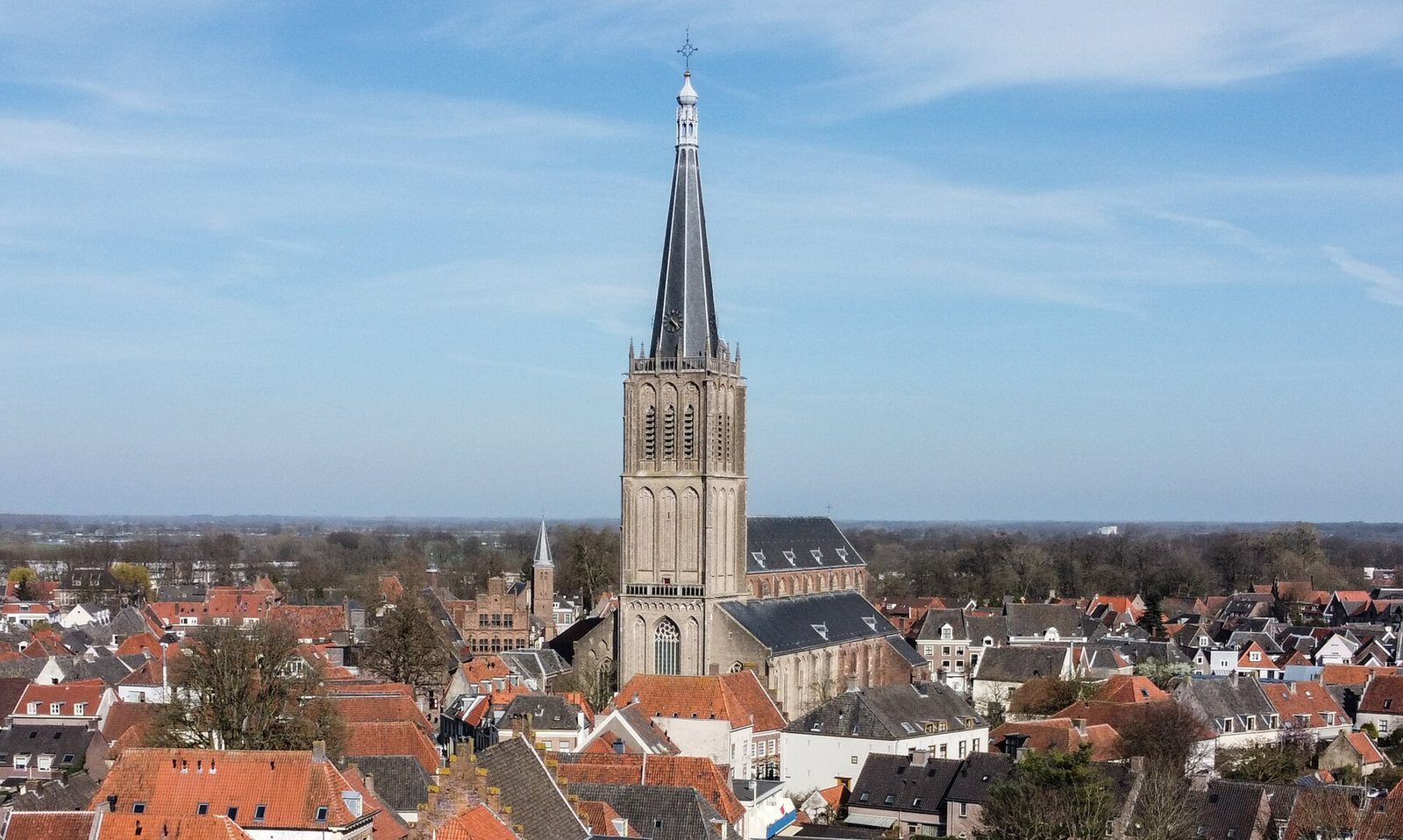
The church has a long central nave, or main central space, and side aisles, with no transept, the crosswise section that would intersect the nave. The side aisles extend alongside the tower and continue to the choir, the area near the altar traditionally occupied by clergy and singers. The tower rises 94 metres and is the tallest church tower in Gelderland and the eighth tallest in the Netherlands.
Vaults and structural features
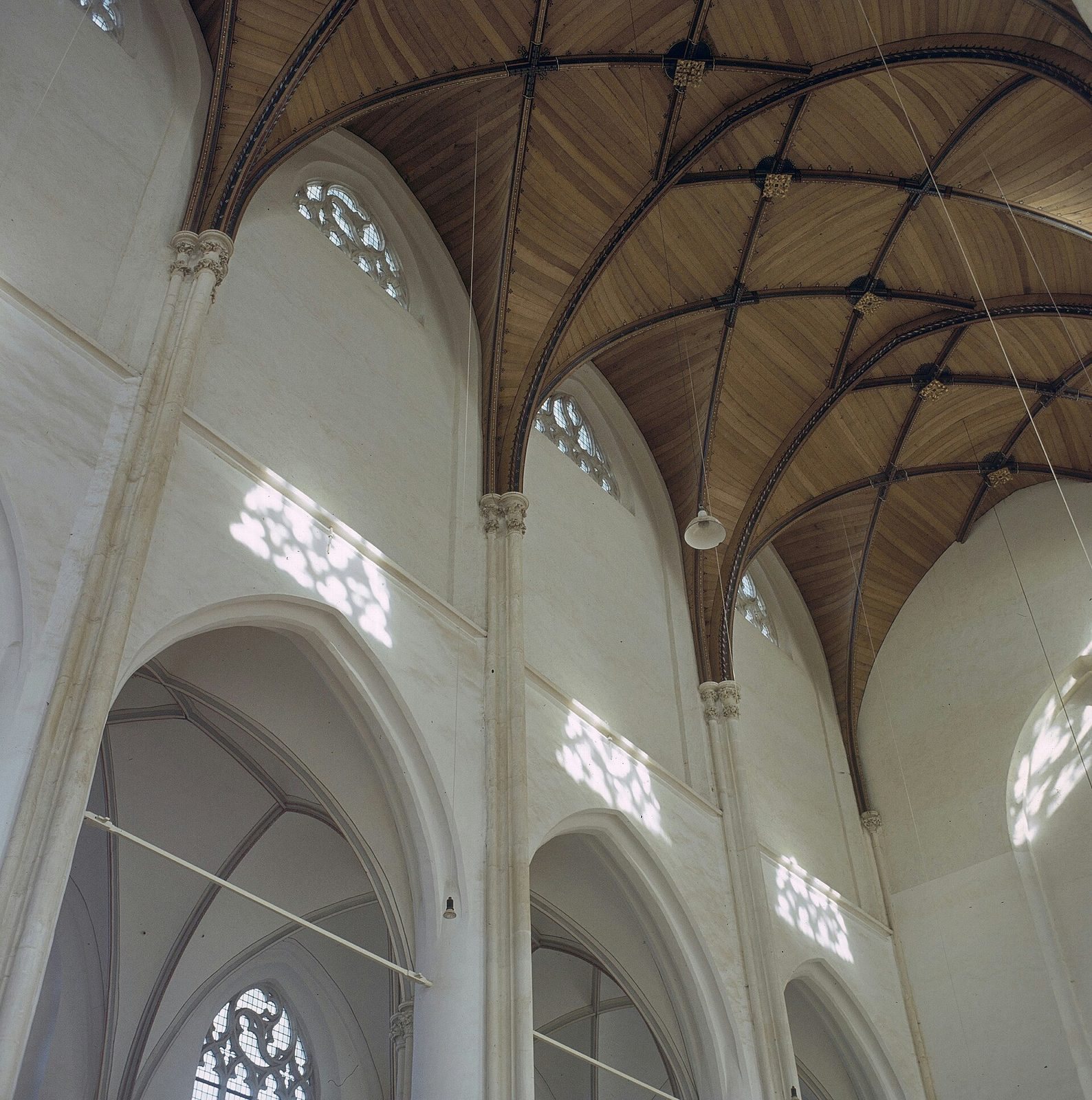
The nave probably had stone vaulting throughout originally. Some of its bays lost their vaults after the lightning fire of 1547. Stone net vaults, whose ribs form a net-like pattern, survive in the side aisles, while wooden vaults have covered the nave since 1888. A pillar bears a record of the further vault collapse in 1552.
Paintings and painted pillars
A mural of Saint Agnes, an early Christian martyr, in the south aisle may date to the fifteenth century. Paintings in the vaults of St Anne’s Choir date to around 1530; Saint Anne is traditionally identified as the mother of Mary. Pillar paintings pair the twelve articles of the Apostles’ Creed, a traditional summary of Christian belief, with corresponding passages from the Bible.
Furnishings and memorials
Small sixteenth-century armorial tomb slabs, grave slabs bearing coats of arms, survive in the church. Seventeenth-century furnishings include the pulpit, baptismal enclosure, benches, communion table, and two chandeliers. Beside Vice Admiral Wemberich van Berchem’s gravestone is a memorial plaque dated 1855. A war memorial stands on the east side of the church.
Organs
Three organs are housed in the church. The main organ, built in 1916 by E.F. Walcker & Cie., stands on the west gallery. It has four manuals, or keyboards, 66 registers that control sets of pipes, ten transmissions that allow a stop or part of the instrument to operate in another division, and 5,415 pipes. A Flentrop choir organ dates to 1953, while a one-manual cabinet organ by Freytag dates to around 1800.
Carillon
Early bells and later alterations
The carillon, a set of tuned bells arranged for musical performance, began with a 20-bell instrument sent on trial in 1655 by the bell founders Pieter and François Hemony. An attempt to raise money for it that year failed. In 1656, Doesburg mayor Jacob Muijs bought it largely on his own responsibility, without arranging payment; the Hemony heirs remained owed money for a long time. The bells hung in a roof turret at the northeast corner of the walkway beside the tower spire, a position intended to improve their sound around the church. Jan Albert de Grave supplied three additional small bells in 1723. During a 1912 restoration, the bells were moved inside the tower and one of de Grave’s bells was recast by Petit & Fritsen. They then sounded weak in relation to the tower.
Postwar carillon
After the tower’s destruction in 1945, a heavier carillon was installed using eight of the sixteen Hemony bells salvaged from the rubble. Following fundraising, a 47-bell carillon was installed in 1965, with Eijsbouts supplying its other 39 bells. It uses meantone, a historical tuning system, and is transposing, meaning its sounding pitches differ from those usually assigned to its notes. Its chromatic range runs from D-flat1 through E-flat1 and F1 to D-flat5; D-flat1 is connected as C1. Two additional tolling bells are a D1 cast in 1549 by Albert Hachman and an E1 cast in 1639 by Peter van Trier, Johann Philipsen, and Willem Eevers. Three small bells, two by Hemony and one by de Grave, hang in a roof turret for the automatic chime.