Szaniec Mewi: A Coastal Fort at the Vistula Mouth
Site at a Glance
- Rating
- 4.4
- Popularity
- Medium
- Country
- Poland
- Primary era
- Modern
- Eras represented
- Modern
- Civilizations
- German, Kingdom of Prussia
- Site type
- Military
- Remains
- Fort
On this page9 sections
History
Szaniec Mewi is a coastal fort in Gdańsk, Poland, built to defend the Vistula mouth after changes to the Gulf of Gdańsk shoreline left the entrance farther from Wisłoujście Fortress, which had previously guarded it. The surviving fort’s principal construction dates to 1844–46, followed by its conversion to coastal artillery in 1874–76.
Early fortification and Prussian rebuilding
A French fortification stood on the site from 1811–13, during the Napoleonic era, the period associated with Napoleon Bonaparte and the wars of the early nineteenth century. It was a circular earthen enclosure with an artillery battery, built beside the seashore and linked to Wisłoujście Fortress by an earthwork. A Vistula flood badly damaged it in 1829, and the structure did not survive.
Prussian forces, from a European kingdom centered in German-speaking lands, built a replacement in 1844–46. They reworked it as a coastal-artillery fort in 1874–76, and it operated in that role until 1912. Advances in fortification had already made the site obsolete by 1895, when its guns were removed and transferred to Brzeźno Fort, now within Brzeźno Park. The military demilitarized and abandoned Szaniec Mewi in 1912. In the years that followed, workers levelled its ramparts and moat and built port workshops on the cleared ground.
Wartime use and port development
The Polish Maritime Club used the site for several years between the world wars. During the 1–7 September 1939 defense of Westerplatte, the peninsula’s Polish Military Transit Depot came under German attack launched from the fort area. After the Polish capitulation, the fort became the first temporary prisoner-of-war camp for captured Polish soldiers.
Construction of North Port and widening of the shipping channel near Five Whistles Bend during the second half of the twentieth century changed the fort’s surroundings. Further port development and channel widening threaten the surviving structures. Vandalism and theft affected the fort’s fittings and metalwork. Following interventions by local heritage advocate Romuald Szymański, Gdańsk’s provincial monument conservator arranged temporary protection.
Remains
Layout and surviving works
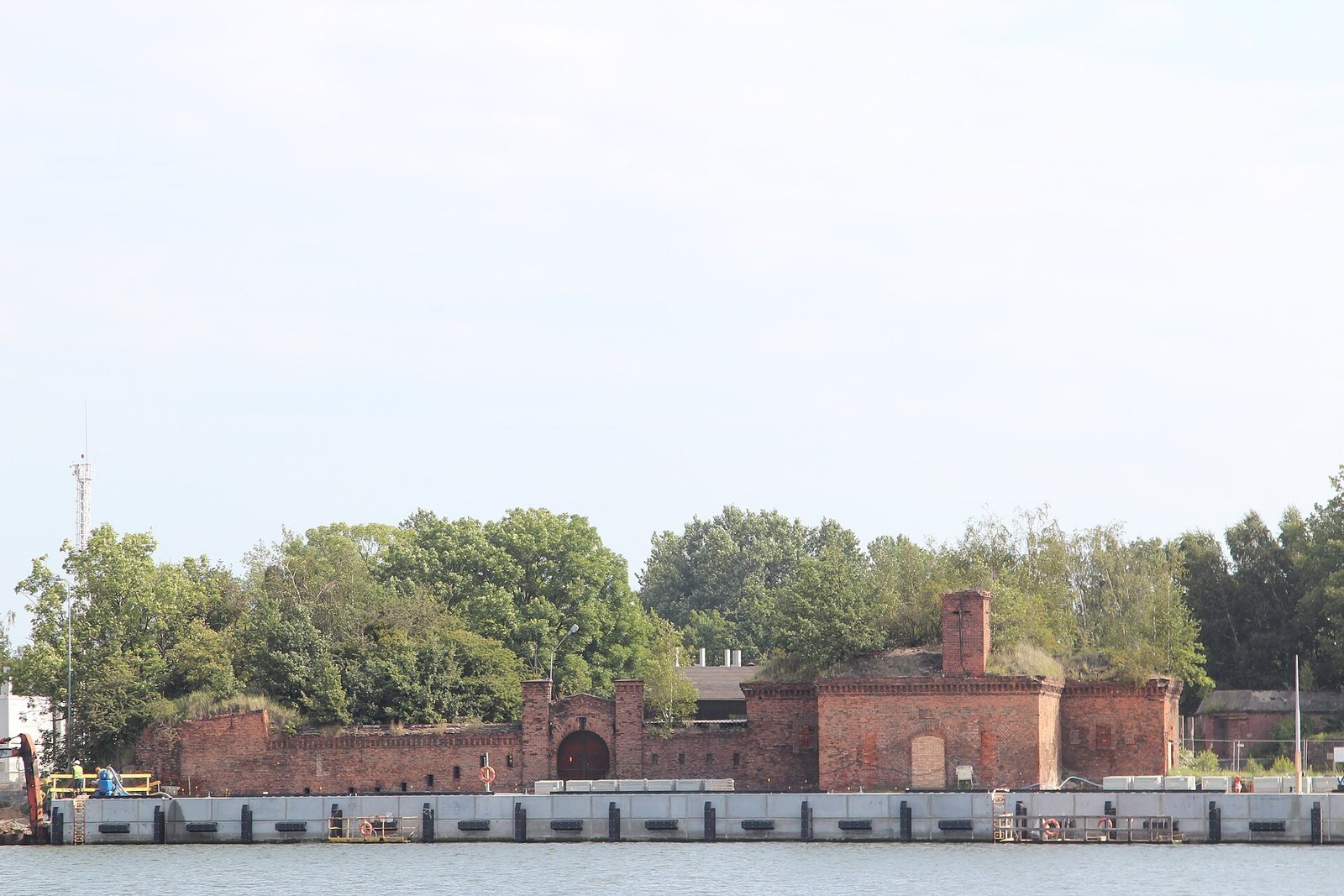
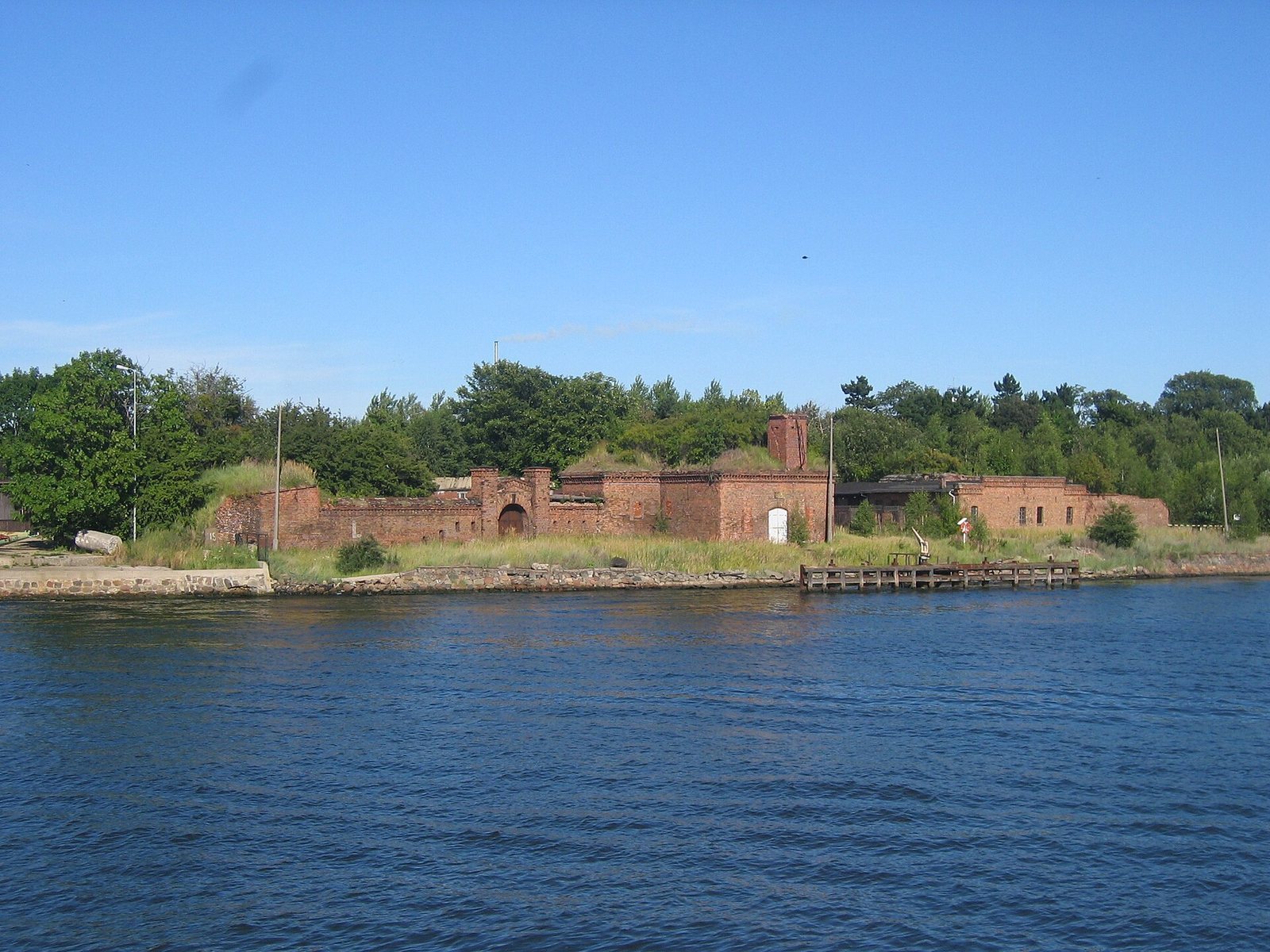
The fort remains lie at Mew Quay in the Przeróbka district, near Five Whistles Bend, north of Wisłoujście Fortress and almost beside the Martwa Wisła. They are within the Gdynia Maritime Office’s aids-to-navigation base and now lie some distance from the Gulf of Gdańsk. The later fort was laid out as a five-sided earthen work surrounded by a water-filled moat. Its southern entrance crossed the moat by a drawbridge, while a cross-shaped masonry structure occupied the interior.
Fort buildings and artillery works
Inner structure and gorge wall
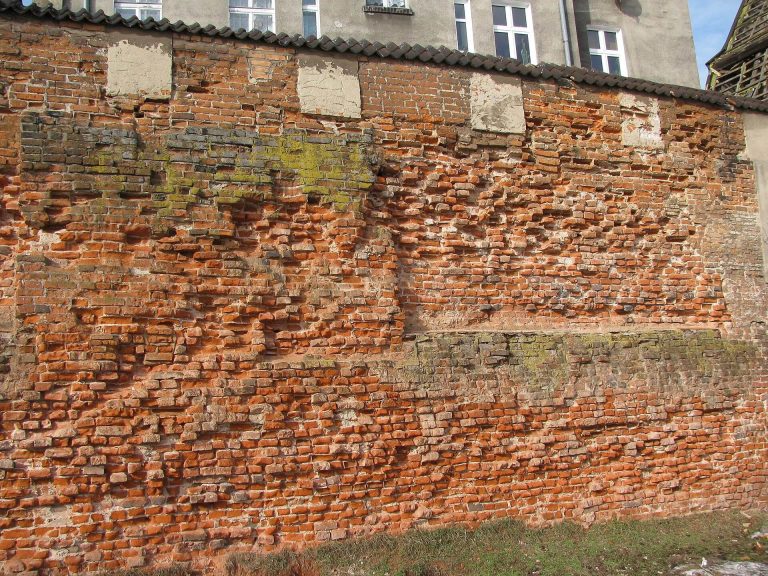
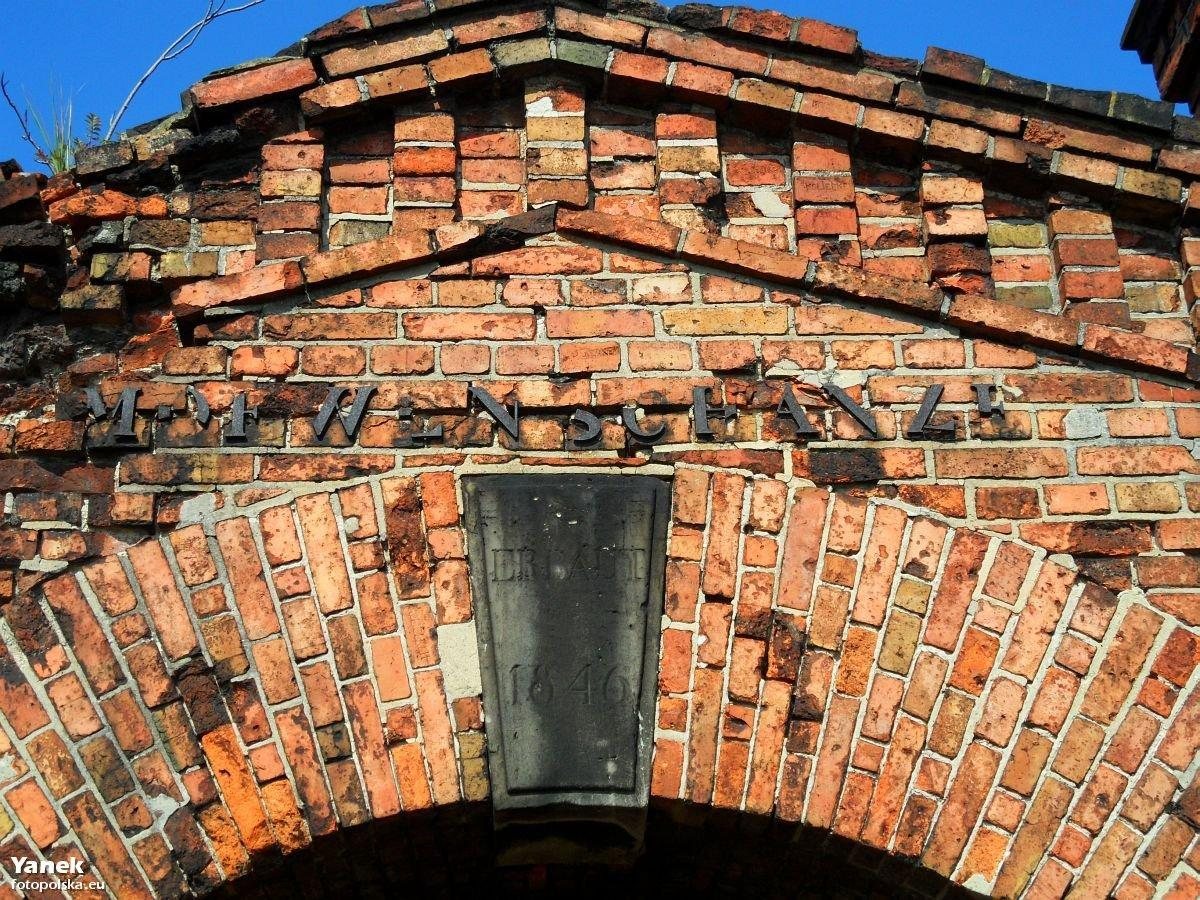
The cross-shaped inner defensive structure survives in brick, together with a wall closing the fort’s rear side and its gate. A stone block above the gate bears the inscription Erbaut 1846
, meaning “Built 1846.” Fragments of metal lettering spelling MOEWENSCHANZE
remain above it.
Powder magazine
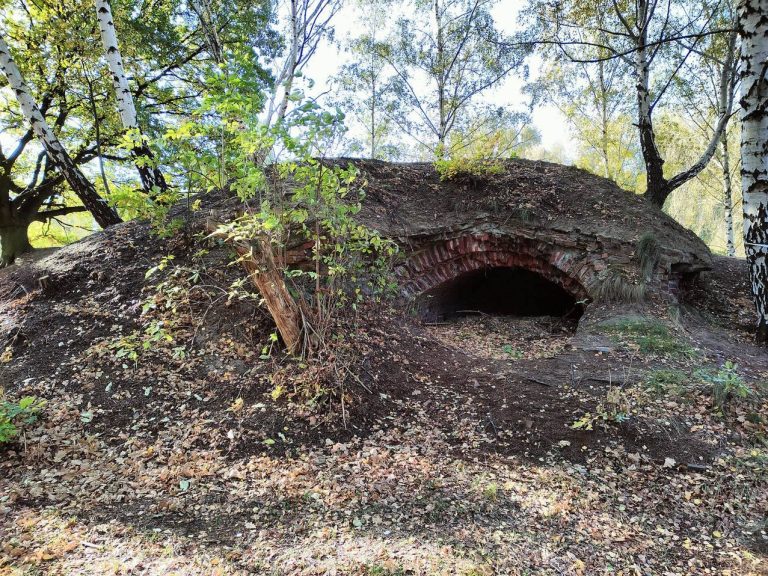
A brick powder magazine stands on the western side of the fort. It forms part of the surviving group of fort buildings.
Gun positions and shelters
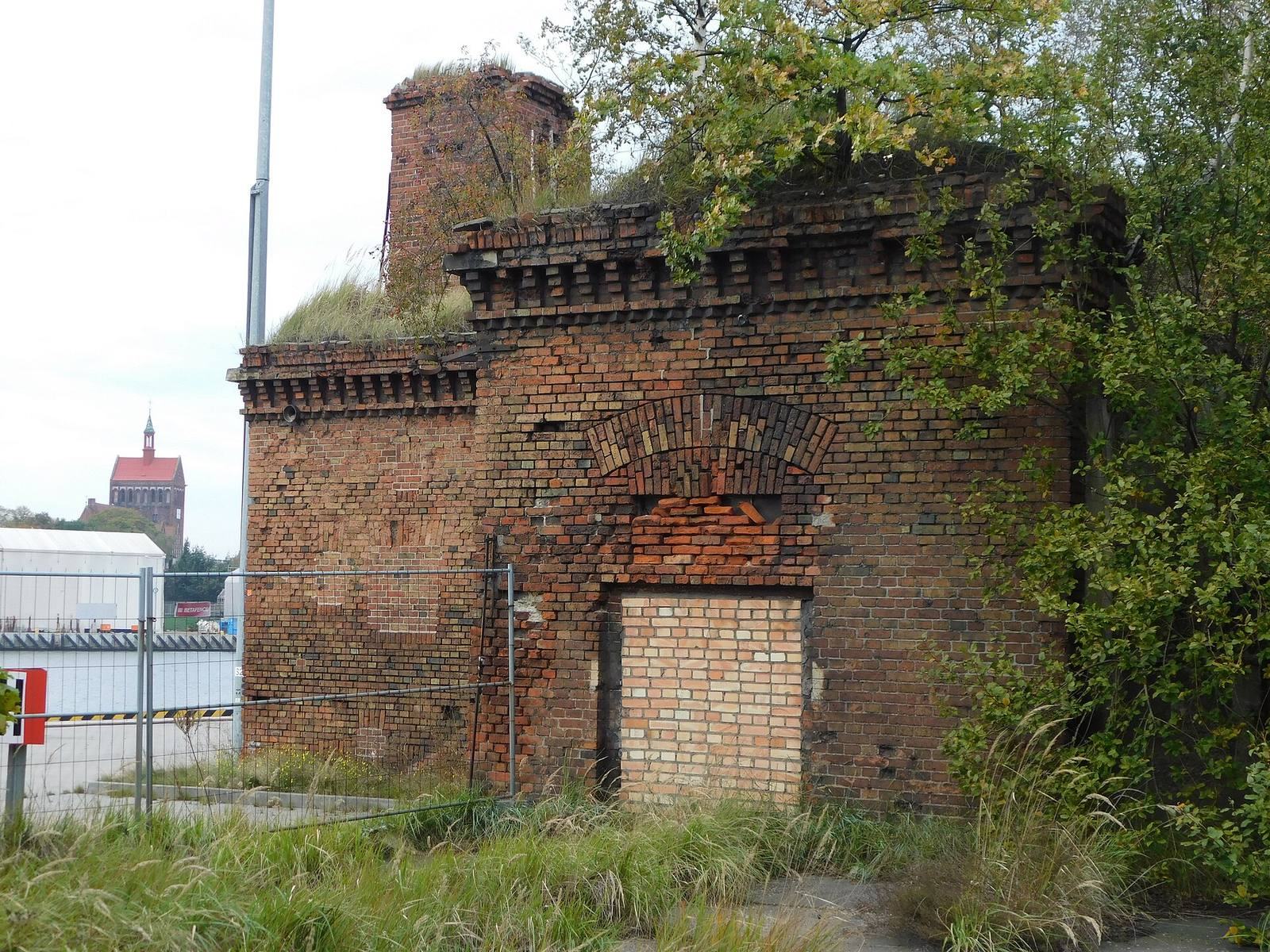
Three positions for heavy 210 mm rifled guns occupy the right-hand rampart. Built of concrete and brick, they belong to the coastal-artillery conversion. Concrete, then an experimental fortification material, was also used for protected gun enclosures and ammunition shelters in place of the timber-and-earth roofs used earlier. Some building entrances and windows have been temporarily sealed with brickwork, and some self-seeded trees have been cleared.