Mochlos Islet: A Minoan Settlement and Cemetery off Crete
Site at a Glance
- Popularity
- Medium
- Country
- Greece
- Primary era
- Bronze Age
- Eras represented
- Bronze Age, Classical
- Civilizations
- Minoan, Mycenaean, Roman
- Site type
- Settlement
- Remains
- Town
On this page19 sections
History
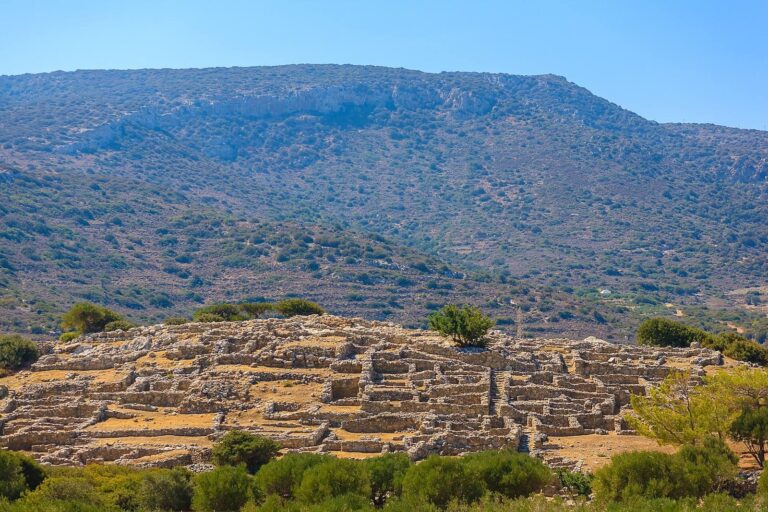
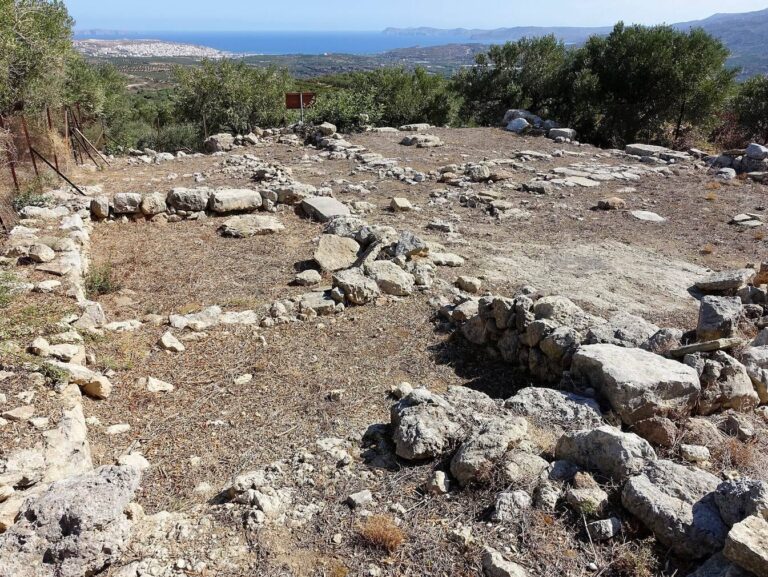
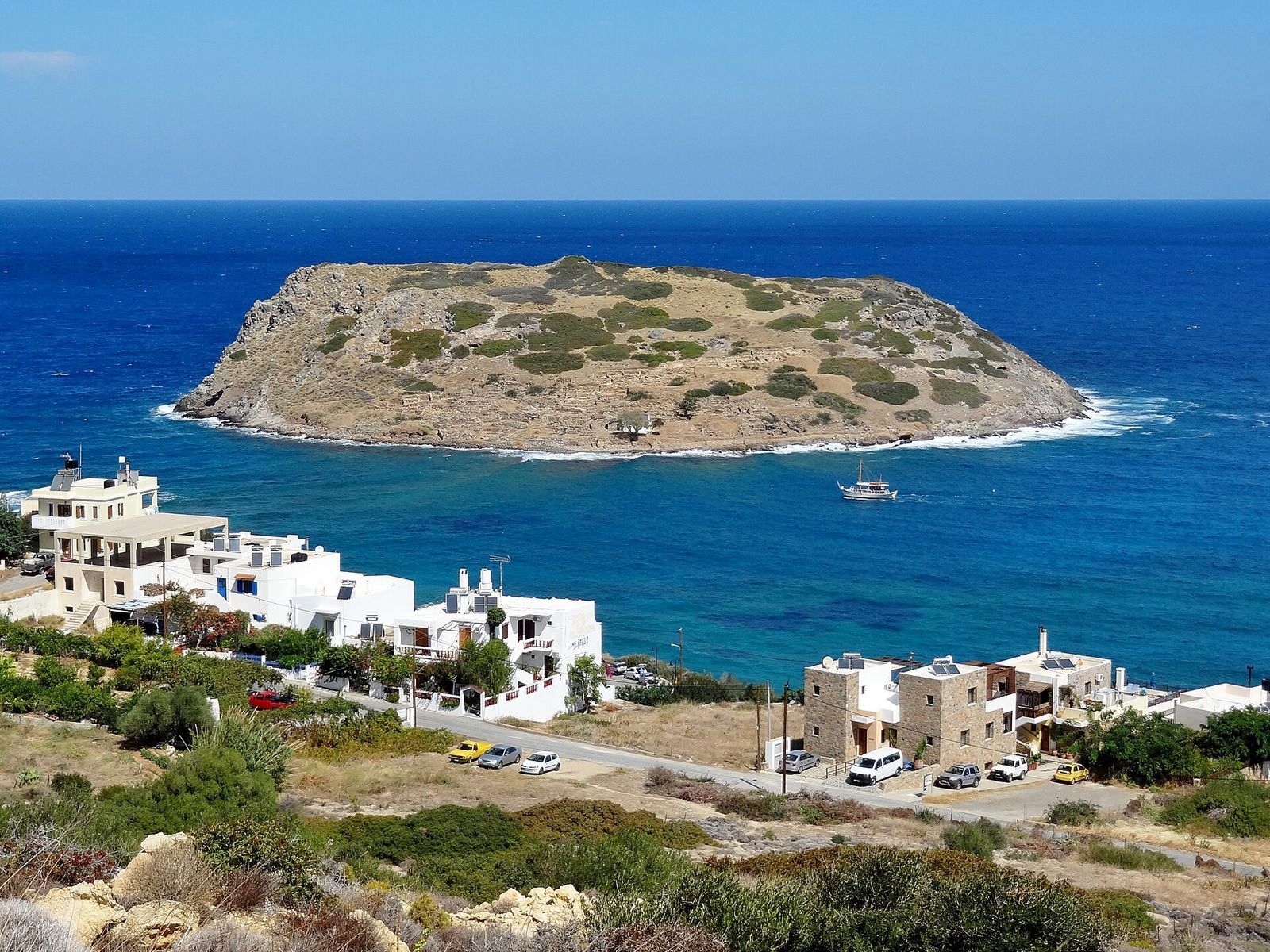
Mochlos islet is an archaeological site on a small island and parts of the coastal plain opposite it, in the Gulf of Mirabello off eastern Crete, Greece. Its Minoan settlement belonged to the Bronze Age civilization centered on Crete and developed through the Early, Middle, and Late Minoan archaeological phases. Activity across the site extends from about 3100 BC to the tenth century AD, while the coastal plain itself was inhabited earlier, in the Neolithic period.
Early and Middle Minoan communities
During Early Minoan II and III, Mochlos was among Crete’s larger settlements, with an estimated population of 200 to 300. It was smaller than Knossos and Malia, similar in scale to Phaistos and perhaps Palaikastro, and larger than Myrtos and Vasiliki. The settlement declined from Middle Minoan IA, then flourished again during the Neopalatial period, a later palace phase, without apparently recovering its earlier prominence.
Later Minoan and historical periods
The island’s southern side held a settlement during Middle and Late Minoan times. The archaeological sequence also includes a Mycenaean village and cemetery. Mycenaean refers to a Late Bronze Age culture of the Aegean.
After the Minoan phases, people resettled the southern part of the island in the Classical period. A large Roman settlement occupied the north, and its use continued into the Byzantine period. The coastal plain opposite the island also formed part of Mochlos’s long record of settlement.
Excavation and interpretation
Richard Seager began excavating at the island’s western end in 1908 and uncovered an early cemetery. Nikolaos Platon resumed work in the area in 1950. Underwater exploration in 1955 established that sea level had risen by about 1 to 2 metres since Roman times and confirmed that an isthmus had once joined the island to Crete.
Costis Davaras and Jeffrey Soles led further excavations in 1971 and 1972, and again in 1976. Davaras also cleaned and stabilized previously excavated areas in 1971, bringing additional finds to light. Excavation of the Late Minoan cemetery at Limenaria began in 1986. Since 1989, a Greek-American project under the auspices of the American School of Classical Studies at Athens has been co-directed by Davaras and Soles. The work has revealed remains from about 3100 BC to the tenth century AD. Excavation continues, while the project’s principal focus is now the study and publication of its results.
Remains
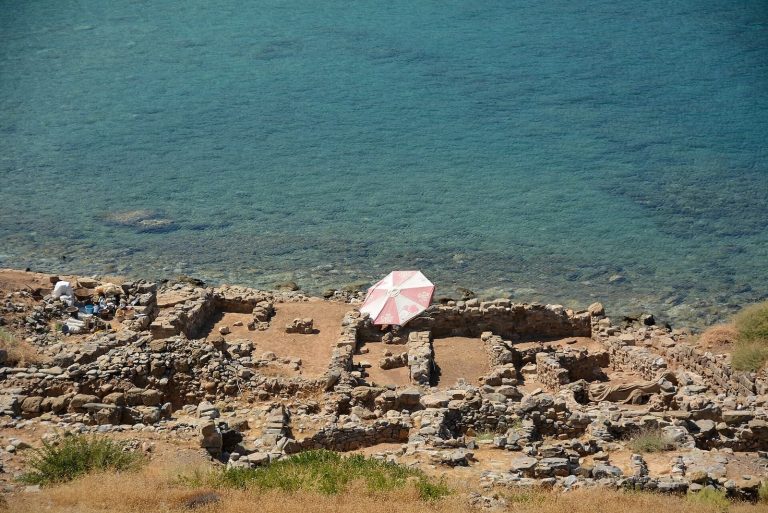
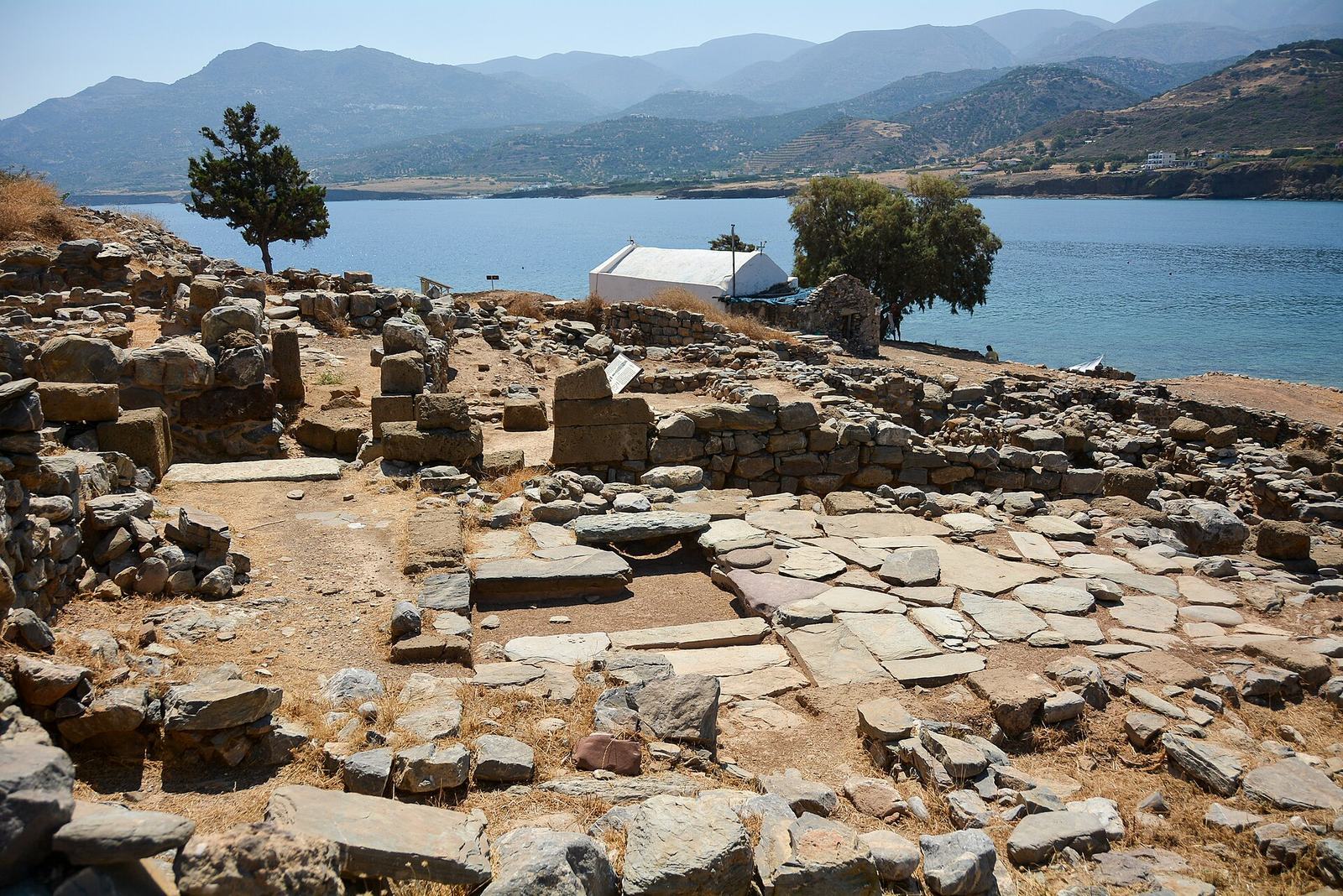
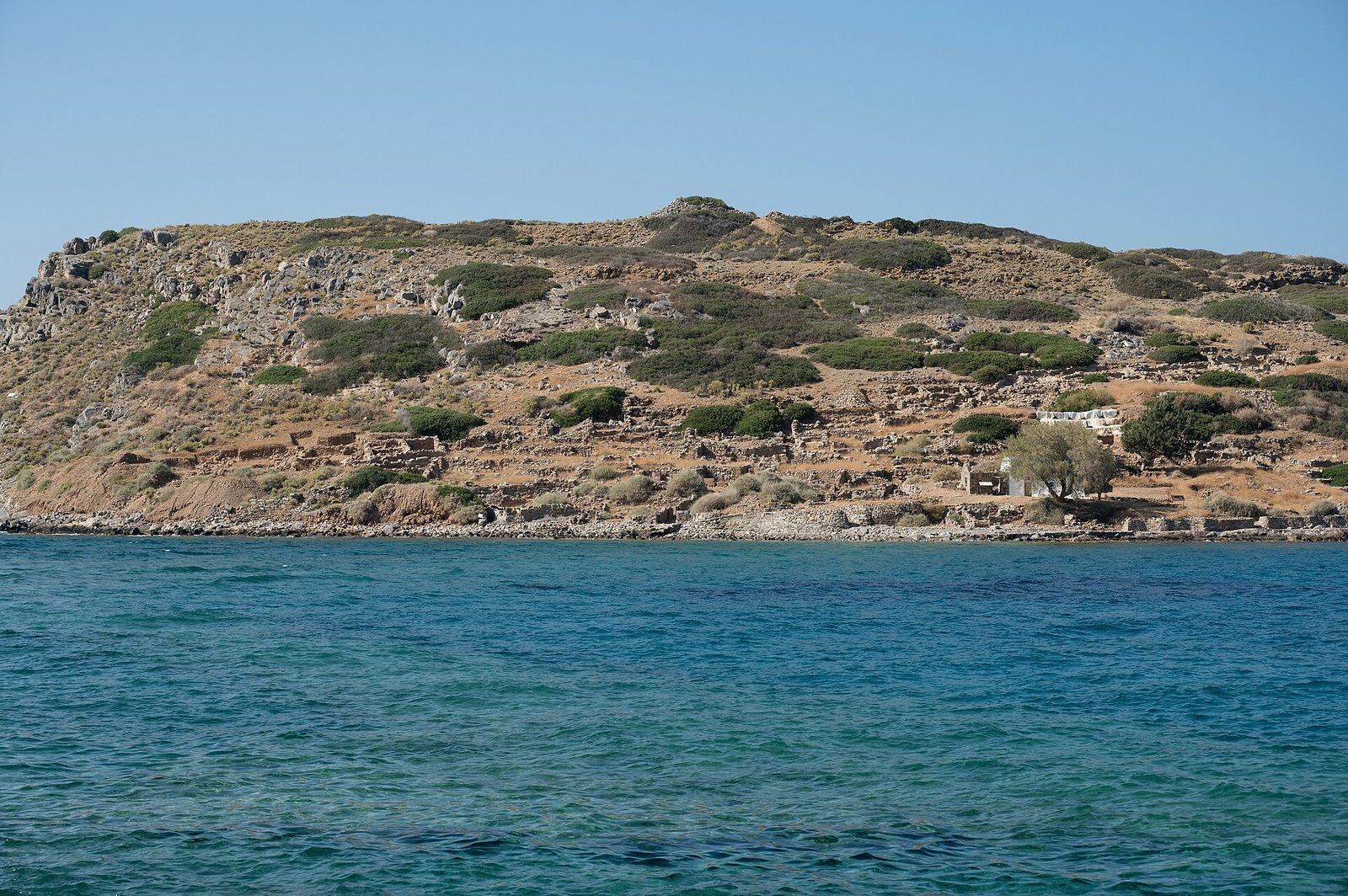
The archaeological site covers the island and portions of the facing coastal plain, now separated by about 150 metres. In the Bronze Age, a narrow isthmus linked them across a strait no more than 2.5 metres deep. A small harbor on each side of the strait sheltered ships according to the direction of the wind.
Island settlement
Southern settlement
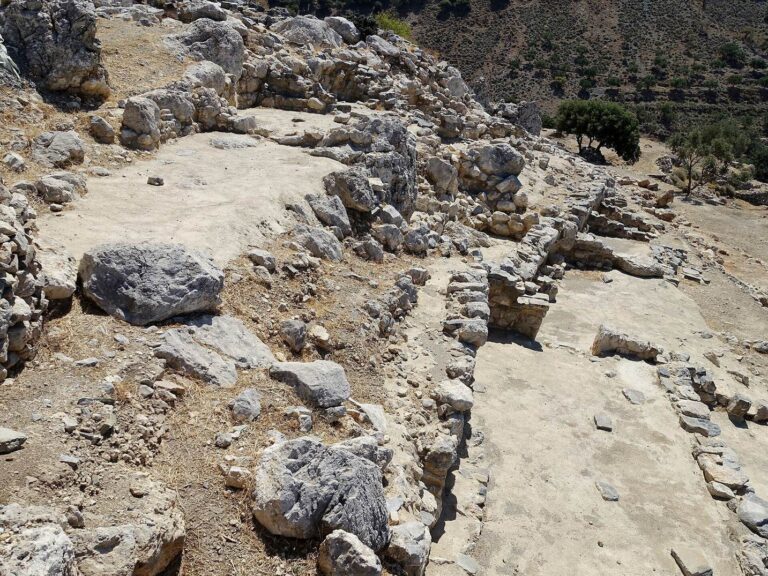
Settlement remains occupy the island’s southern side, facing the mainland, and date to Middle and Late Minoan times. The area was resettled in the Classical period.
Northern defenses
Fortification remains lie in the northern part of the island, where the large Roman settlement was located.
Burial grounds
Western cemetery
The cemetery on the western slope was used from Early Minoan I to Middle Minoan IA. Its graves include burials in large jars, rock shelters, and pits, as well as monumental tombs with rectangular chambers. Most graves date to Early Minoan II, about 2900 BC, and use continued into Early Minoan III. Some graves were used in Middle Minoan IA, and a few were reused in the Late Minoan period, when large-jar burials also occurred. Two large tombs stand at the island’s western tip; monumental tombs are also dated to Middle Minoan, about 2200 to 2000 BC. They may have belonged to the community’s highest social group, perhaps a political or religious elite. A small rectangular structure above Tomb theta contained a substantial quantity of obsidian, a natural volcanic glass.
Limenaria cemetery
At Limenaria, nine undisturbed Late Minoan chambers cut into rock contained burials in sarcophagi or large jars. Excavation recovered more than one hundred vessels, most decorated, along with a seal stone showing a deer.
Mycenaean cemetery
A Mycenaean cemetery was excavated on the hill above the coastal craft quarter.
Coastal plain remains
Craft quarter
The coastal craft quarter comprised four single-storey buildings. They were occupied during Late Minoan IB and destroyed by fire at the end of that period. One building was used for working bronze, ivory, and stone; another was devoted to pottery production. The quarter also supported stone carving, copper and bronze working, textile production, cooking, and other maintenance tasks.
Cups and bowls for eating and drinking were common. Cooking took place in separate kitchens rather than inside the buildings’ main rooms, and each building included a room for worship or ritual.
Farmhouse and Roman fish tanks
At Chalinomouri, on the far eastern end of the coastal plain, excavations uncovered a Minoan farmhouse. Two Roman fish tanks were also found on the mainland opposite the island.
Objects and material finds
Grave goods and seals
Objects from the island’s tombs include gold headbands, silver cups, stone vessels, and glazed faience vessels. A hematite cylinder seal, an engraved cylinder rolled to make impressions, came from Tomb lambda in a layer dated to Middle Minoan IB. It was imported from Syria. A silver cylinder seal associated with Mochlos has been linked to Mesopotamia and the era of Sargon of Akkad, though its identification is uncertain.
Jewelry and ritual objects
A silver pyxis (small container) dated to about 3000 to 2800 BC held a gold headband with antenna-like projections and a raised design of a dotted animal. A gold ring from Mochlos depicts a nude deity seated in a boat that appears to have just left a small building on a rocky shore. The figure raises its hands in farewell; the boat has a horse-shaped prow and a fish-tail stern.
The wider finds include vessels carved from steatite, a soft stone, as well as marble, alabaster, and limestone. Their natural veining contributed to their appearance. Ten Late Minoan I metal hoards include foundry and traders’ collections, as well as ceremonial assemblages. Tests comparing lead-isotope ratios, a method of tracing metal to its source, indicate that copper ingots shaped like stretched hides and fragments from the hoards originated in Cyprus.
Finds in museum collections
Large quantities of Early Minoan gold jewelry excavated in 1908 are displayed in the Heraklion Archaeological Museum. More recent Mochlos finds are displayed in museums at Hagios Nikolaos and Siteia. Other finds in Heraklion include a woman-shaped rhyton, a vessel used in ritual or ceremony, dated to 2300 to 2200 BC; a green-slate container lid showing a dog, dated to 2500 to 2000 BC; gold and rock-crystal necklaces dated to 2500 to 1600 BC; and a bull-head rhyton dated to 1500 to 1450 BC.