St Martin’s Church, Ruislip: A 13th-Century Parish Church
Site at a Glance
- Rating
- 4.7
- Popularity
- Medium
- Country
- United Kingdom
- Primary era
- Medieval
- Eras represented
- Medieval, Early Modern, Modern
- Civilizations
- British, English
- Site type
- Religious
- Remains
- Church
On this page12 sections
History
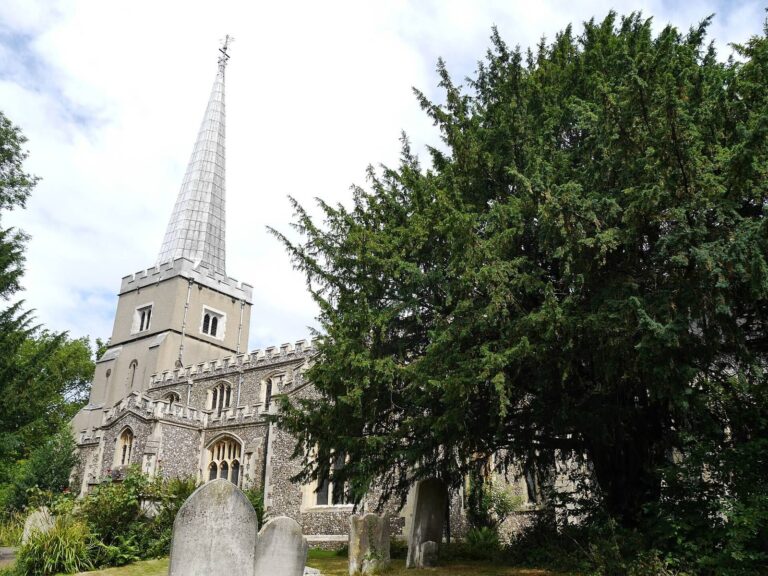
St Martin’s Church is a parish church in Ruislip, United Kingdom, with a 13th-century building classified in the Norman style, the Romanesque tradition associated with the Normans. Its history reaches back to a church recorded in 1086.
Early church and Bec Abbey
The Domesday Book, William the Conqueror’s 1086 survey of English land and resources, records a church at Ruislip. The present church is believed to have replaced that earlier building in 1245, when it was consecrated. The rebuilding responded to growth in the parish population. While Ruislip belonged to Bec Abbey, a Benedictine monastery in Normandy, its monks dedicated the church to Saint Martin of Tours, a fourth-century Christian bishop who became a widely venerated saint.
William de Guineville, Bec Abbey’s senior representative in its affairs from 1242, is thought to have promoted the rebuilding. He lived at the religious house at Manor Farm. William de Berminton is the first vicar known by name, in 1327; a vicar is a parish’s local clergy minister.
Late-medieval ownership and rebuilding
Bec Abbey lost its lands between 1404 and 1414 after heavy taxation during the Hundred Years’ War, a prolonged series of conflicts between England and France. By 1422, the church had fallen into disrepair and passed to the Dean and Canons of Windsor, the clergy associated with St George’s Chapel. Parishioners and the new custodians undertook successive building works during the later Middle Ages.
Restoration and later parish life
Architect George Gilbert Scott substantially restored the church in 1870. The First World War memorial to Ruislip’s dead was originally in the churchyard; in 1976 it was moved near the entrance to Manor Farm. The church has held Grade I listed status since January 1950.
St Martin’s is a Church of England church in the Anglo-Catholic tradition, which emphasizes historic Catholic liturgy and practices. It belongs to the Diocese of London, the Archdeaconry of Northolt, the Deanery of Hillingdon and the Parish of Ruislip. In 2021, the Parochial Church Council passed a resolution under the Church of England’s House of Bishops’ Declaration, a framework concerning the ministry of bishops and priests and pastoral provision for parishes. The council reaffirmed the resolution on 23 November 2021 and rescinded it on 27 April 2022.
Remains
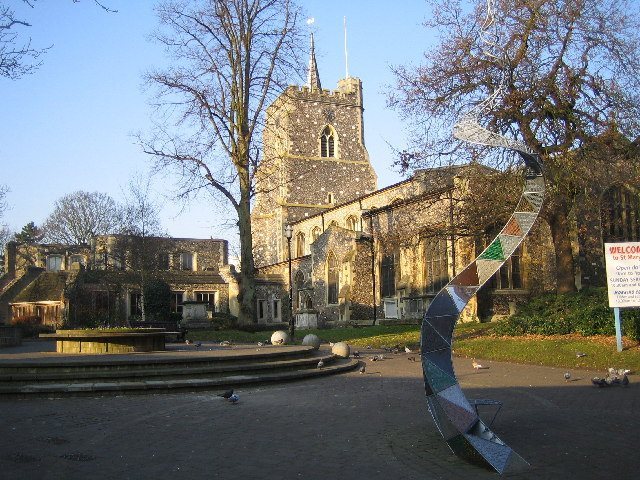
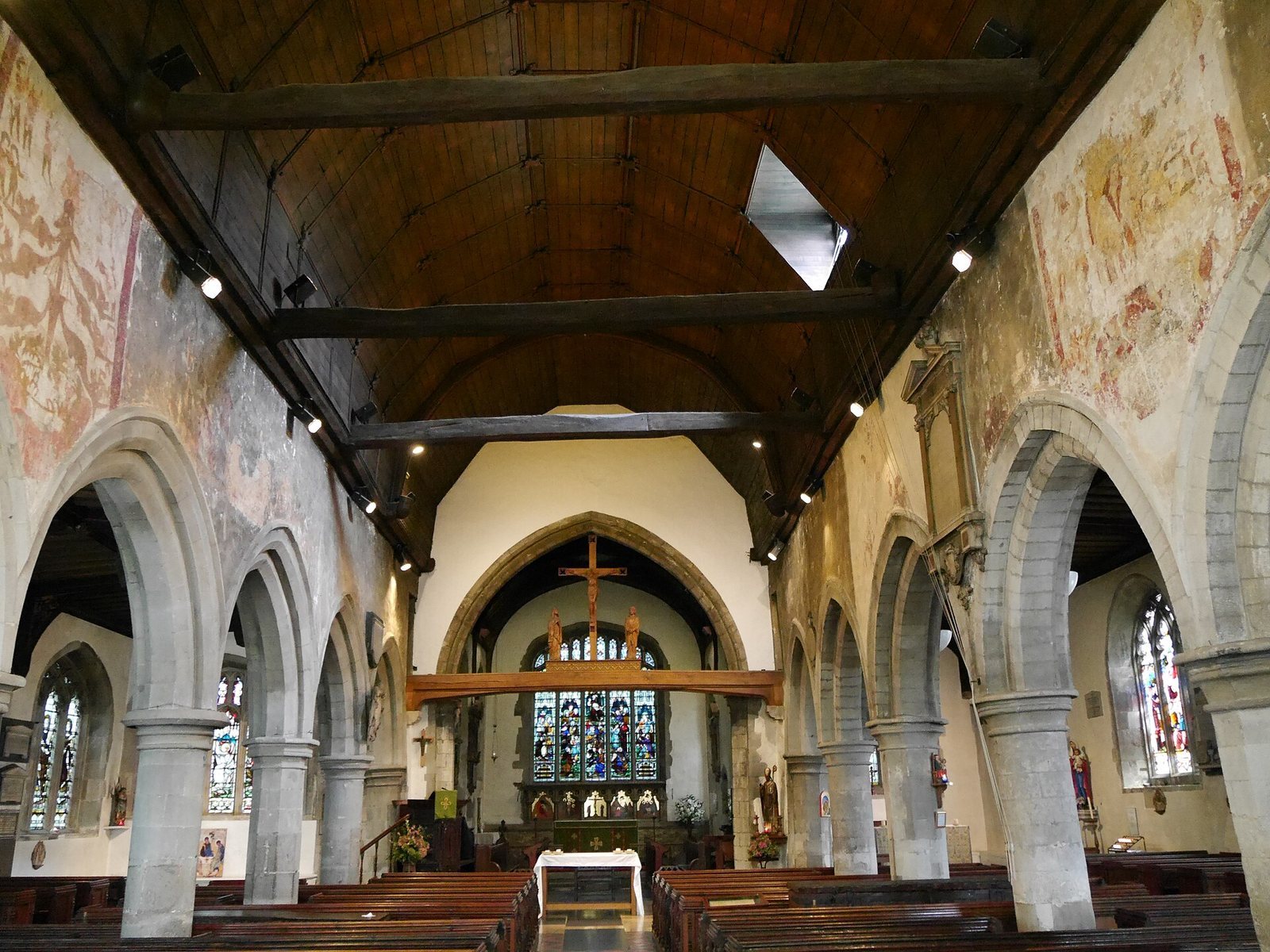
At the northern end of Ruislip High Street, near Manor Farm, the church’s layout centers on a nave and chancel, with an aisle on the south side and a tower. Its surviving fabric brings together the main church and later additions, while stones with Norman-period markings found in the grounds are believed to have come from the earlier church.
Medieval church fabric
Nave and chancel
The present nave and chancel date to the 13th century. The chancel was built later in the 15th century under the Dean and Canons of Windsor. Together, these parts form the central body of the church.
South aisle
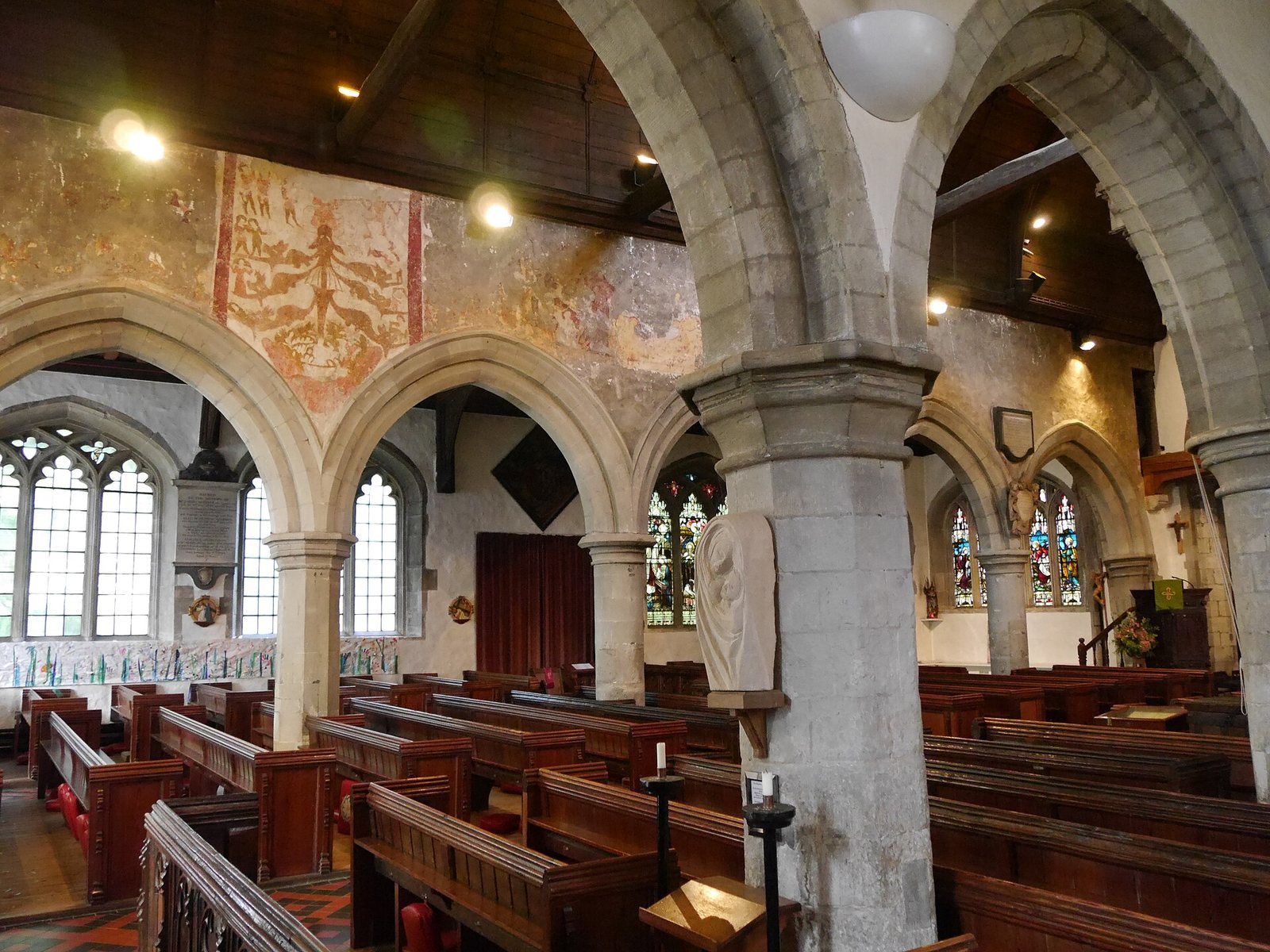
Parishioners rebuilt the south aisle in 1440, and an extension was added in 1500. The aisle and its extension form the church’s south-side addition to the main body.
Tower and bells
The tower was built in the 15th century and is associated with a set of bells. In 1463, Thomas Bettz left £26 13s 4d in his will for their repair.
Interior features and memorials
Rood beam
A rood beam was installed in 1958 in memory of the local Gower family. It supports a rood, a representation of the crucifixion traditionally placed above a church screen.
Memorials
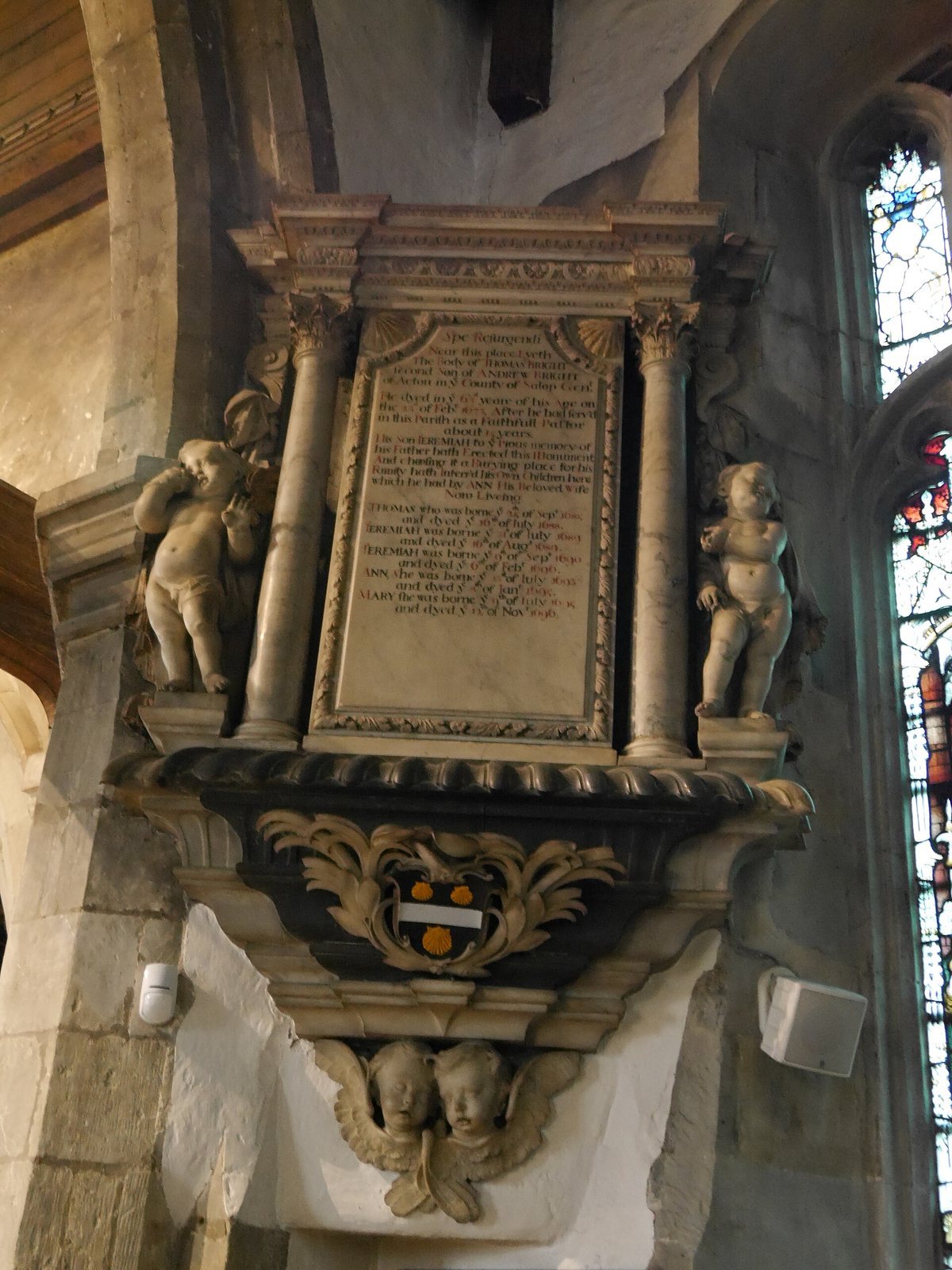
Memorials inside the church commemorate Lady Mary Bankes, born in Ruislip, who defended Corfe Castle against the Parliamentarians during the English Civil War; Scottish merchant John Anderson (1852–1924); German opera and art-song singer Elisabeth Schumann (1888–1952); and British film and stage entertainer Jessie Matthews (1907–1981).