Cornus: A Punic-Roman City in Sardinia
Site at a Glance
- Rating
- 4.1
- Popularity
- Low
- Country
- Italy
- Primary era
- Classical
- Eras represented
- Iron Age, Classical, Medieval
- Civilizations
- Byzantine, Carthaginian, Roman
- Site type
- Settlement
- Remains
- City
On this page10 sections
History
Punic city and Roman rule
Cornus was a Punic-Roman city near Cuglieri in Sardinia, Italy, probably founded in the late sixth century BCE. The Punic world was centered on Carthage and drew on Phoenician culture. Cornus may have had earlier roots in the Nuragic civilization, Sardinia’s prehistoric culture.
In 215 BCE, Cornus became a focus of a Sardinian revolt against Rome led by Ampsicora and Hiostus, with Carthaginian forces also fighting the Romans. Livy described the city as the revolt’s capital. Roman commander Titus Manlius Torquatus captured Cornus, which was destroyed in the aftermath.
Cornus later received the status of a municipium (a community with Roman civic status), during either the Flavian or Trajanic period, and became a colonia (a community with formal Roman colonial status) in the third century CE. In the second century CE, the geographer Claudius Ptolemy called it Kornos. The Roman route guide known as the Antonine Itinerary placed Cornos between Bosa and Tharros.
Late antiquity and Christianity
In 484, Boniface, bishop of Sanaphar, also rendered Sanafer, attended the Council of Carthage with 466 other bishops. Some scholars identify Sanaphar, a bishop’s diocese, with Cornus. Vandal king Huneric convened the council in an effort to convert Catholics to Arianism, a doctrine that held the Son subordinate to God the Father and was rejected by Nicene Christianity. The name Sanaphar may itself preserve an earlier Sardinian-Nuragic place-name later rendered in Latin as Cornus.
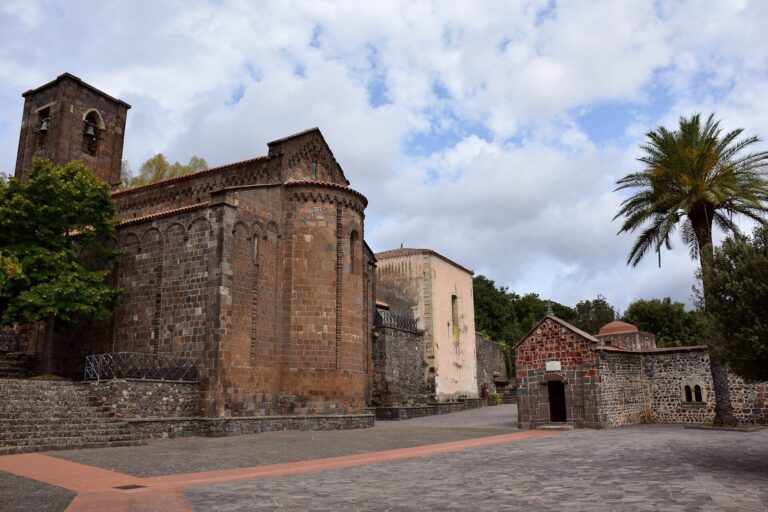
During late antiquity, a Christian complex developed at nearby Columbaris. Its earliest nucleus was abandoned after the eighth century, and the complex was finally abandoned in the ninth.
Remains
Urban center
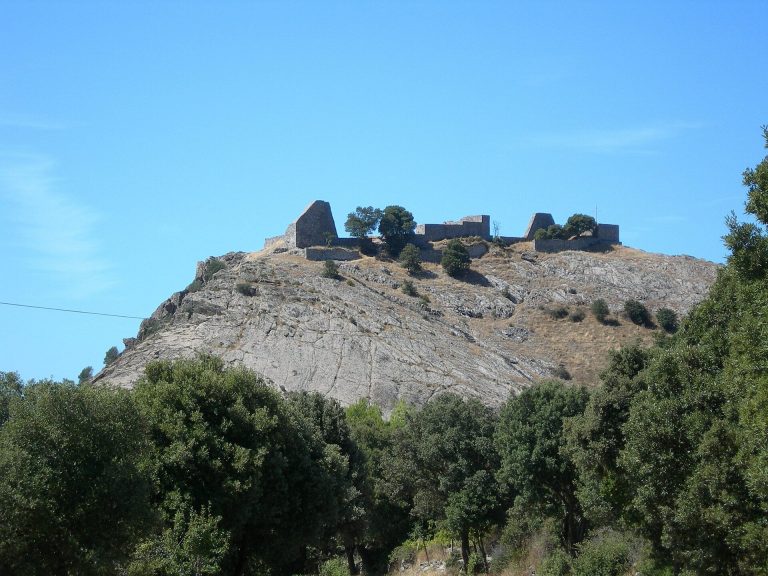
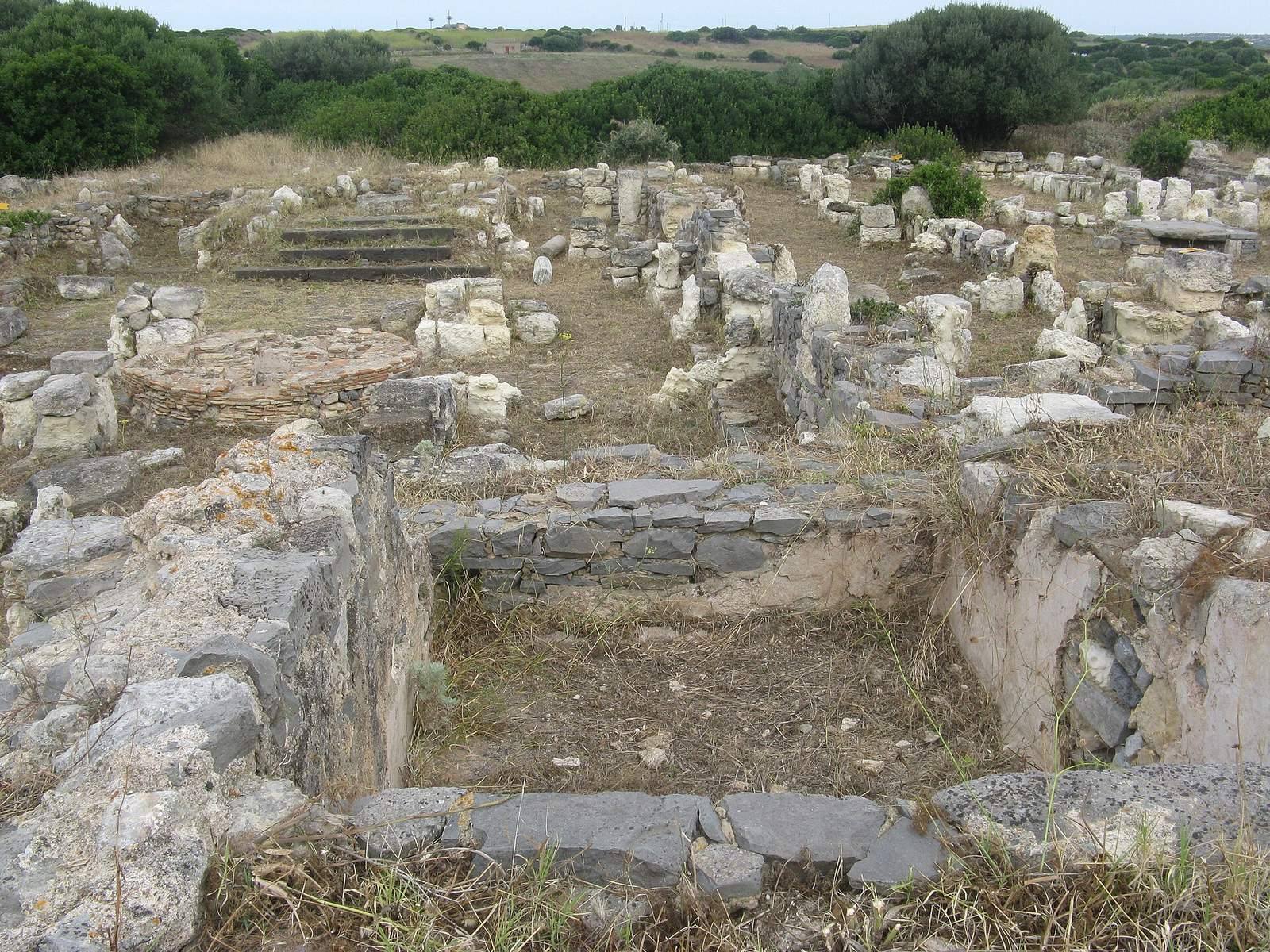
The archaeological area covers about 9,000 square metres at roughly 67 metres above sea level. The city was arranged around the fortified high ground of Corchinas hill, with craft and residential districts on level ground.
Corchinas hill and civic area
Visible sections of the walls show the strong defenses around the hilltop acropolis, the elevated fortified center of an ancient city. A public area probably stood there, perhaps including a forum, the city’s central civic space. Honorific inscriptions found in the area include a dedication by the colony’s inhabitants to Quintus Sergius Quadratus, a Roman equestrian belonging to an elite order originally associated with cavalry service. The inscription recognizes services he had rendered.
Baths and water features
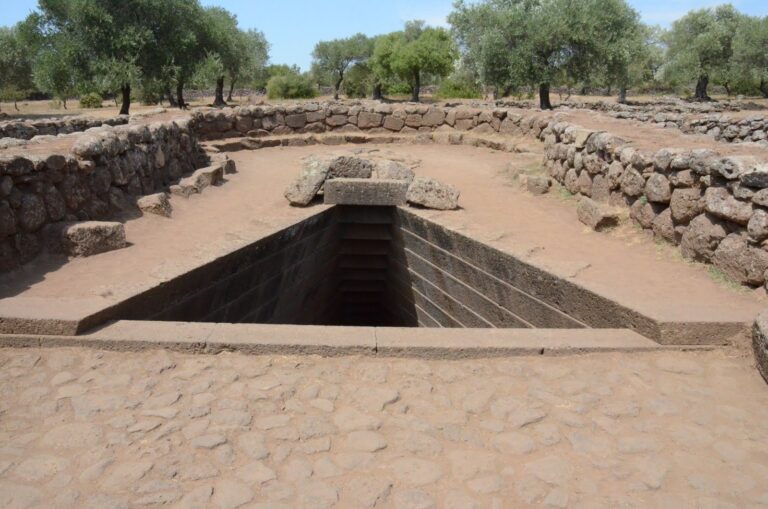
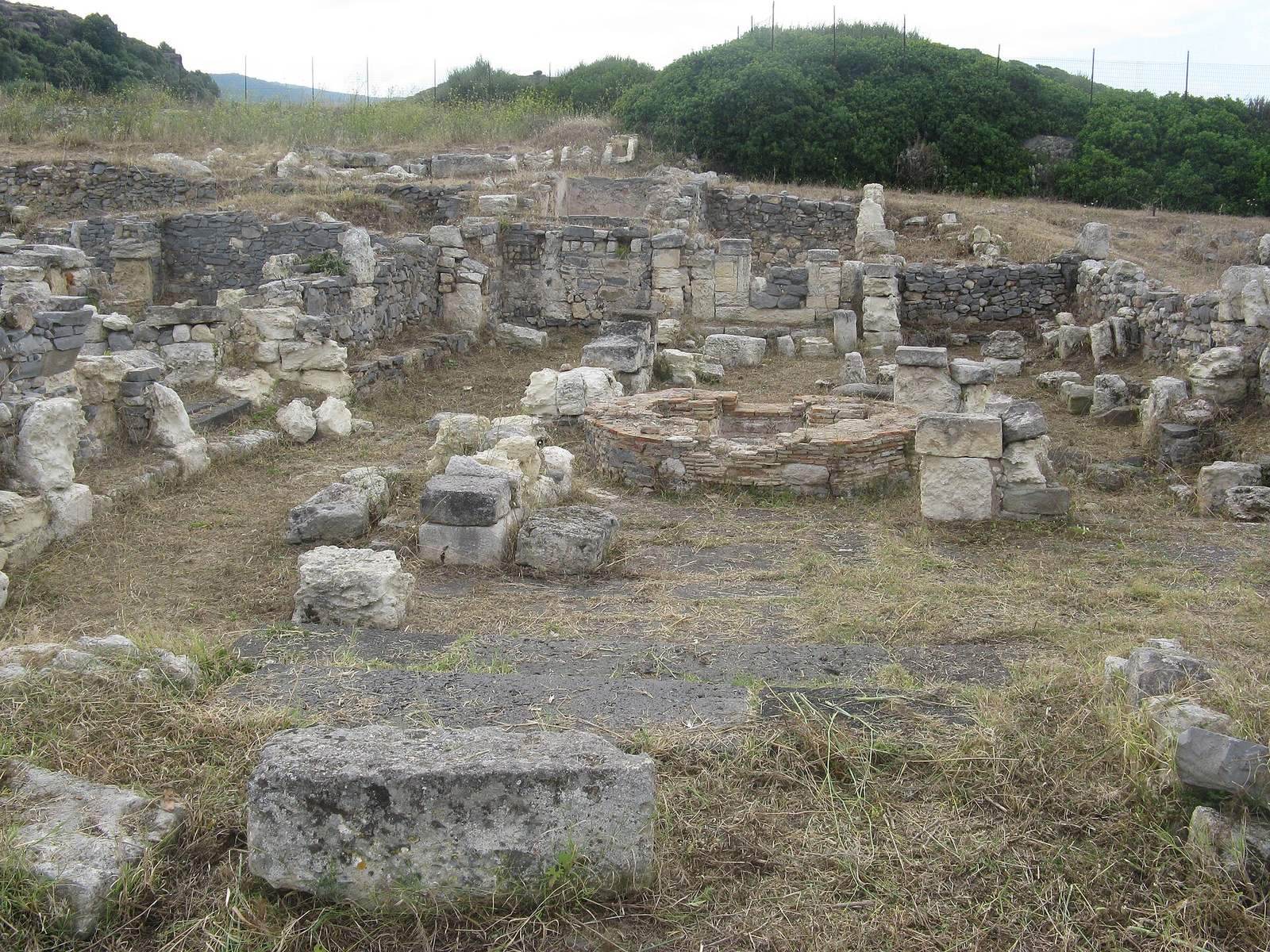
The baths survive in masonry laid in alternating bands. They may have been restored between 379 and 383 CE, during the reigns of Gratian, Valentinian, and Theodosius. Cornus also had an aqueduct, a conduit for carrying water, and a visible well-temple complex, a sanctuary associated with a sacred well.
Columbaris
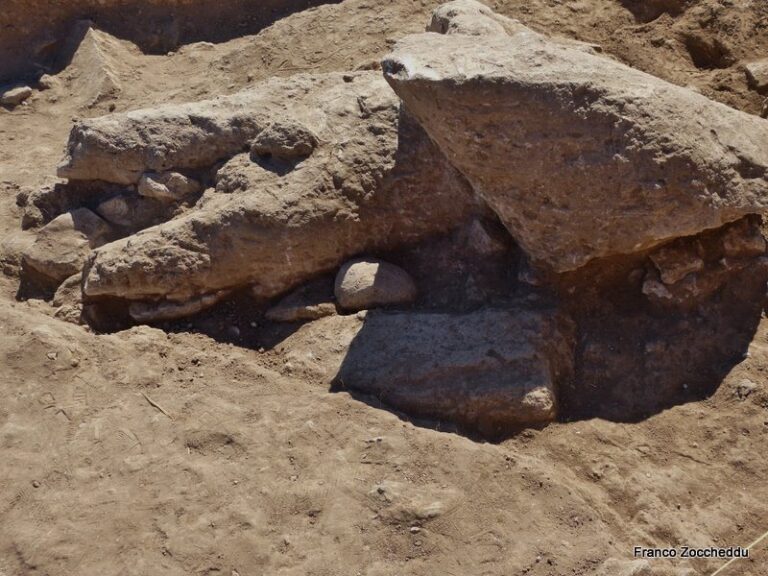
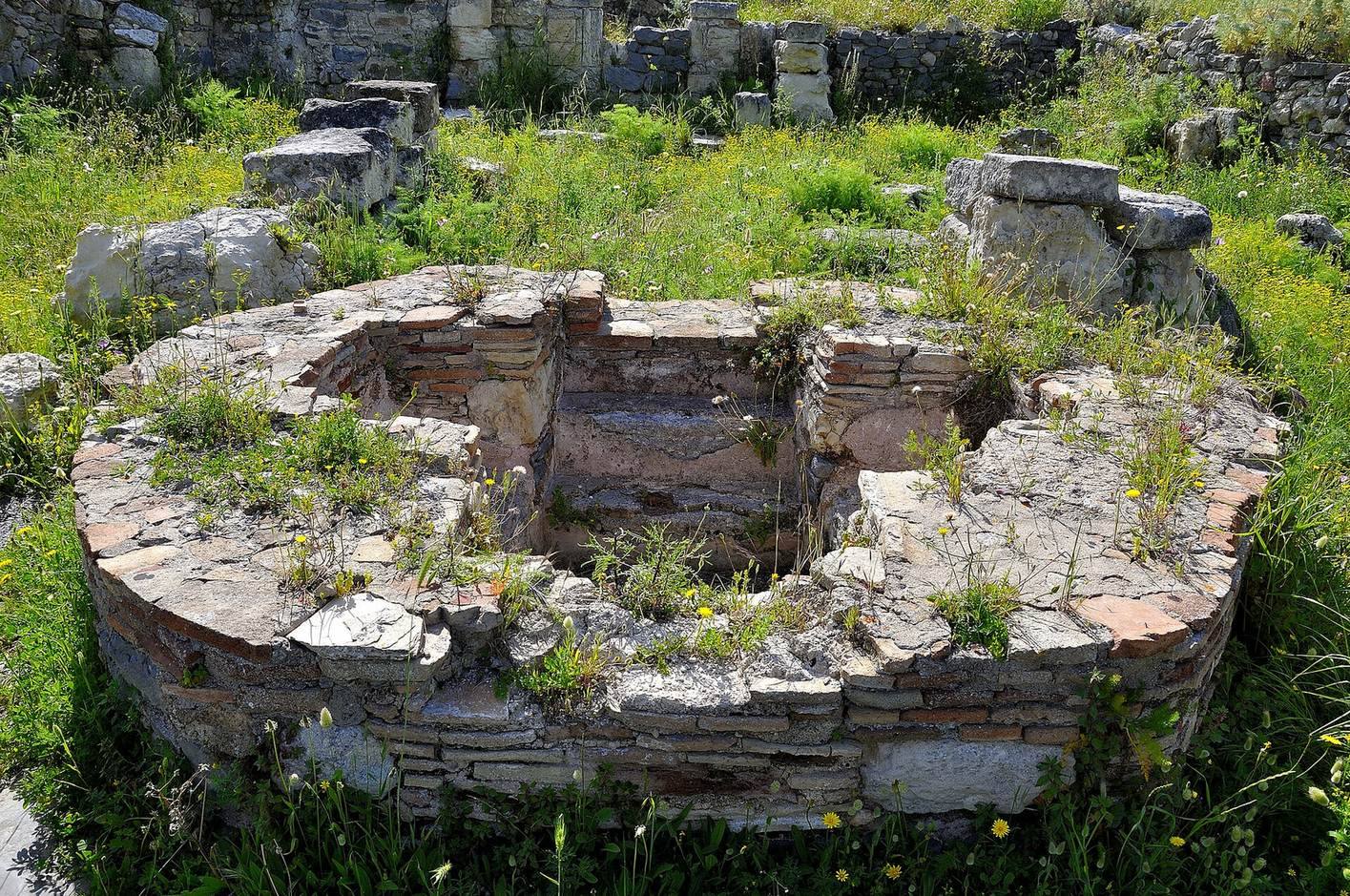
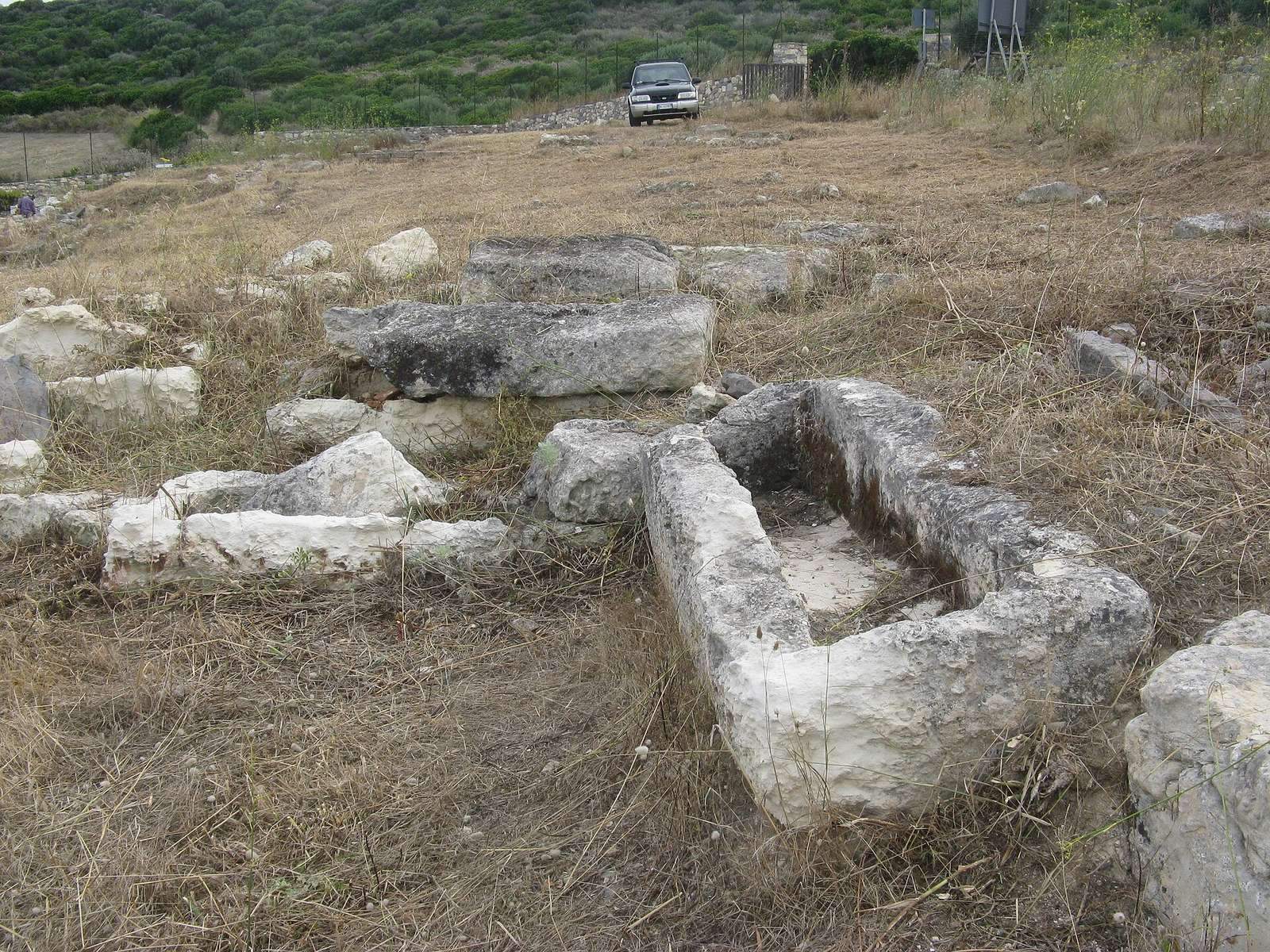
The cemetery at Columbaris yielded several stone coffins. The Christian complex developed near the city and included several basilicas and a baptistery.
Early funerary basilica and baptistery
The earliest funerary basilica dates to the third or fourth century CE. It had three aisles and an apse, a recess at the end of the building. A baptistery, a structure used for Christian baptism, stood in front of it, while the baptismal font was at the basilica’s center.
Later basilicas
Two further basilicas and other buildings were constructed at Columbaris in the fifth and sixth centuries.