Palatiolum: A Late Roman Palace Complex in Trier-Pfalzel
Site at a Glance
- Popularity
- Medium
- Country
- Germany
- Primary era
- Classical
- Eras represented
- Classical
- Civilizations
- Roman
- Site type
- Domestic
- Remains
- Elite Residence
On this page8 sections
History
Palatiolum is a Roman palace complex in Trier-Pfalzel, Germany, generally dated to around AD 350, during Late Antiquity, the later Roman period and transition toward medieval rule. Its later reuse connected the Roman residence with Frankish royal, monastic, and archiepiscopal history.
Late Roman residence
The Latin name Palatiolum means small palace. A proposed reconstruction links the building to Emperor Julian, who ruled from AD 361 to 363, and to the response to Frankish incursions in AD 353. The Franks were a Germanic people who established kingdoms in lands once governed by Rome. This reconstruction remains hypothetical. The lavish fittings suggest that the patron was a senior official or a member of the imperial household.
After the imperial court left Trier around AD 400, the complex fell into disrepair. Around 588, the sixth-century poet Venantius Fortunatus referred to it in a travel poem as an old aristocratic residence.
Frankish and monastic phases
The palace and its lands passed together to the Frankish kings as a royal fiscal estate, property held by a ruler for revenue. Around 700, Adela of Pfalzel acquired the estate in an exchange, and a Benedictine monastery took shape among the Roman ruins. Its communal religious life followed the tradition of the Rule of Saint Benedict. The missionary bishop Boniface and the church leader Gregory of Utrecht were at the site in 721.
In the eleventh century, Archbishop Poppo of Trier used his authority as the monastery’s protector to end the monastic community, whose influence had declined, and replace its members with canons, clergy assigned to serve a church.
Archbishops and later changes
Trier’s archbishops built Pfalzel Castle in the western part of the Roman complex and often took refuge there during disputes with Trier’s citizens. A fortress with bastions, projecting gun platforms, and ramparts was established in the sixteenth century. French troops demolished it in 1685. Medieval reuse also contributed to the growth of Pfalzel’s center, including an administrative building, a palace mill, a tithe barn, houses for canons, and courtyard complexes.
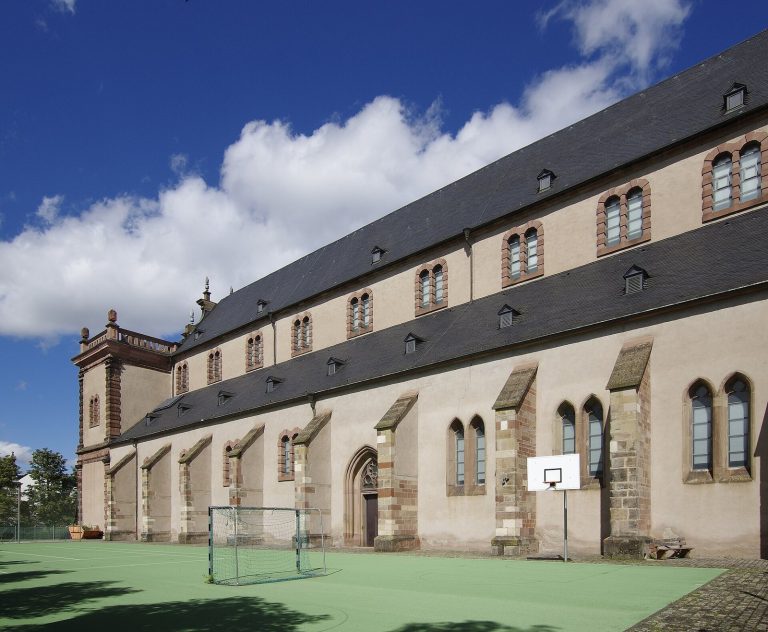
The collegiate church was secularized in 1802. Bombing severely damaged it in 1945, and it was rebuilt in 1962.
Remains
Setting and palace plan
The remains occupy a flood-free ridge in central Trier-Pfalzel, above a long bend in the Moselle. The Roman city of Augusta Treverorum, now Trier, was about five kilometres away in a straight line. The palace had four massive stone wings arranged around a rectangular courtyard measuring 26.53 by 18.3 metres. Projecting sections of the outer walls stood at each corner and midway along all four sides, giving every exterior face a formal appearance while also providing some defensive capacity. The plan resembles a type of late Roman fort found in comparisons with excavations at Oedenburg in the Upper Rhine region.
The palace’s towers had smaller windows. At least the towers had a double-height ground floor, with at least two further single-height storeys above. The spaces between the towers may have contained open-sided galleries; finds of side piers and columns support this reconstruction. A small barracks at the approach served as an access barrier and housed a bodyguard.
Rooms and decoration
Excavations identified 28 rooms. Two had mosaic decoration, six contained geometric marble slabs, and two had wall mosaics made from small pieces of glass arranged in a scale pattern. A mosaic from the original building phase depicted scenes from pagan mythology. It was later altered and may have been changed again soon afterward because of its imagery.
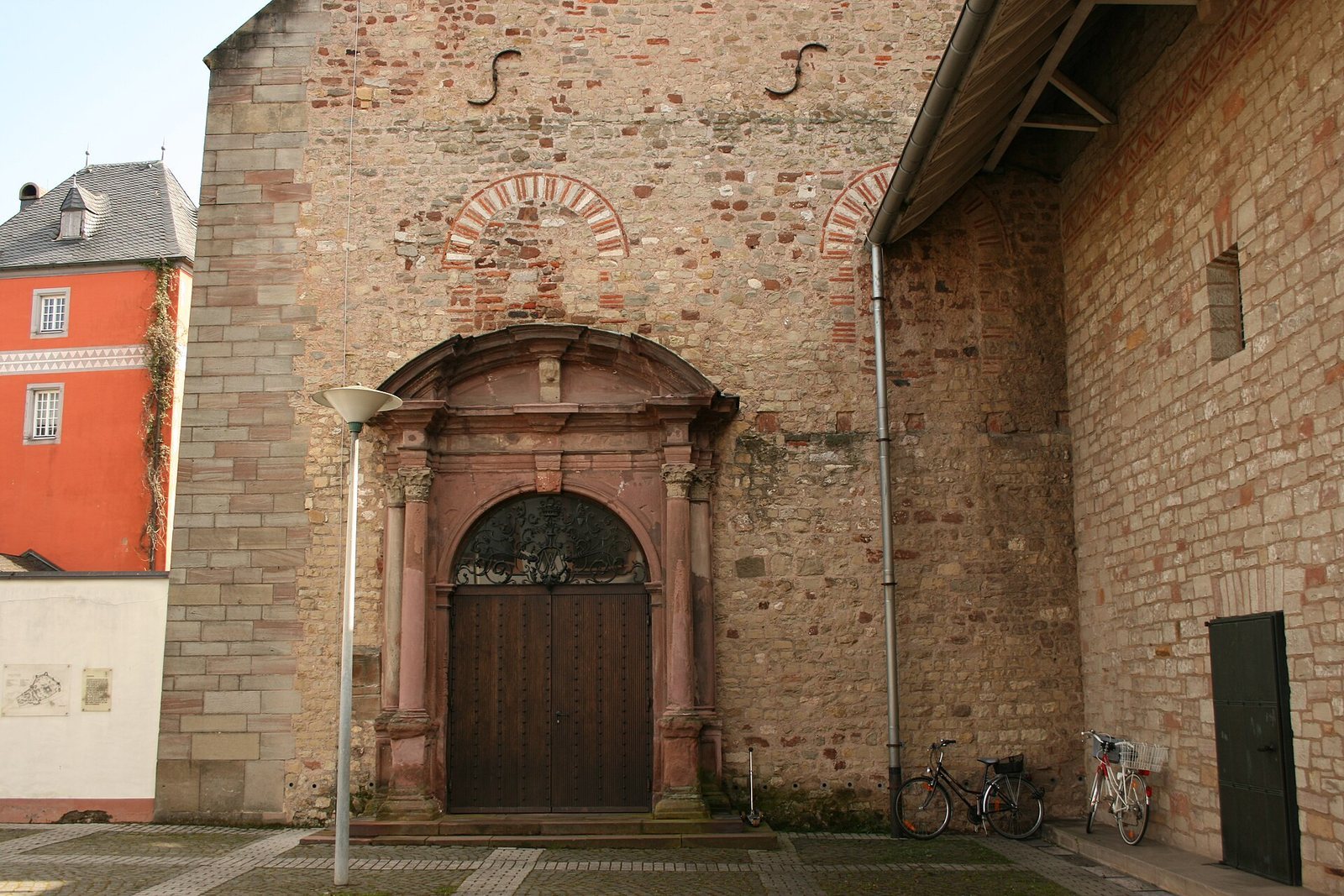
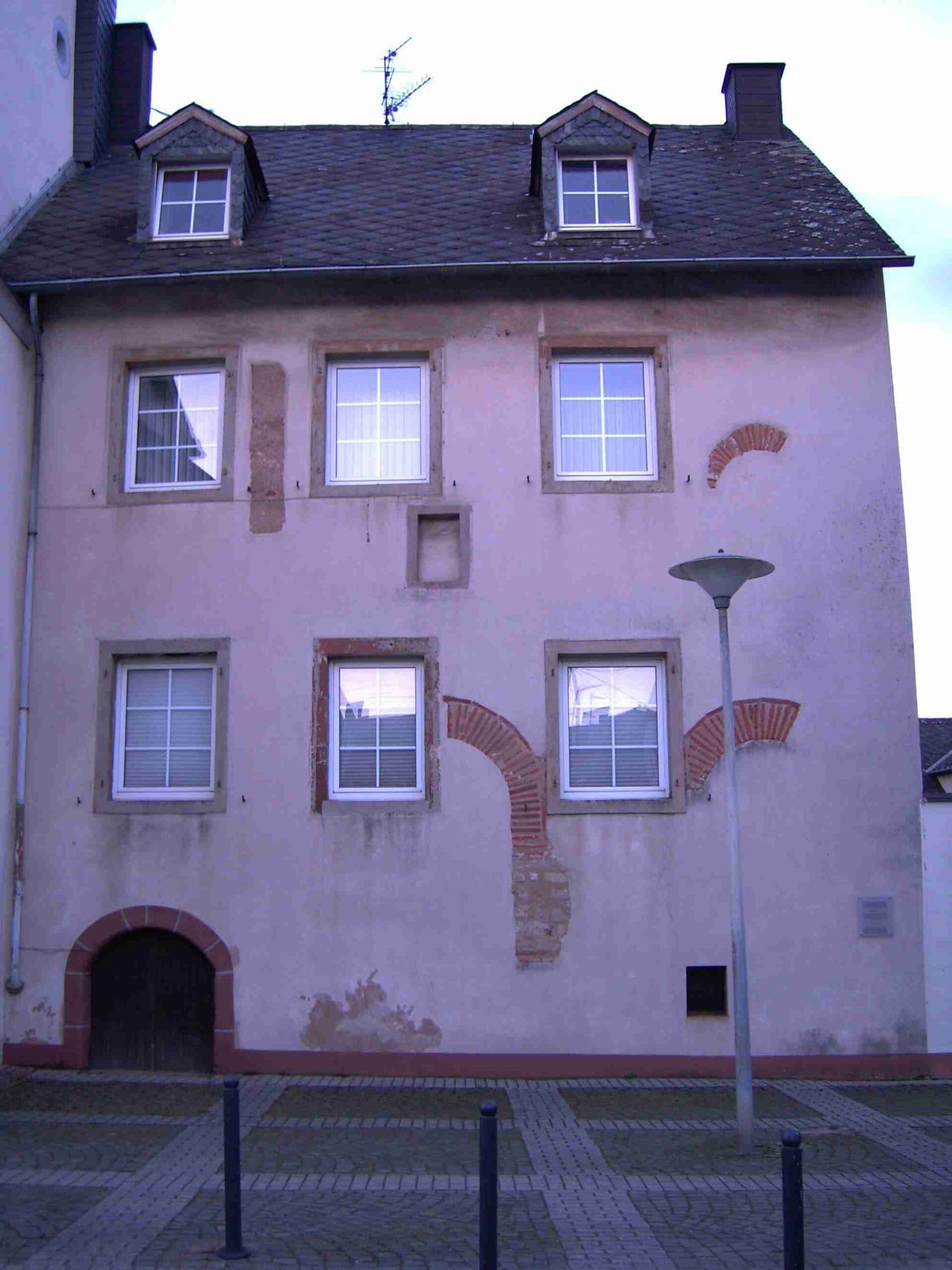
Surviving frontage
Surviving windows have broad brick-built arches and arcades. Arches from the former palace frontage remain visible in the façades of the sacristan’s house and the Church of St Mary and St Martin. Some parts of the remains have been described as Germany’s oldest stone building.