Srah Srang: An Angkorian Reservoir in Cambodia
Site at a Glance
- Rating
- 4.5
- Popularity
- Medium
- Country
- Cambodia
- Primary era
- Medieval
- Eras represented
- Medieval
- Civilizations
- Khmer
- Site type
- Infrastructure
- Remains
- Cistern
On this page9 sections
History
Foundation and purpose
Srah Srang is a Khmer reservoir in Cambodia, excavated in the mid-10th century during the Angkorian period under King Rajendravarman II. The work was initiated by Kavindrarimathana, a Buddhist minister and royal builder.
An inscription associated with the reservoir describes it as serving the welfare of living beings, except those who damaged its embankments, understood as elephants. The modern name, “Royal Bath,” does not reflect that stated purpose. Srah Srang is also listed as dedicated to Brahmanism, an ancient religious tradition rooted in Vedic ritual and the Brahmanical priesthood. Its precise function remains uncertain; a small shrine on an artificial island may have been used for royal recreation or meditation.
Jayavarman VII’s modification
Around 1200, King Jayavarman VII modified the reservoir and added a landing stage on its western side. This work was probably prompted by sediment impairing the nearby East Baray, a large reservoir in the Angkorian landscape.
Modern work
Henri Marchal’s team cleaned Srah Srang in 1920. B.P. Groslier’s team restored it between 1963 and 1965.
Remains
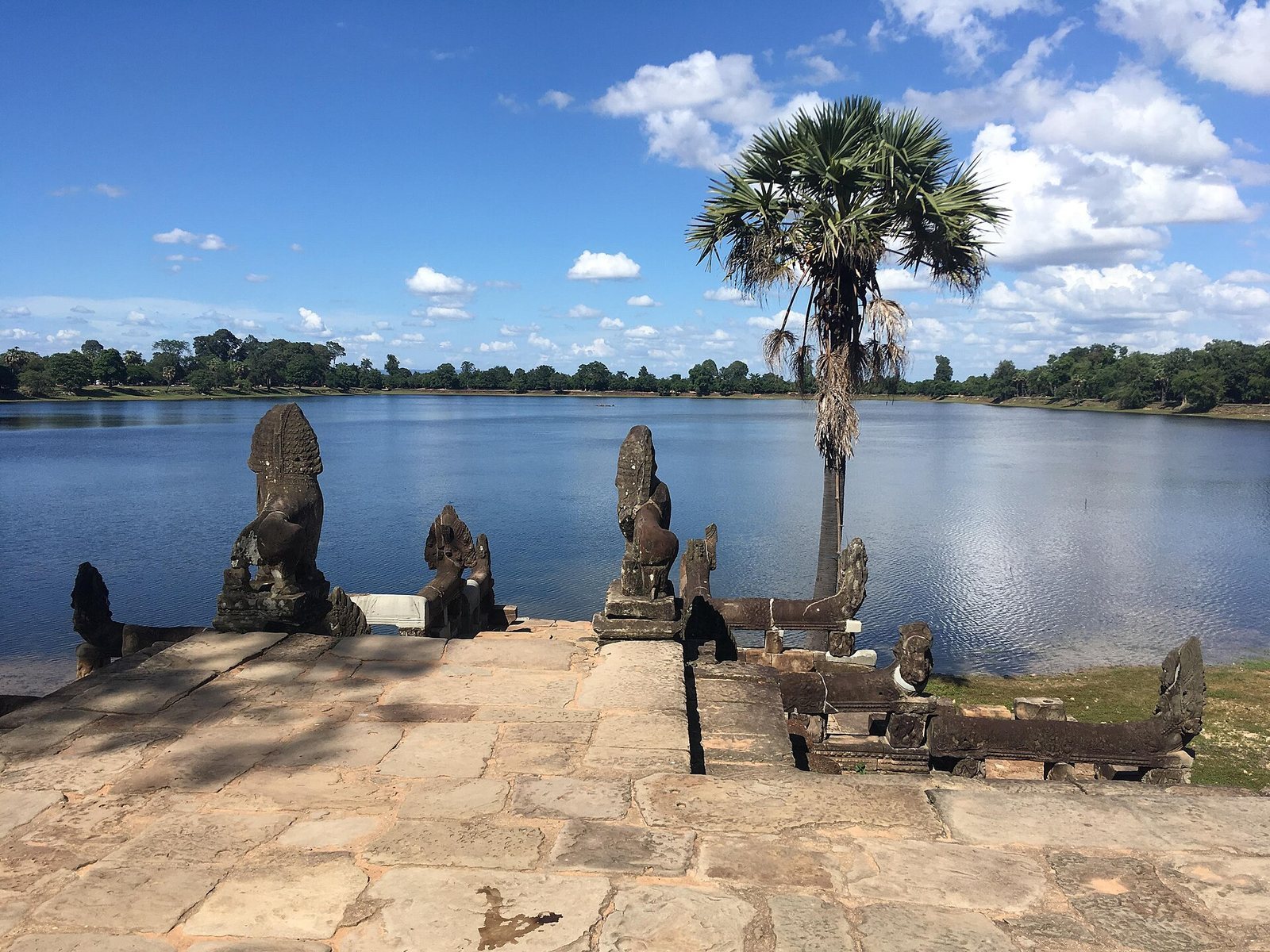
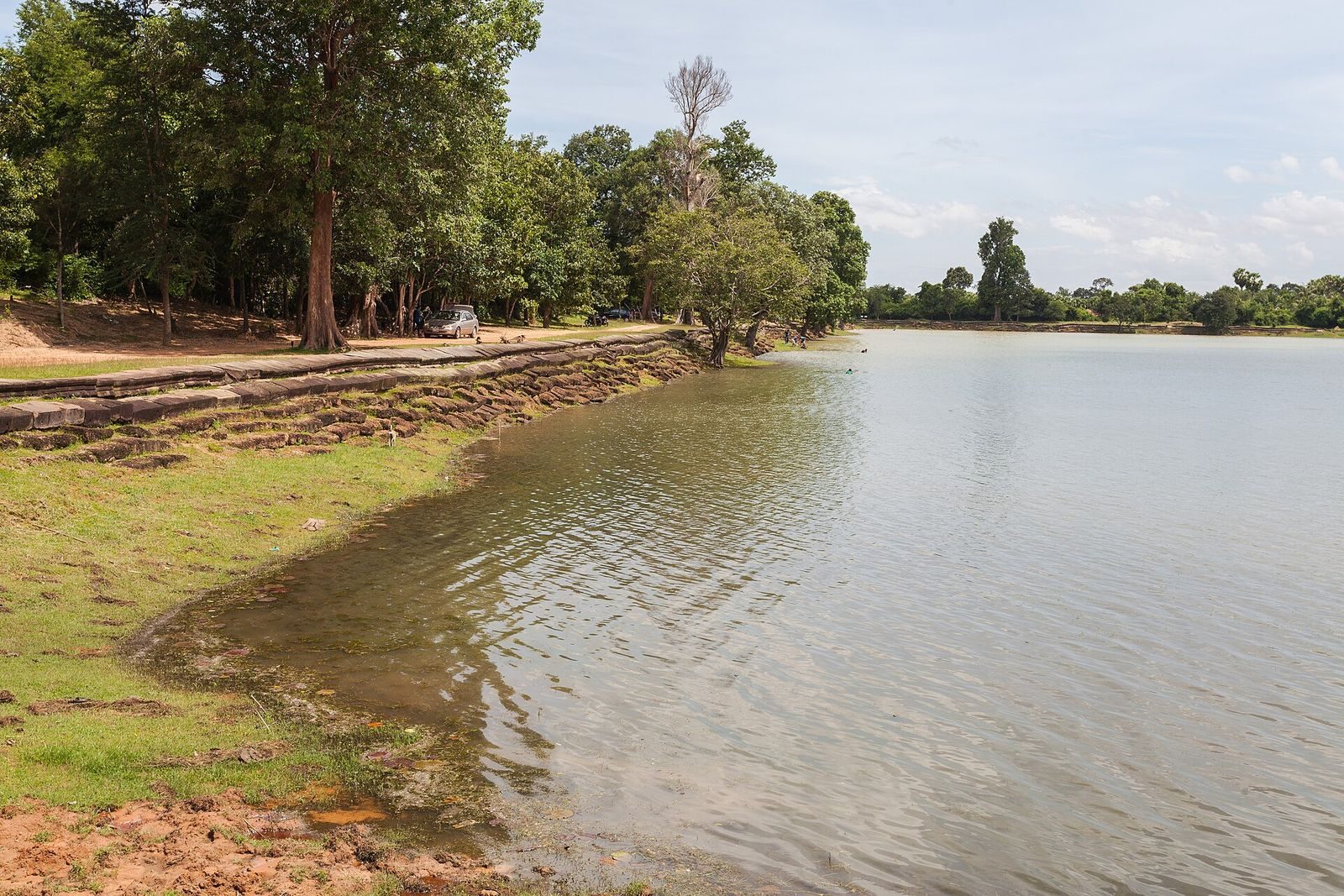
Srah Srang is a rectangular reservoir, about 700 metres from east to west and 350 metres from north to south, south of the East Baray and east of Banteay Kdei. It remains partly flooded, with water supplied by rain and groundwater seeping from the East Baray. A foundation and sandstone fragments found near its centre suggest that a temple may have stood on an artificial island. The reservoir nearly dried out during the dry season of 2015.
Western structures
Landing stage
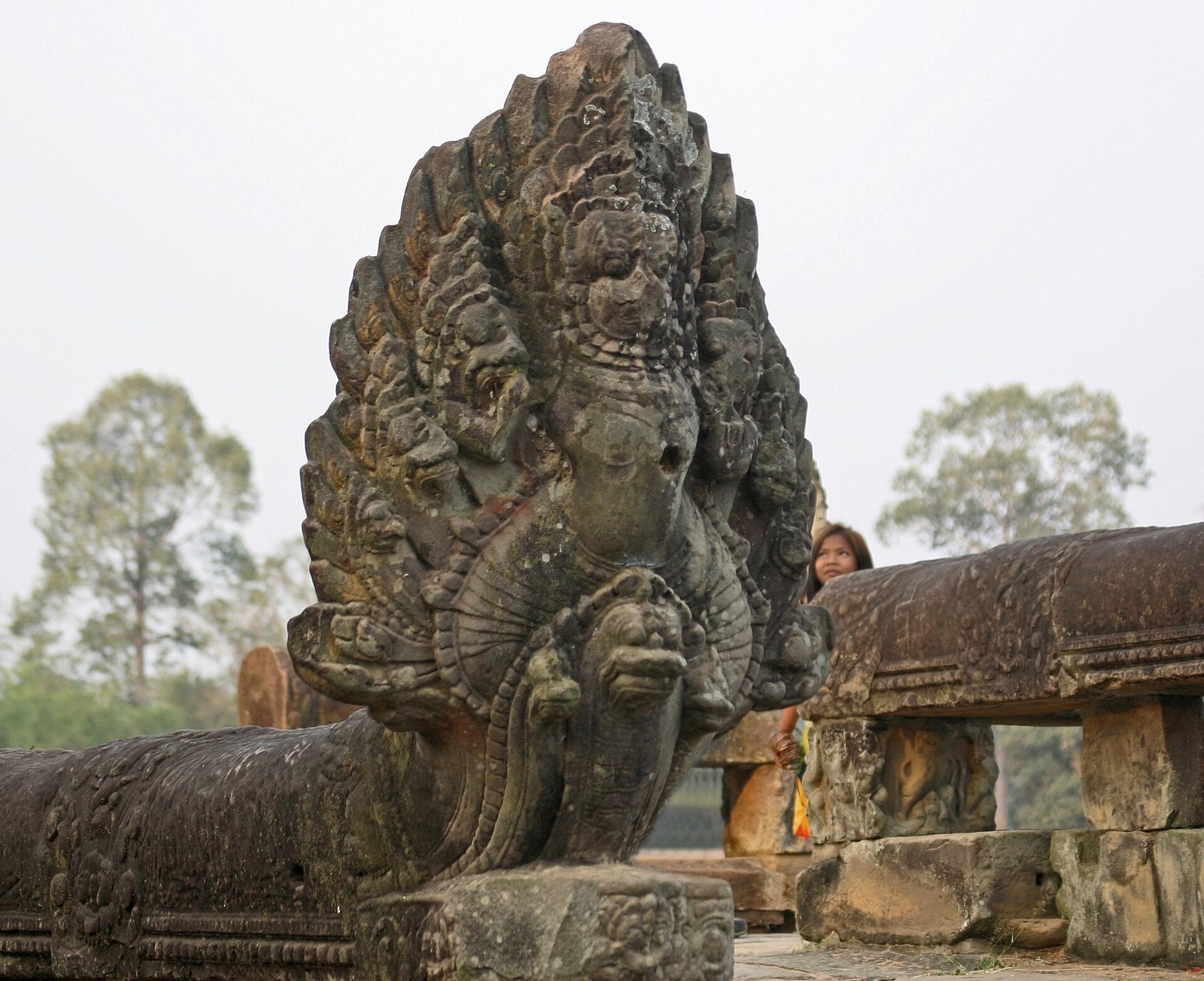
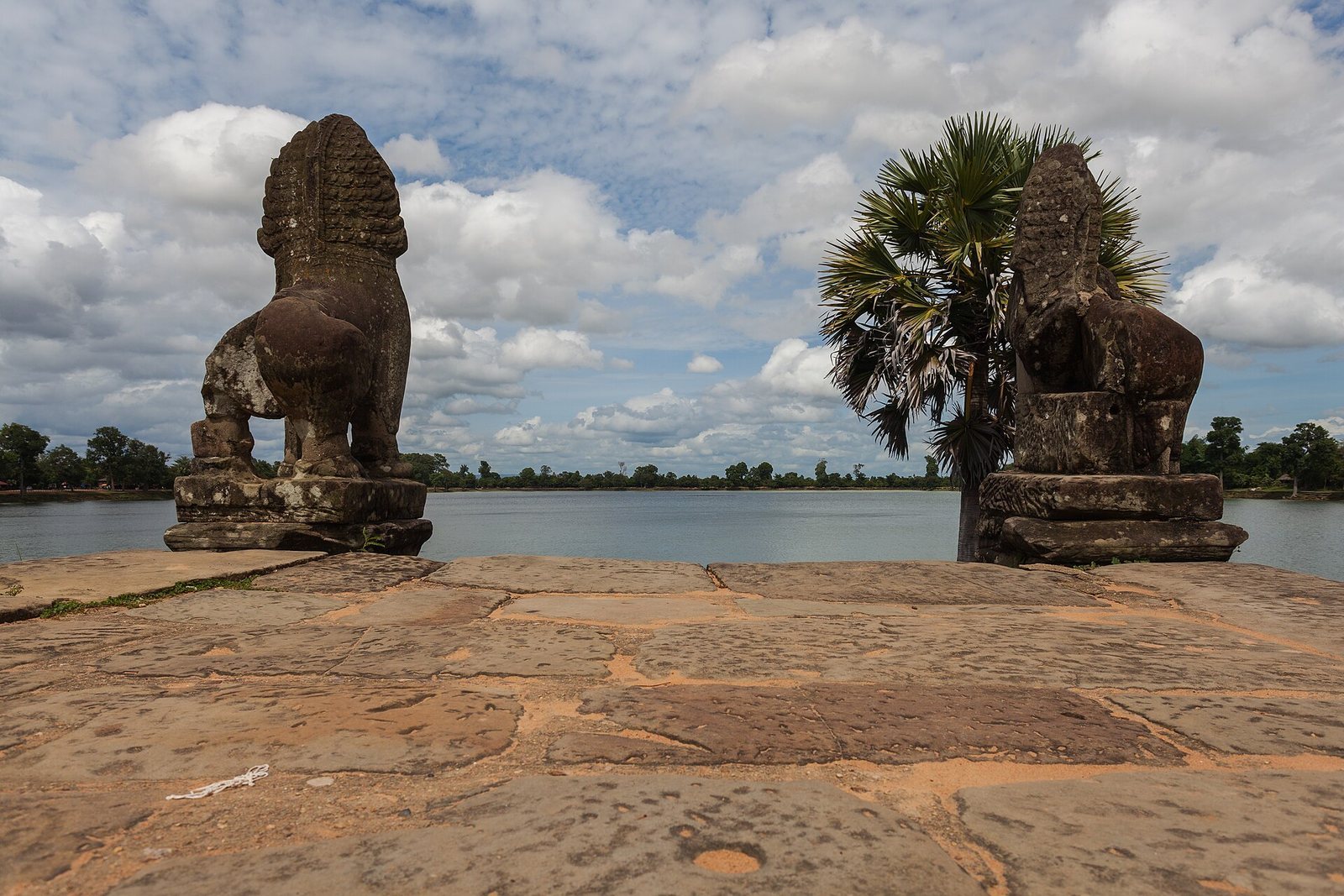
The cross-shaped landing stage is built of laterite, a reddish iron-rich stone, and sandstone. Stairs descend toward the water between two lion figures. Naga, serpent figures in South and Southeast Asian religious art, line the sides, with winged Garudas, mythological beings often depicted in relation to serpents, above their heads. The original brick stair structure can still be identified beneath later work.
Ceremonial pavilion
A raised pavilion of laterite and sandstone stood beside the water. It may have had a wooden roof and served as a place for the king to meet officials. Sculpted lions and naga balustrades decorated the structure, with a winged Garuda between the serpent heads.
Cemetery and excavated finds
Archaeological work in 1963 excavated about 1,600 square metres at an average depth of two to 2.5 metres in the cemetery at the reservoir’s northwest corner. More than 200 burial pits were identified, along with cremation jars, about 300 bronze objects and over 1,000 pottery vessels. The finds included bronze Buddhist images, clay prayer tablets, fired-clay Buddha molds, bronze mirrors, iron weapons, and lumps of iron and lead. A bronze image mold dates to the 12th to 15th centuries. Mortuary jars containing cremated remains, together with other artifacts, date to the reign of King Udayadityavarman II.