Red Bridge: A Stone Arch Bridge in Yerevan
Site at a Glance
- Rating
- 4.7
- Popularity
- Medium
- Country
- Armenia
- Primary era
- Early Modern
- Eras represented
- Early Modern
- Civilizations
- Safavid
- Site type
- Infrastructure
- Remains
- Bridge
On this page5 sections
History
Red Bridge is a stone arch bridge over the Hrazdan River in Yerevan, Armenia, restored in 1680 after an earthquake destroyed an earlier bridge. A crossing at the site is traditionally dated to the twelfth century. It carried caravans entering Yerevan and connected Erivan Fortress, the city’s fortified citadel, with the Ararat Valley.
The 1680 restoration
An earthquake destroyed the earlier bridge in 1679. The Armenian merchant Khoja Plav, from Kanaker, financed its restoration the following year on the Persian shah’s order. The bridge also became known as the Old Hrazdan Bridge and the Bridge of Khoja Plav.
A marble inscription commemorates the construction. It refers to Shah-Abaz, a Persian monarch, and the Twelve Imams, religious leaders central to Twelver Shi’a Islam. It names Amir-guna-khan-siri-Aslan, also known as Shahr-Aslan, governor of the Erivan Khanate, a polity centered on Yerevan. The inscription says that master Khan-Karim laid the foundation and died after the work was completed. An acrostic, which encodes a date through the initial letters of successive phrases, gives the year as 1035 in the lunar Islamic calendar, equivalent to 1680.
Repairs and changing use
The bridge was repaired in 1830 and again in 1850. Russian engineers carried out the later work while retaining its previous appearance. Until Victory Bridge opened in 1945, Red Bridge was Yerevan’s main and only bridge across the Hrazdan connecting the city to the river’s right bank. It was abandoned afterward.
Modern restoration and protection
In 1986, Soviet Armenia’s monument-preservation authority ordered restoration and assembled surveyors and structural engineers for the work. The dissolution of the Soviet Union brought the project to a halt. Restoration began in 2023 and continued in 2024–25, with the aim of recovering the bridge’s earlier appearance while incorporating elements from its historical layers. Red Bridge is listed in Armenia as a cultural monument of republican significance.
Remains
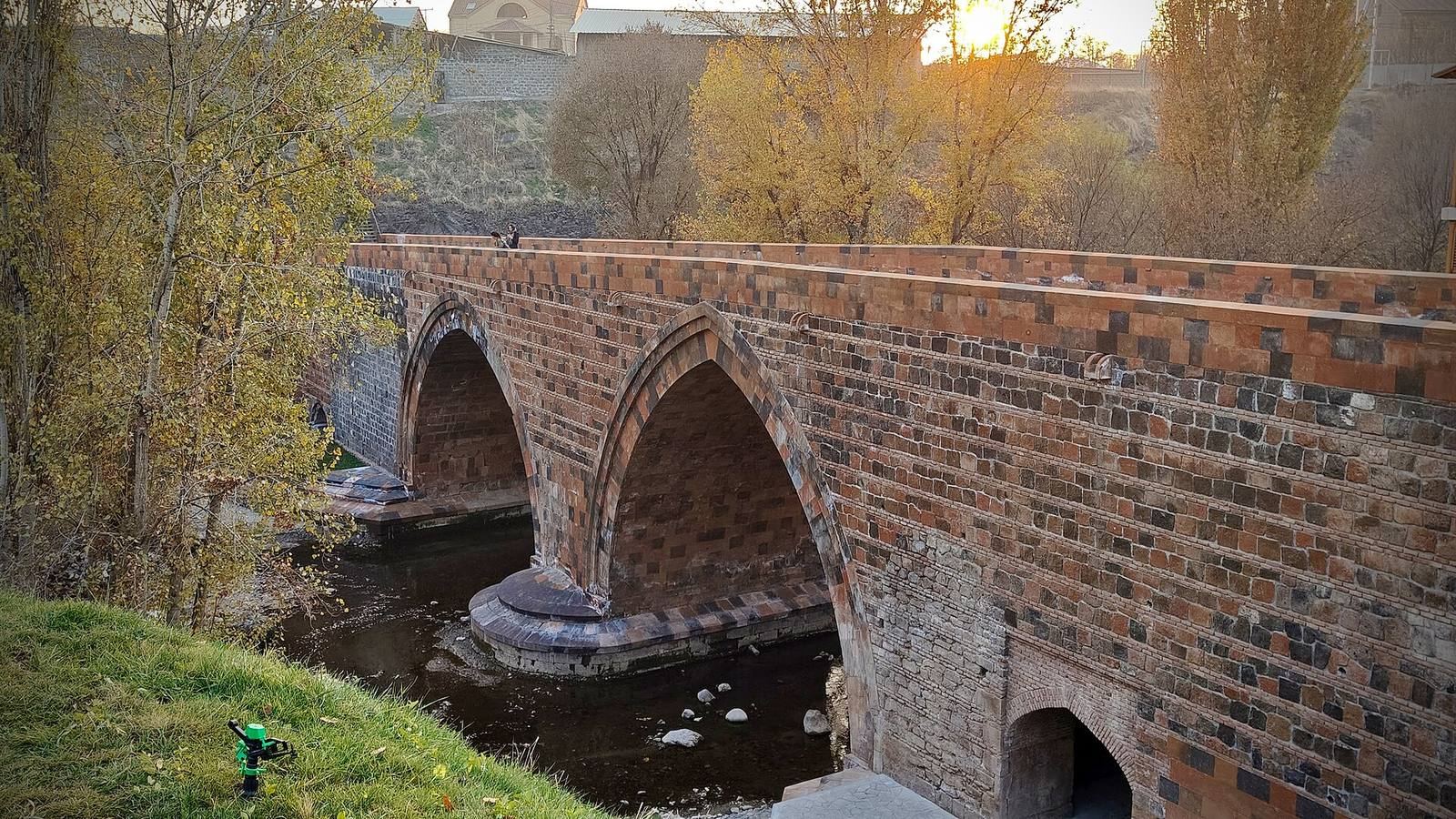
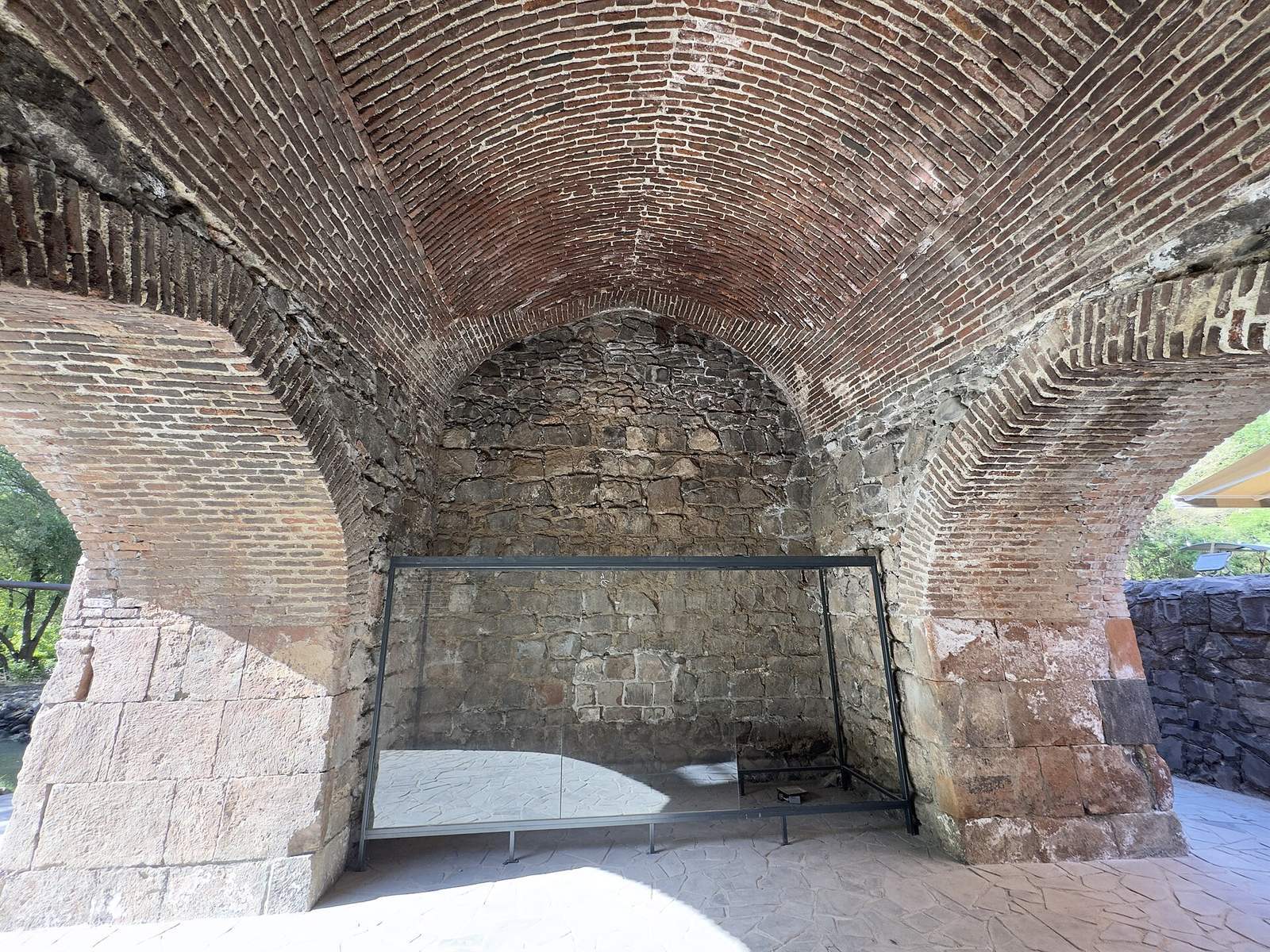
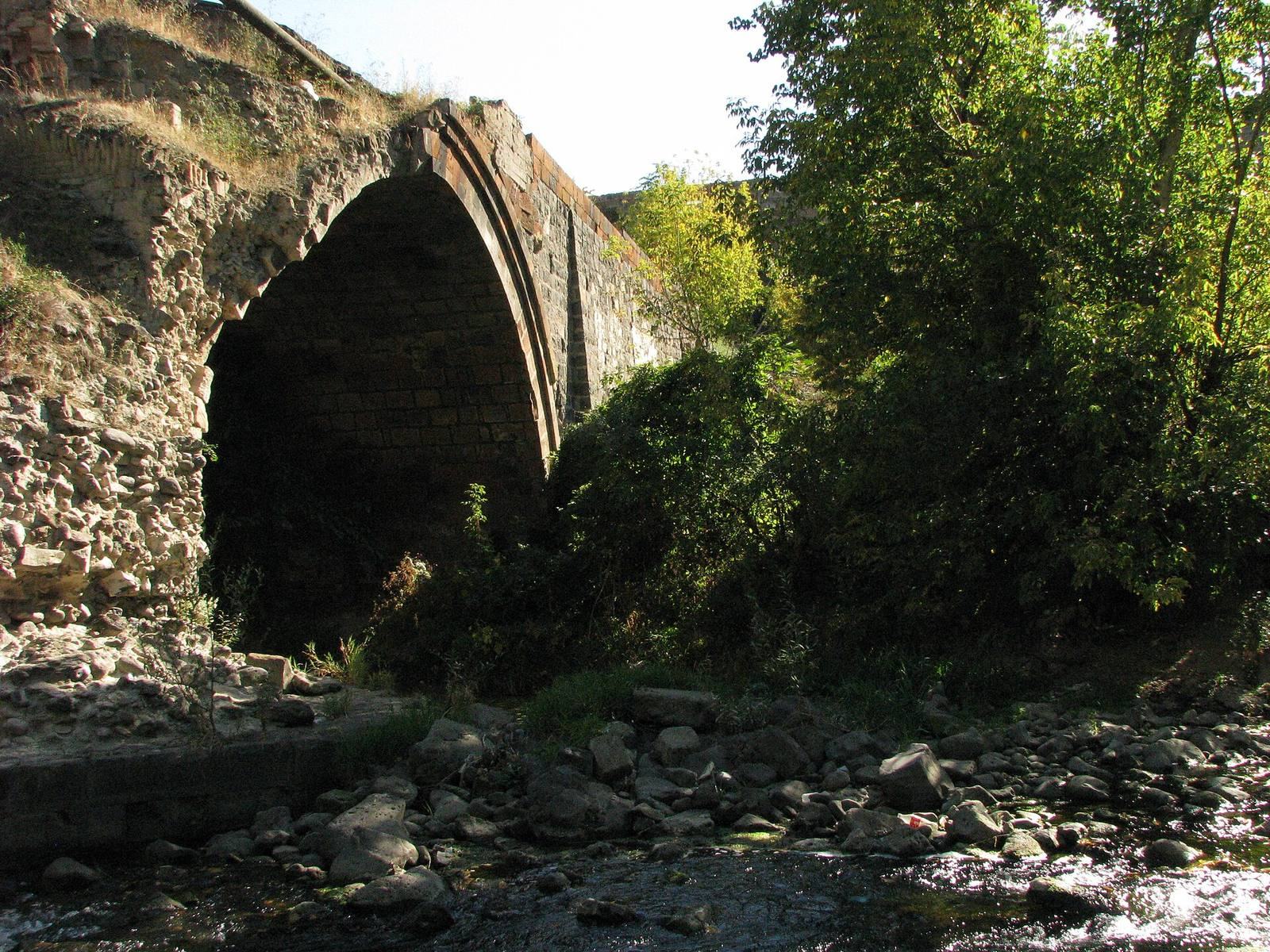
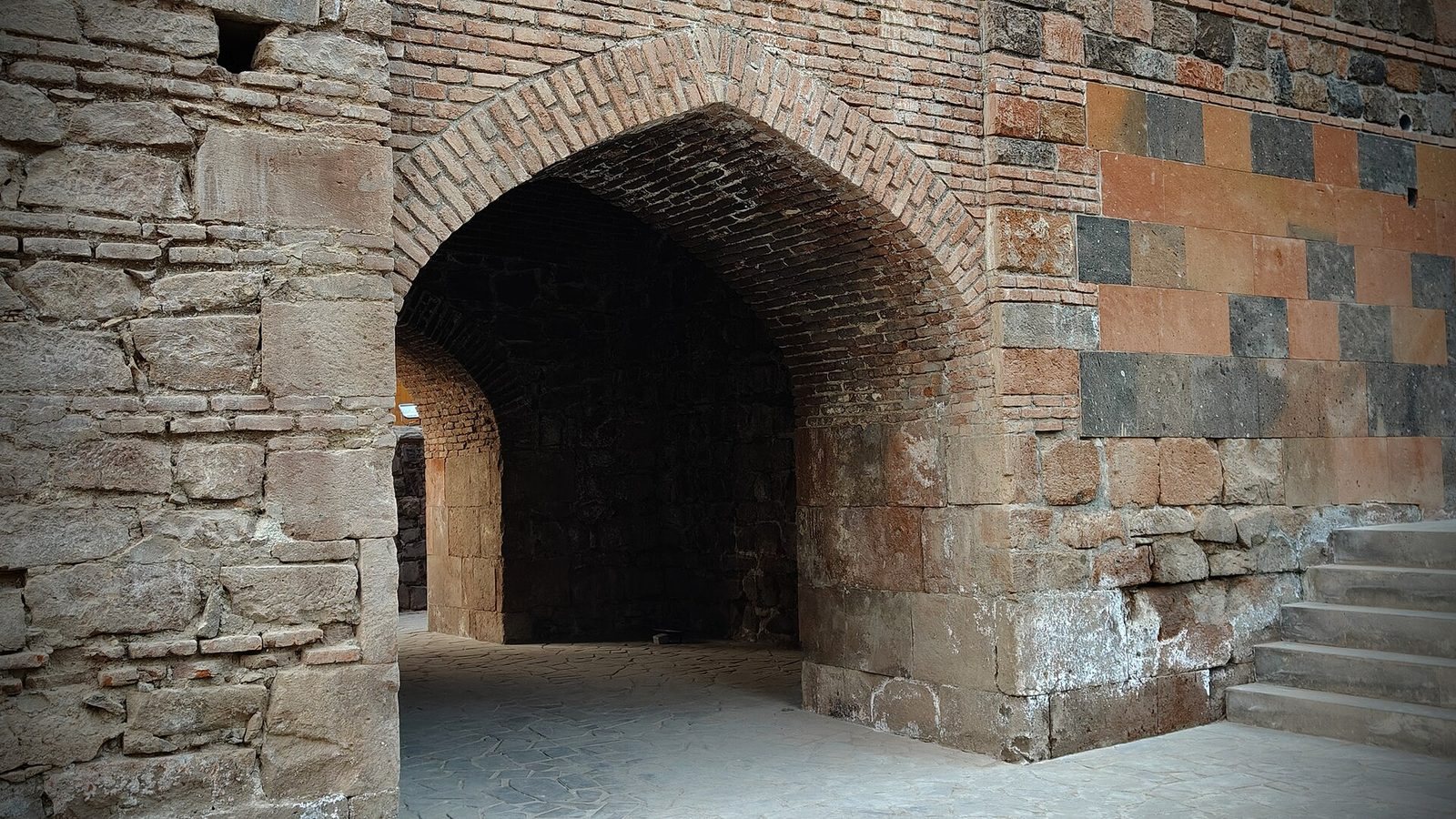
The bridge is about 80 m long, 6.5 m wide, and 11 m above the water. Two principal pointed arches span 14 m and 14.1 m, while smaller openings at the bridge ends carry irrigation water. The name refers to the red volcanic tuff, or volcanic stone, used in its construction. The arches and lower sections of the supports are made from cut and shaped tuff; brick set in mortar forms the upper sections and embankment, with thick joints emphasizing bands that follow the arch curves. The base is faced with tuff. Built for pedestrians, horse riders, pack animals, and carts, the bridge was restored in 2023–25 using unworked red tuff brought from the Ararat Plain and bricks made by traditional methods at Iranian brickworks.