Beçin: The Medieval Capital of the Menteşe Principality
Site at a Glance
- Rating
- 4.4
- Popularity
- Medium
- Country
- Turkey
- Primary era
- Medieval
- Eras represented
- Classical, Medieval
- Civilizations
- Byzantine, Roman
- Site type
- Settlement
- Remains
- Town
On this page12 sections
History
Beçin is a historic hilltop town and fortress in Turkey, about 4 km from Milas and southwest of the modern village of Beçin. Settlement on the hill began in the Bronze Age, followed by Hellenistic occupation, from the era after Alexander the Great’s conquests, and a small church from the Byzantine Empire, the eastern continuation of Roman rule. The church’s small size suggests that the settlement had limited importance at that time. Beçin’s defining medieval phase began under the Menteşe Beylik, a principality ruled by beys in southwestern Anatolia, especially during the fourteenth century, when it became the principality’s capital.
The town’s name appears in several forms. A contemporary Italian document calls it “Pezona,” the traveler Ibn Battuta used “Berçin,” and Menteşe and Ottoman records give “Peçin.”
Capital of the Menteşe Beylik
The Menteşe Beylik took Beçin around the turn of the fourteenth century, and the settlement then grew rapidly. Orhan Bey succeeded his father, Mesud Bey, around 1320. After leading an unsuccessful expedition to Rhodes, Orhan spent a short time in Muğla before moving to Beçin and establishing his capital there. Historian Paul Wittek interpreted the decision as reflecting Beçin’s strategic position and greater security than Milas, which lies on the plain.
In 1332–1333, Ibn Battuta visited Beçin and met Orhan Bey at his residence. He described a newly founded town with houses and mosques, including a mosque still being built. After Orhan’s death, his son Ibrahim ruled until his own death, when Ibrahim’s sons divided the principality’s territory. Beçin passed first to Musa Bey and then to Musa’s brother Ahmet Gazi, who fostered the settlement. Its growth stopped after the capital moved to Balat.
Ottoman rule and later settlement
Beçin came under Ottoman rule around 1390. The Ottomans established the district administration first at Milas and then, after 1425, at Muğla, and Beçin consequently lost importance. In the mid-seventeenth century, the travel writer Evliya Çelebi described the walled settlement as ruined, with twenty households. He also reported that the fortress served as a prison, with a commander and twenty soldiers.
The medieval town had declined by the eighteenth century, although people continued to live within the site into the 1980s. On 13 April 2012, Turkey added the medieval city, including its fortress and settlement, to the UNESCO World Heritage Tentative List, a register of places that may be considered for nomination rather than a World Heritage inscription.
Remains
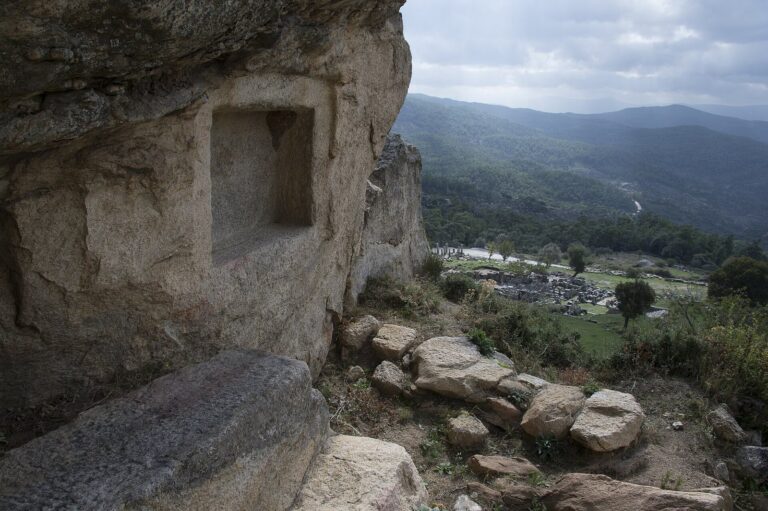
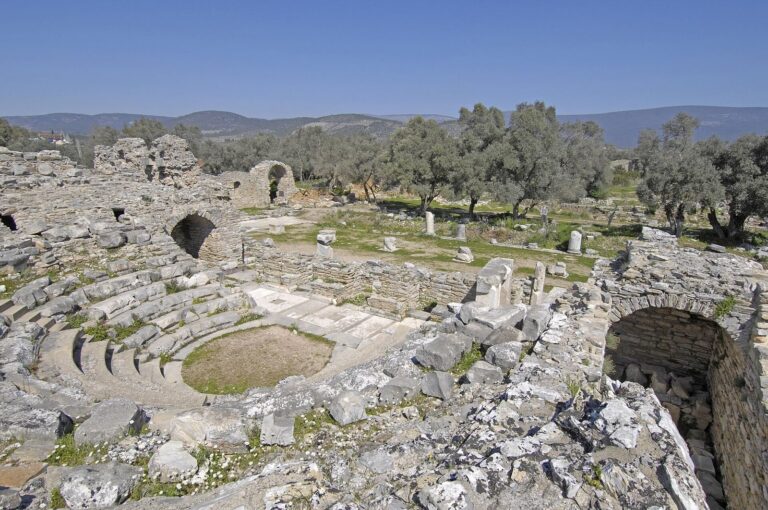
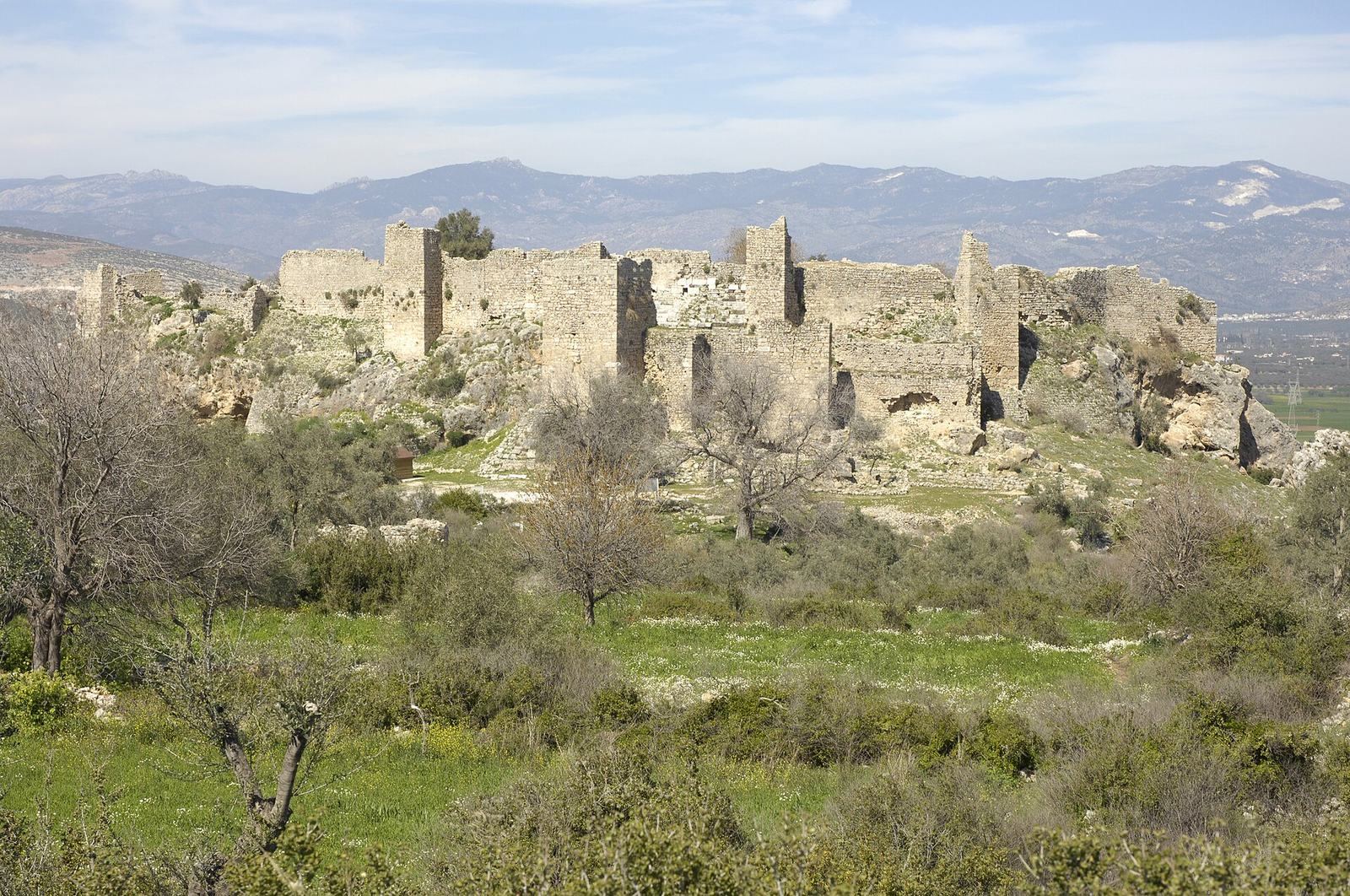
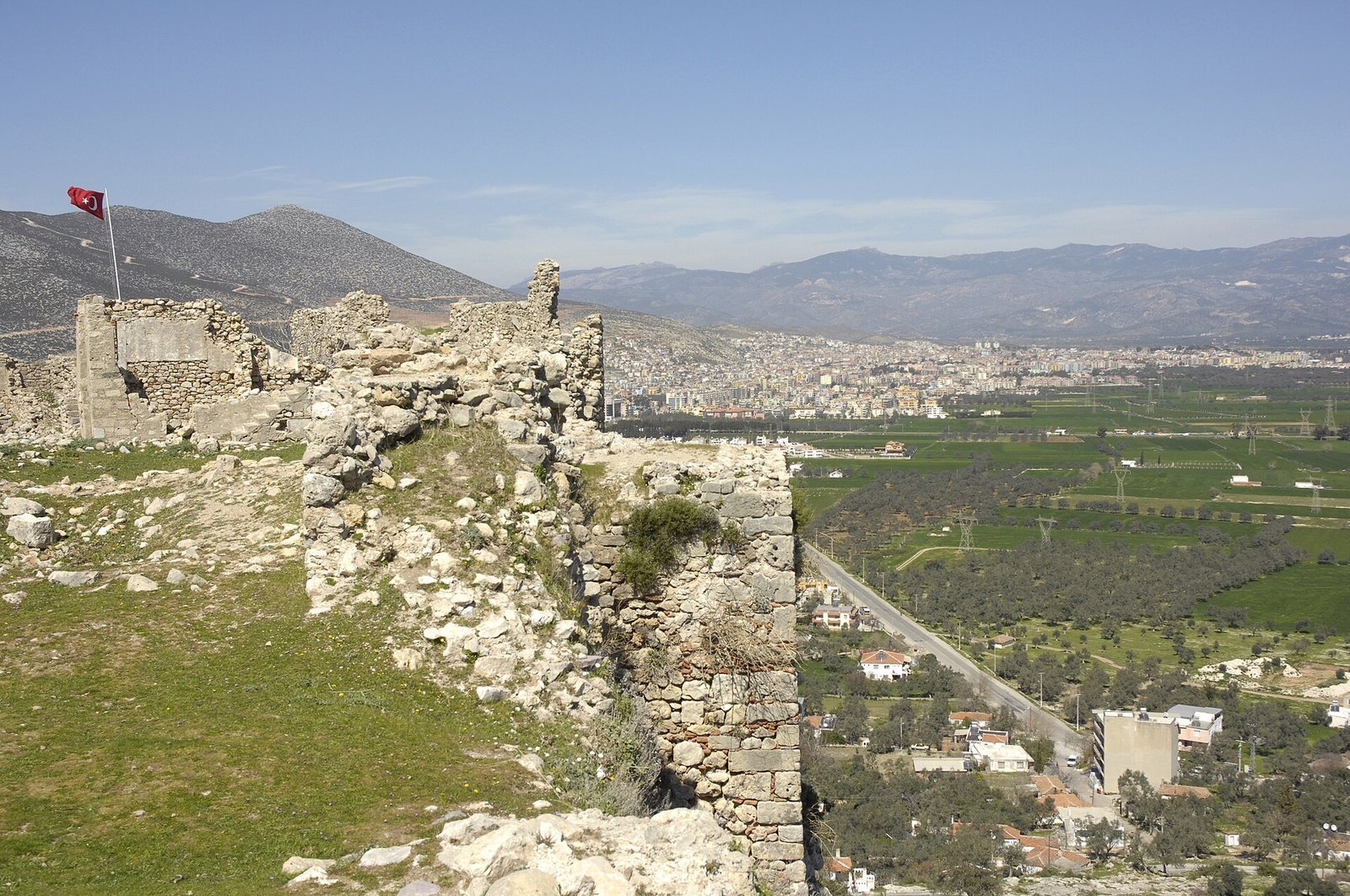
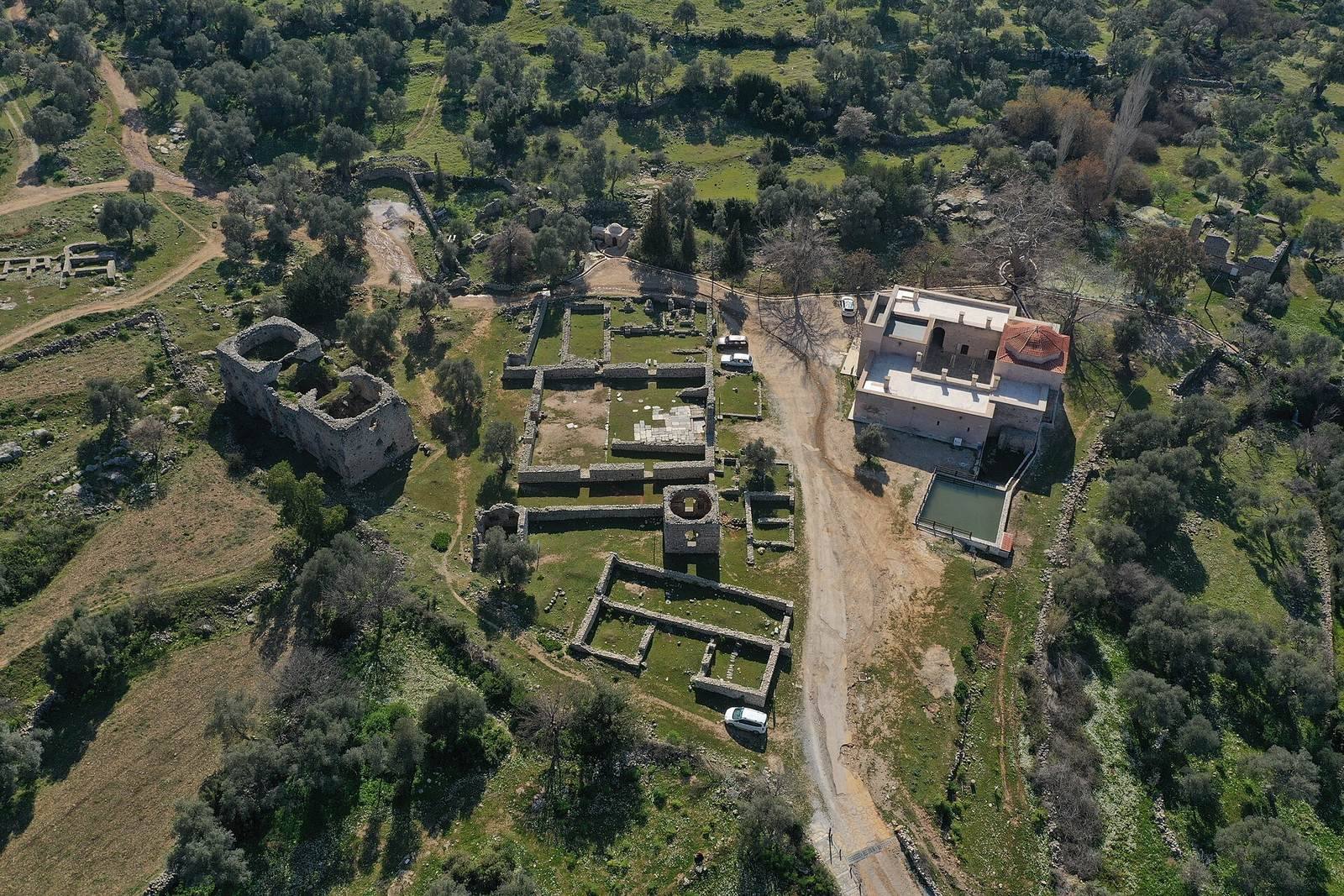
The site is arranged around a low hill whose fortification walls enclose the summit and overlook the plain. Settlement areas extend south beyond the walled enclosure. The remains include structures from several periods, while the architecture of the medieval town reflects the Menteşe Beylik and early Turkish settlement traditions.
Earlier structures
Hellenistic temple
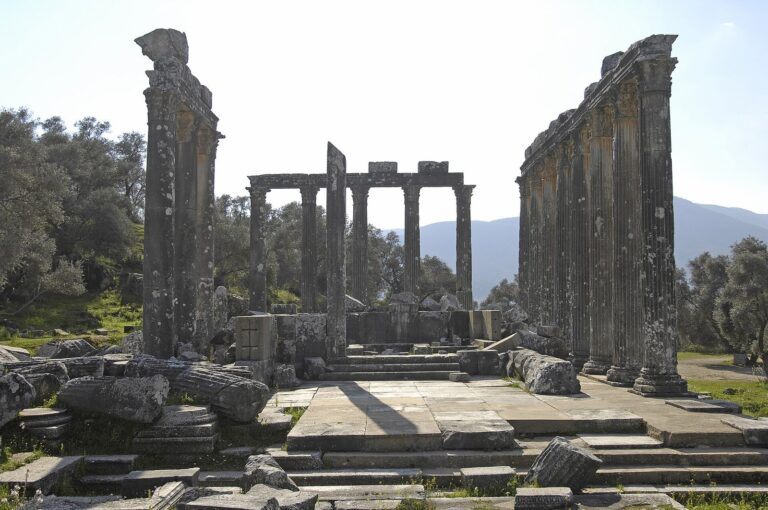
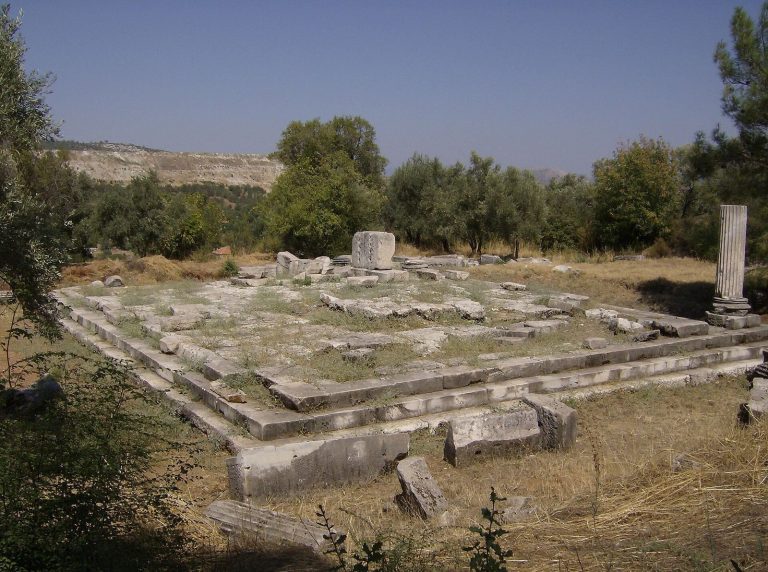
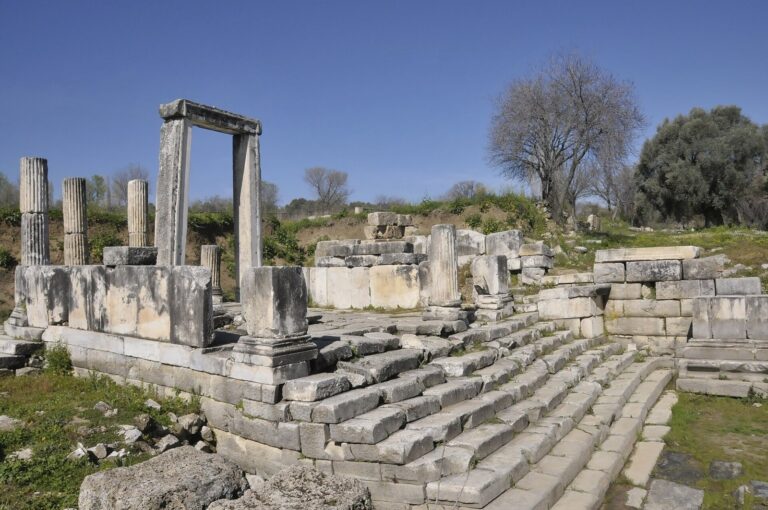
A Hellenistic temple dating to the fourth century BCE survives within the site.
Churches and chapels
The earlier religious remains include a small Byzantine-period church and a Byzantine chapel. Roman-period structures within the fortress are damaged, though a chapel ruin survives.
Medieval buildings
Ahmet Gazi Madrasa
Ahmet Gazi commissioned the madrasa, a school for religious learning, in 1375, the date given by the Arabic inscription above its entrance. The inscription calls him “Sultan of the Coasts.” Its entrance portal combines traditional design associated with the medieval Seljuk dynasties with details resembling European Gothic architecture. This blend may reflect the Menteşe Beylik’s commercial connections with the Aegean islands, Italy and southern France.
Eight chambers and two iwans, vaulted halls open on one side, face a rectangular central courtyard. The building has no portico of the kind usual in this type of structure. Ahmet Gazi’s tomb occupies the main iwan; an adjoining tomb may belong to another Menteşe ruler, Shujaeddin Bey. Large sections of the entrance façade were reconstructed in modern times.
Caravanserais
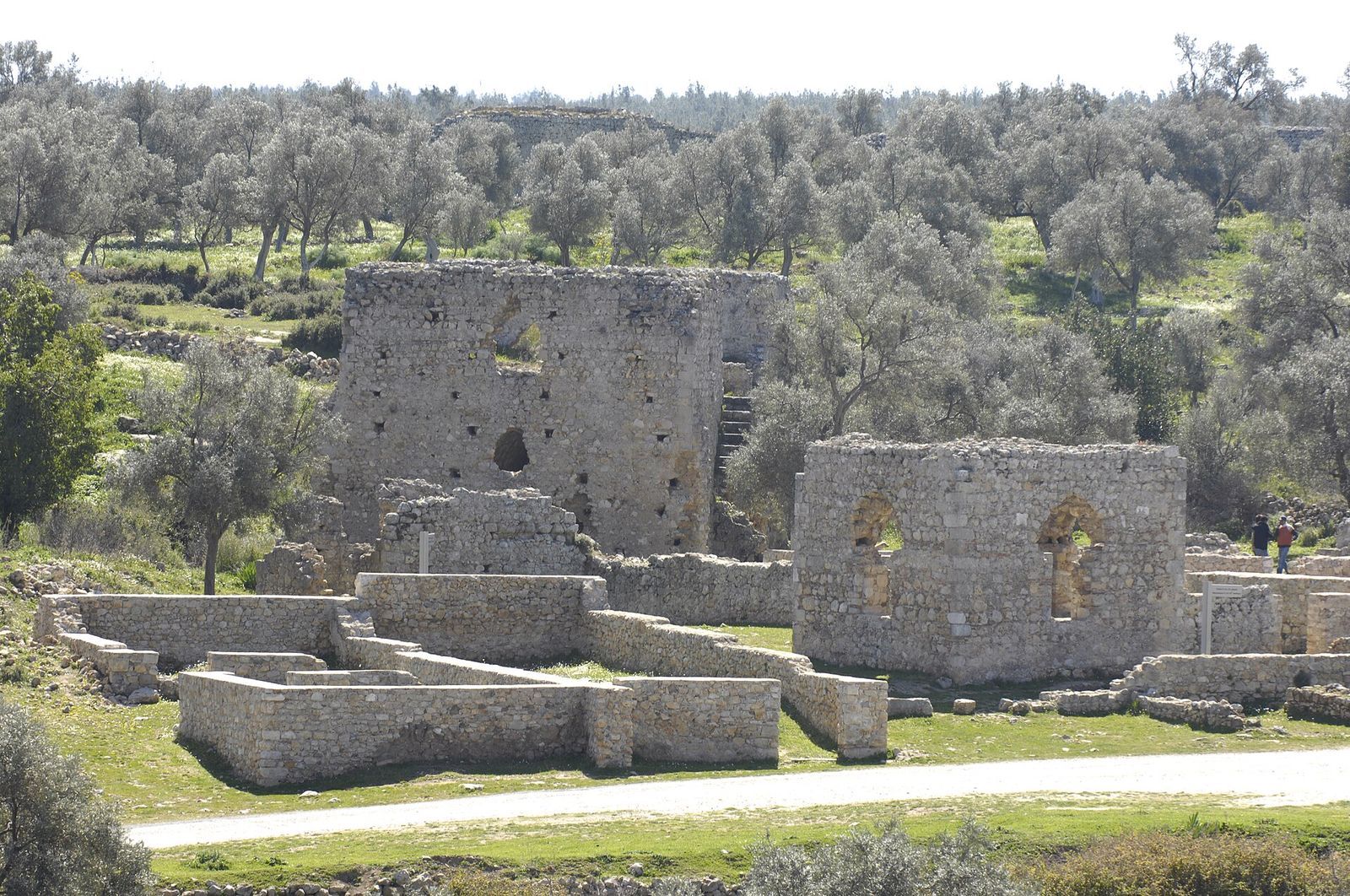
Kızıl Han is a caravanserai, a lodging and trading complex for travelers and caravans, and one of two surviving such buildings at Beçin. The plain, two-storey structure is partly ruined, and its upper floor has collapsed. Kara Paşa Han is the other surviving han.
Bathhouses
Five public bathhouses once stood in the town, and all are now in ruins. The Büyük Hammam, or Great Bath, may have been among its most imposing buildings; most of the roof has fallen. Excavations exposed interior rooms and the original floor, paved with marble blocks.
Other medieval remains
The medieval remains also include the Emirs’ Courtyard, Orman Pension and New Church.