Church of St. Bernard of Siena in Kraków: A Bernardine Conventual Church
Site at a Glance
- Rating
- 4.8
- Popularity
- High
- Country
- Poland
- Primary era
- Early Modern
- Eras represented
- Early Modern
- Civilizations
- Polish–Lithuanian Commonwealth
- Site type
- Religious
- Remains
- Church
On this page14 sections
History
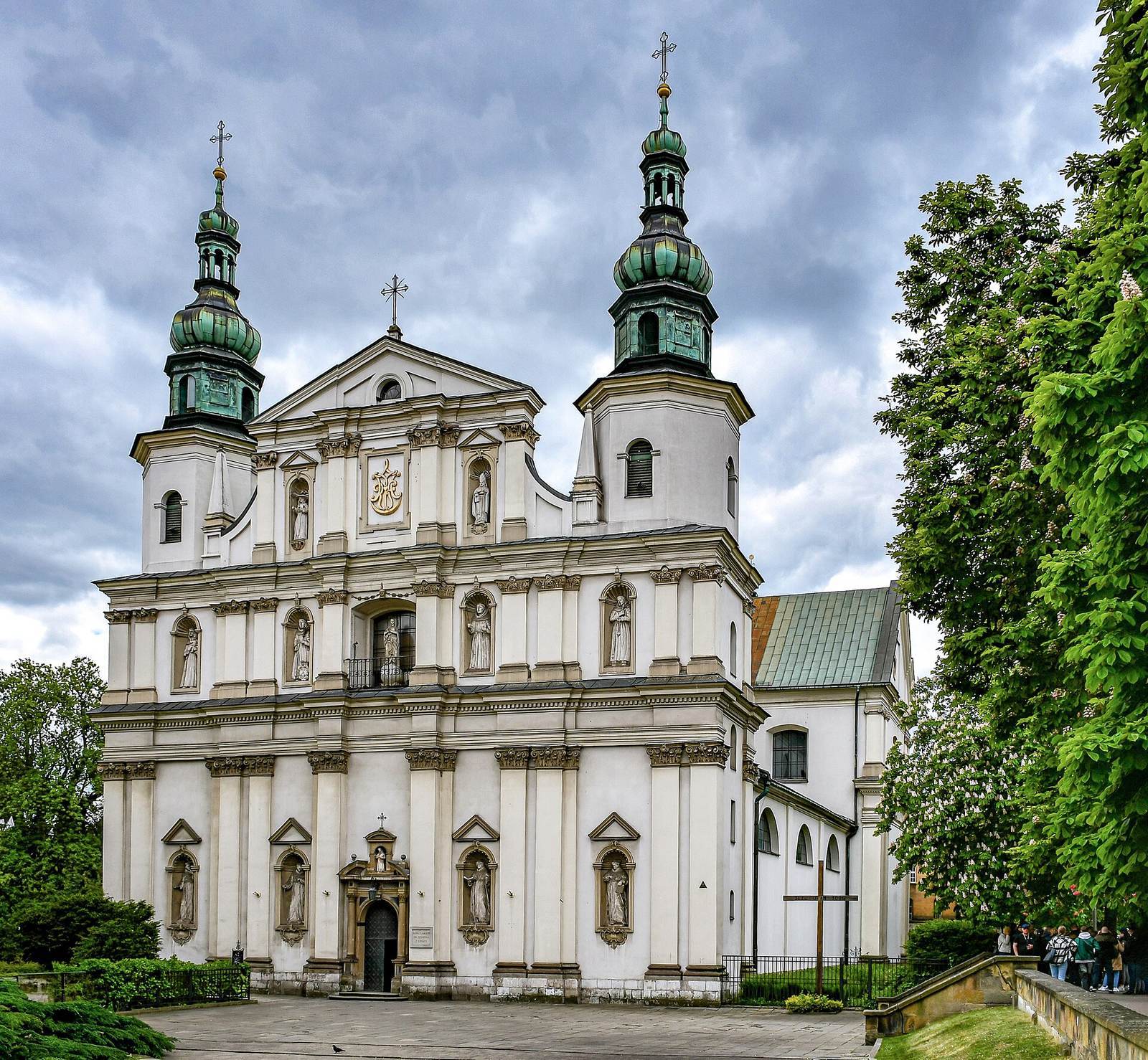
The Church of St. Bernard of Siena in Kraków is a Roman Catholic church in Poland, built in its present early Baroque form between 1659 and 1680 after the Bernardines established Poland’s first Observant Franciscan monastery on the site.
Foundation and Gothic church
The Bernardine religious house was founded in Stradom in 1453, ten days after the Observant Franciscan preacher John of Capistrano arrived in Kraków. Observant Franciscans were a reform movement within the Franciscan order that called for stricter observance of its rule. John came at the invitation of King Casimir IV Jagiellon and Cardinal Zbigniew Oleśnicki, bishop of Kraków. The friars became known as Bernardines after the Kraków house.
Oleśnicki obtained land from his brother, Jan Głowacz Oleśnicki, voivode, or regional governor, of Sandomierz, and gave it to the friars. A royal donation later enlarged the property. The first church and monastery were wooden; work on a Gothic brick church began soon afterward. After Oleśnicki’s death, the cleric and chronicler Jan Długosz oversaw construction and completed the chancel, the area around the altar. Jan Hińcza of Rogów, castellan, or senior local official, of Sandomierz, was a major patron, while Kraków townsmen Marcin Bełza and Paweł Ber also contributed. The church was finished by the end of the 15th century.
Rebuilding and destruction
The church’s body was entirely rebuilt in 1645–1647, with support from Stanisław Lubomirski, voivode of Kraków, and Zofia Ługowska. In 1655, during the Swedish Deluge, the Swedish invasion of the Polish–Lithuanian Commonwealth, the church was burned and destroyed on the order of General Stefan Czarniecki. The replacement church was designed by Krzysztof Mieroszewski, with construction funded by Stanisław Witkowski, castellan of Sandomierz, and Ługowska.
Monastery and later history
A walled cemetery adjoined the Bernardine complex. Its Baroque gate, built in 1767, opened onto Stradomska Street and had three portals, with the central one taller and more ornate. Seven saint statues crowned the gate, including an Immaculate Virgin Mary at the center. Early 19th-century demolitions removed the cemetery, part of its enclosure, a monastery corridor, kitchen, tailoring workshop, clothing and linen room, and utility buildings in the large courtyard. After 1830, the gate and adjoining wall sections were also demolished.
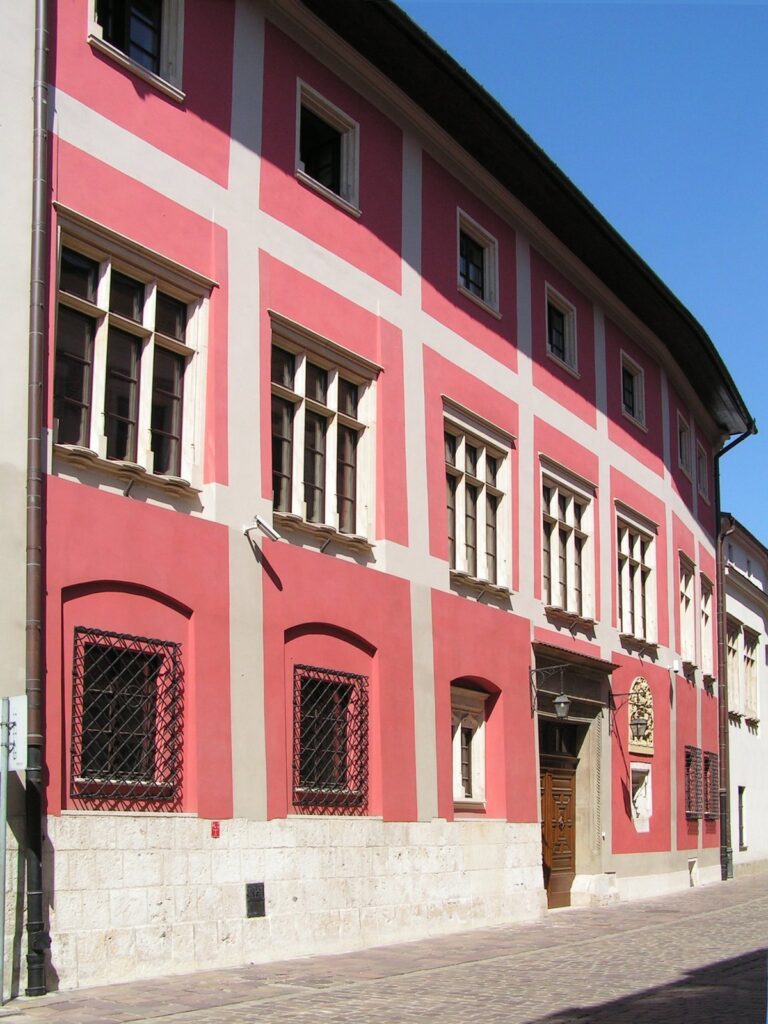
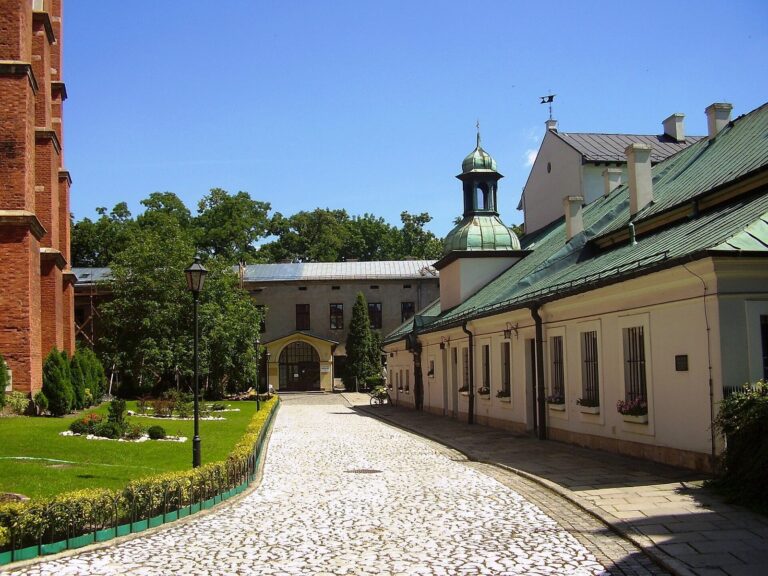
Work connected with expanding the monastery buildings took place in 1883 under master mason Alfred Zajączkowski. In 1907, the refectory, library, porter’s lodge, and entrance gate on Bernardyńska Street were enlarged to plans by architect Jan Sas-Zubrzycki.
The church serves the Bernardine community as a conventual church and is also a rectoral church, entrusted to a rector rather than a parish pastor. Dedicated to Bernardino of Siena, an Italian Franciscan preacher, it belongs to the Latin, or Western Catholic, tradition and the Archdiocese of Kraków. It is also a sanctuary of Simon of Lipnica, a Polish Franciscan saint; Archbishop Stanisław Dziwisz conferred the sanctuary title on 7 November 2016. The church is part of Kraków’s Historic Centre, added to the UNESCO World Heritage List in 1978 under criterion iv, which recognizes outstanding examples of building types or ensembles illustrating stages in human history. The Kraków historic city complex was designated a Polish Historic Monument in 1994.
Remains
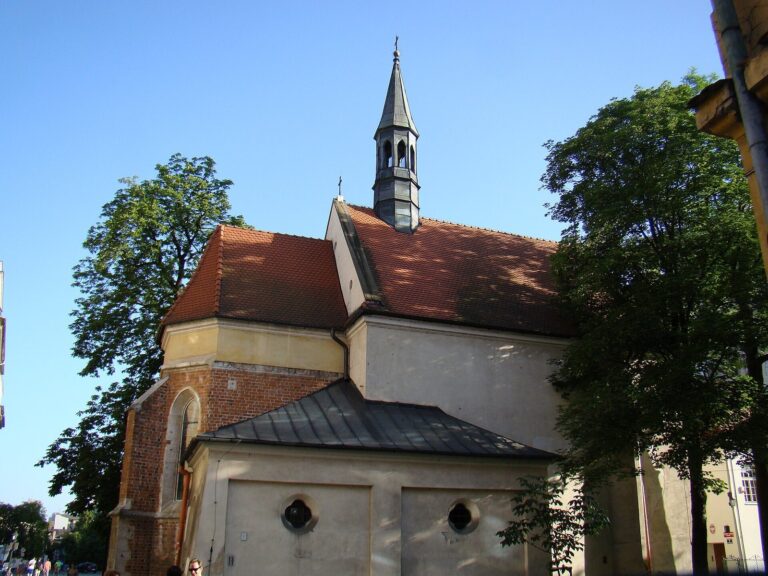
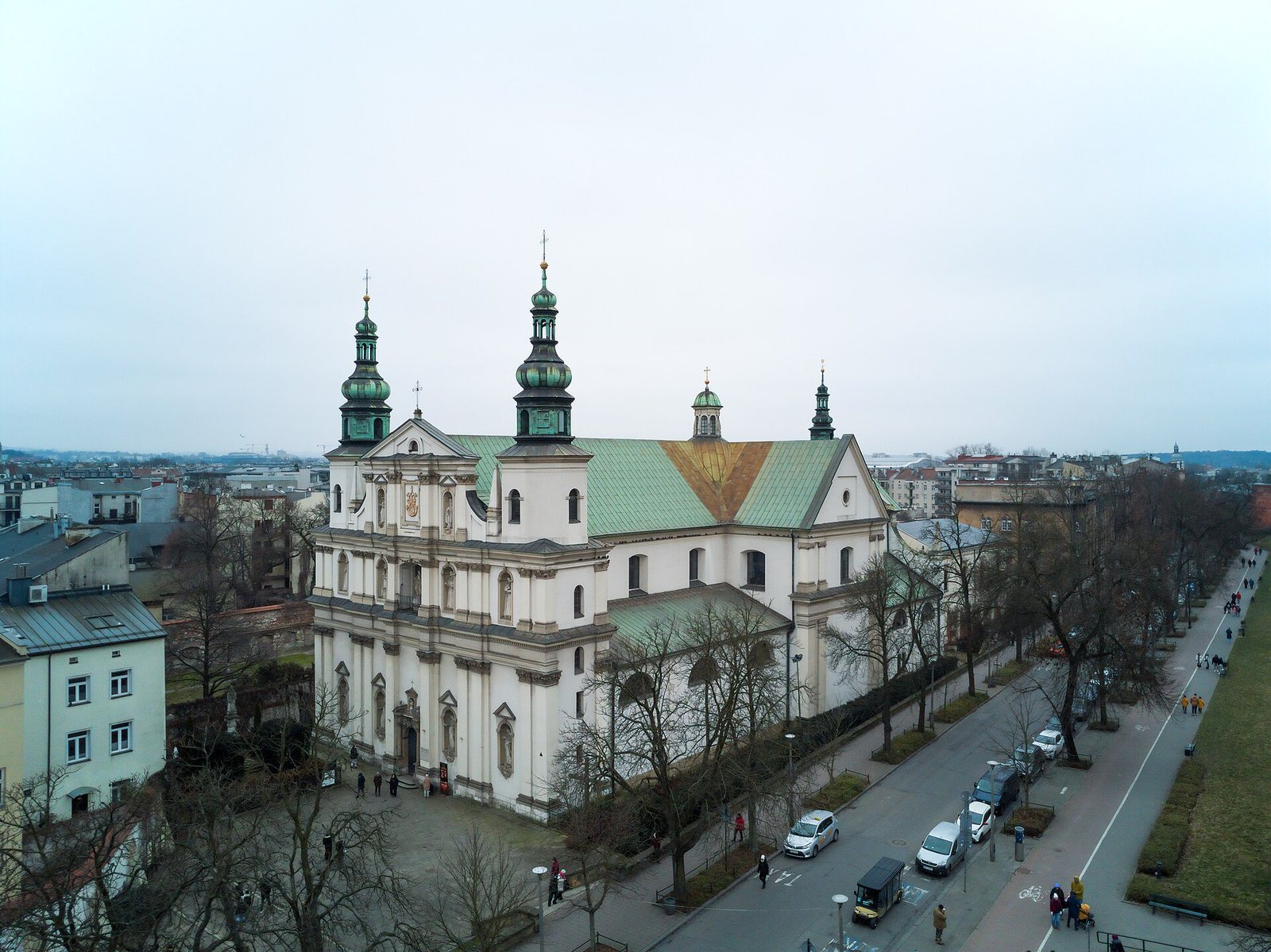
The brick church has a three-aisled basilica plan, with a central nave flanked by aisles, and a transept, the crosswise arm of the building. Its chancel is slightly narrower than the nave and ends in a straight wall. A two-towered façade stands before a dome concealed beneath the roof. The concealment may have been intended to shield the dome from possible artillery fire from Wawel Hill.
Church interior
Nave and vestibule
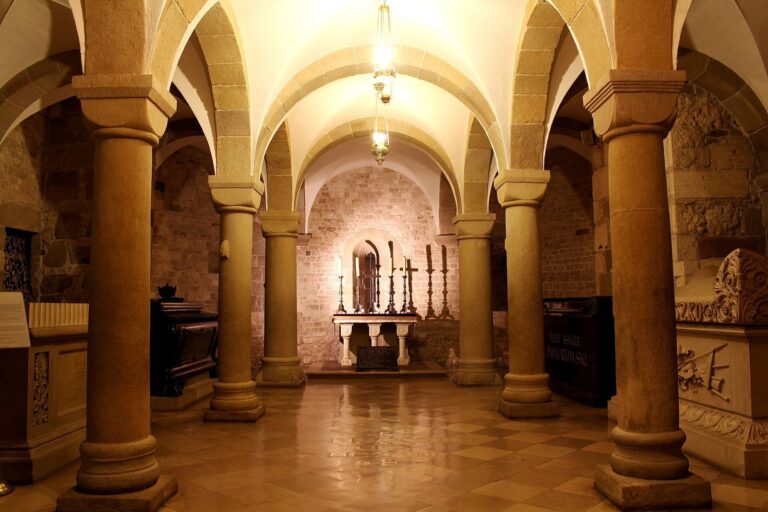
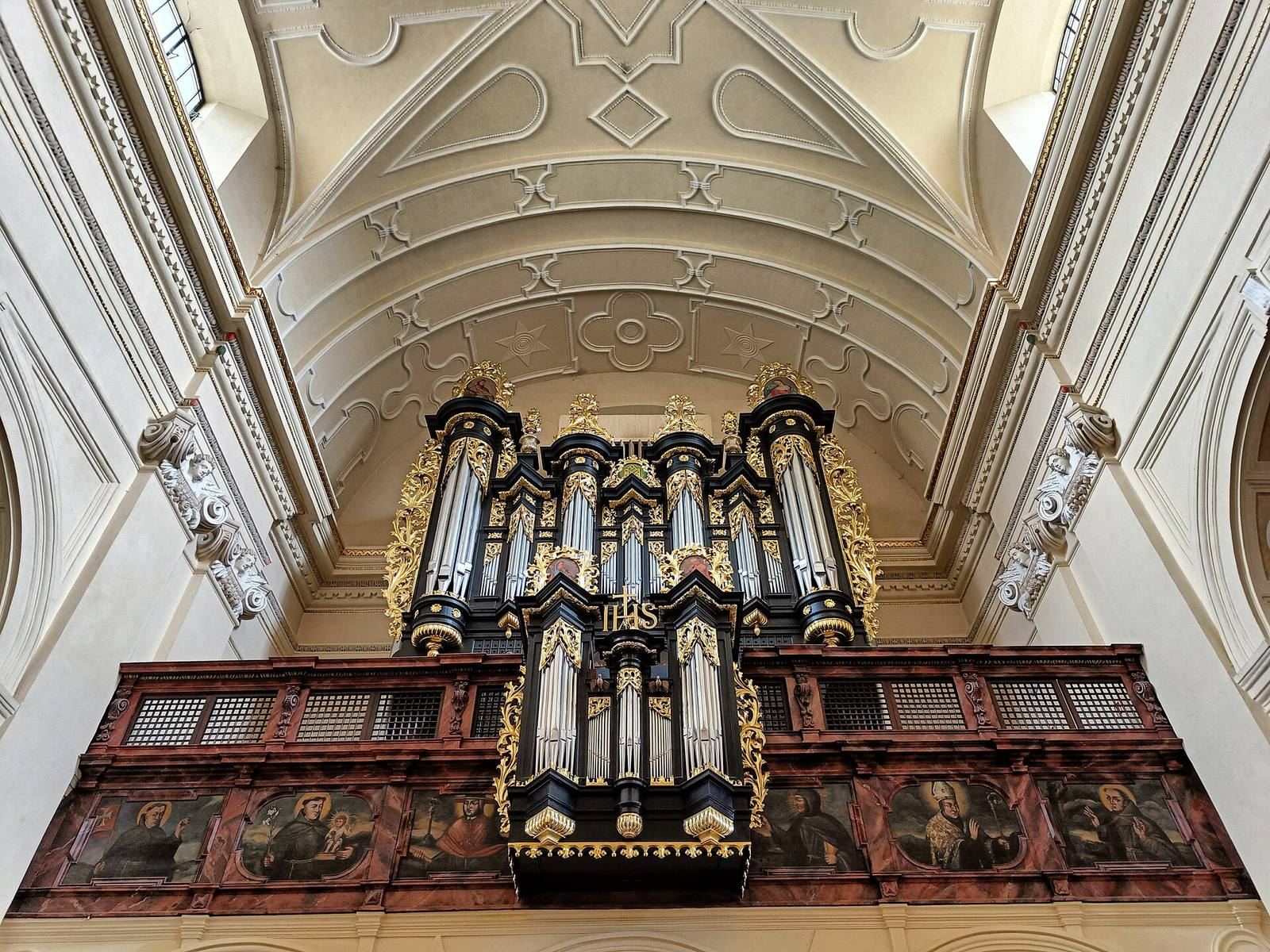
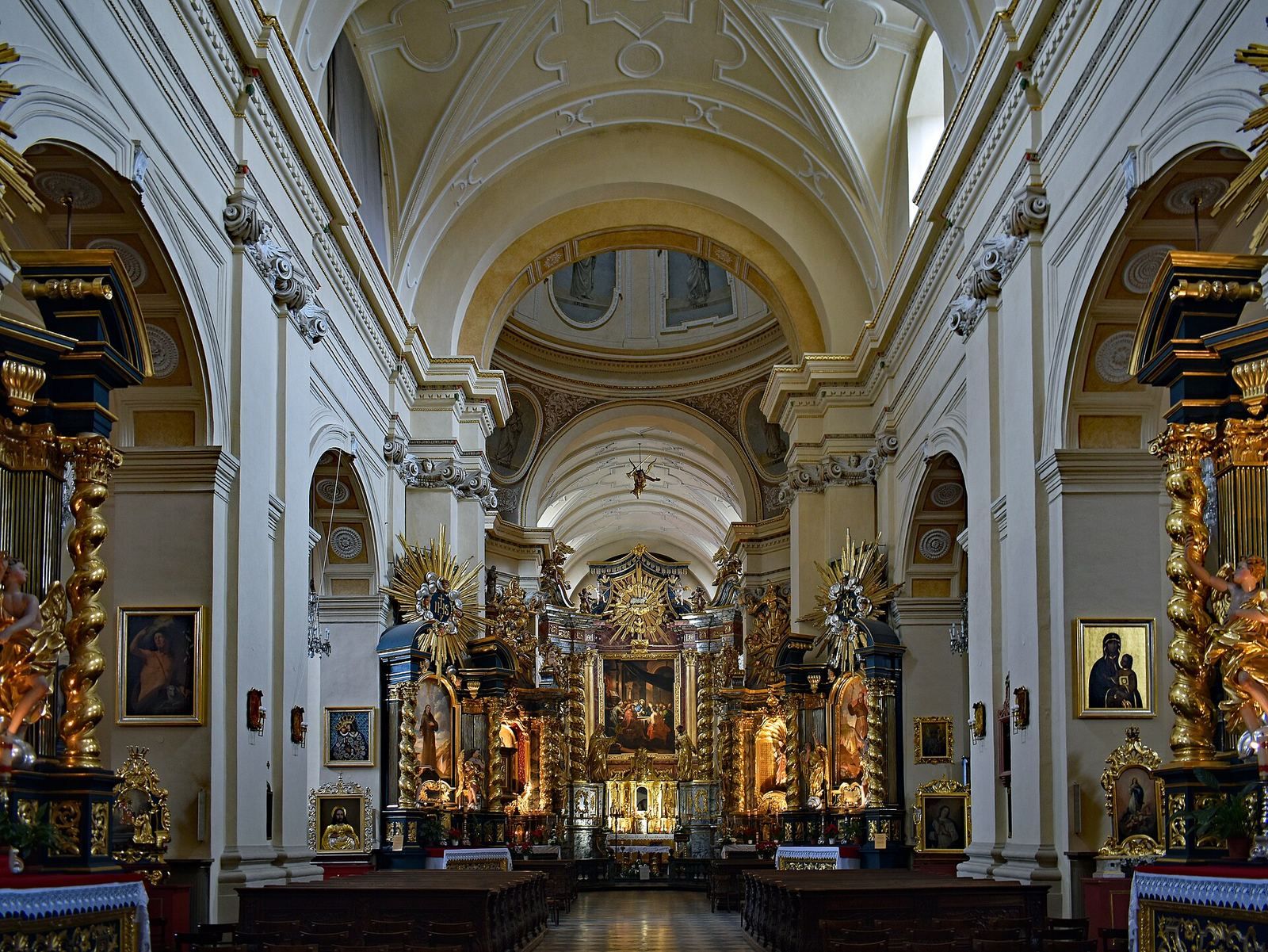
The nave and chancel have vaults decorated with elaborate stucco, or ornamental plasterwork. Late Renaissance tombstones of Stanisław and Zofia Ługowski stand in the vestibule and are remnants of the earlier church. The interior also includes a choir and organ.
Transept chapels
A chapel in the left arm of the transept contains a late Baroque altar from the second half of the 18th century and a late-15th-century sculpture of the Virgin and Child with Saint Anne, probably made in the workshop of Veit Stoss. The sculpture is another remnant of the earlier church. A painting called Dance of Death, dating to the fourth quarter of the 17th century, hangs on the chapel wall. In the right arm, the Chapel of Simon of Lipnica contains a marble altar-mausoleum made in 1662. Its altar table incorporates a small shrine associated with a saint’s tomb or relics, with a statue of Simon. A stained-glass window showing scenes from his life was designed by Józef Mehoffer and made by a Kraków workshop.
Chapel of Our Lady of Sokal
A small chapel dedicated to Our Lady of Sokal lies near the sacristy. It contains a copy of a painting whose original was kept in the chapel from 1951 to 2001, after its evacuation from territory seized by the Soviet Union.
Main and side altars
The main altar and four related side altars are carved wooden works made between 1758 and 1766. Their paintings are by Franciszek Lekszycki, a Bernardine monk, who drew on prints, sketches, and paintings by Rubens and van Dyck. His works include The First Fall under the Cross in the right transept arm and Crucifixion in the left.
Easter display
Tadeusz Popiel’s painting Golgotha, made in 1911, was brought to Kraków after the Second World War from the Bernardine church in Lviv. During Easter it forms the background to a monstrance, a vessel for displaying the consecrated host, in the church’s Holy Sepulchre, a temporary display representing Christ’s tomb.
Exterior memorials
Former cemetery site
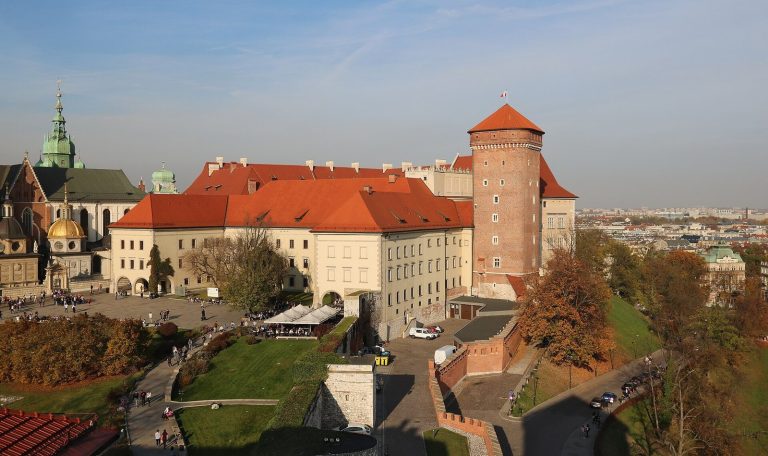
A statue of the Virgin Mary on a column marks the center of the former cemetery, at the corner of Stradomska and Bernardyńska Streets, at the foot of Wawel Hill.
Simon of Lipnica memorials
A monument to Simon of Lipnica stands in front of the church. Made by Jan Sas-Zubrzycki, it dates to 1907. A well associated with Simon is beside the monastery gate.