Al Khor Island: An Archaeological Site in Qatar
Site at a Glance
- Rating
- 4.4
- Popularity
- High
- Country
- Qatar
- Primary era
- Unclassified
- Eras represented
- Unclassified
- Civilizations
- Unclassified
- Site type
- Economic
- Remains
- Production Complex
On this page7 sections
History
Al Khor Island, also known as Purple Island, is an archaeological site on Qatar’s northeastern coast, in Al Khor municipality. Four principal periods of human occupation span from about 2000 BC to around 1900 AD. It is the only archaeological site in Qatar attributed to the second millennium BC.
Early evidence and Dilmun
Possible Neolithic, or later Stone Age, visits to the island remain uncertain. Several Neolithic camps and pottery from the Ubaid period, a prehistoric culture of Mesopotamia, were found about 6 km to the east. These discoveries have prompted the suggestion that people visited the island, but do not establish that it was occupied then.
Pottery links the island with Dilmun, an ancient civilization centered in Bahrain, from about 2000 to 1750 BC. Settlements may have supported journeys between Bahrain and Tell Abraq, a major settlement on the Persian Gulf. Alternatively, visiting Dilmun fishermen or pearl fishers may have used camps on the island. Trade between island inhabitants and Dilmun has also been proposed, though it is considered unlikely because Qatar’s population was sparse at the time.
Kassite dye production
From about 1400 to 1100 BC, the Kassites, an ancient people who ruled Babylonia during part of the second millennium BC, operated a purple-dye industry on the island. Trade relations also connected Qatar’s inhabitants with the Kassites. Al Khor Island is believed to have been the earliest known place where purple dye was produced from shellfish.
Later activity and archaeological study
Artifacts indicate activity on the island during the late Sasanian period, about AD 400–600. The Sasanians were an Iranian dynasty and empire of late antiquity. The island was inhabited again in the late Islamic period, about AD 1700–1900.
The site was known before 1976, when the French Archaeological Mission in Qatar began a systematic study led by French archaeologist Jacques Tixier.
Remains
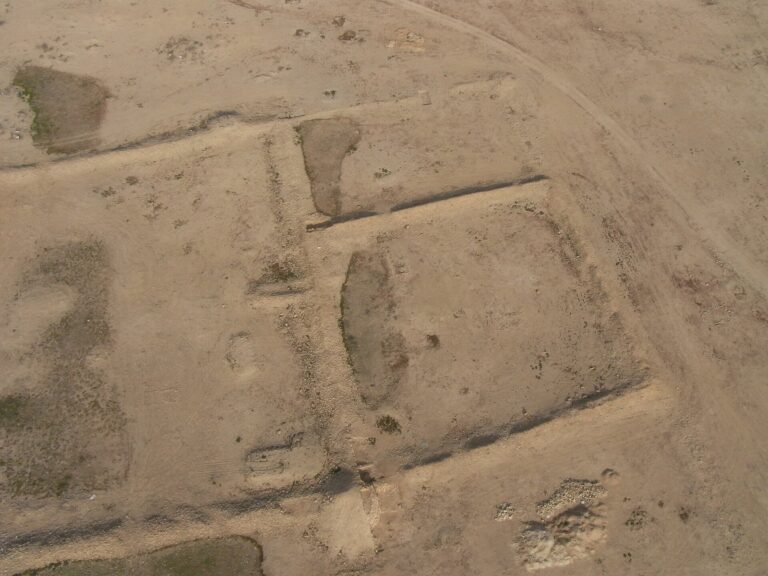
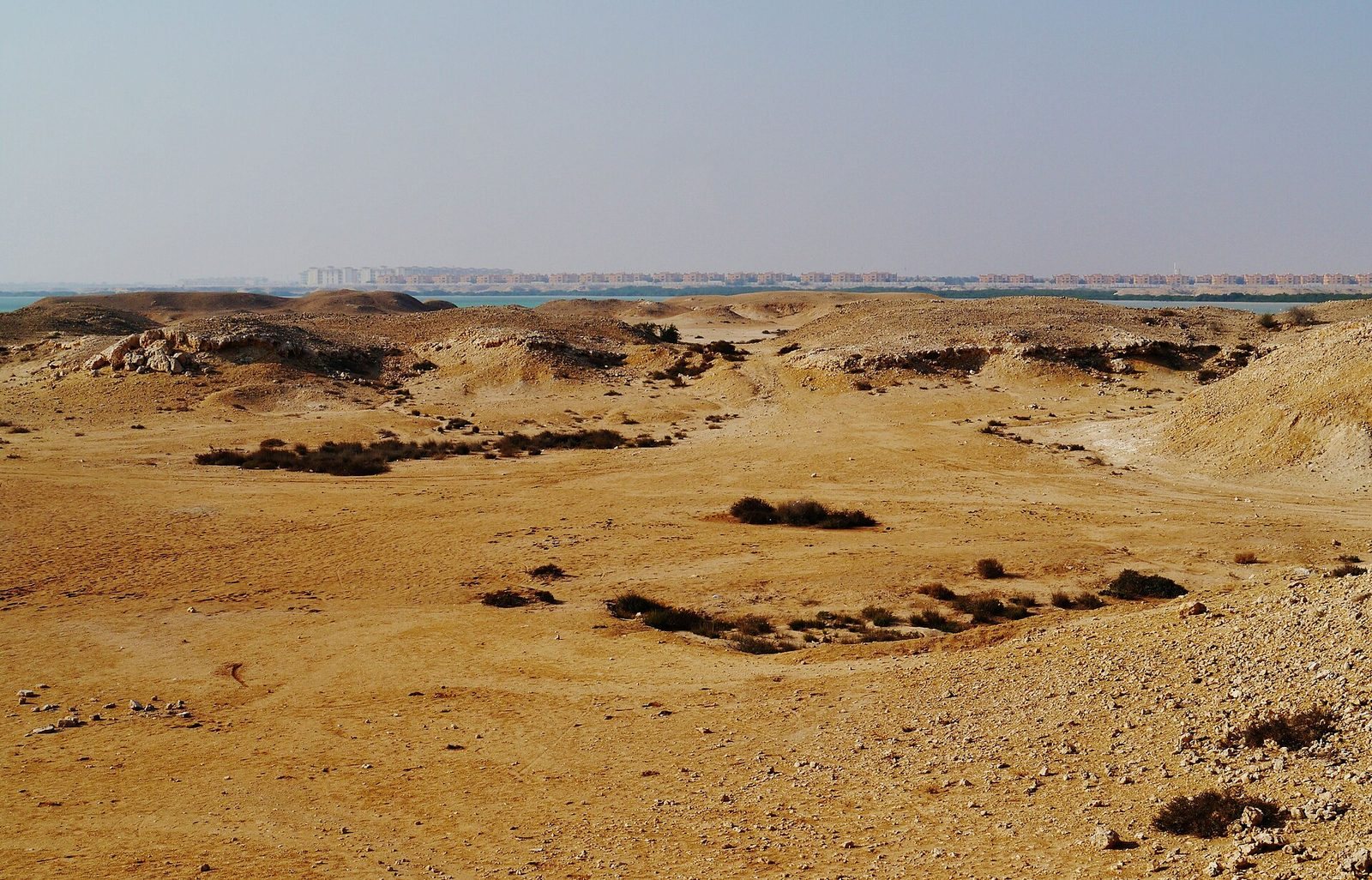
The archaeological landscape extends across level ground and limestone outcrops, with evidence from both higher ground and the shoreline.
Island setting and terrain
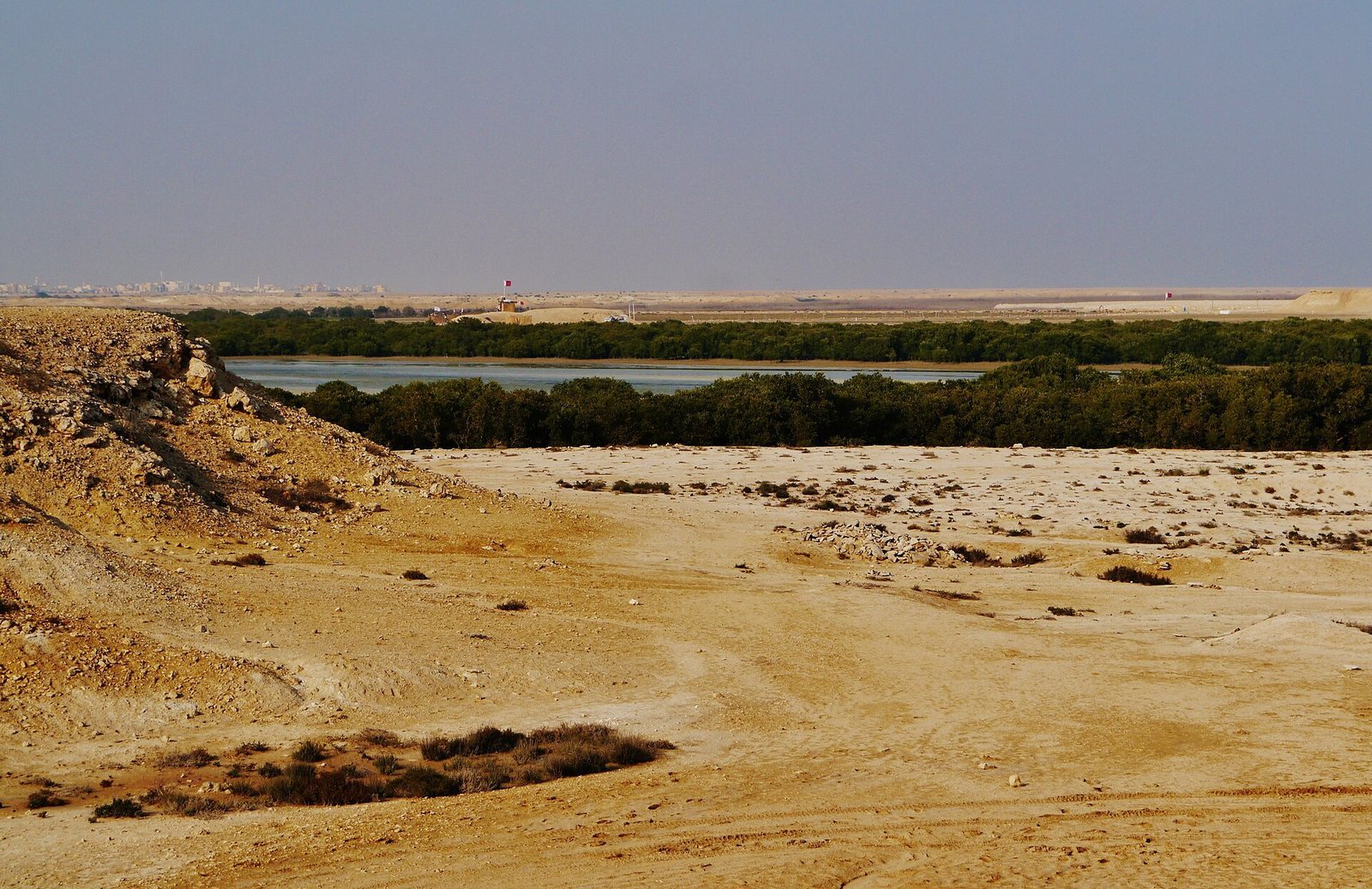
The island covers about 1.67 km² on the eastern side of a sheltered bay overlooked by Al Khor city, roughly 50 km north of Doha. About 420 m of shallow water separates it from the city. The bay is approximately 2.2–6.5 km wide and opens to the sea through a channel about 750 m wide at its southern end. A narrow dirt track crosses several streams to connect the island with the mainland. Mangroves grow along the southeastern and eastern coasts.
Outcrops and archaeological finds
Limestone outcrops rise to about 8.5 m. Higher formations contain traces of human-made features, including burial mounds, while most archaeological discoveries came from the level ground around the outcrops. The coast has friable, flat-surfaced rock formations where sea-snail shells were found. Finds include about three million crushed snail shells and Kassite pottery fragments. Early Dilmun-period ceramics consist mainly of medium-sized jars and cooking pots.