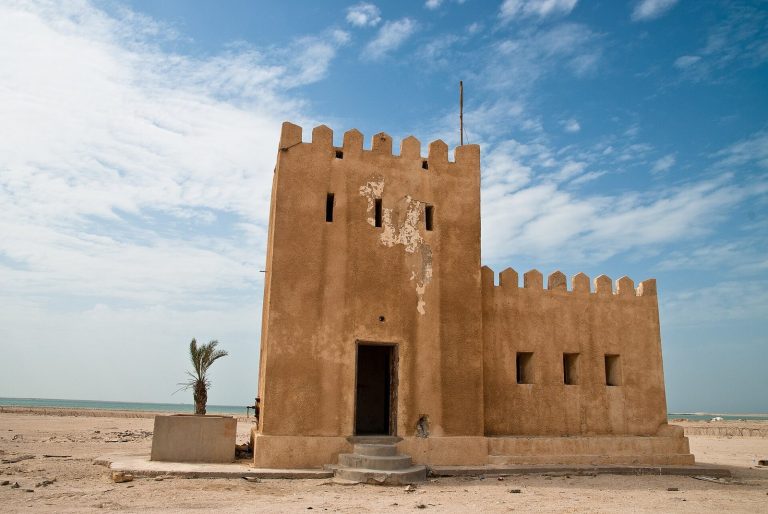
Barzan Tower: A Defensive Watchtower Complex in Qatar
Site at a Glance
- Country
- Qatar
- Primary era
- Modern
- Eras represented
- Modern
- Civilizations
- Ottoman
- Site type
- Military
- Remains
- Tower
On this page9 sections
History
Late nineteenth-century defenses
Barzan Tower is a pair of defensive towers in Umm Salal Mohammed, Qatar, built in the late 19th century. They belonged to a defensive system developed from the late 19th into the early 20th century to protect a rawda, a depression where rainwater gathers as it flows down from higher ground. In Arabic, Barzan means “high place.”
The towers may also have been intended to monitor pearl divers and approaching ships, as well as the moon. Qataris observed the new moon from the towers to identify the start of lunar months, including Ramadan, the Islamic holy month.
Renovation and later use
In 1910, Sheikh Mohammed bin Jassim Al Thani, a member of Qatar’s ruling family, renovated the towers for use against approaching Ottoman soldiers. His father, Sheikh Jassim bin Mohammed Al Thani, had defeated Ottoman forces at the Battle of Al Wajbah, a conflict between Qatari and Ottoman forces, several years earlier. Mohammed remained concerned that military tensions might return.
The towers served as watch posts from 1910 until 2003, when Qatari authorities restored them and the site became a museum.
Remains
The towers
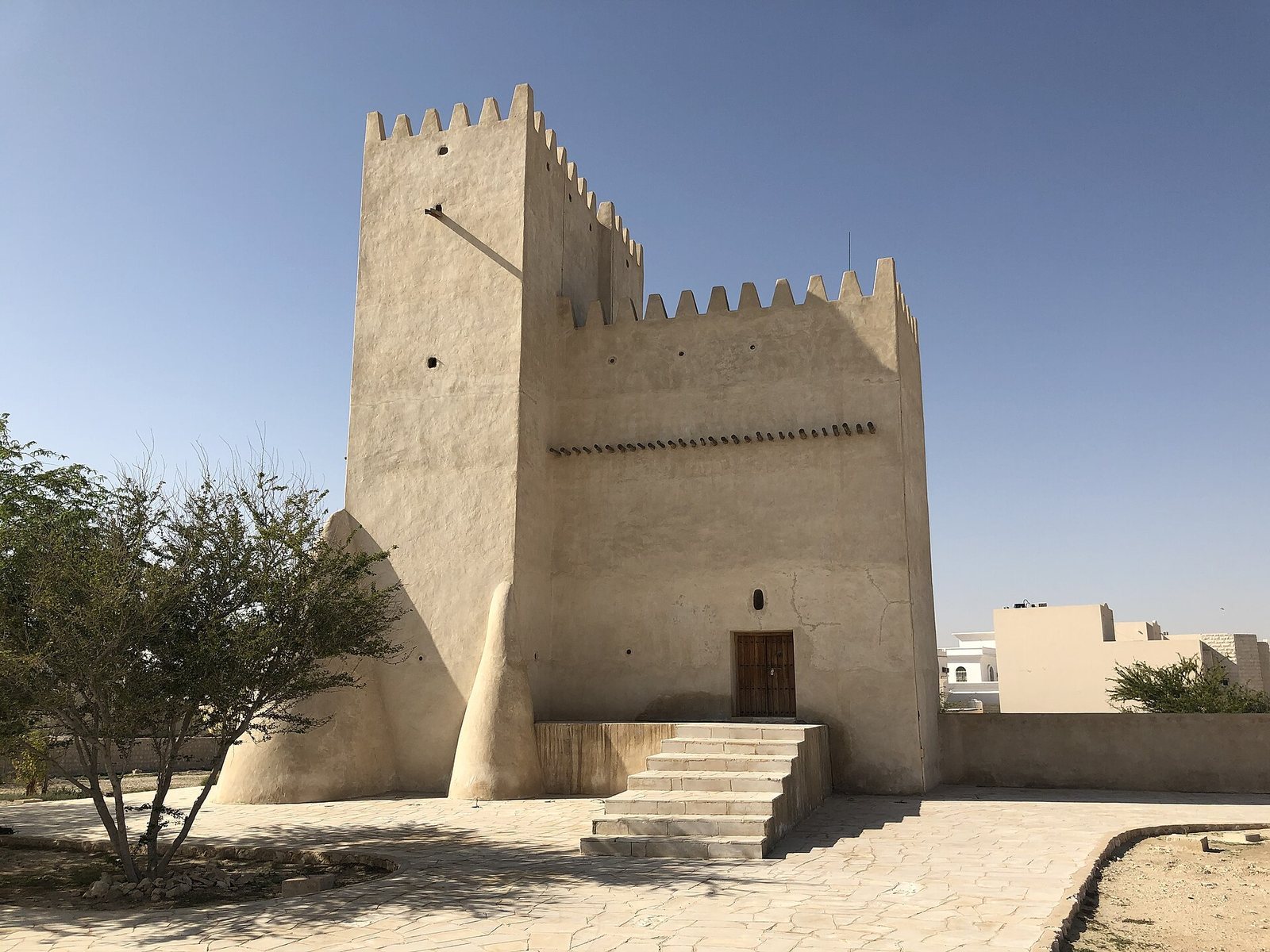
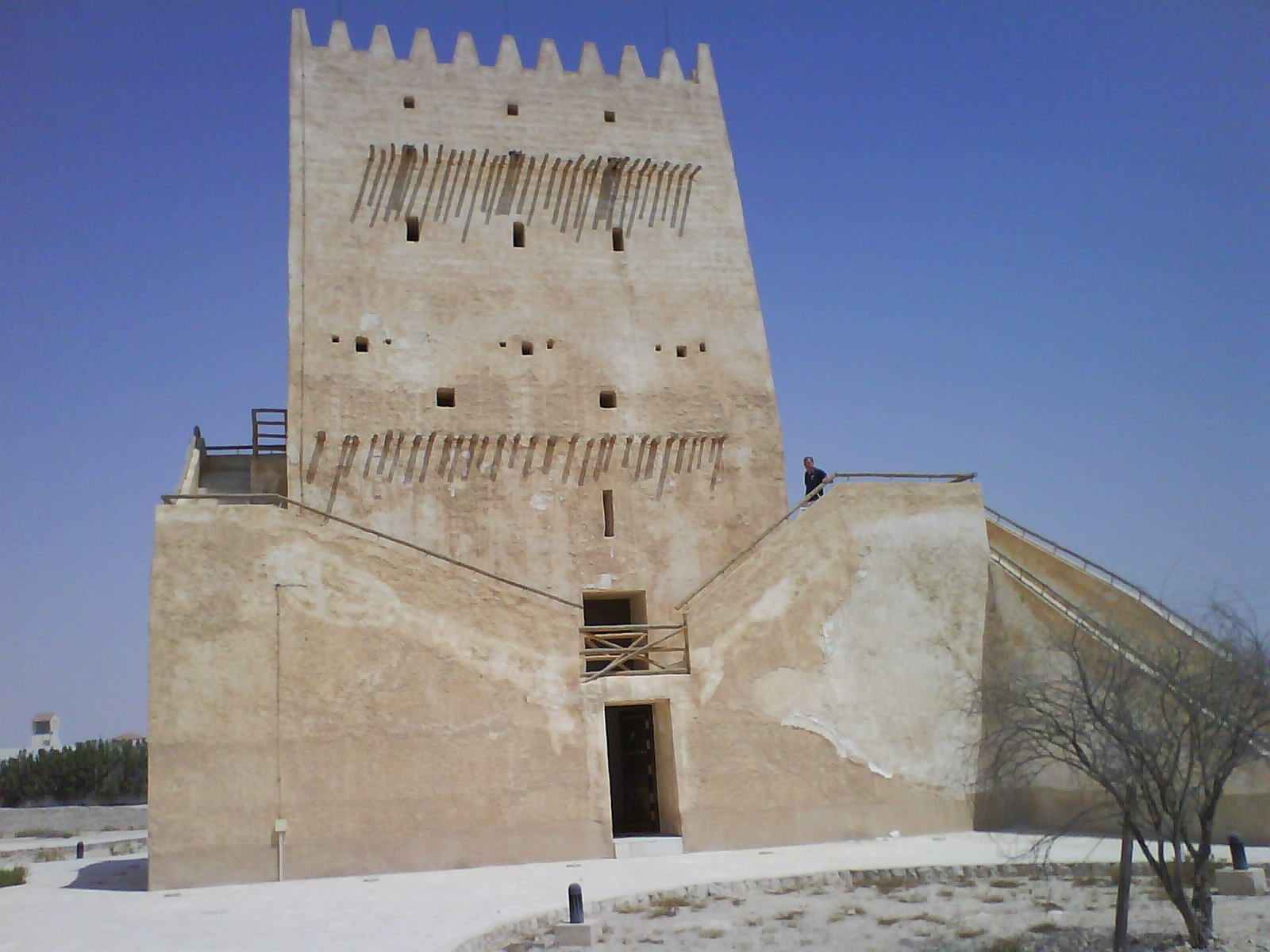
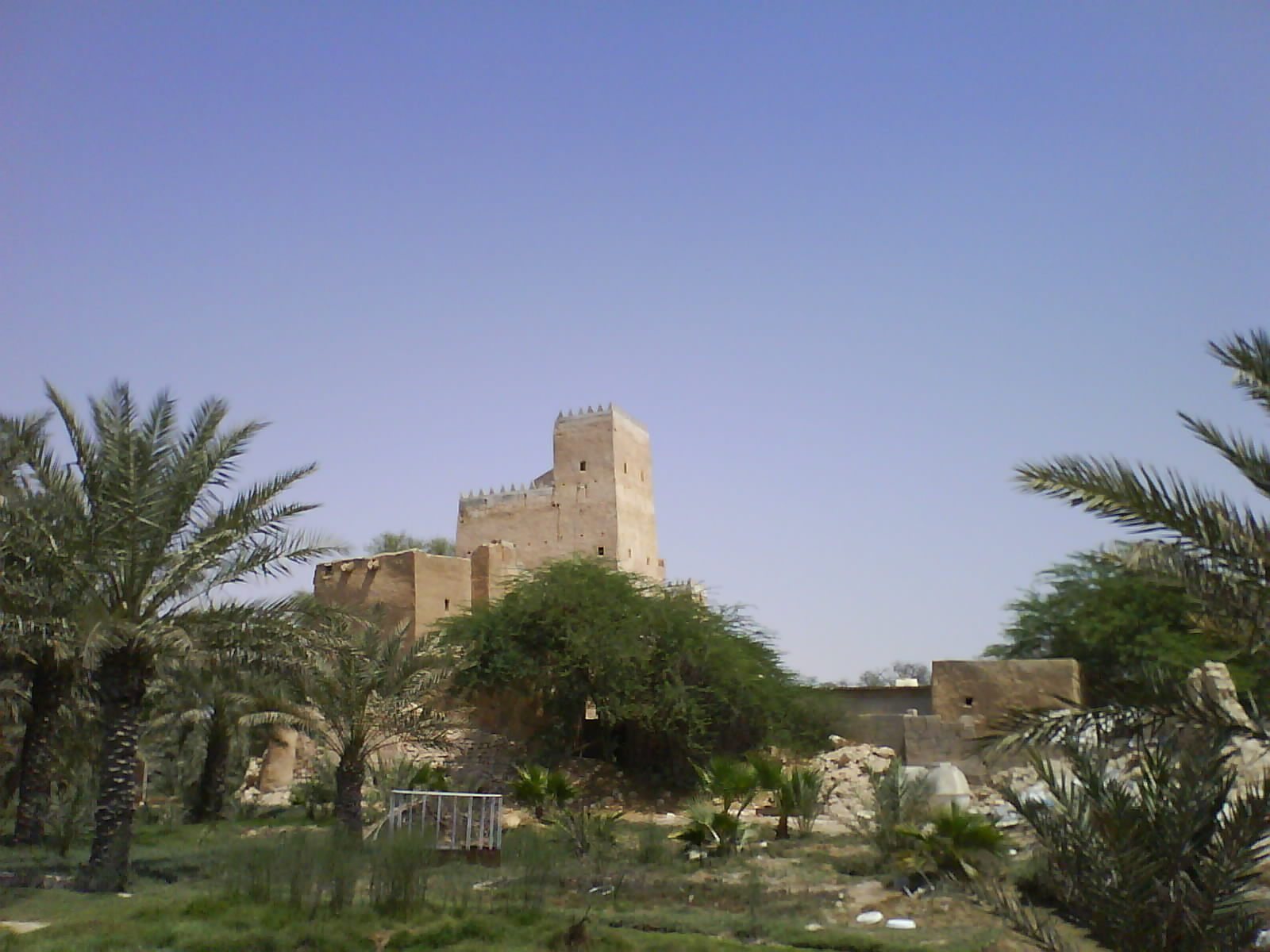
The two towers stand on the low hill of Jebel Lusail, about 10 kilometres from the coast and 15 kilometres north of Doha. Each is 16 metres high. Their walls combine overlapping coral stone with limestone, bonded with mud mortar and finished with gypsum-based plaster. Similar wall construction was used at Al Zubara Fort. An oasis with trees, animals, and palm trees lies behind the towers.
The walls are about a metre thick at the base and strengthened with projecting supports. One tower has sloping, conical walls, while the other has a large staircase. Each roof consists of wooden poles, sometimes protected with bitumen, woven bamboo strips, a mesh of mangrove branches, and compressed mud. The mud layer helped shield the towers from the summer sun. Wooden rain channels project from the roofs to carry water away from the walls and protect their surfaces; they sit above the reception room and mosque. The rebuilt towers also incorporate modern features, including air-conditioning.
Associated structures
Reception room and mosque
An L-shaped majilis, or guest-reception room, stands between the towers and has windows for ventilation. The mosque includes a prayer room that also served as a school where children learned the Quran.
Linked defensive structures
The complex is linked to two fortified buildings to the west and another tower to the north.
Fortified house
A former fortified house beside the towers, sometimes described as a castle, is associated with Sheikh Jassim bin Mohammed Al Thani, a Qatari ruler.