Royal Shrine of Christ of La Laguna: A Franciscan Church in Tenerife
Site at a Glance
- Popularity
- Medium
- Country
- Spain
- Primary era
- Modern
- Eras represented
- Early Modern, Modern
- Civilizations
- Crown of Castile, Habsburg, Habsburg Spain, Spanish
- Site type
- Religious
- Remains
- Sanctuary
On this page16 sections
History
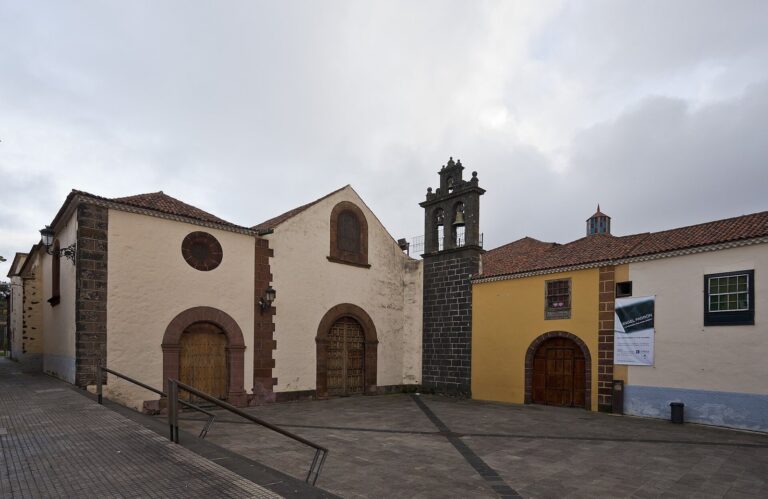
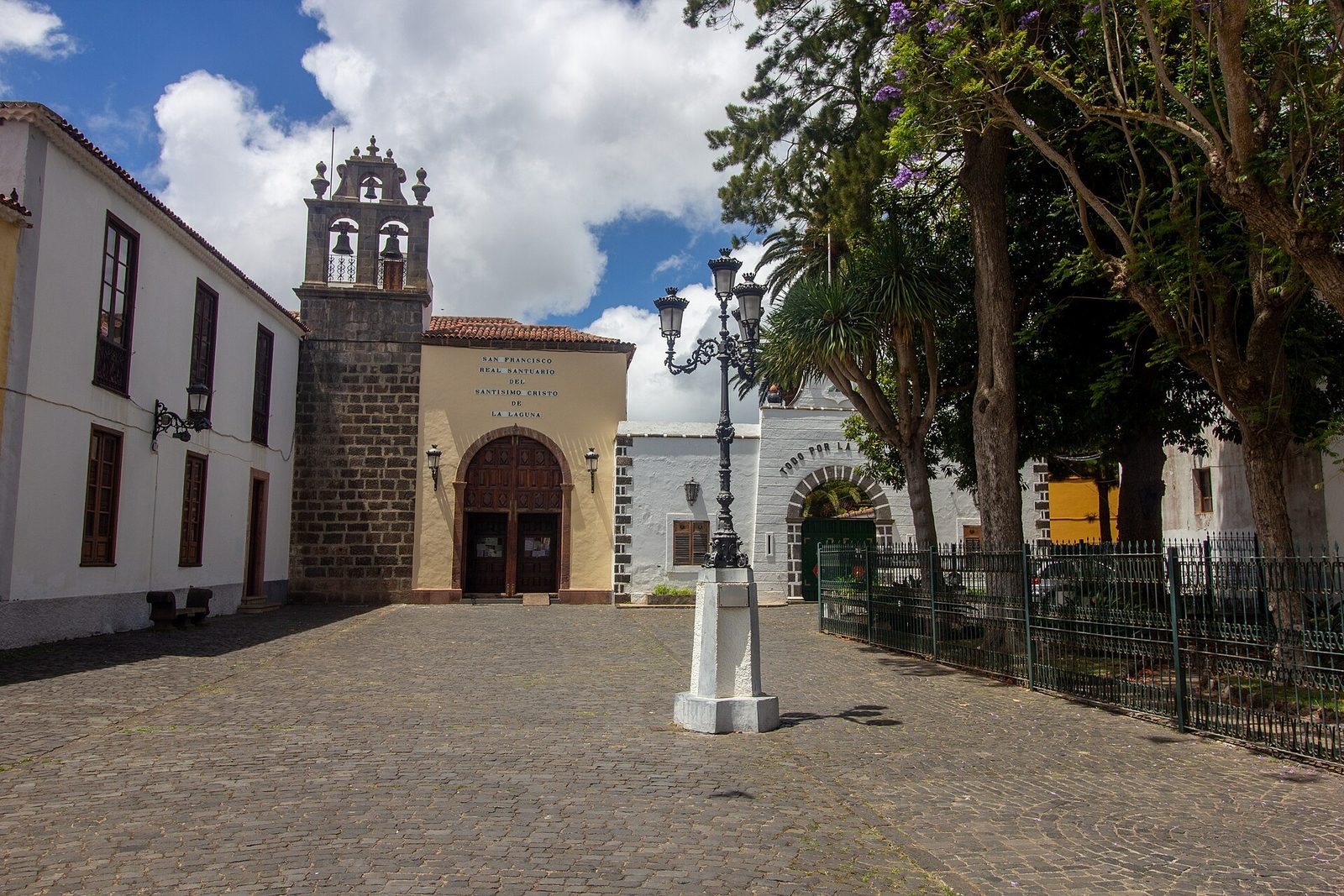
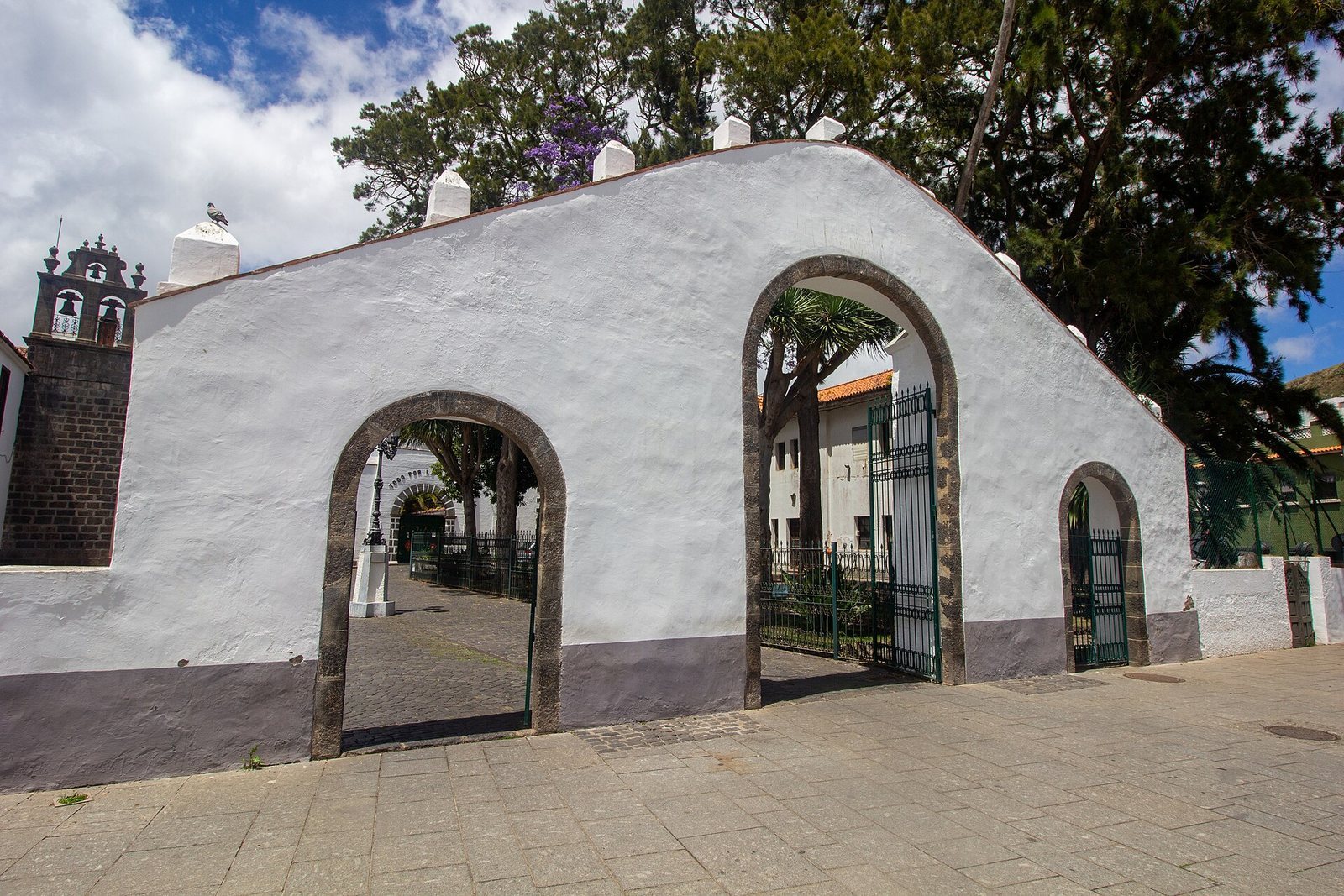
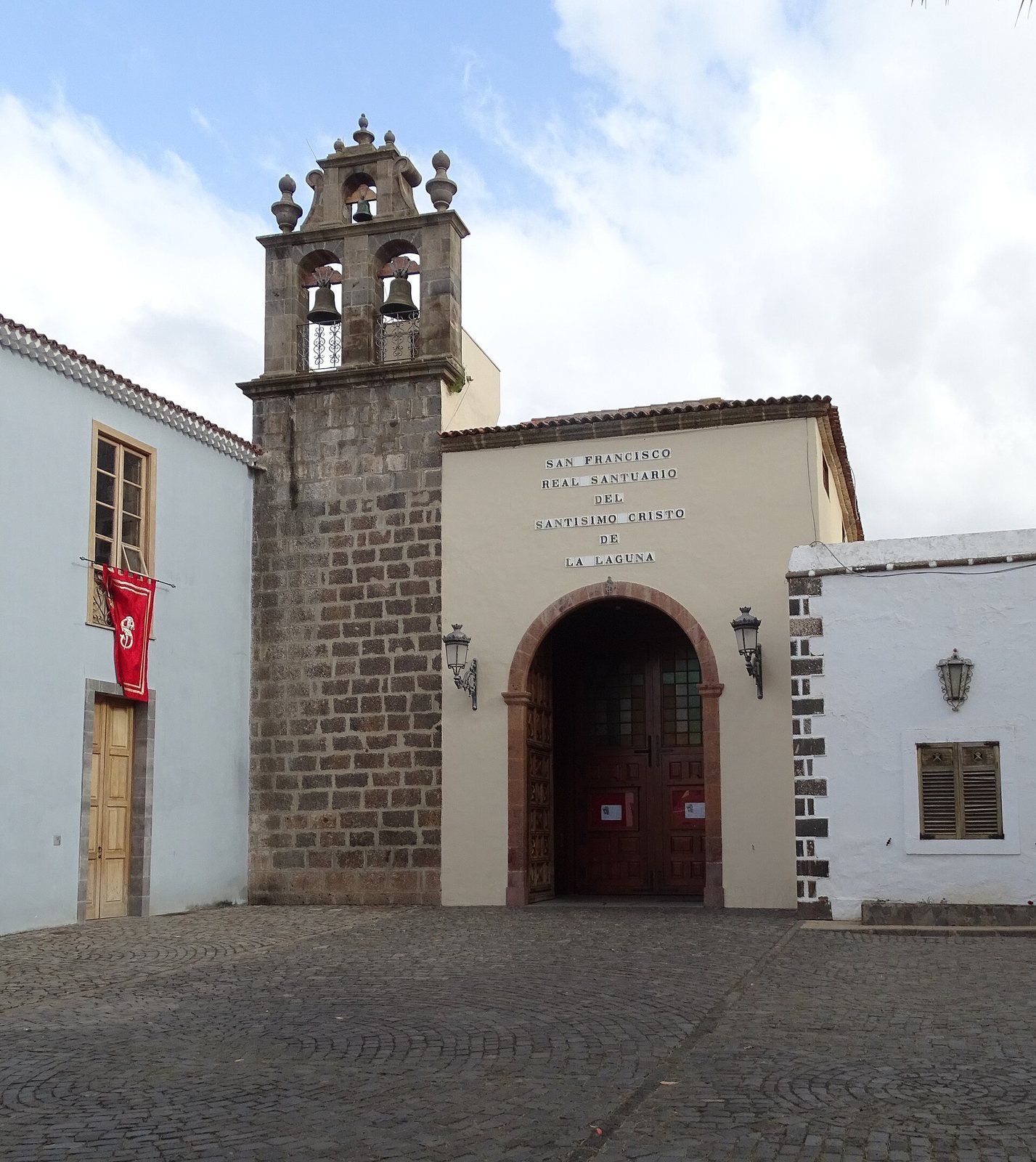
The Royal Shrine of Christ of La Laguna is a Roman Catholic shrine and conventual church in San Cristóbal de La Laguna, Tenerife, Spain. It grew from the Franciscan convent of San Miguel de las Victorias, the first Franciscan convent established on Tenerife, and remains associated with that community. Alonso Fernández de Lugo, a Spanish conquistador and royal official, commissioned the convent in February or March 1506. Construction was completed in 1580, the year the shrine was founded.
Foundation and pilgrimage
The image of Christ of La Laguna was displayed in the church in 1520. Its presence made the shrine a pilgrimage destination, and the image came to be regarded as miraculous and as one of the Canary Islands’ most venerated religious images. It also became a symbol of La Laguna. During the sixteenth century, the sanctuary was known for funeral Masses called “Mass for the Soul,” offered for souls in Purgatory, understood in Catholic belief as a state of purification before entry into heaven.
Fire and rebuilding
A major fire struck the building in 1810. The convent was rebuilt the following year under the direction of the Franciscan friar Antonio Tejera, with the new church set on a different orientation. The replacement was initially planned as a temporary chapel, but it became the form of the shrine that survives today.
Titles and continuing use
During a visit to the Canary Islands on 19 December 1906, King Alfonso XIII granted the shrine the title “Royal.” In 1908, the pope granted the title “Pontifical” to the Brotherhood of the Most Holy Christ of La Laguna, a devotional association. Popes also granted pilgrims an indulgence, a remission of temporal punishment for sin in Catholic teaching, equivalent to one associated with the Archbasilica of Saint John Lateran, the cathedral of the Diocese of Rome.
The shrine hosted the first Mass of veneration of the Shroud of Turin in the Canary Islands in 2000, marking its display in Turin Cathedral during the Jubilee Year. It was designated a Spanish Property of Cultural Interest in the monument category in 2005. The shrine has since returned to the Franciscan community of the adjoining convent and continues in religious use. Since 2014, it has kept a replica of the Shroud donated by the Canary Islands delegation of the Spanish Center for Sindonology.
Remains
Church plan and surviving features
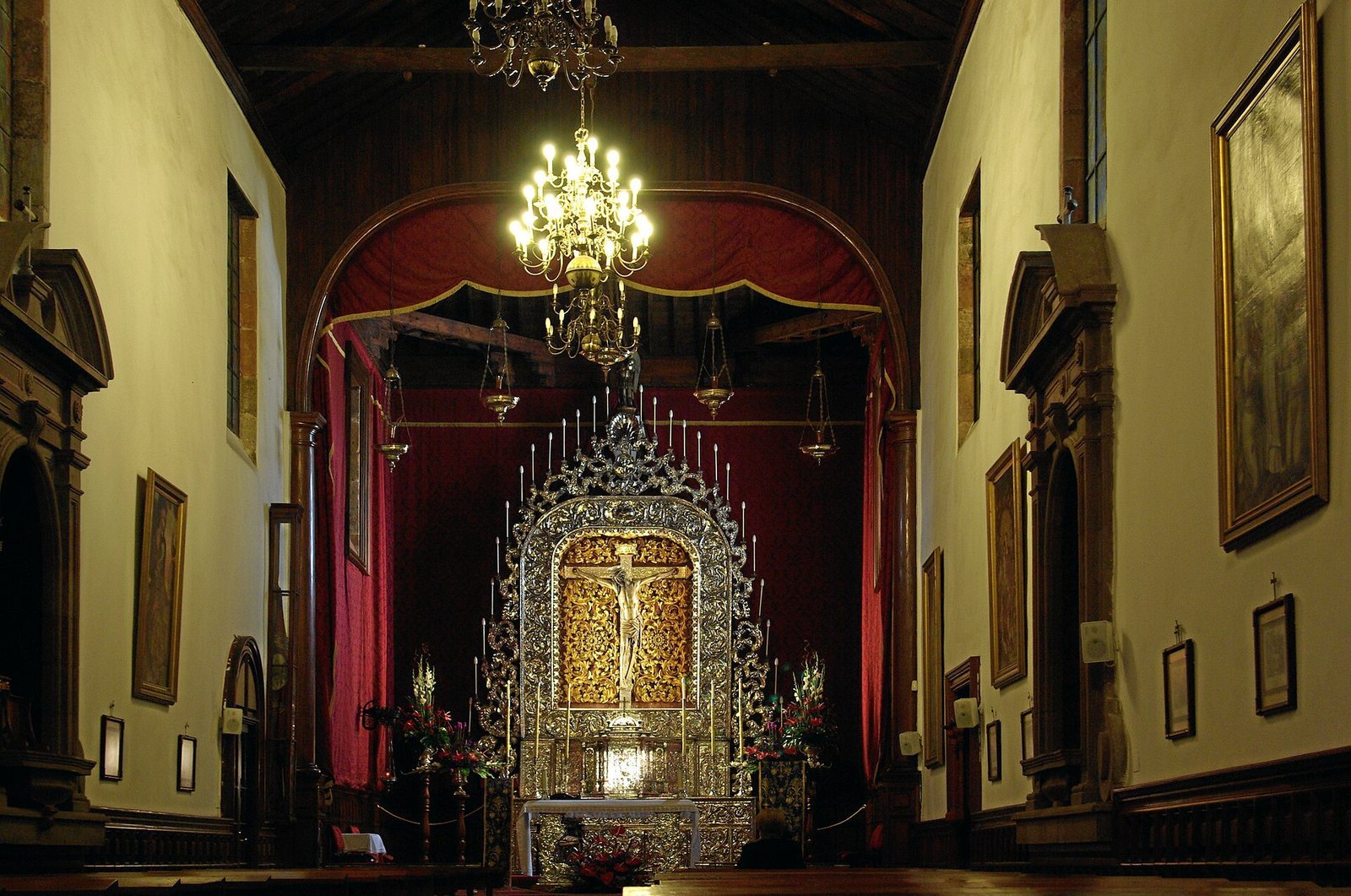
The present church is in the Colonial Canarian style. Its south-facing façade fronts a simple, high, narrow interior with one nave (the church’s main lengthwise space), approximately 46 metres long and 7 to 8 metres wide. The entrance lies beneath an elevated choir loft. The rear wall is occupied by a large silver display with a central niche. Against a carved and gilded wooden background, the cross bearing the image of Christ is set beneath a small, old, multicolored carving of Saint Michael of the Victories.
Before the 1810 fire, the convent church had three naves and several chapels, dedicated to the Lord of the Column, the Holy Spirit, Our Lady of Candelaria, and Our Lady of the Angels. Its main chapel used substantial quantities of cut stone. The church’s bell gable and the Brotherhood’s house survived the fire, as did the image of Christ.
Main altar and sacred image
Altar and silver frontal
The main-chapel altarpiece, a decorated structure behind the altar, is a Baroque work of the eighteenth century comprising a niche, tabernacle (a receptacle for the Eucharist), and frontal. Mateo Velusco bore its cost in 1675. The altar includes a silver frontal made by hammering the metal from the reverse to raise its design, bearing the arms of the Marquises of Villanueva del Prado.
A frontal donated by Alonso de Nava y Grimón and Alvarado Bracamonte is described as the oldest in the Canary Islands. Made by Canarian silversmiths, it is divided into two zones by chased bands, with the upper zone narrower than the lower. Stems, leaves, flowers, and pomegranates fill the upper panel around a framed central coat of arms of the Nava y Grimón family. Five panels divide the lower portion. The altar table has a base and four supports for the consecrated altar stone, and bears plant designs. Its design draws on island Baroque altarpieces by Portuguese and Andalusian artists, and the work is regarded as one of Spain’s finest examples.
Christ of La Laguna
The venerated image is a wooden sculpture made from fine wood from Flanders and attributed to Belgian sculptor Louis Van Der Vule. It dates to around the sixteenth century. The dark-complexioned figure wears a distinctive gold crown in a circular form with rays resembling sunlight. The sculpture has been designated a Property of Cultural Interest as a movable object.
Crosses
A Baroque cross associated with the main altarpiece is made of wood covered in silver and fixed with silver nails. Francisco Bautista Pereira de Lugo gave it to the Franciscan convent of San Miguel de las Victorias. An earlier wooden cross is now at the convent of Santa Clara, where it continues to be venerated.
Paintings and devotional sculpture
Paintings of Mary
An eighteenth-century Baroque oil painting of Our Lady of Candelaria, attributed to Cristóbal Hernández de Quintana, stands beneath the choir at the foot of the nave. From the mid-seventeenth century, paintings of Candelaria showed her in the form then seen at her own sanctuary. A Baroque oil painting of Our Lady of Mercy on the Gospel side is attributed to Gaspar de Quevedo, who lived from 1616 to 1670. An anonymous painting of Our Lady of the Rosary, made by a Tenerife artist in the early eighteenth century, is also held by the shrine.
Paintings of saints and Christ
A Baroque oil painting of Saint Barbara, attributed to Hernández de Quintana and dating to the first third of the eighteenth century, hangs at the foot of the nave on the Epistle side, one of the church’s traditional liturgical sides. An anonymous eighteenth-century painting of Saint John the Evangelist is on the Gospel side. Another anonymous eighteenth-century painting shows Saint Peter the Apostle with a rooster, a reference to Peter’s denial of Jesus. A Baroque painting of Christ the Good Shepherd, also anonymous and from the eighteenth century, shows Christ carrying a sheep on his shoulders. Its composition draws on older models, including images of Hermes, a Greek god, carrying a ram. A painting of Saint Rose of Viterbo was donated in 1745 with a similar painting of Saint Francis of Assisi.
Marian and Franciscan sculptures
A sculpture of the Immaculate Conception, designed to be dressed in garments, dates to the eighteenth or nineteenth century and stands in a niche beneath the choir on the Epistle side. A small, freestanding carving of Saint Anthony of Padua, 70 centimetres high, is made of painted wood. Its maker is unknown; created for an altarpiece, it now stands in a niche on the Epistle side. On the Gospel side is an anonymous seventeenth-century Baroque sculpture of Saint Francis of Assisi, regarded as one of the shrine’s finest carvings.
Holy Child Jesus of the Afflicted
This anonymous sculpture, made of painted wood and designed to be dressed, dates approximately to the first third of the eighteenth century. The Baroque figure sits on a carved wooden throne and raises a hand in blessing. Its carefully worked head and delicate features anticipate Rococo, a lighter and more ornamental style than Baroque.
Shroud replica
The shrine keeps a faithful replica of the Shroud of Turin, a linen cloth venerated by some Christians as the burial shroud of Jesus. The replica was donated in 2014 and is described as the only faithful copy in the Canary Islands.