Elamite Rock Relief at Naqsh-e Rustam in Iran
Site at a Glance
- Popularity
- Medium
- Country
- Iran
- Primary era
- Iron Age
- Eras represented
- Bronze Age, Iron Age, Classical
- Civilizations
- Elamite, Sassanid
- Site type
- Civic
- Remains
- Rock Art
On this page5 sections
History
The Elamite rock relief at Naqsh-e Rustam in Iran is the site’s oldest relief. It belongs to the Elamite period, when Elamite civilization was centered in what is now southwestern Iran.
Elamite carving and later overcarving
The relief’s date is disputed. Ernst Herzfeld and Heidemarie Koch placed it at roughly 4,000 years old, while Isa Behnam proposed a date around 1200 BCE. Alireza Shapour Shahbazi suggested that it was carved in two phases: the throne scene around 1200 BCE, followed by the royal figures around 800–600 BCE. He based the later dating on the man’s cap and the woman’s crown.
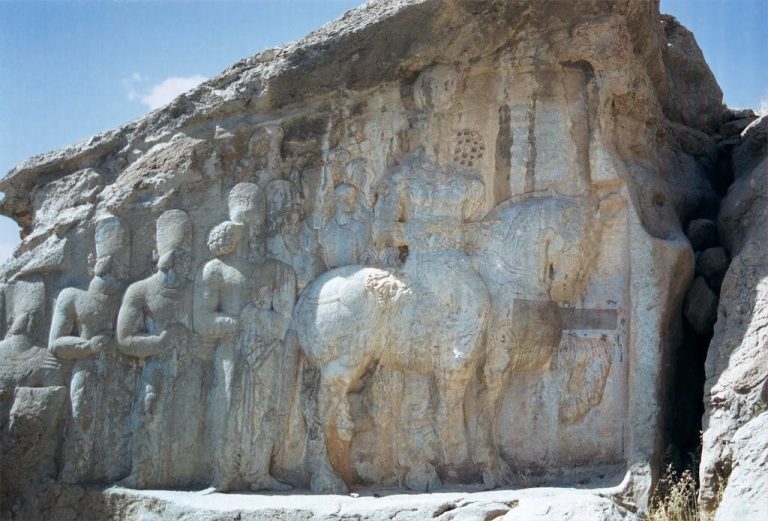
Much of the carving was later obliterated when Bahram II, a king of the Sasanian Empire, an Iranian dynasty that ruled from the third to the seventh centuries CE, had a scene of himself and his courtiers carved over it.
Remains
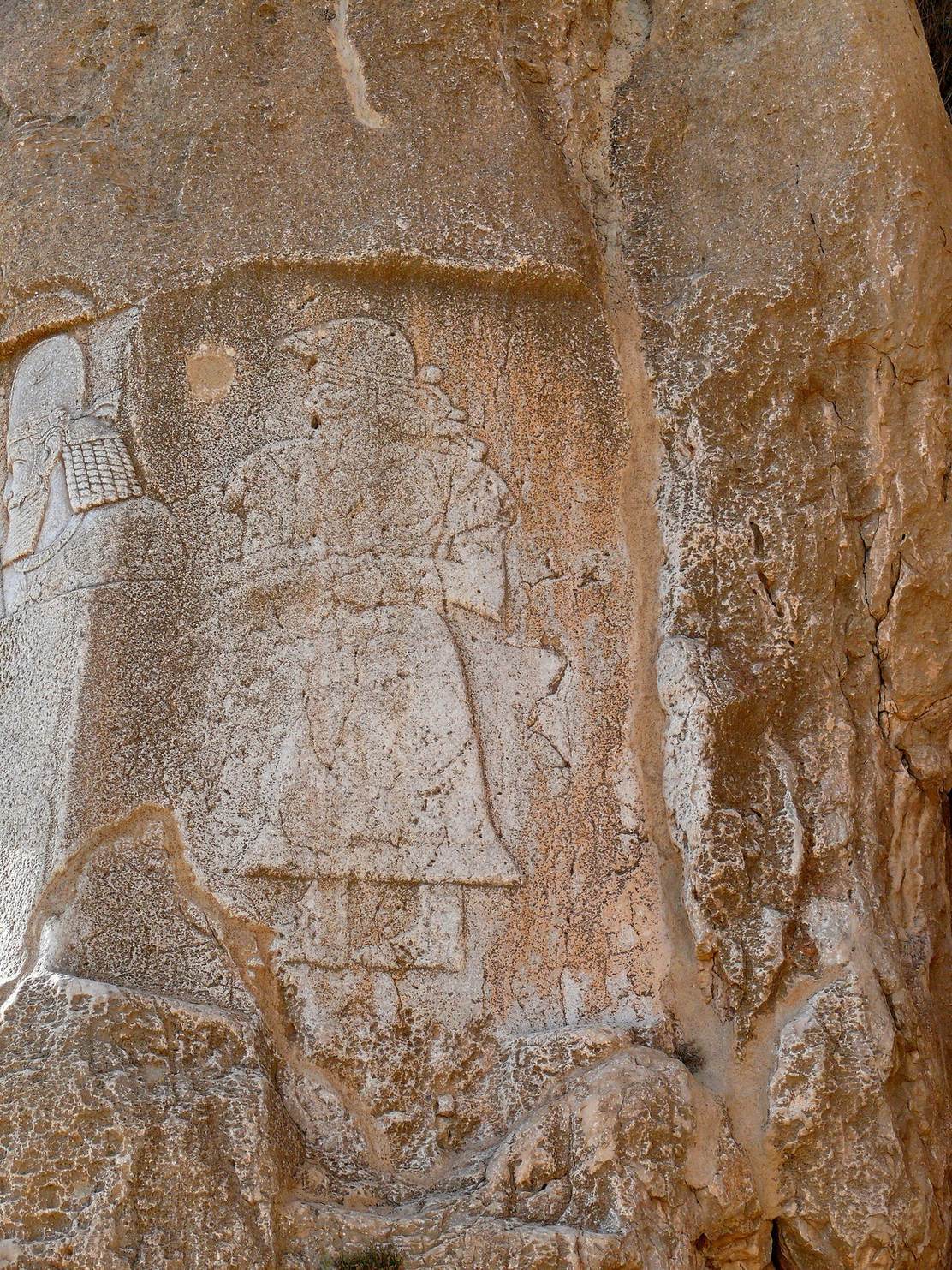
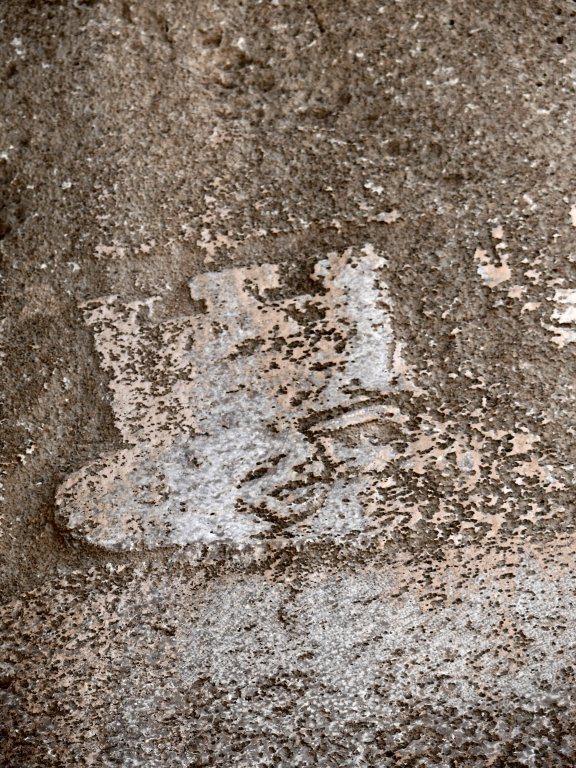
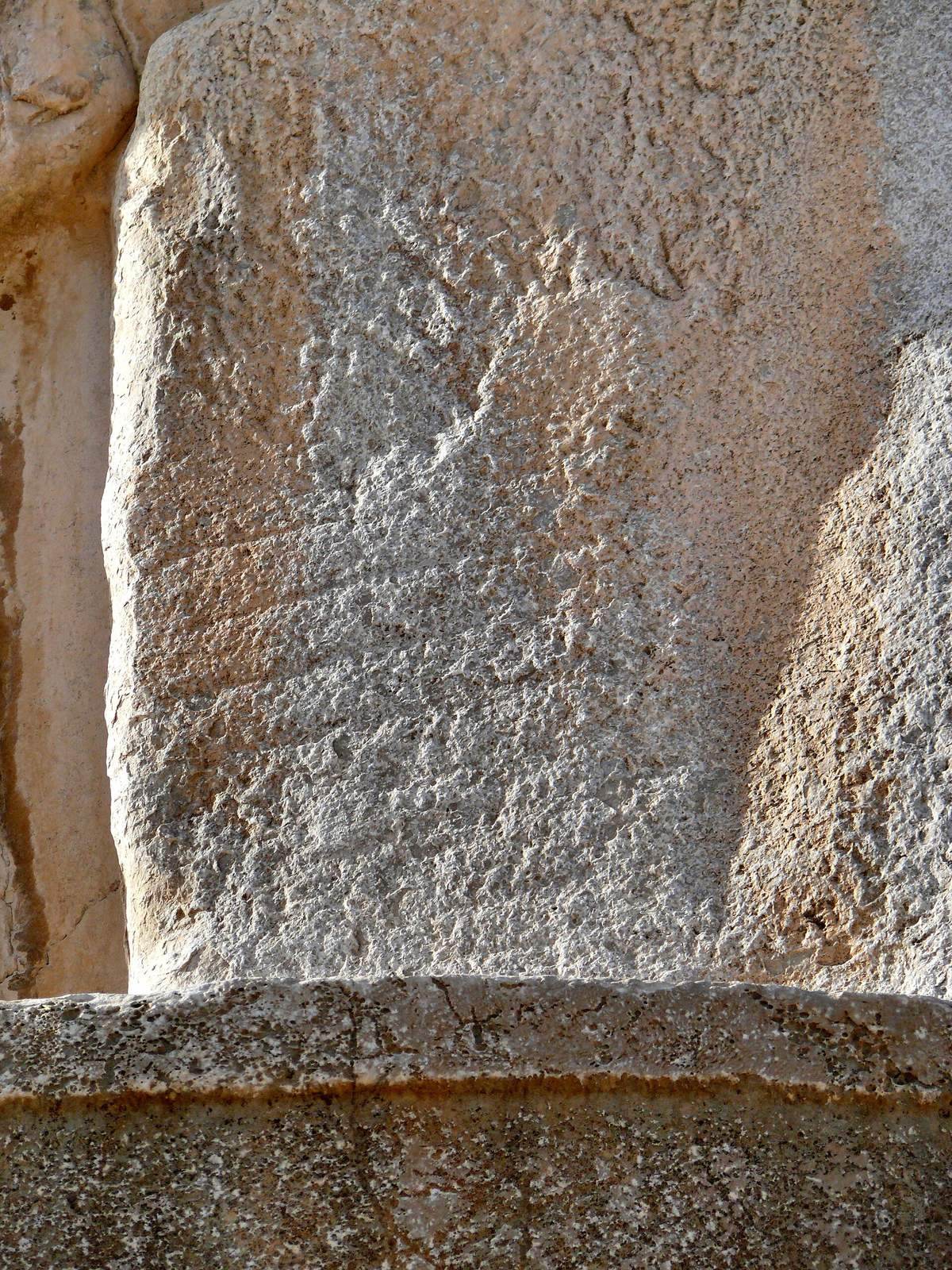
Small sections of the earlier carving survive and are relatively well preserved. The composition centers on a throne with figures on either side, and can be understood in part through comparison with the Kurangan relief, another Elamite rock carving in southwestern Iran.
Throne and divine figures
A god and goddess are shown seated on a throne supported by legs shaped like intertwined snakes. Only small portions of the divine figures remain, and their identities cannot be determined.
Royal figures
On the right, a complete male figure with long hair and a beard faces a deity whose image has been erased. He holds his hands against his chest in a gesture of respect and wears a rounded cap fastened with a band and a long robe. On the left, traces show a woman with a delicate face and a crenellated crown. The two figures are thought to represent a king and queen worshipping the god and goddess.