Sedir Island and the Ancient City of Kedrai, Turkey
Site at a Glance
- Popularity
- High
- Country
- Turkey
- Primary era
- Classical
- Eras represented
- Classical
- Civilizations
- Ancient Greek
- Site type
- Settlement
- Remains
- City
On this page10 sections
History
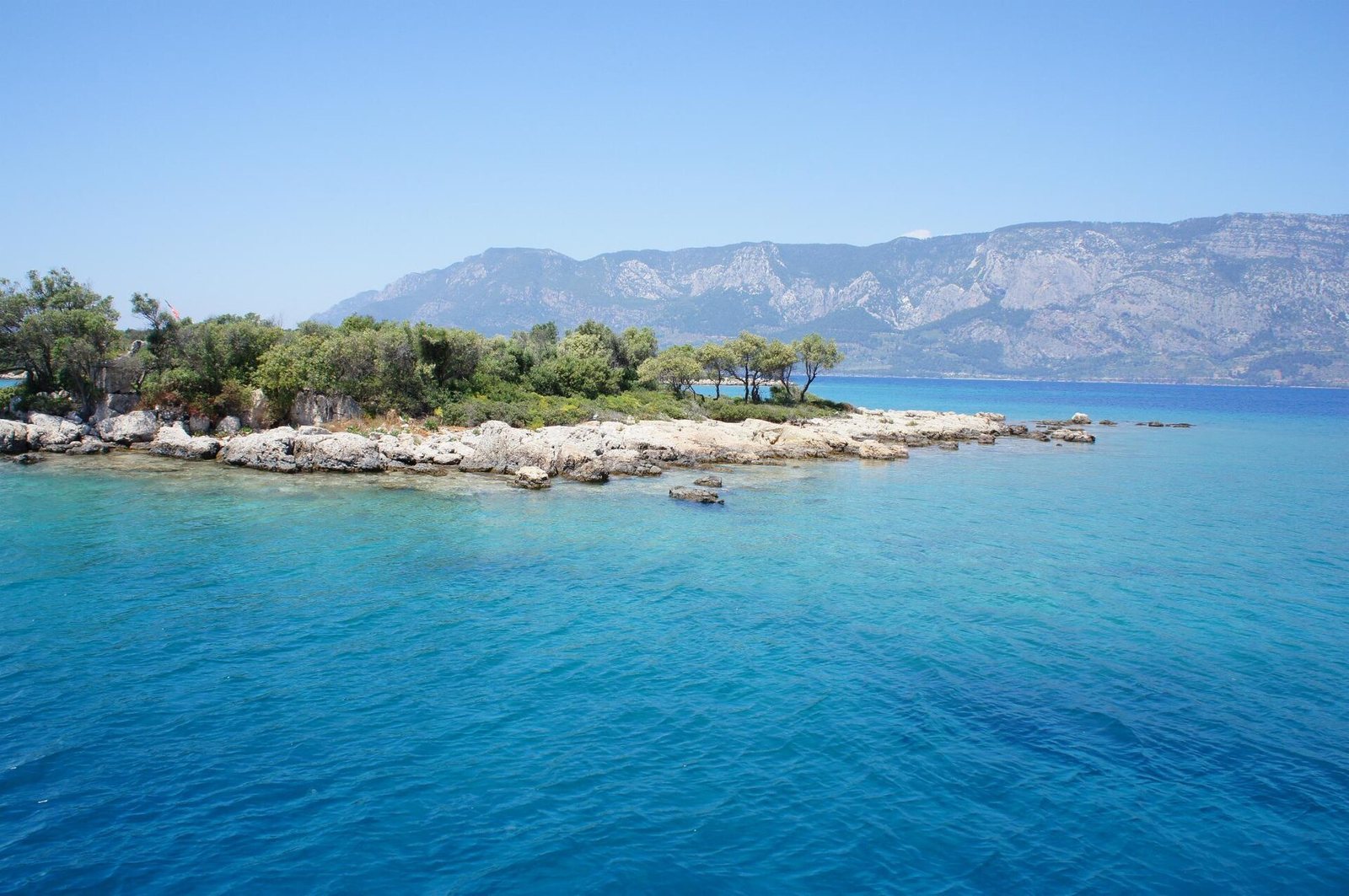
Sedir Island, in the Gulf of Gökova off southwestern Turkey, is a small island containing the ruins of the ancient city of Kedrai. The name Kedrai is translated from Greek as “cedar,” though it is uncertain whether cedar trees grew on the island. Sedir Island is also informally known as Cleopatra Island.
Kedrai and the Peloponnesian War
During the Peloponnesian War, a major conflict between Athens and Sparta and their allies, Kedrai supported Athens. The Spartan commander Lysander captured the city and enslaved its inhabitants. The Greek historian Xenophon described the events and said that half the population were “barbarians,” a Greek label for people considered non-Greek, not a specific ethnic group.
Local tradition and protection
Local tradition links the island with Cleopatra, queen of ancient Egypt, and Mark Antony, a Roman political and military leader. In the story, ships carried the island’s sand from Egypt, sometimes said to be from the Red Sea, for Cleopatra. One version says Antony arranged the transport. The beach is protected by Turkey’s Ministry of Culture as a national treasure.
Remains
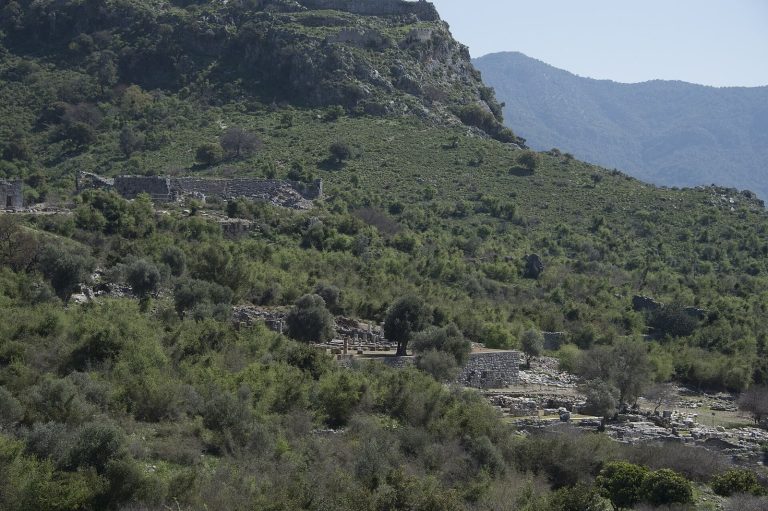
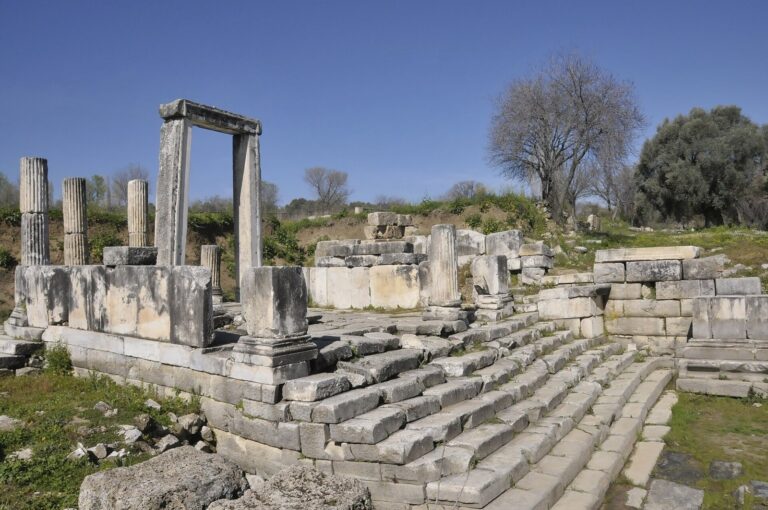
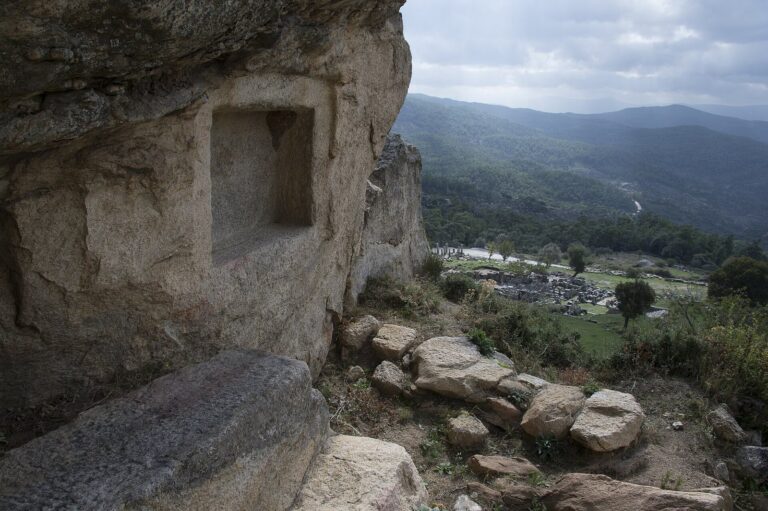
Kedrai’s surviving remains include defensive works, a temple, an amphitheater, and a burial ground. Sections of the city wall and its towers lie in the central area, while the amphitheater is in the northern part of the ancient city. The island’s distinctive beach sand is another notable physical feature.
Structures and burial remains
City wall
Sections of Kedrai’s city wall and its towers survive in the central area of the ancient city.
Temple of Apollo
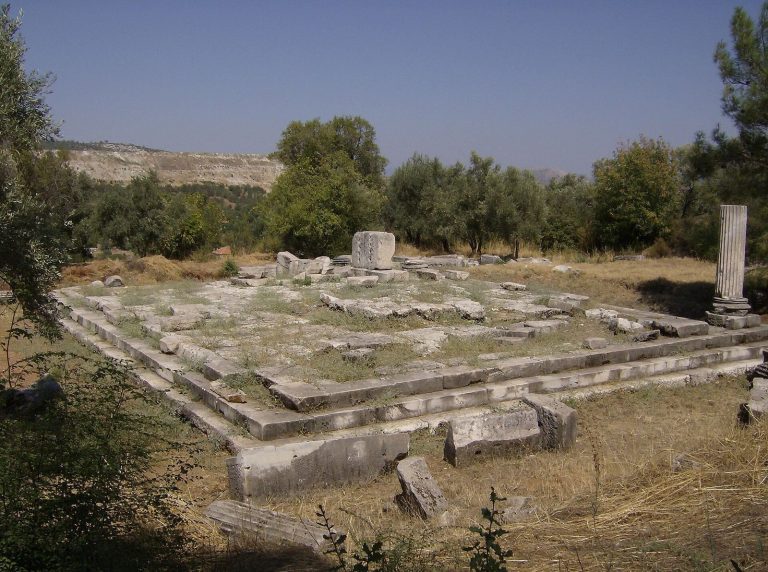
The surviving temple is dedicated to Apollo, a major Greek god. It is built in the Doric style, one of ancient Greece’s main architectural orders, recognized by its characteristic columns.
Amphitheater
The well-preserved amphitheater stands in the northern part of the ancient city and faces north.
Necropolis
A necropolis, or ancient burial ground, survives on the island.
Beach sand
The beach is known for rare golden sand whose grains are nearly perfect spheres. The sand is thought to result from the continual erosion of the island’s sandstone bed.