Yōgaiyama Castle: A Takeda Mountain Fortress in Japan
Site at a Glance
- Popularity
- High
- Country
- Japan
- Primary era
- Early Modern
- Eras represented
- Early Modern
- Civilizations
- Takeda, Toyotomi regime
- Site type
- Military
- Remains
- Castle
On this page8 sections
History
Takeda rule and the castle’s construction
Yōgaiyama Castle, also known as Sekisuiyama Castle, was a Takeda mountain fortress built around 1520 on Mount Yōgaiyama in present-day Yamanashi Prefecture, Japan. The Takeda clan, a branch of the Minamoto warrior lineage, gradually established control over Kai Province from the late Heian period. After earlier bases at Hakusan and Yato castles, the clan served as Kai’s military governors from the Kamakura period through the Sengoku period, an era of political fragmentation and frequent warfare.
In 1519, Takeda Nobutora established his government center at Tsutsujigasaki, in present-day Kōfu, and planned a fortified residence and castle town near the center of Kai. Since the residence relied mainly on moats for defense and was considered vulnerable to siege, Nobutora fortified nearby Yōgaiyama as a supporting castle and a refuge in an emergency.
The invasion of 1521
On 16 October 1521, Fukushima Masanari, a general of the Imagawa clan, invaded from neighboring Suruga Province with 15,000 men. The campaign supported a revolt by the Ōi clan against Takeda rule. Nobutora sent his wife, a daughter of Ōi Nobusato, to Yōgaiyama for safety. She gave birth to their son the day before Nobutora defeated the invading force at the Battle of Iidagawara. Nobutora named the child Katsuchiyo, the future Takeda Shingen, in celebration of the victory.
Renovation and later control
In 1576, Takeda Katsuyori ordered a major renovation of the castle’s defenses. After the Takeda clan fell, the castle passed to retainers serving Tokugawa Ieyasu and later Toyotomi Hideyoshi. Katō Mitsuyasu, one of those retainers, further altered the fortifications.
Abandonment and preservation
Following the Battle of Sekigahara in 1600, a decisive conflict in the struggle for political control of Japan, Yōgaiyama Castle and Tsutsujigasaki Castle were abandoned in favor of the newly built Kōfu Castle. The ruins were designated a National Historic Site of Japan in 1991; the designation also covers the remains of the branch castle of Kumajō to the southeast.
Remains
Mountain ridge and main defenses
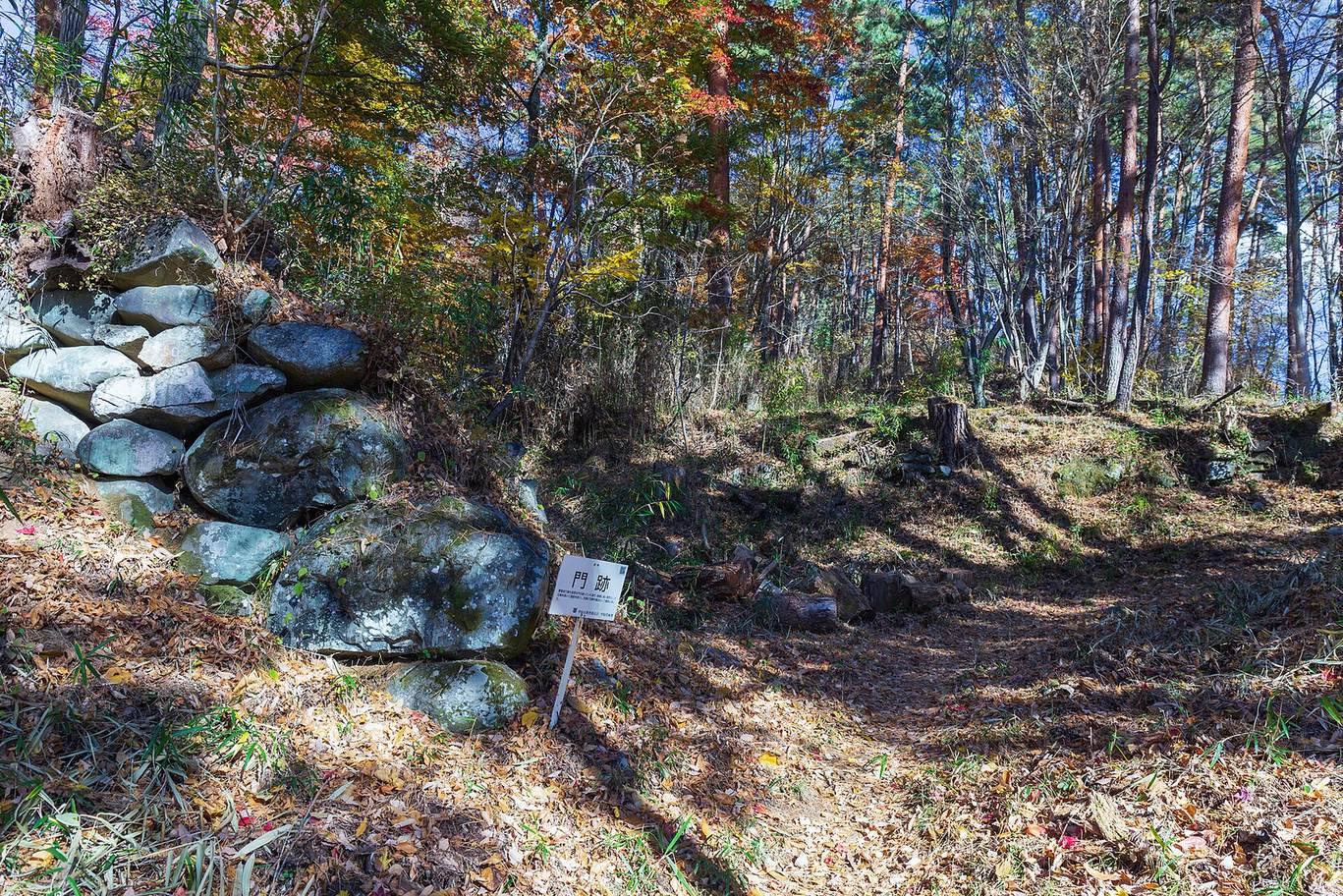
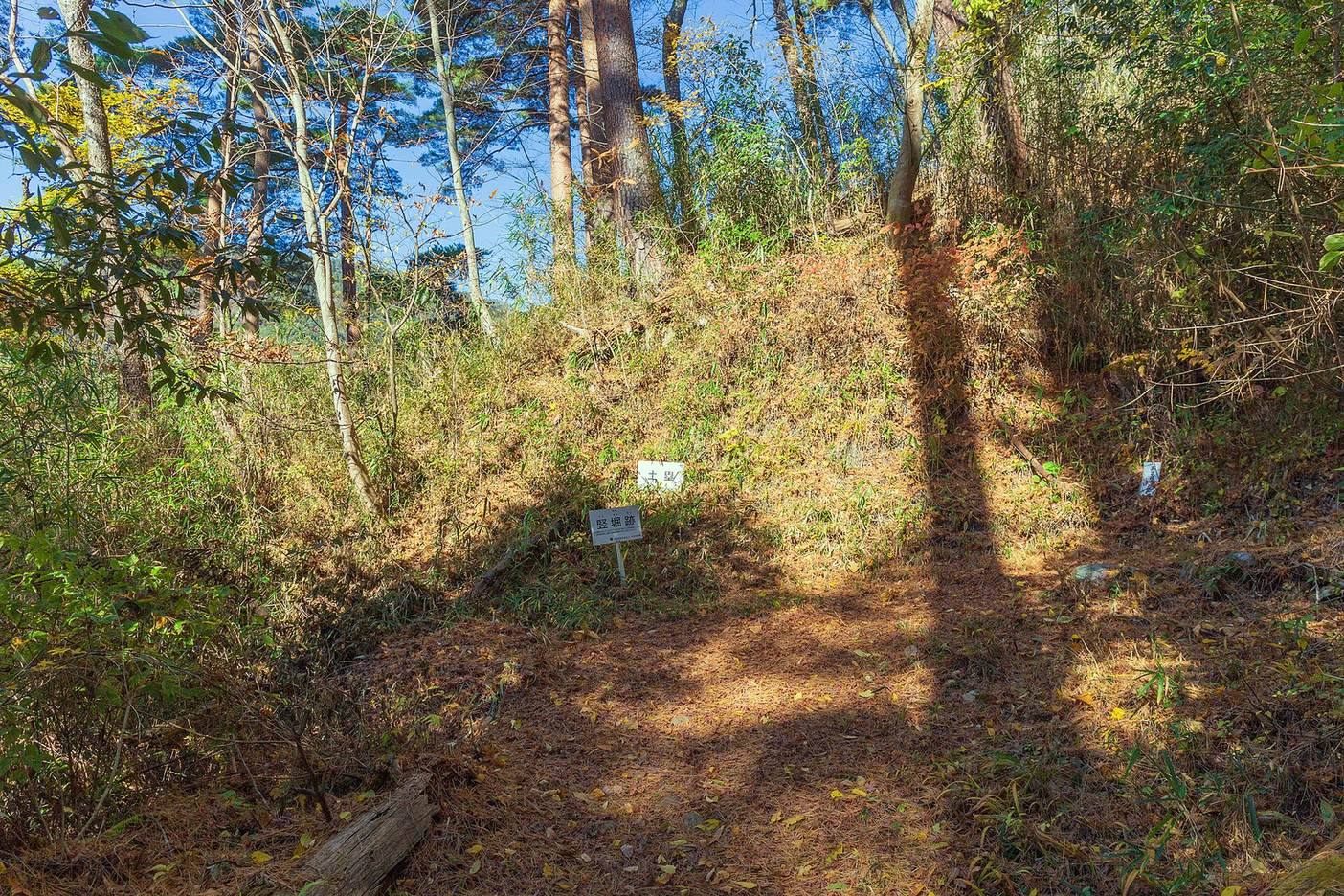
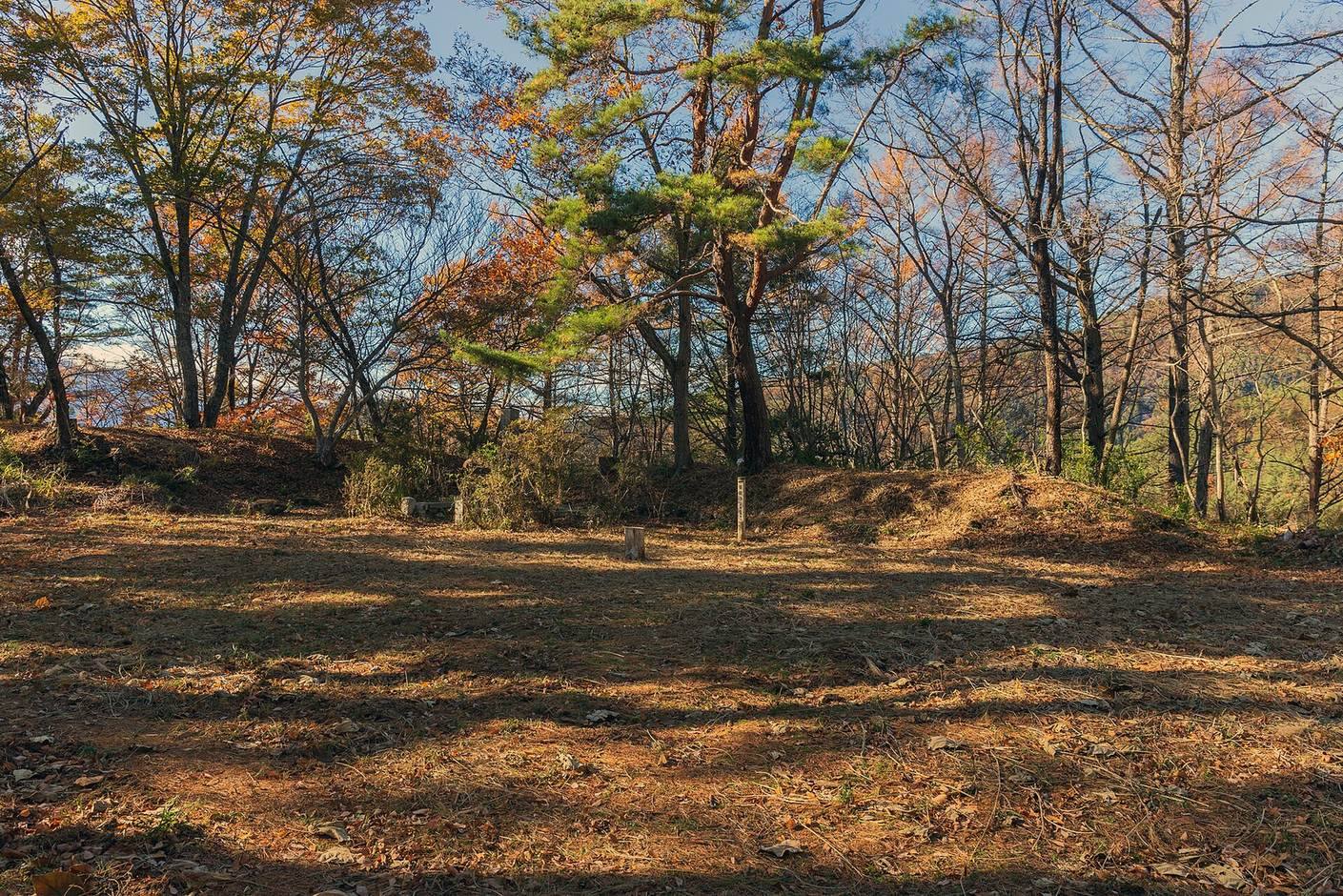
The castle occupied a narrow ridge on 770-metre-high Mount Yōgaiyama and extended for more than 500 metres. Its defenses combined wooden ramparts and earthenworks, with a signal tower at the summit. Twenty terraces cut into the hillside were linked by a winding route rather than a direct ascent, exposing attackers to defenders above. At the mountain’s highest point, the inner bailey, the castle’s most protected enclosure, formed a rectangle measuring 80 by 30 metres. Clay walls enclosed it, with gates on the east and west. Foundation stones and traces of earthen defenses associated with the castle’s enclosures survive.
Kumajō
The ruined branch castle of Kumajō lies southeast of Yōgaiyama Castle and supplemented its southern defenses.