Kanda Tenjinsha: A Guardian Shrine of Kai

Site at a Glance
- Rating
- 4
- Popularity
- Very Low
- Country
- Japan
- Primary era
- Early Modern
- External website
- Open
- Eras represented
- Early Modern
- Civilizations
- Tokugawa
- Site type
- Religious
- Remains
- Sanctuary
On this page11 sections
History
Kanda Tenjinsha is a Shinto shrine in Koshu, Japan, founded in 842 in Kai Province by order of the provincial governor, Fujiwara no Itaseo. He instructed the assistant official Iitaka Hamanari to establish the shrine. Its principal deities are Susanoo-no-Mikoto, a major Shinto kami associated with storms, the sea, and the defeat of destructive forces, five male and three female kami, and Sugawara no Michizane, the Heian-period scholar and statesman later worshipped as Tenjin, a deity associated especially with learning.
Foundation and Tenjin worship
In 1004, Sugawara no Michizane was added to the shrine’s existing deities. This addition gave rise to the name Tenjin and established a religious association that continued alongside the shrine’s earlier worship. From an early period, Kanda Tenjinsha was regarded as a guardian shrine of the Kai Genji, a branch of the Minamoto warrior lineage based in Kai Province.
Protection under the Takeda
The shrine received especially strong protection from the Takeda clan, the medieval warrior house that ruled much of Kai. Its chief priest was exempted from the customary obligation to attend Fuchu Hachimangu, a Shinto shrine dedicated to Hachiman, a major martial deity.
Because the shrine stood to the northeast of Kofu, a direction traditionally regarded as a vulnerable “demon gate” through which harmful forces could enter, the Takeda family heirloom Tatenashi armor was kept there around the time of Takeda Nobumitsu. A banner connected with the armor was held at Unpo-ji, a Buddhist temple, while the armor was administered by the Oso clan.
Kanda Tenjinsha received land grants from Takeda Nobutoyo in February 1561 and from Itagaki Nobuyasu in May 1564. A later tradition relates that, when the Takeda clan fell, the armor was buried beneath a cedar at Kogaku-ji in Enzan and was subsequently returned to the shrine by Tokugawa Ieyasu. Detailed examination of the armor has found no evidence that it was buried.
Tokugawa and Edo-period history
Tokugawa authorities confirmed the shrine’s land rights in 1583 and issued a prohibition order in 1603. Shrine buildings were constructed in 1602 and again in 1713. During the Edo period, Aoki Konyo, an official and scholar who conducted investigations for the shogunate, saw the armor while examining old records in Kai. The popularity of the historical chronicle Koyo Gunkan also brought many worshippers to the shrine.
Modern rebuilding
A fire in March 1965 destroyed the shrine buildings, which were rebuilt in 1969. The shrine was formerly classified as a prefectural shrine within Japan’s prewar state-supported system of shrine rankings. Its surviving traditions connect the site with early Kai worship, the Kai Genji, the Takeda clan, and the preservation of the Tatenashi armor.
Remains
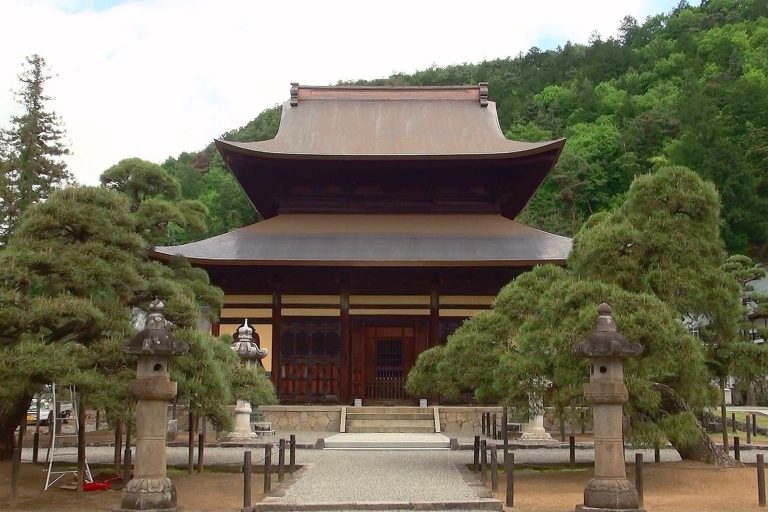
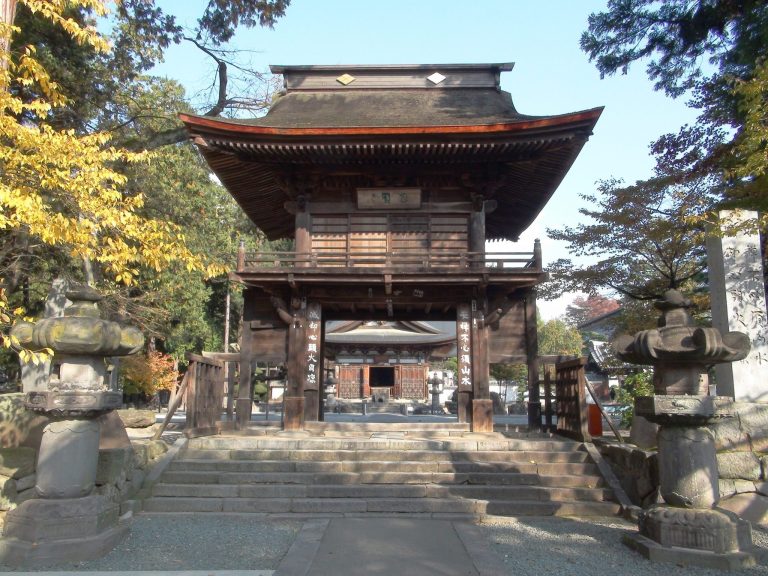
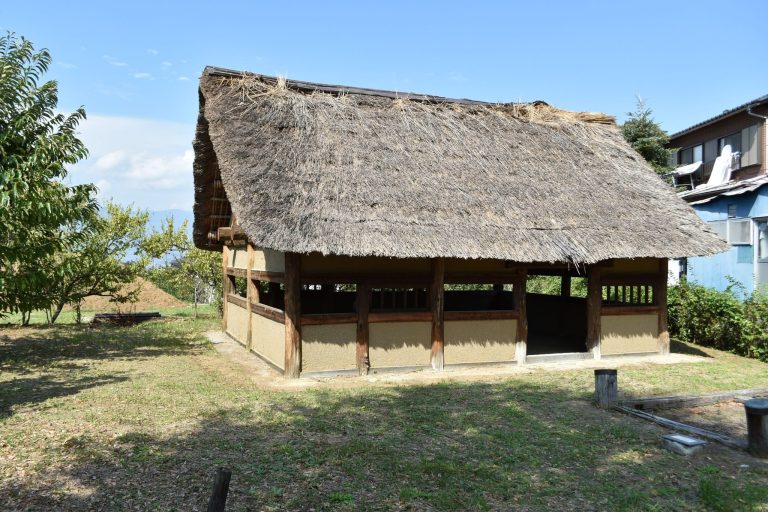
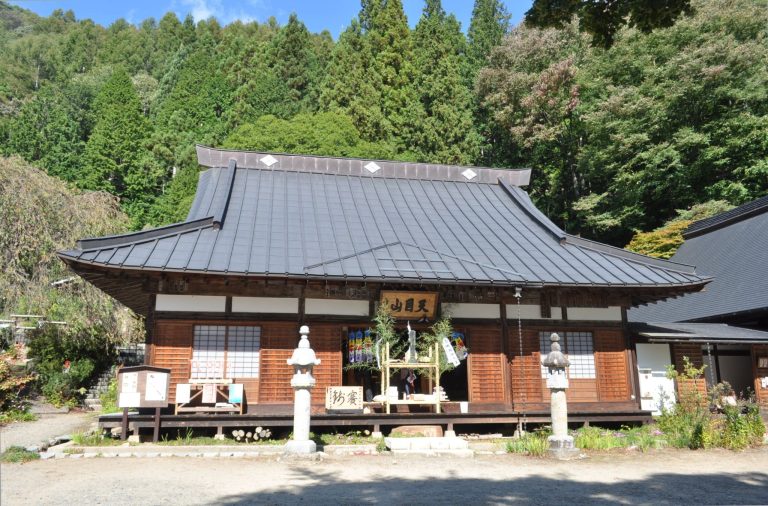
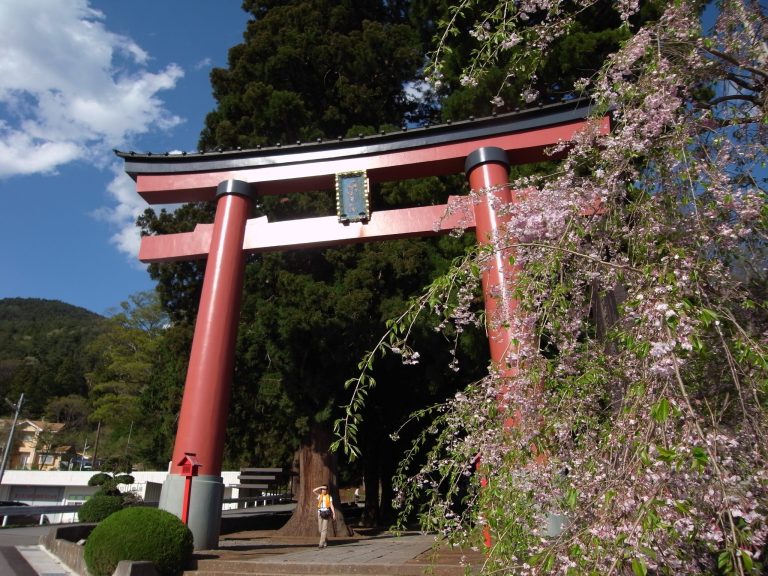
The shrine complex includes a shrine gate and a worship hall, together with a treasure hall for the armor associated with Tatenashi. Trees form another important part of the grounds, including oaks, cedars, cypresses, and zelkovas. The oak growth includes Tsukubane oak and a hybrid of red oak and Tsukubane oak.
Shrine buildings
Shrine gate and worship hall
The shrine gate marks the complex, while the worship hall provides its principal setting for ritual activity. The buildings now present follow the rebuilding of 1969 after the fire that destroyed the earlier shrine structures in March 1965.
Tatenashi and the grounds
Treasure hall
The treasure hall houses the Small Cherry-Blossom Pattern Leather-Laced Armor with Helmet and Large Shoulder Guards, identified with Tatenashi. The armor had remained in private keeping into the modern period and is designated a National Treasure, Japan’s highest level of designation for important cultural properties.
Oak growth
The oaks within the shrine grounds include Tsukubane oak and a hybrid of red oak and Tsukubane oak. This oak growth was designated a prefectural natural monument in 1963. Cedars, cypresses, and zelkovas also grow within the complex.