Walls of Jerez de la Frontera: Andalusi City Defenses
Site at a Glance
- Popularity
- Medium
- Country
- Spain
- Primary era
- Medieval
- Eras represented
- Medieval
- Civilizations
- Almohad, Almoravid
- Site type
- Military
- Remains
- Wall
On this page15 sections
History
Origins and Almoravid rule
The Walls of Jerez de la Frontera are an Andalusi defensive circuit in Spain, built to protect the historic center. By the eleventh century, attacks and sieges from North Africa were affecting the city. Burials beneath the wall point to a local population in the tenth century or earlier. Tradition places the decision to fortify Jerez in 1133, when the city was under Almoravid rule. The Almoravids were a North African Muslim dynasty that governed parts of al-Andalus, the name for Muslim-ruled territories of the Iberian Peninsula.
Almohad rule and the city’s defenses
In 1145, Jerez rebelled against the Almoravids and became an independent taifa, or Muslim kingdom formed amid the fragmentation of larger political rule. The city continued to strengthen its defenses. In 1147, while Abu al-Gamar ruled the taifa, an Almohad army landed in Iberia and conquered much of southern Spain. Jerez was among its early conquests. The city surrendered by capitulation, so its walls escaped damage.
Jerez later remained loyal to the Almohads, a North African Muslim dynasty that succeeded the Almoravids, even as much of lower al-Andalus rebelled. The city received privileges, including exemption from taxes and permission to build another line of fortifications. It also had a pronounced military role and supplied combatants.
Gates and later history
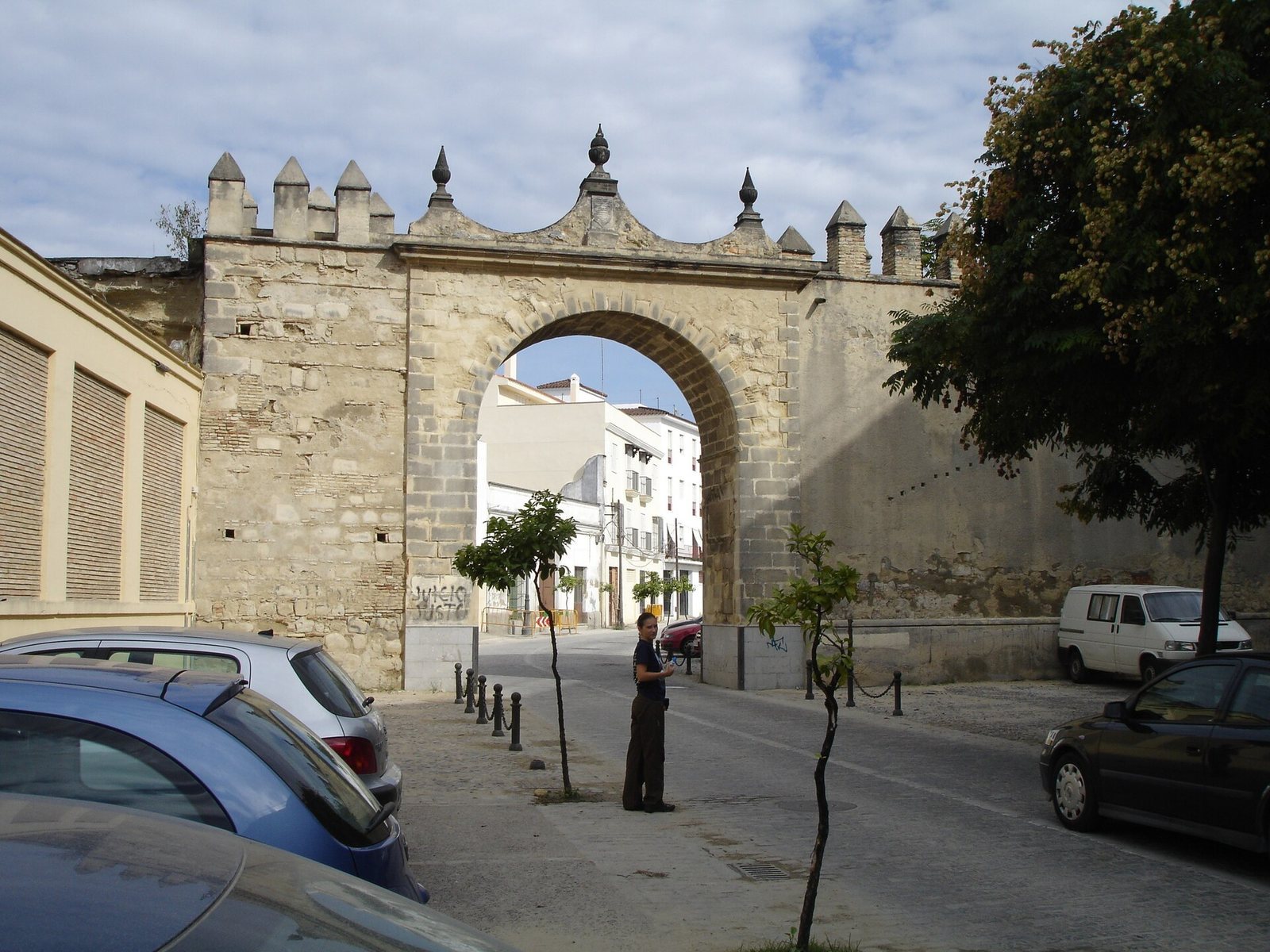
The Almohad defenses included four gates linking the walled city with developing suburbs. During the reconquest of Jerez, Alfonso X of Castile passed through the Puerta de Sevilla (Seville Gate). On their first visit, the Catholic Monarchs, Isabella I of Castile and Ferdinand II of Aragon, entered through the Puerta de Santiago (Santiago Gate) and continued to the Alcázar, a fortified palace or citadel.
Medieval custom placed religious images at gates and smaller wall openings, often invoking the Virgin Mary. These images were intended to bar pagan entry and protect people leaving the city, who faced dangers on the roads. The Puerta de Rota was associated with Our Lady of Mercy, Santiago Gate with Our Lady of the Olive, Seville Gate with Our Lady of the Star, and the Puerta Real (Royal Gate) with Our Lady of Remedies. The Puerta del Arroyo (Arroyo Gate) was linked to Our Lady of Antigua, the Chancillería Gate to Jesus of Nazareth, the Algarve Arch to Our Lady of Sorrows, and the Corregidor Arch to Our Lady of Health.
In the eighteenth century, construction over the wall was permitted as a way to preserve it. Property owners were made responsible for upkeep and paid rent to the municipality. The arrangement helped maintain the fortification, while leaving much of it concealed. The Puerta de Rota was the first of the original four gates to be demolished, because of its poor condition. The Puerta Real was demolished in 1821, and part of it came to light during building work in 2017. The Puerta de Sevilla collapsed in 1864, the last of the original four gates to disappear.
The defensive system underwent further refortification in the twentieth century. The wall is designated a historical-artistic monument and has Spain’s Asset of Cultural Interest status in the monument category, a heritage classification for culturally significant property, dating from 1931.
Remains
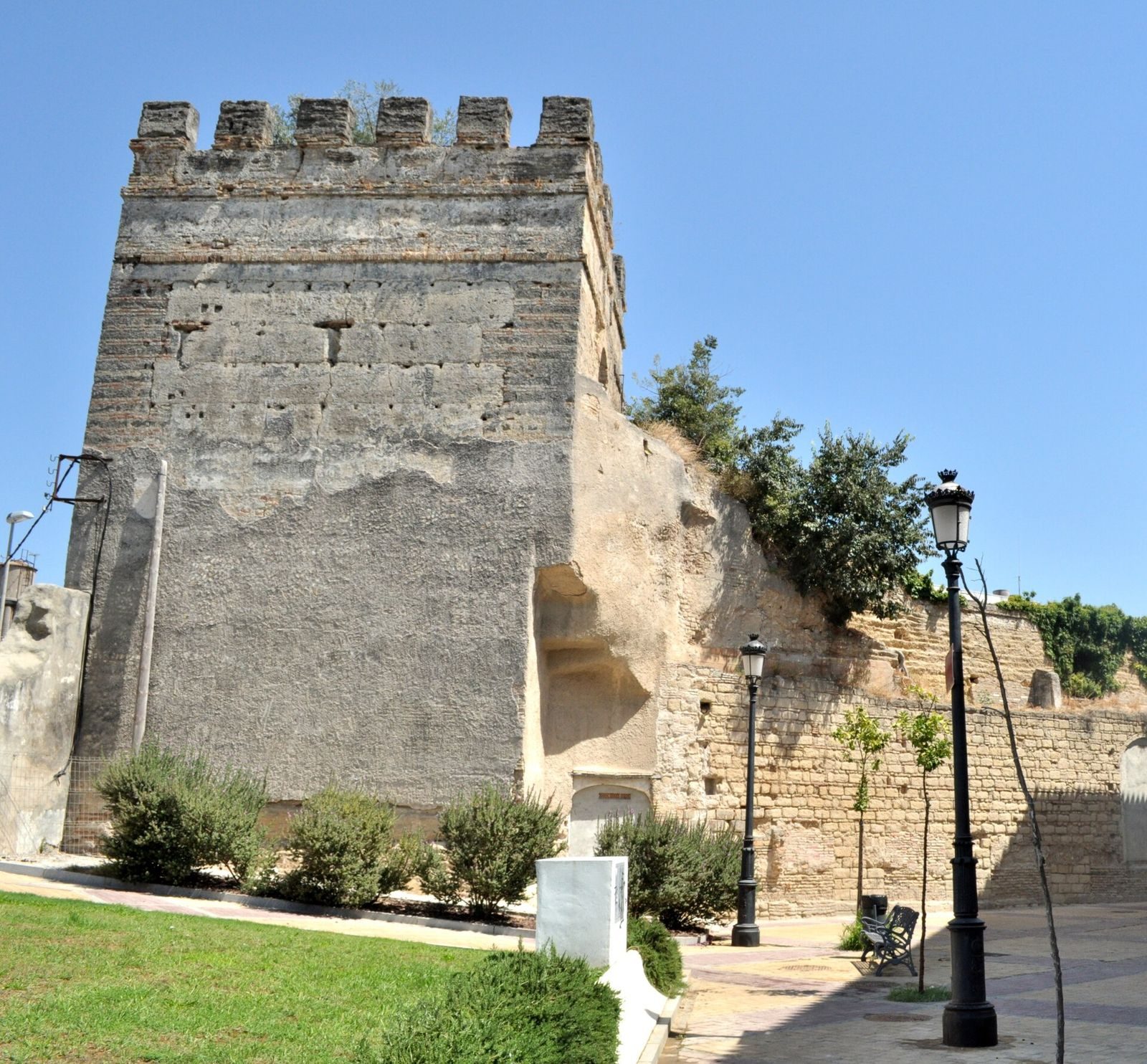
The wall encloses Jerez’s historic center. Its circuit begins at the Alcázar, at the southern end and highest point, then follows the present-day route of the Alcázar, Calle Armas, Plaza del Arenal, Calle Lancería, Calle Larga, Alameda Cristina, Calle Porvera, Calle Ancha, Plaza de Santiago, Calle Muro, Calle Ronda del Caracol, Calle Puerta de Rota and the Puerta del Arroyo, before returning to the Alcázar. The walls are about 2.6 metres thick and 9 metres high. They are built mainly of rammed earth, with brick and cut stone in some sections. The rammed-earth construction suggests that the wall was erected under urgent and precarious conditions.
Gates and passages
Puerta Real
Also known as the Puerta del Marmolejo, the Puerta Real stood at present-day Plaza del Arenal, beside Calle Consistorio. It connected the walled city with the suburb of San Miguel and provided an exit toward the bay. A pedestal from the ancient city of Asta Regia was set into the gate.
Puerta de Sevilla
The Puerta de Sevilla stood at present-day Alameda Cristina, facing the route to Seville. It had a fountain.
Puerta de Rota
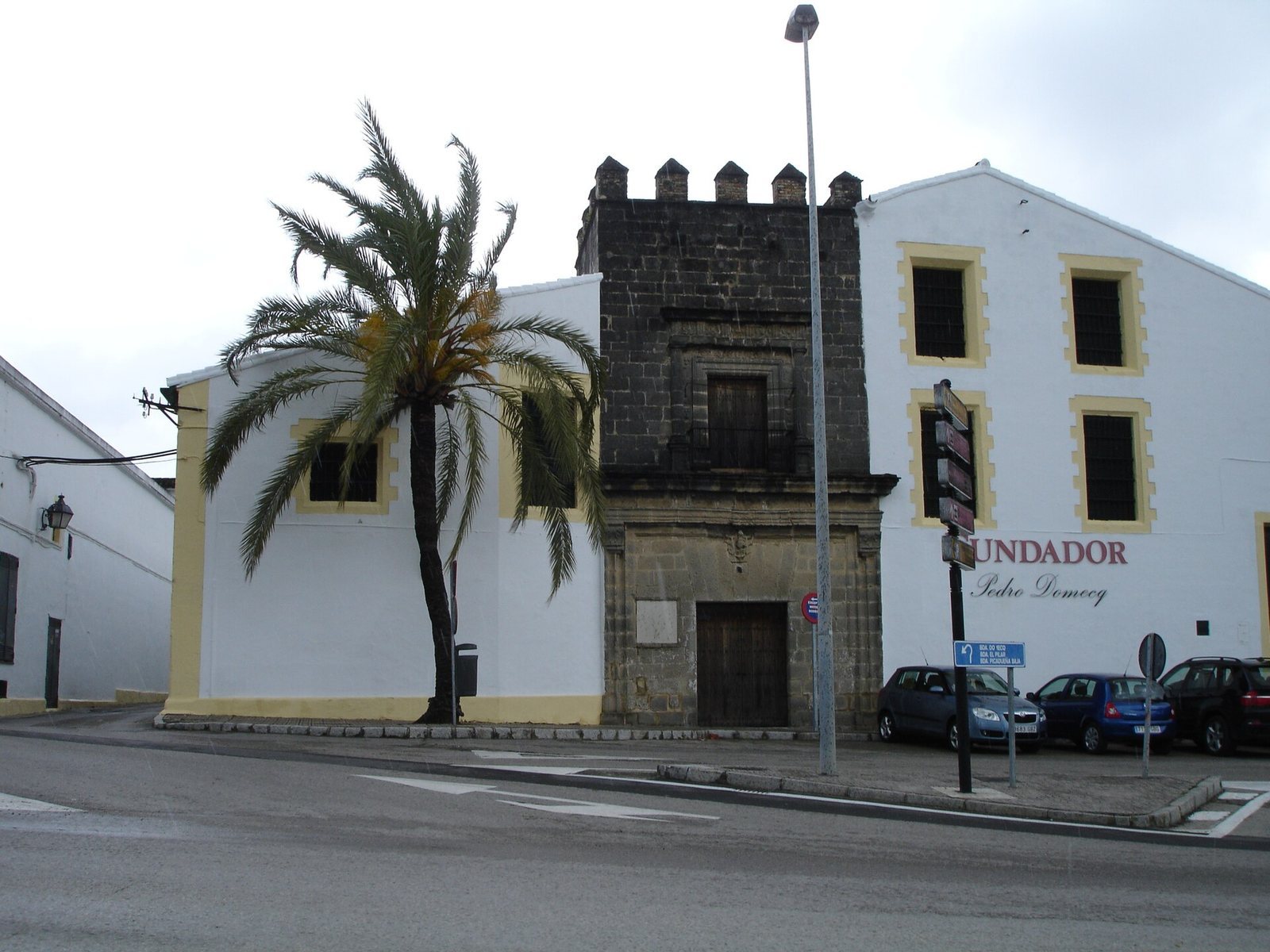
On present-day Calle Puerta de Rota, along the road toward Sanlúcar de Barrameda, this was a fortified complex with three strongholds and high watchtowers. A winery beside the former gate incorporates Torre Riquelme.
Puerta de Santiago
Also called the Puerta del Olivillo, this gate stood at present-day Plaza de Santiago. It had seven strongholds, five towers, a grille and a small fortified enclosure. The gate connected the walled city with the suburb of Santiago and the surrounding countryside.
Puerta del Arroyo and posterns
The Puerta del Arroyo was an opening through which the stream from Plaza del Arroyo flowed out of the city. Smaller passages through the defensive wall, known as posterns, included the passage of the Cuatro Juanes on Calle Larga and the postern of Mirabal on Calle Ancha.
Surviving sections and towers
Wall incorporated into buildings
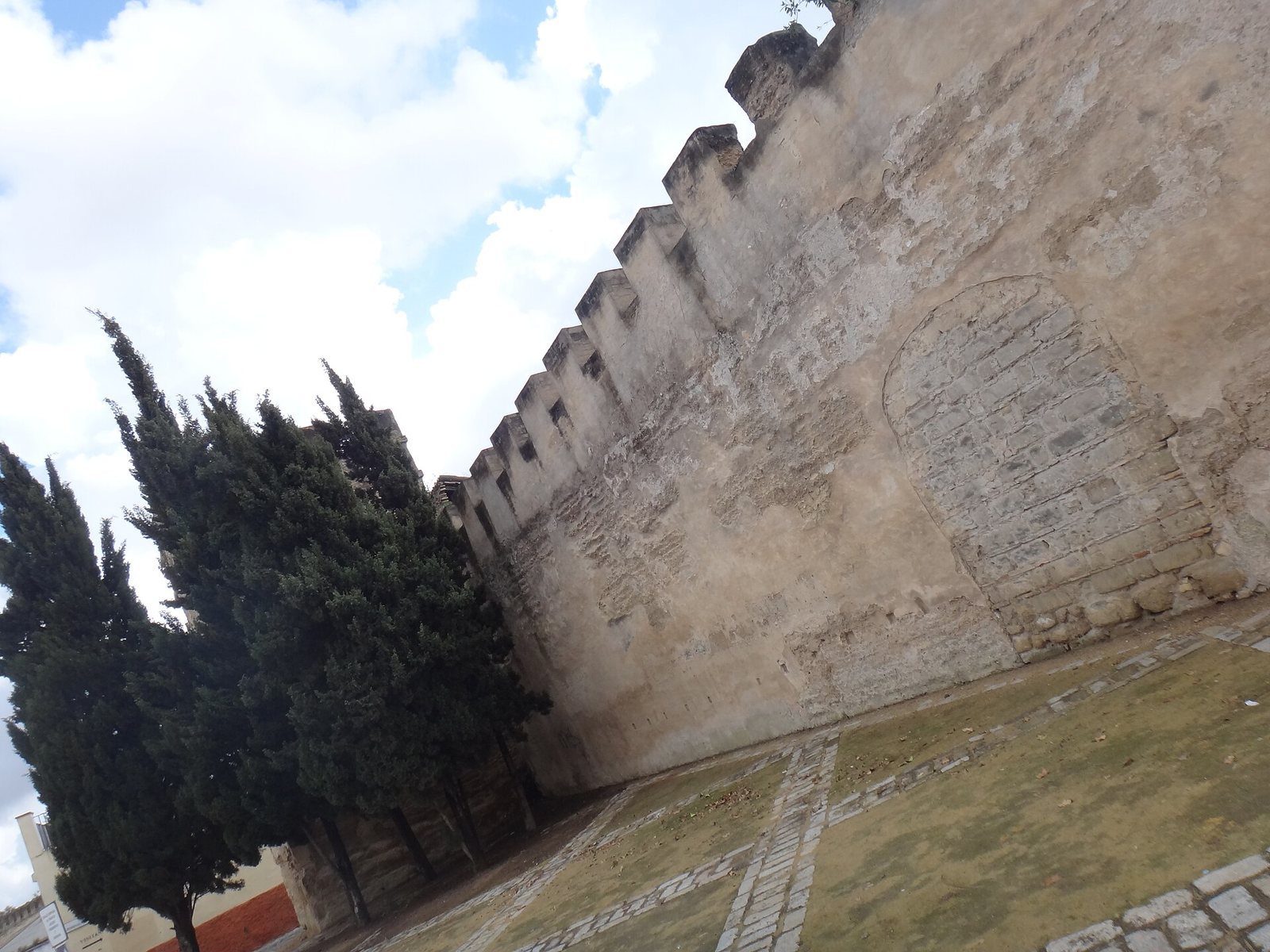
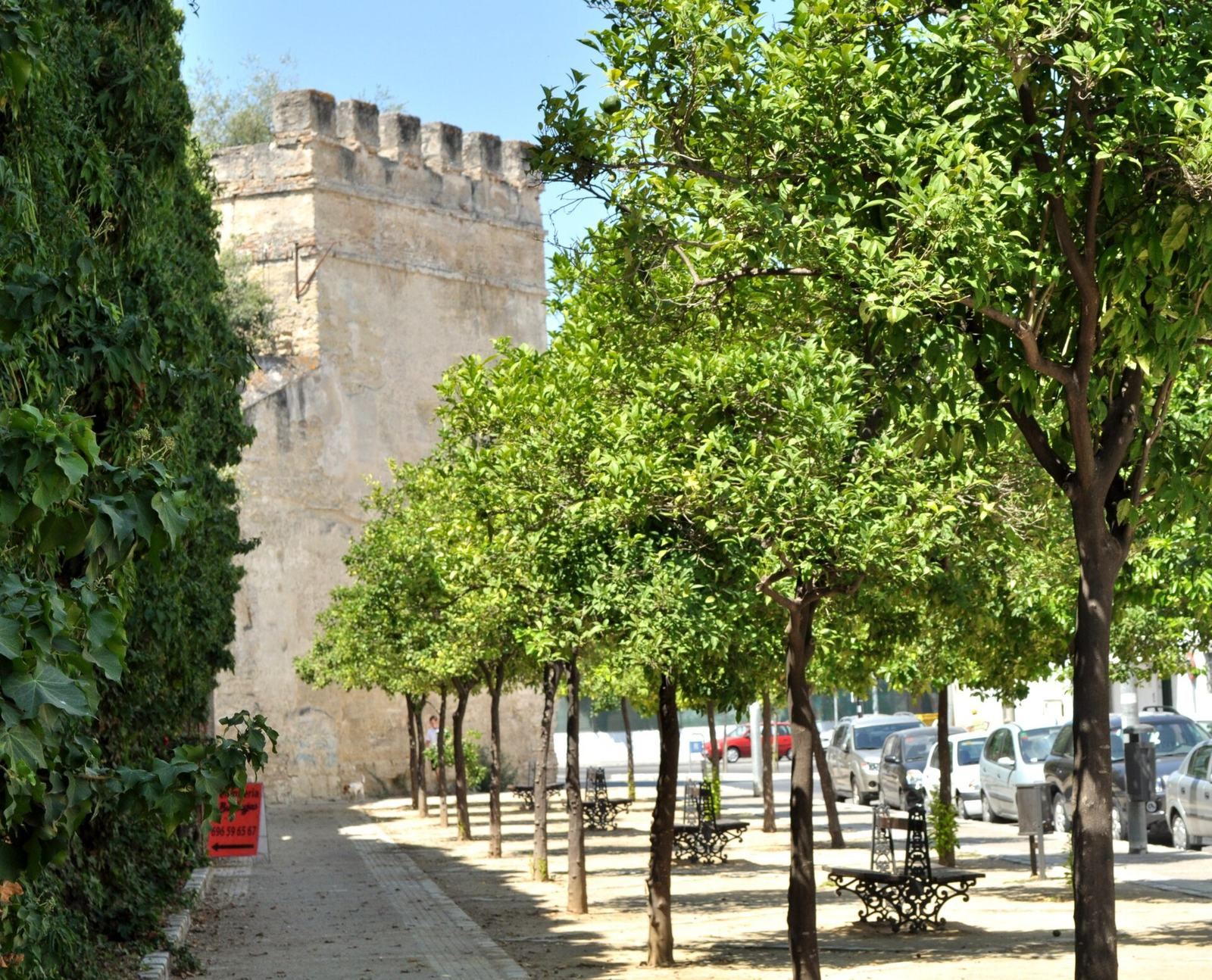
Sections of the wall are built into commercial premises and the ground floors of homes, especially on Calle Larga and Calle Porvera. Wineries on Calle Muro and Calle Ronda del Caracol also contain parts of the fortification. Exposed stretches remain on Calle Ancha, beside a monument to the Spanish explorer Núñez Cabeza de Vaca, and along much of Calle Muro. The Alcázar’s walls and towers are also visible.
Torre Riquelme
A winery beside the former Puerta de Rota incorporates Torre Riquelme. A major restoration of the tower revealed its origin.
Torreón on Calle Muro
The Torreón on Calle Muro is in particularly delicate condition.