Holy Trinity Monastery on Halki: An Orthodox Monastery and Theological School
Site at a Glance
- Popularity
- Medium
- Country
- Turkey
- Primary era
- Early Modern
- Eras represented
- Early Modern
- Civilizations
- Ottoman
- Site type
- Religious
- Remains
- Monastery
On this page8 sections
History
The Holy Trinity Monastery on Halki, also known as Haghia Triada, is a male Orthodox monastery on Halki, Turkey, built in the Byzantine architectural style. It belongs to the Ecumenical Patriarchate of Constantinople, a major institution of Eastern Orthodox Christianity, and has stauropegial status, meaning it is directly under a patriarch’s authority rather than that of a local diocesan bishop. The monastery later became home to the Halki Theological School, an Orthodox seminary that educated generations of clergy.
Medieval monastery
A monastery on Halki called the Monastery of the Despots appears in the life of Theodore the Studite, a Byzantine monk and theologian who was exiled on the island from 809 to 811. It is considered to have developed into the later Monastery of the Holy Trinity. The institution was also known as Zion, New Zion, and the School of Wisdom and Learning.
Rus raiders sacked the monastery in 860, leaving it in ruins. Tradition connects its revival with Photius I, patriarch of Constantinople. Empress Theodosia, wife of the Byzantine emperor Leo V the Armenian, lived there after her exile. In 1063, Catherine Komnene entered monastic life at the monastery and took the name Xenia. After the Byzantine Empire fell, the monastery declined gradually.
Library and theological school
The monastery’s library began to take shape in the sixteenth century, when Patriarch Metrophanes III contributed his collection. The Halki Theological School opened within the monastery on 1 October 1844, through the efforts of Patriarch Germanos IV.
Over the following century and a half, the school educated nearly 1,000 students, including nearly all the Ecumenical Patriarchs of that period and many senior clergy from other Orthodox churches. Its library grew to 120,000 volumes, including valuable Byzantine manuscripts. Under Ottoman rule, it was the largest collection in the Greek world.
Earthquake, closure, and later history
In June 1894, an earthquake destroyed the monastery and seminary buildings, with the seventeenth-century church surviving. Architect Periklis Fotiadis directed the restoration of the complex.
In 1971, following a petition by supporters of Turkey’s Republican People’s Party, the Constitutional Court ordered the school closed. The ruling cited Articles 130 and 132 of the Turkish Constitution and the prohibition on private religious education. The school had been subject to the canonical and administrative authority of the Ecumenical Patriarch and the Holy Synod. A synodal committee had overseen its finances, appointments, admissions, and general administration; after the closure, this body became known as the Ephorate of the Holy Trinity Monastery of Halki.
The Ecumenical Patriarchate continues to seek the school’s revival. The monastery remains active, with a five-member brotherhood led by its abbot, Bishop Kassianos of Arabissos. On 10 January 2013, Turkey’s Directorate General of Foundations decided to return 190 stremma of woodland to the monastery. A stremma is an area unit equal to 1,000 square metres.
Remains
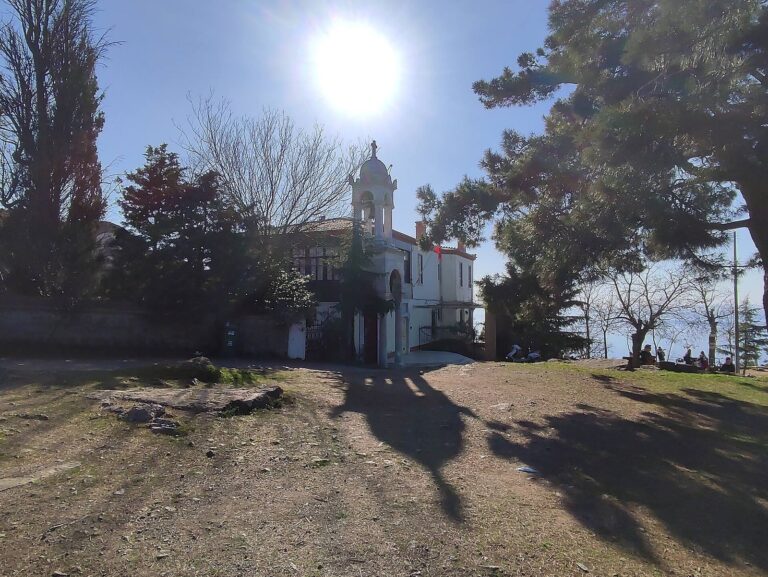
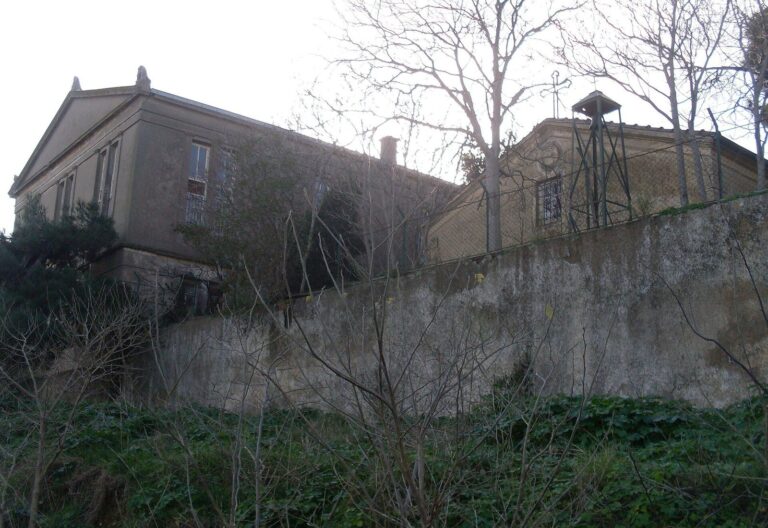
The monastery stands on the Hill of Hope, also called Ümit Tepesi or Papaz Dağı, on Halki, the third of the Princes’ Islands. Halki is also known as Heybeliada. The complex is Byzantine in style and includes the monastery church and the grounds that housed the theological school.
Monastery buildings and finds
Church and seminary
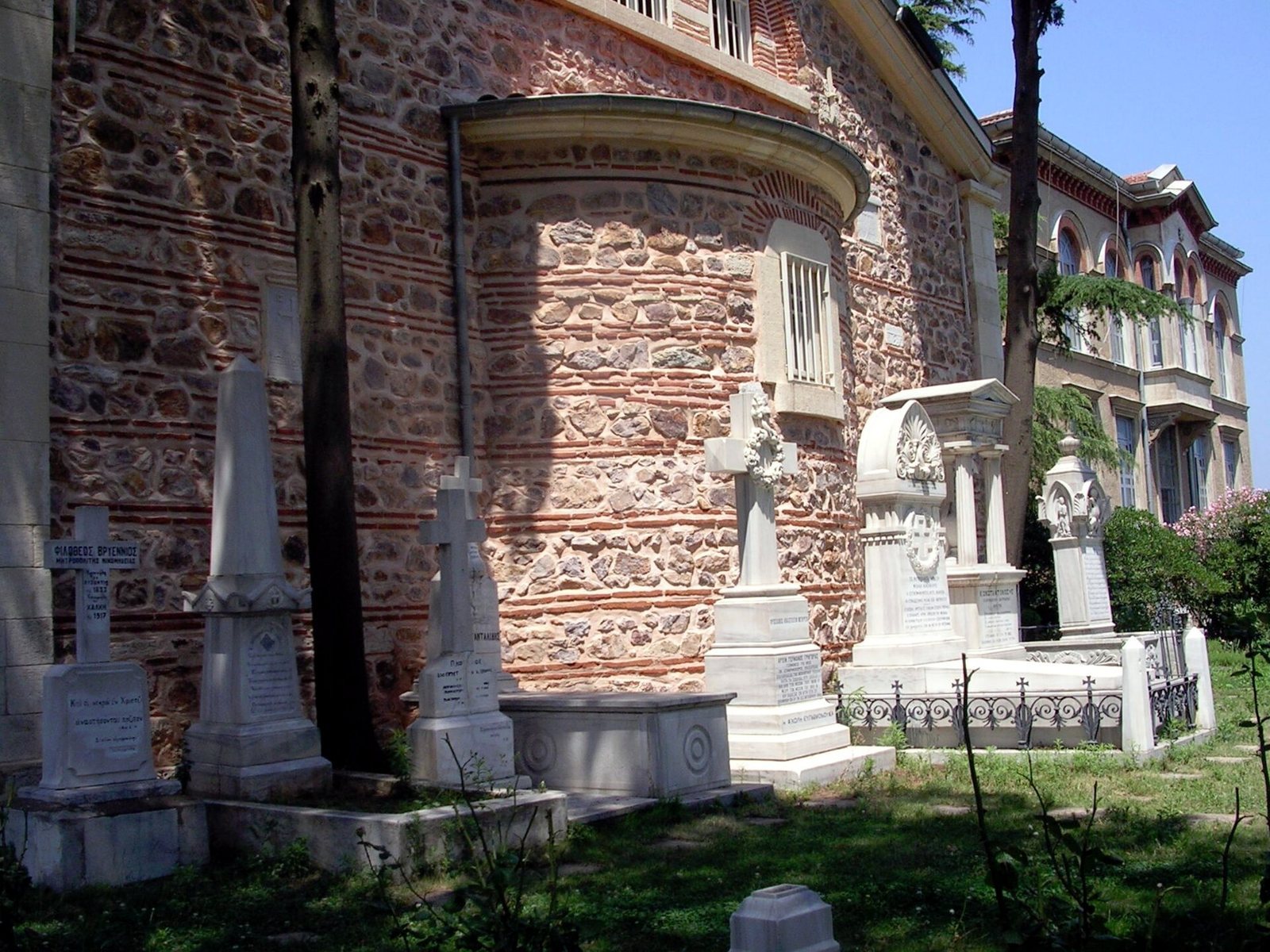
The seventeenth-century church is the complex’s surviving building from before the June 1894 earthquake. The other monastery and seminary buildings were destroyed, and the complex was subsequently restored. The Halki Theological School occupied part of the monastery grounds.
Antiquities from the 1844 renovation
Renovation work in 1844 brought antiquities and funerary sculpture to light. They were thought to have come from an ancient temple of Apollo, a major deity of ancient Greek religion.