Telesia: A Samnite Town and Roman City in Italy
Site at a Glance
- Popularity
- Medium
- Country
- Italy
- Primary era
- Classical
- Eras represented
- Classical
- Civilizations
- Roman, Samnite
- Site type
- Settlement
- Remains
- City
On this page17 sections
History
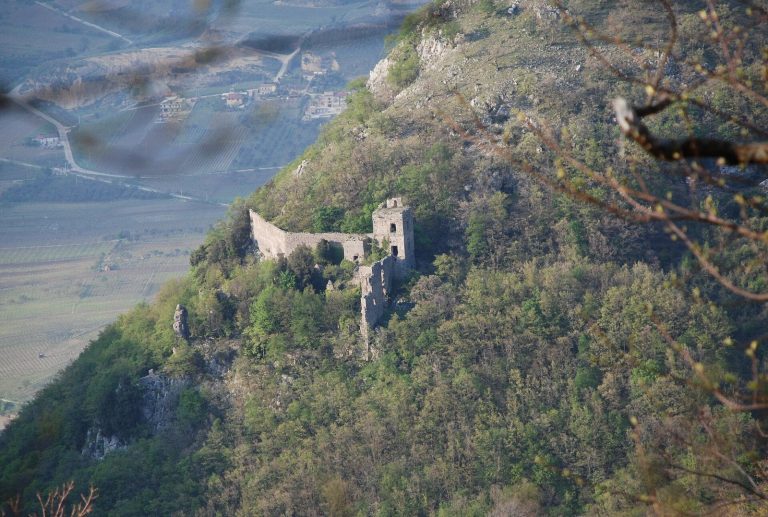
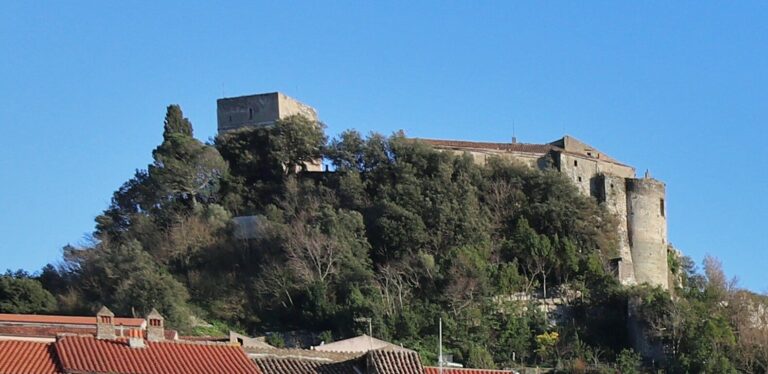
Telesia was a town of Samnite origin that developed into a Roman city in the Telesina Valley, within present-day San Salvatore Telesino, Italy. The Samnites were an ancient people of southern Italy who fought Rome before their lands became part of Roman territory. They called the settlement Tullisiom, while Greek and Latin writers used the name Telesia. The location of the original Samnite settlement is disputed: proposals place it either on Mount Acero, where an ancient fortification called Arce survives, or within the territory of present-day Castelvenere. Supporters of the latter view suggest the settlement moved onto the plain in the Roman period.
From Samnite settlement to Roman colony
Telesia first appears in written history in 217 BC, when the Carthaginian general Hannibal Barca occupied it during the Second Punic War, the conflict between Carthage and Rome. His forces crossed the Titerno gorge, camped near the Volturno, and attacked a town that then had no defensive walls. The Roman commander Quintus Fabius Maximus captured Telesia in 214 BC, after an occupation said to have lasted about two years, and restored Roman control.
After the war, Telesia became a Roman municipium, a community with a defined civic status within the Roman state. Inscriptions name its duumviri, pairs of municipal magistrates. It later became a colonia, a Roman settlement often established for citizens or veterans, under the name Herculea Telesina. Its foundation is dated either to the period of the Gracchi or to Sulla. The name honored Hercules, and the city held athletic contests, including the pentathlon, in his honor. As a Roman colony, Telesia grew as a commercial crossroads, and its population has been estimated at about 15,000.
Telesia took part in the Social War of 91–88 BC, when Italian communities fought for Roman citizenship. In 82 BC, the Samnite commander Gaius Pontius Telesinus, a descendant of an earlier leader named Gaius Pontius, led an army of about 40,000 men that camped near Rome on the night of 31 October to 1 November. Sulla, the Roman general who commanded the opposing forces, counterattacked and won a hard-fought battle. He then destroyed Telesia and other towns that had supported the Italian League.
Bishops and Lombard rule
In 465, Florentius, the first recorded bishop of Telesia’s diocese, or church district, attended the Second Council of Rome, an assembly of church leaders held at the Basilica of Santa Maria Maggiore under Pope Hilary. His successor, Agnello, took part in a third council convened by Pope Felix III. Around the turn of the sixth and seventh centuries, Menna served as bishop and advised Pope Gregory I. After the Western Roman Empire fell in 476, Telesia probably faced raids like those affecting Benevento.
Under Lombard rule, Telesia became the center of a district administered by a gastald, a Lombard official. The district was established in the late seventh century and, by 969, had become a county whose jurisdiction also included Alife. Between 846 and 847, a raiding force led by Massar forced the town to surrender after cutting its water conduits. The attackers damaged its walls and destroyed much of the settlement. An earthquake in 848 caused further damage. Bishop Palerio probably sought refuge in the Irpinian mountains, while many residents left for more defensible places, including San Lorenzello, San Salvatore Telesino, Frasso Telesino, and the early settlement around the Cathedral of Santa Croce in present-day Telese Terme.
Norman rule and abandonment
By about the twelfth century, Telesia was the seat of a Norman county. In 1193, Tancred of Sicily, a ruler of the Kingdom of Sicily, burned the town because it supported Henry VI of Swabia, a German king and Holy Roman Emperor.
A series of severe earthquakes from January to September 1349 brought Telesia’s lasting abandonment. Shifts in the ground created ponds and marshes, while carbon dioxide and sulfur dioxide escaped and made the air difficult to breathe. The resulting unhealthy conditions included malaria, and the bishops also left. Bishop Branca, who held office from 1413 to 1453, later described the air as increasingly dangerous. He associated the conditions with gas emissions, stagnant water, and dampness linked to currents of the Grassano stream.
Modern archaeological investigations have confirmed Samnite-period occupation in the area. The surviving remains also reveal the scale and organization of the Roman city.
Remains
The archaeological area lies on a fertile plain in the Telesina Valley, on the right bank of the Calore near its confluence with the Volturno. It extends between San Salvatore Telesino and Telese Terme, along the provincial road connecting the two towns. Telesia stood at an important junction in southern Samnium’s road network, with routes linking it to Venafro and Alife, Cubulteria, Benevento, Caiazzo, and Maddaloni.
City plan and defenses
Urban layout
The walled city covered about 31 hectares and was divided into 44 insulae, or urban blocks, each measuring 98 by 41 metres. Streets paved with basalt were about 2.51 metres wide. These measured blocks and roadways formed the plan of a Roman city set on open ground.
Walls, towers, and gates
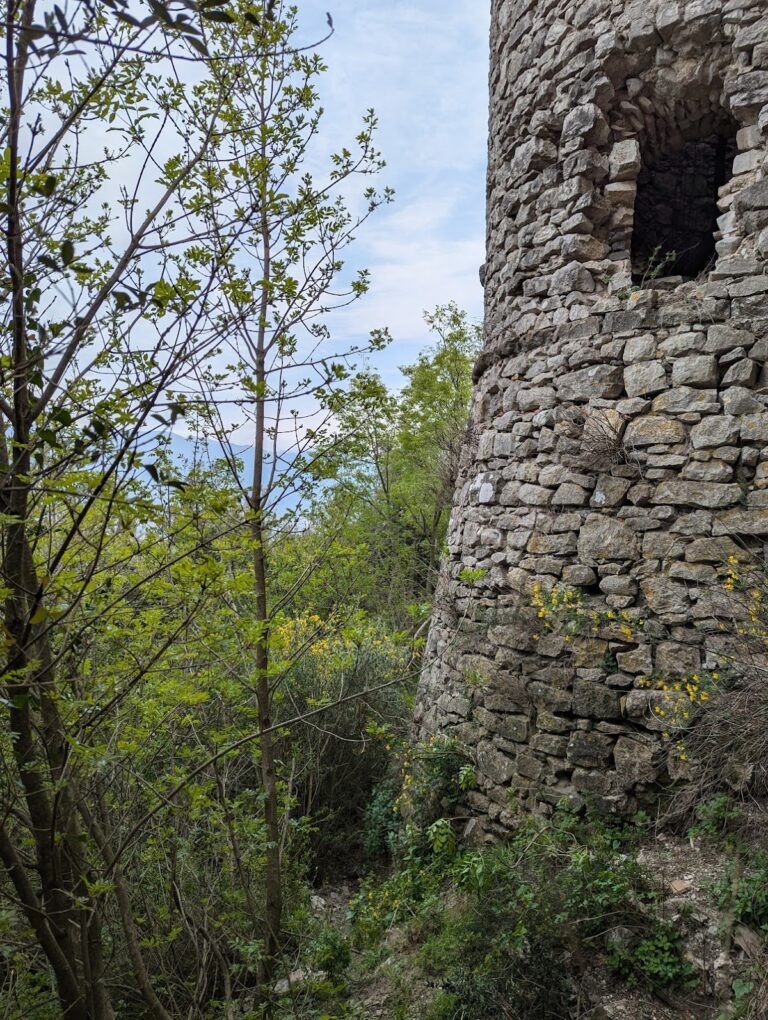
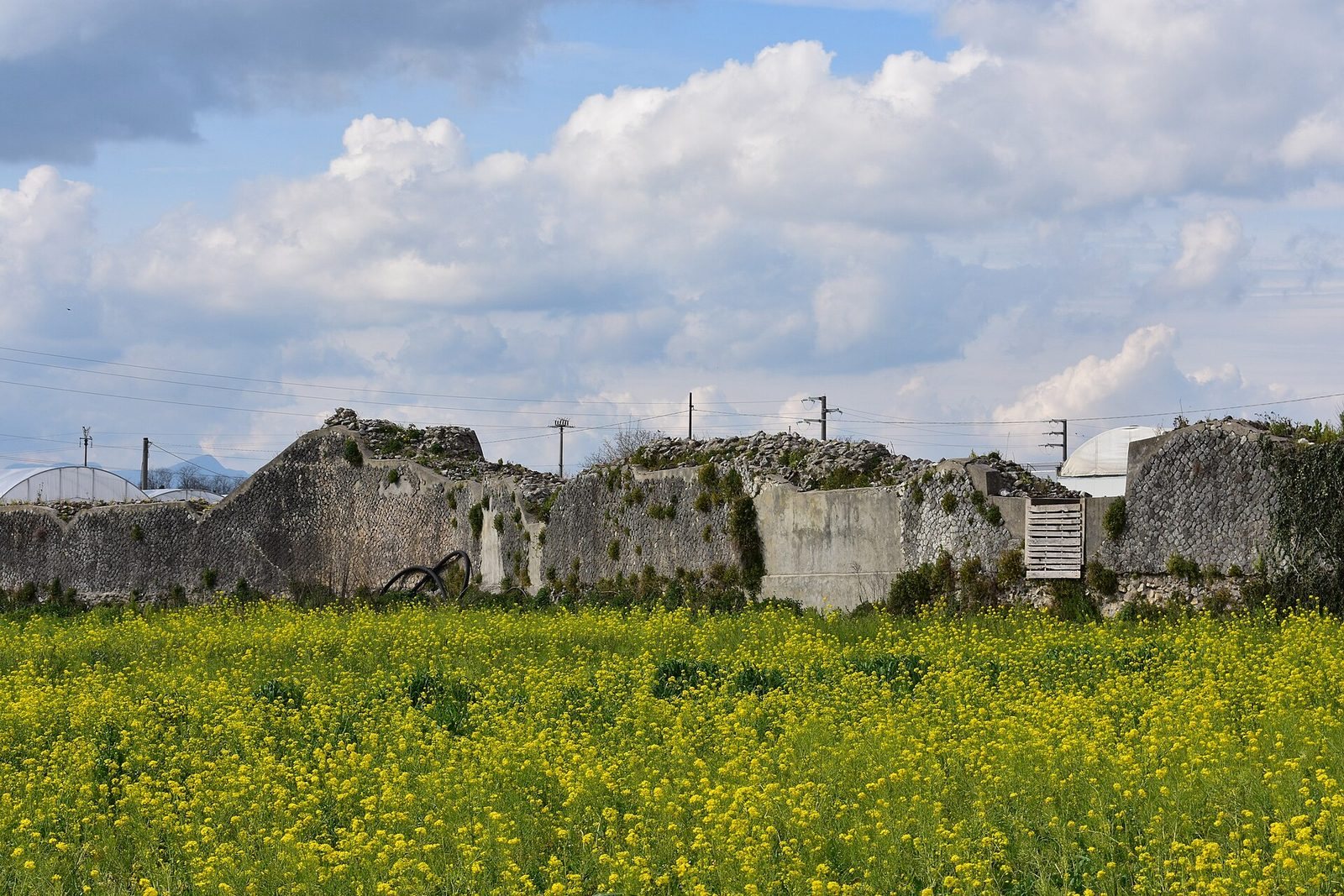
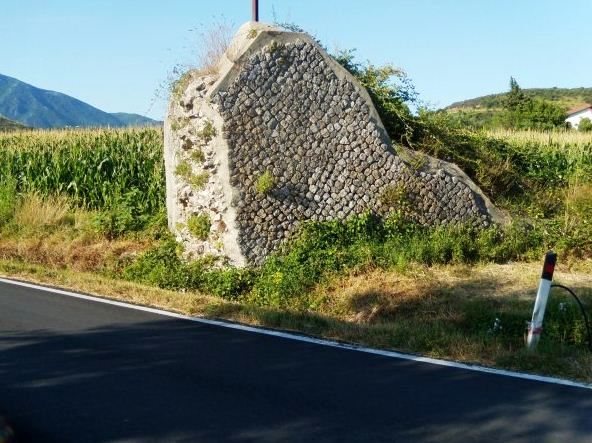
The surviving wall circuit is formed from outward-facing, inward-curving sections, with a tower at each end. Its stone facing, made with irregular blocks and in places arranged in a net-like pattern, covers a solid concrete core. The walls stand about 7 metres high and measure around 2 metres thick. Mostly solid circular or hexagonal towers, generally without openings, recur at intervals of 30 to 45 metres. Their positions allowed defenders to cover the walls from the sides: each tower had a field of fire of about 250 degrees, compared with 180 degrees for ordinary defensive structures. The arrangement anticipated bastioned defenses, which use projecting structures to cover adjoining stretches of wall, by sixteen centuries.
Three principal gates and several secondary entrances opened within the curved wall sections, protected by towers set forward of the gates. The wall-top walkway was too narrow for patrols to pass one another. It may have been widened inward with wooden structures that also provided access.
Public buildings and water systems
Amphitheatre
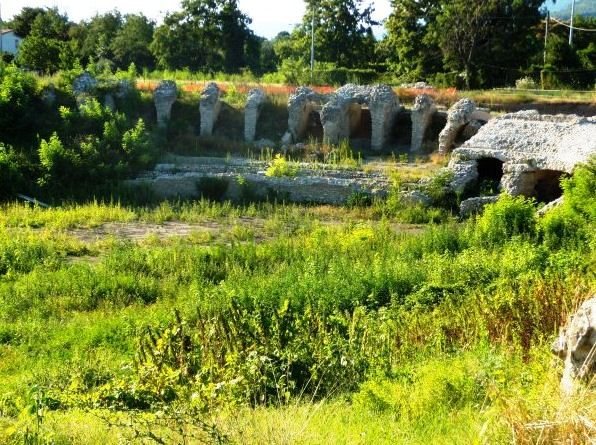
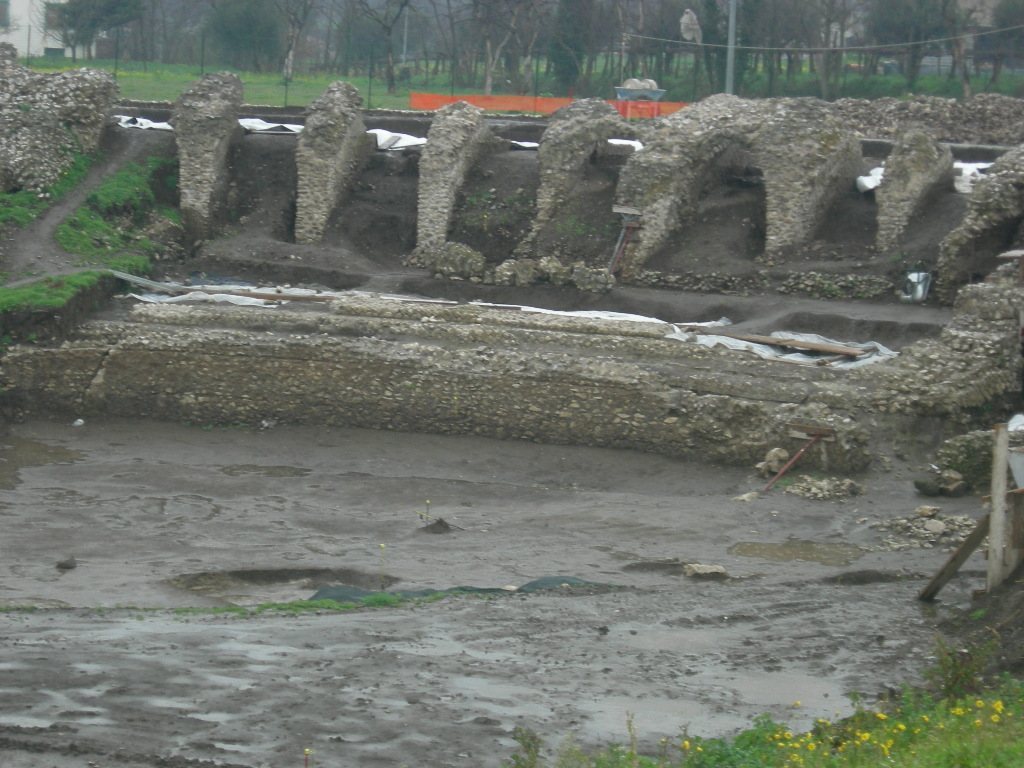
The amphitheatre stands outside the walls near the Porta di Capua, in the area known as Imperiale. Its construction was contemporary with the amphitheatre at Pompeii. An inscription records the city’s decision to honor Titus Fabius Severus with a statue for financing gladiatorial games five times. The performances included a family of dwarfs and were accompanied by major celebrations. Another inscription attests to a gladiators’ school at Telesia.
Theatre
Inscriptions attest to a Roman theatre where prominent actors of the period performed.
Aqueduct
An aqueduct carried water from Sant’Angelo in Cerreto Sannita, about six miles away, crossing bridges in the territory of present-day Castelvenere before reaching Telesia. Its source may have been the spring-rich Morgia Sant’Angelo, also called “the lioness.” The aqueduct entered the city from the north, where the ground is higher, and water was distributed through the northernmost hexagonal tower in the wall circuit. Lead pipes carried water from a large cistern beside the walls through the city. In the eighteenth century, the aqueduct’s bridges and the cistern were still visible.
Bath complexes
Two large bath complexes date to the first and second centuries. Their remains include mosaic work and numerous basins. An inscription records the restoration of one complex by Fabio Massimo, an administrator of the province of Samnium. Other inscriptions show that special magistrates supervised the water system; Gaius Minucius held the water magistrate’s office several times.
Burial remains and archaeological collections
Samson’s Cradle
Within the walls stands a substantial mausoleum known as Samson’s Cradle. Its original purpose is uncertain.
Samnite tombs
Five Samnite tombs were found in the Truono district, close to the Roman archaeological area. Further tombs came to light at two other nearby locations.
Antiquarium
The Antiquarium, a museum of archaeological and historical objects, opened in 2010 in the Benedictine Abbey of the Most Holy Savior at San Salvatore Telesino. Its collection includes inscriptions, pottery vessels, and other finds recovered from Telesia’s archaeological area. Further excavated objects from the city are held at the National Archaeological Museum of Sannio Caudino in Montesarchio.