Marad: An Ancient Mesopotamian City and Temple Center in Iraq
Site at a Glance
- Popularity
- High
- Country
- Iraq
- Primary era
- Bronze Age
- Eras represented
- Bronze Age
- Civilizations
- Babylonian, Sumerian
- Site type
- Settlement
- Remains
- City
On this page13 sections
History
Marad was an ancient Mesopotamian city in Iraq, founded around 2700 BCE during the Early Dynastic II period of Sumerian urban history. Its name appears in records from the Early Dynastic period and continued in use into the early first millennium BCE, although its linguistic origin is uncertain. Lugal-Marada was the city’s god, and a hymn to him is attributed to Enheduanna, a Sumerian high priestess and poet. Interpretations have identified Lugal-Marada with Ninurta or described him as the deified son of Naram-Sin.
Early dynasties and Akkadian rule
Sargon of Akkad, founder of the Akkadian Empire, captured Marad and brought it under imperial rule. Four inscribed door sockets said to have come from Wana-Sedoum name Lipit-ilē, a governor of Marad and son of Naram-Sin, as the builder of a temple to Lugal-Marada. Naram-Sin was a later ruler of the Akkadian Empire.
After the empire fell, Marad came under the Third Dynasty of Ur, or Ur III, and was governed by an official. The city was briefly controlled by Elamites before Ur-Nammu restored its freedom and that of other places described as oppressed by Anshan, an Elamite center in southwestern Iran. An Ur III offering record names Lishanum as Marad’s governor and lists 36 fat sheep and 28 sheep. After Ur III, Marad seems to have fallen under Isin’s influence, though little is known about this transition.
Independence and Babylonian control
Marad had a brief period of independence during the Isin-Larsa and Old Babylonian periods, approximately from 1890/1880 to 1869 BCE. Texts name Halun-pi-umu, Sumu-ditana, Sumu-atar, Sumu-numhim and Yamsi-el among its rulers. Alumbiumu, a ruler broadly contemporary with Babylonian king Sumu-la-El, is associated with year names recording his accession, seizure of Dilbat and defeat in battle. A daughter of Alumbiumu became a nadītu, a consecrated woman, at Sippar during Sumu-la-El’s reign.
Records from Ašdumlû’s reign refer to his accession and the digging of a ditch for the Abgal canal. The branch may have been the Me-enlila canal, though this identification is uncertain. A year name attributed to Sumu-la-El might refer to Ašdumlû’s defeat, but its reading is disputed. Marad is often discussed alongside Kazallu, and some have proposed that the two cities belonged to one kingdom. That connection is unconfirmed, and Kazallu’s location is uncertain. Marad’s independence has sometimes been linked to Sumu-la-El’s campaigns against Kazallu and its ruler Yahzir-El, but Marad’s fate in those campaigns is not securely known.
A royal oath by Babylonian king Sabium to Lugal-Marada points to Babylonian involvement after Marad’s independent period. The city may later have been caught up in the conflict between Isin and Larsa and reconquered by Sin-muballit, although this remains a hypothesis. A year name from Sin-muballit’s reign records the building of Marad’s defensive walls. Babylonian control is certain after Hammurabi conquered Larsa in 1763 BCE, but Marad’s subsequent history is unclear.
Later occupation and temple activity
Marad was lightly occupied under the Kassites, who ruled Babylonia for several centuries during the second millennium BCE. King Kadashman-Turgu carried out work on the temple of Lugal-Marada; a rebuilding under Kadashman-Enlil has also been proposed. The city was occupied in Neo-Assyrian and Neo-Babylonian times. Nebuchadnezzar II recorded rebuilding the temple on an ancient platform attributed to Naram-Sin, while Nabonidus also left evidence of building activity. The archaeological identification of Nebuchadnezzar’s work remains uncertain.
Shortly before the Persian conquest of Babylonia, Nabonidus ordered the images of gods from Marad, Kish and Hursagkalamma, among other cities, to be brought to Babylon. Marad remained inhabited into the end of the Neo-Babylonian period, and occupation also took place during the Parthian period. A document from the reign of Darius I records the sale of a prebend, an endowed share of income associated with specified rights or duties, connected with E-igi-kalama and the god Ea.
Identification and archaeological work
The identification of Marad with Tell as-Sadoum was proposed in the early twentieth century by the French Assyriologist François Thureau-Dangin. His case drew on a 1910 report by Langdon that he had seen a duplicate of a Neo-Babylonian temple-restoration inscription at a Paris antiquities dealer. The inscription was said to come from Wannah and Sedoum. Local people found the cylinder rather than excavating it, leaving its provenance uncertain. A Naram-Sin inscription attributed to Wana-Sedoum, including door-socket inscriptions, provided further support for the identification.
The Iraqi General Directorate of Antiquities and Al-Qadisiyyah University excavated the site around 1990 and 1991. Further campaigns took place from 2005 to 2007, followed by an Italian-Iraqi research project begun in 2019 and additional excavations in 2023.
Remains
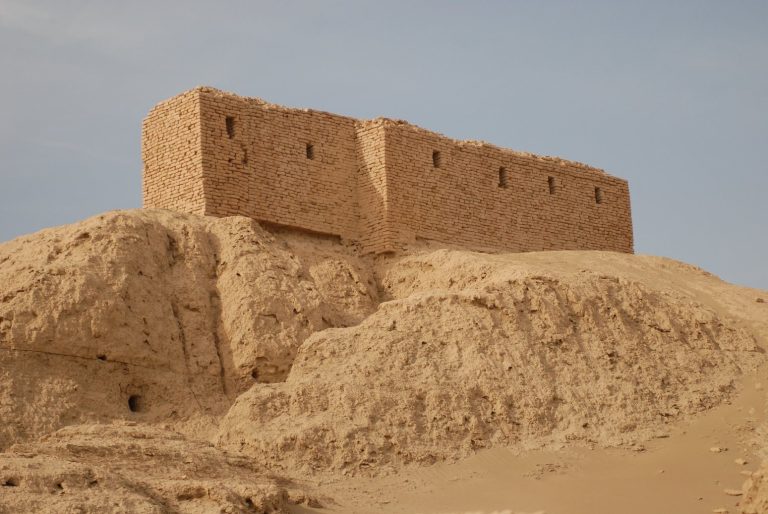
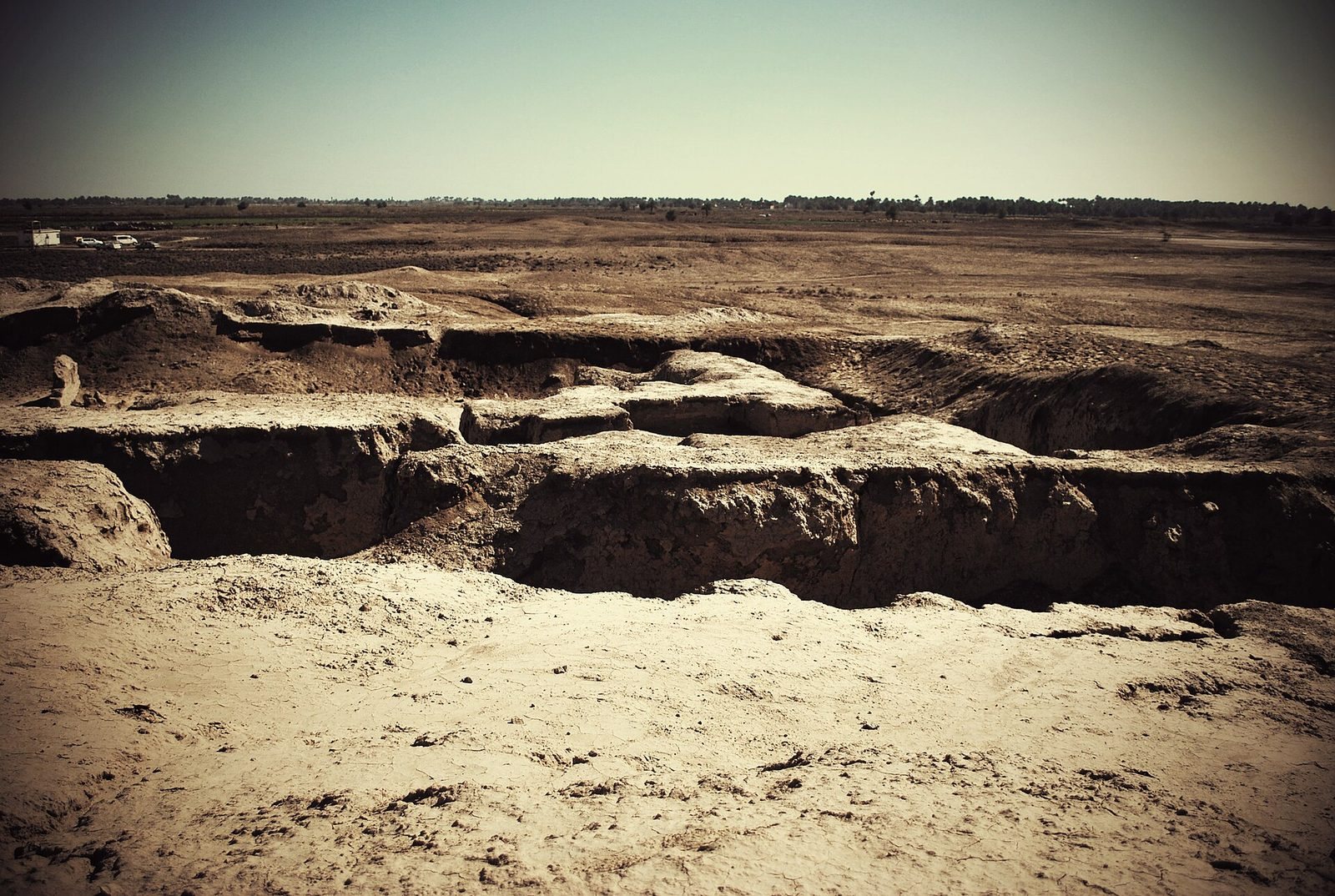
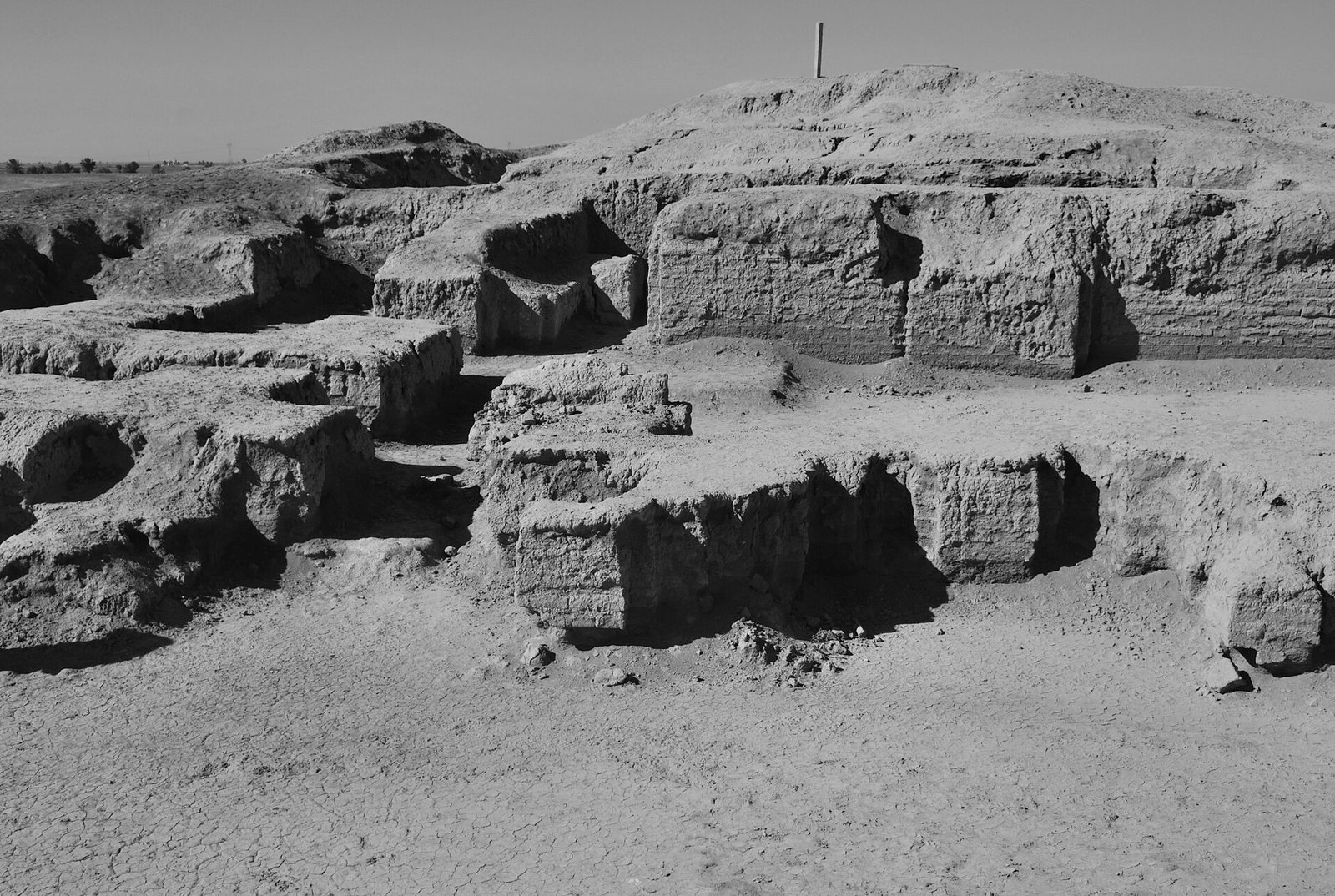
Marad’s archaeological remains cover about 50 hectares of mounds and ridges. The main mound stands at the northern edge of the site, rising about 14 metres above the plain, and is locally called Bint as-Sheikh or Bint ish-Shaikh. The ancient city is identified with Tell as-Sadoum, the northern settlement area in the local place-name Wanna-wa-Sadoum; Tell Wanna, a smaller mound, lies about a kilometre away. Marad lay near the Arahtu, a branch of the Euphrates, and was connected in antiquity to the Abgal canal, which ran between Babylon and Isin. The site is west of Nippur and about 50 kilometres southeast of Kish.
The temple precinct
E-igi-kalama
The main temple, associated with Lugal-Marada, is called E-igi-kalama, meaning House that is the Eye of the Land. Texts describe it as a ziggurat, or stepped temple tower. The excavated monumental building on the main mound is rectangular, with a large cella, the temple’s principal inner chamber, and a niche centered in its rear wall. Its identification as the temple remains provisional. The structure was filled with clean, sandy soil. The building visible beneath the fill is tentatively dated to the Old Babylonian period and may have remained in use under the Kassites. The filling may have been intentional, perhaps ritual, in preparation for rebuilding under Nebuchadnezzar II.
Rooms and enclosing wall
Excavations of the precinct included Area A, identified with the temple; Area B, where a cluster of rooms formed part of the complex; and Area C, which included a section of the precinct wall. Residential and administrative buildings were investigated near the temple. Farther west, Area D contained residential remains from the Old Babylonian period.
Other settlement areas
A small mound at the western end of the site has three occupation layers spanning the Early Dynastic III, Akkadian, Isin-Larsa and Old Babylonian periods. Parthian graves have been found in different parts of Marad.
Tablets, archives and building finds
Written records and sealings
Excavations from 2005 to 2007 recovered about 40 inscribed objects, including 21 cuneiform tablets, most from the Isin-Larsa and Old Babylonian periods and a smaller number from Neo-Babylonian times. Most came from Area B, while looting heavily damaged the temple area. The 2019 work recovered five complete tablets, three nearly complete tablets, eight small fragments, clay tags and pieces of tablet envelopes. Around 100 cuneiform fragments have been found at the site, about eight substantially intact, along with numerous cretulae, clay sealings bearing impressions of seals or cords.
Excavations in Areas B and J in 2023 produced more tablets and fragments. Many relate to the Old Babylonian archive of Ilum-bani’s family and its business, particularly date-palm cultivation and transactions involving land, fields and date gardens. The archive is described as comprising 18 tablets and naming Ilum-bani and five of his sons; illegal digging removed part of this family archive. Some texts invoke Lugal-Marada, while others name Numušda. Personal names also refer to local deities such as Lulu. Legal and economic tablets preserve year names associated with Sumu-numhim of Marad and Sumu-la-El of Babylon. Other tablets contain oaths to Lugal-Marada, including texts associated with Sumu-ditana of Marad and Apil-Sin of Babylon.
Building inscriptions
Inscribed bricks and a fragment of a cylinder associated with Nebuchadnezzar II’s building activity have been found at Marad. These finds add physical evidence to the records of work on the city’s temple.