Roman Amphitheatre of Benevento: An Ancient Gladiatorial Arena
Site at a Glance
- Popularity
- Medium
- Country
- Italy
- Primary era
- Classical
- Eras represented
- Classical
- Civilizations
- Roman
- Site type
- Entertainment
- Remains
- Amphitheatre
On this page7 sections
History
The Roman Amphitheatre of Benevento, in Italy, is dated to between the first century BC and the beginning of the first century AD. Its construction date is based on building technique and a coin of Tiberius found near the floor. This chronology makes the amphitheatre a possible venue for a gladiatorial spectacle held in Benevento in AD 63.
Gladiatorial spectacles
The Roman historian Tacitus records that Emperor Nero was travelling from Naples toward Greece in AD 63, after attending a spectacle in Naples. Vatinius, a former shoemaker who had risen at Nero’s court, arranged a gladiatorial show in Benevento to honor the emperor. The amphitheatre was probably its setting.
Gladiatorial combats were a regular feature of life in Benevento. The city may also have had a branch of Rome’s principal gladiator-training school, the Ludus Magnus. A funerary inscription commemorates two retiarii, fighters who used a net and trident, associated with the school.
Abandonment and reuse
The amphitheatre was probably abandoned after an earthquake in 346. Small volcanic fragments from an eruption in 472 later covered the ruins, indicating that the building’s coverings had already disappeared. The structures were reused, and the floor was found encrusted with tufa, a porous stone, and lime. The area later served as a burial ground outside the city.
As the site declined, its walls were lowered so attackers could not use them as a stronghold, and stone was taken for other building work. After the Ostrogothic king Totila destroyed Benevento in 545, amphitheatre stone was among the materials used to rebuild the city walls. The 56 matching columns that stood in Benevento Cathedral until the 1943 bombings have also been suggested as possible reuse from the amphitheatre.
Identification and excavation
Until the nineteenth century, scholars confused Benevento’s Roman theatre with its amphitheatre. The Italian architect and antiquarian Almerico Meomartini resolved the mistake.
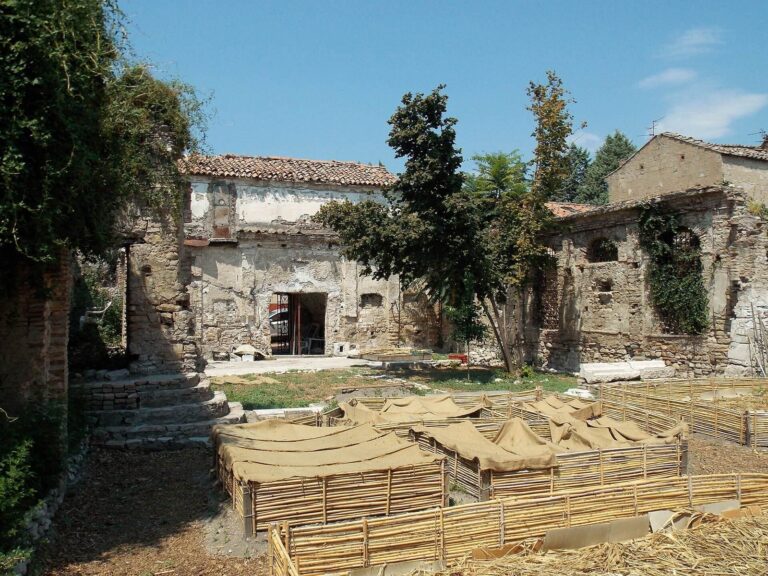
The amphitheatre’s remains came to light in 1985, when a building from Italy’s Fascist period (1922–1943), known as the Mother and Child House, was demolished. Archaeologists Daniela Giampaola and Giuseppina Bisogno were associated with the discovery. Exploratory excavations followed, and the local heritage authority acquired the site in 1999.
Remains
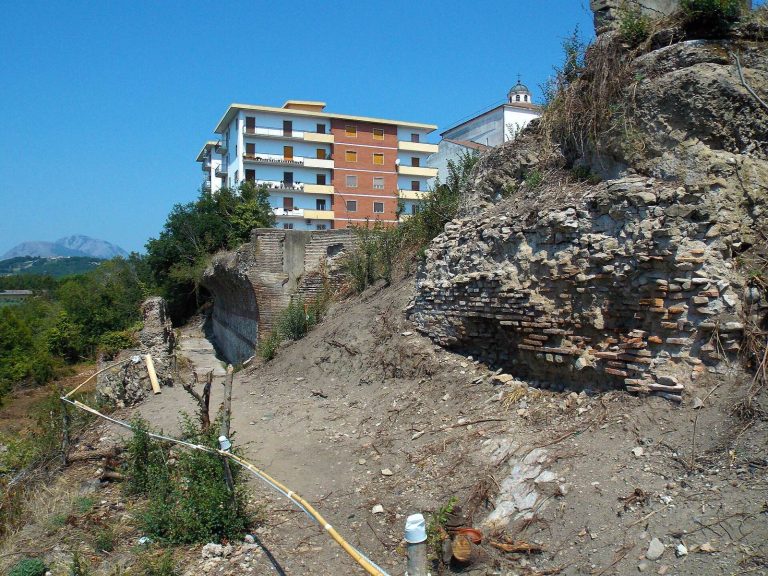
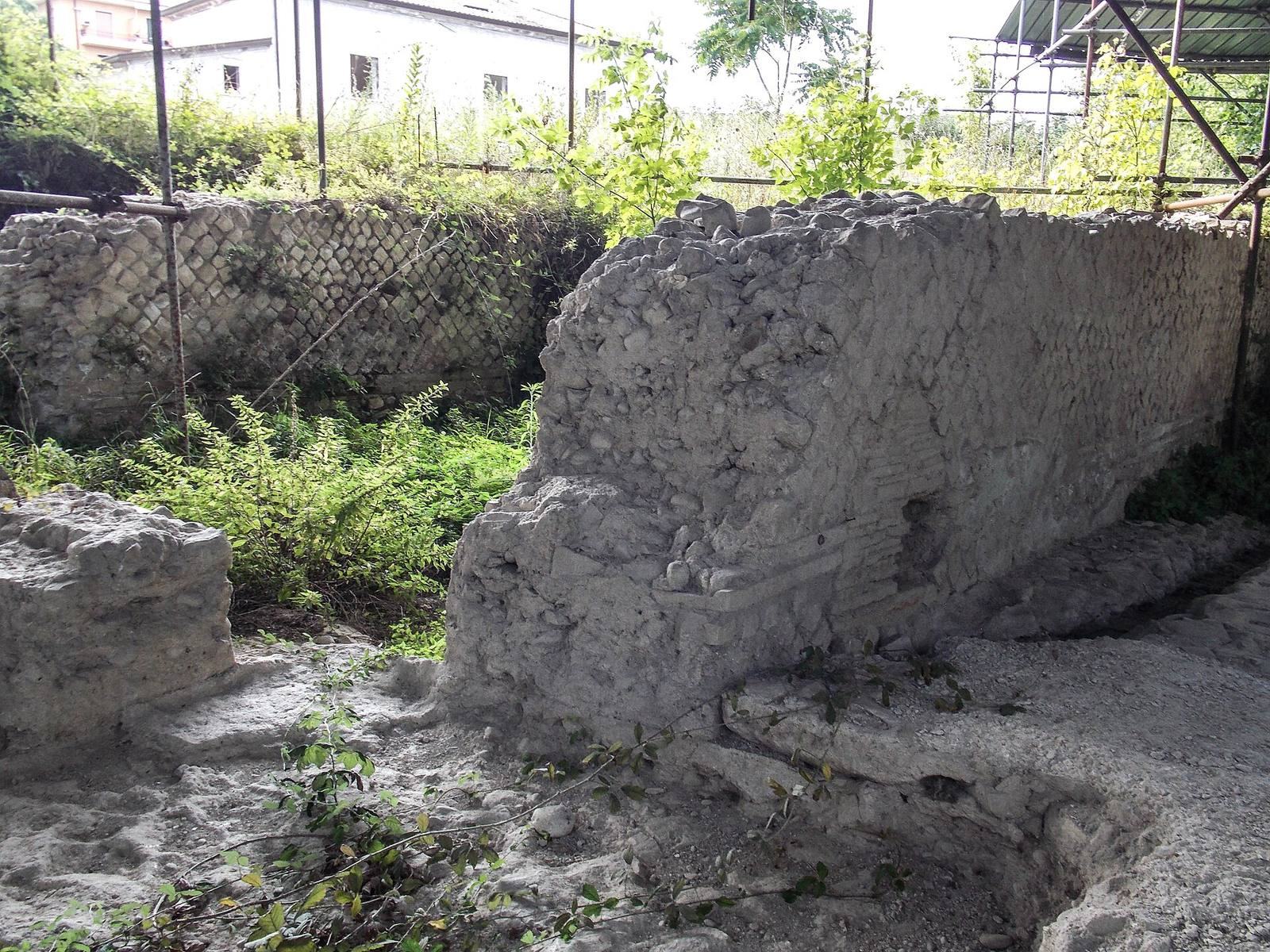
The remains lie between Via Munazio Planco and Ponte Leproso, outside the medieval city walls and beside the ancient Via Appia, a road linking Rome with southern Italy. The Benevento-Cancello railway crosses part of the site. Nearby are the covered gallery at Santi Quaranta and the artisan quarter of Cellarulo. This setting places ancient Benevento’s western extent as far as the Calore River. Reconstructions suggest an elliptical building about 160 by 130 metres across and around 25 metres high, arranged over three levels. The exposed area includes foundations, part of the first seating tier, the perimeter wall, and two projecting supports.
Construction and circulation
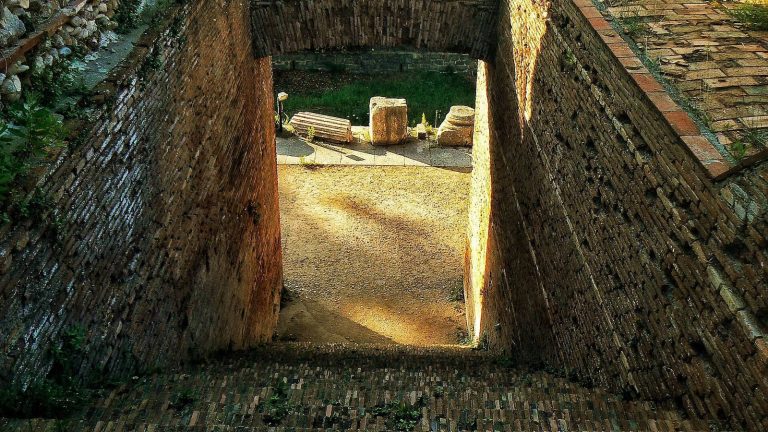
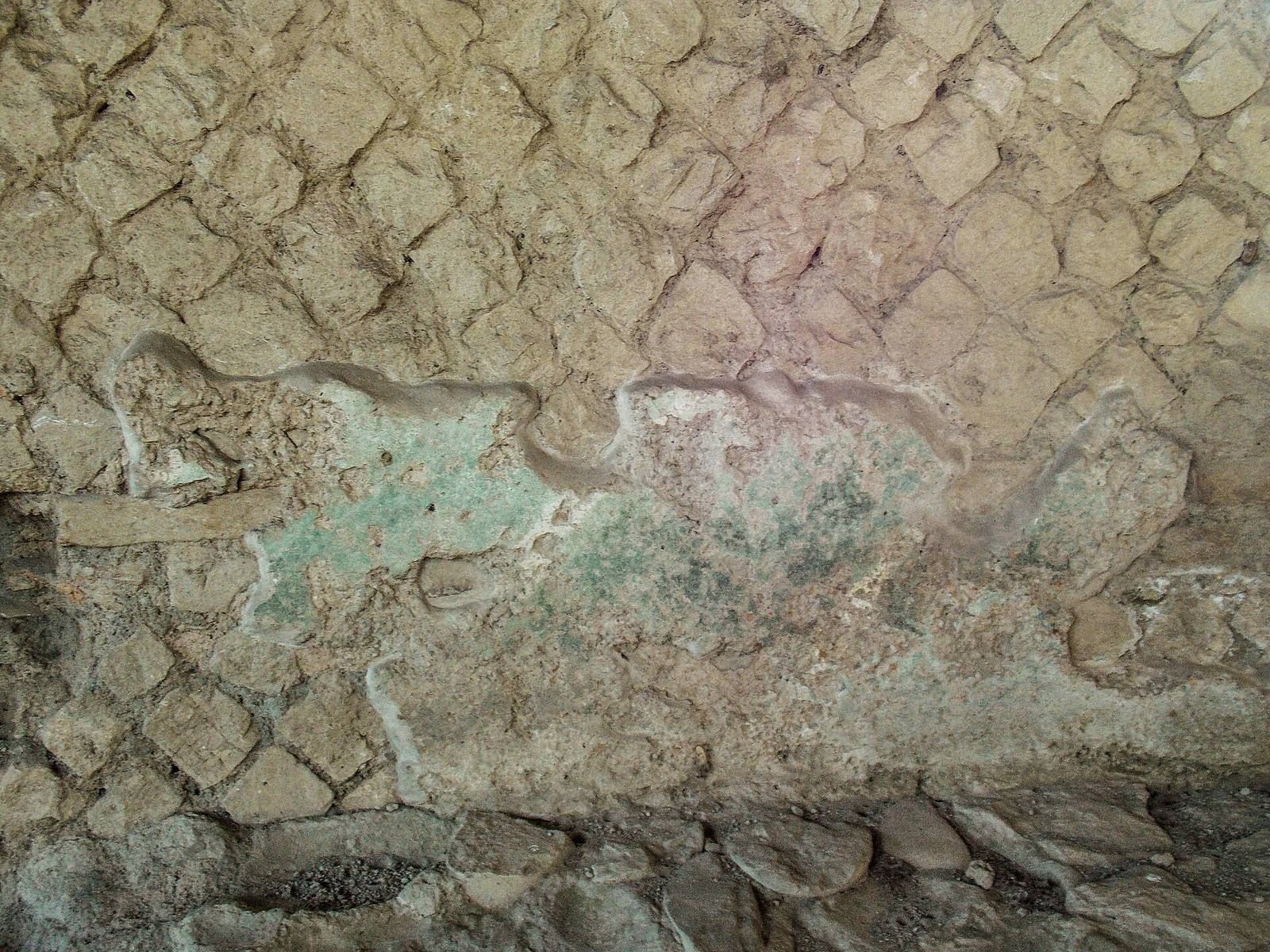
The foundations were cast in temporary moulds over those of an earlier building. Sections of the wall have a facing of small limestone blocks arranged in a net-like pattern, interrupted by courses of broken roof tiles; traces of plaster also survive. Marks at the ends of walls radiating outward from the centre show where upright limestone supports stood. Radial walls remain in eight sectors of the outer circuit and two of the inner circuit. A passage for circulation survives with a floor made from mortar containing crushed pottery.
Gladiator reliefs
Several carved relief fragments depicting gladiators were known in Benevento before the amphitheatre was discovered. Similar in style and dated to the first century, they are generally attributed to the arena, although funerary monuments have also been proposed as their original setting. The best-known fragment shows a hoplomachus, a gladiator armed with a spear and small shield, fighting in profile; it is held at the Museo del Sannio, Benevento’s history and archaeology museum. Other carved gladiator faces were reused in the bell towers of Benevento Cathedral and Santa Sofia. Two fragments with gladiatorial scenes, once set into the Rummo mill façade, are now in the museum. Two carved legs are built into the walls of a small tower atop the Rocca dei Rettori and a building on Via San Filippo.