Church of the Conception in San Cristóbal de La Laguna: Tenerife’s First Parish
Site at a Glance
- Popularity
- Medium
- Country
- Spain
- Primary era
- Early Modern
- Eras represented
- Early Modern
- Civilizations
- Crown of Castile, Spanish
- Site type
- Religious
- Remains
- Church
On this page17 sections
History
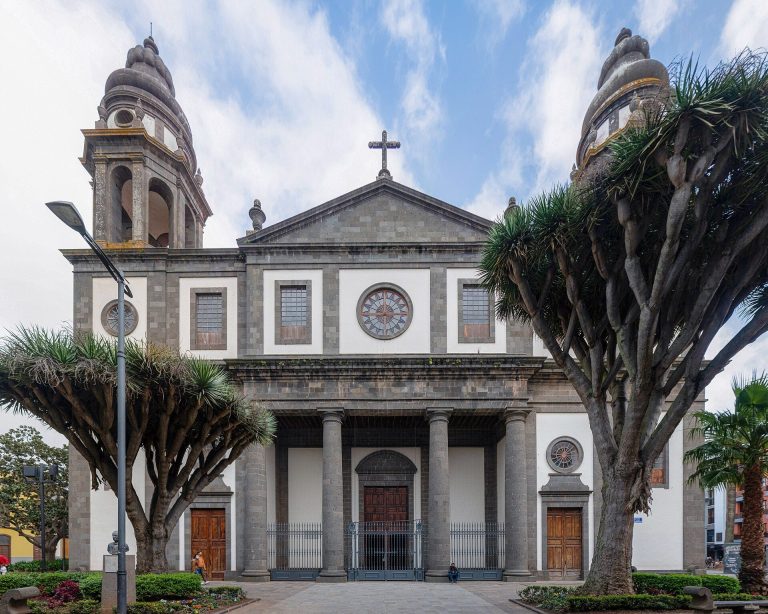
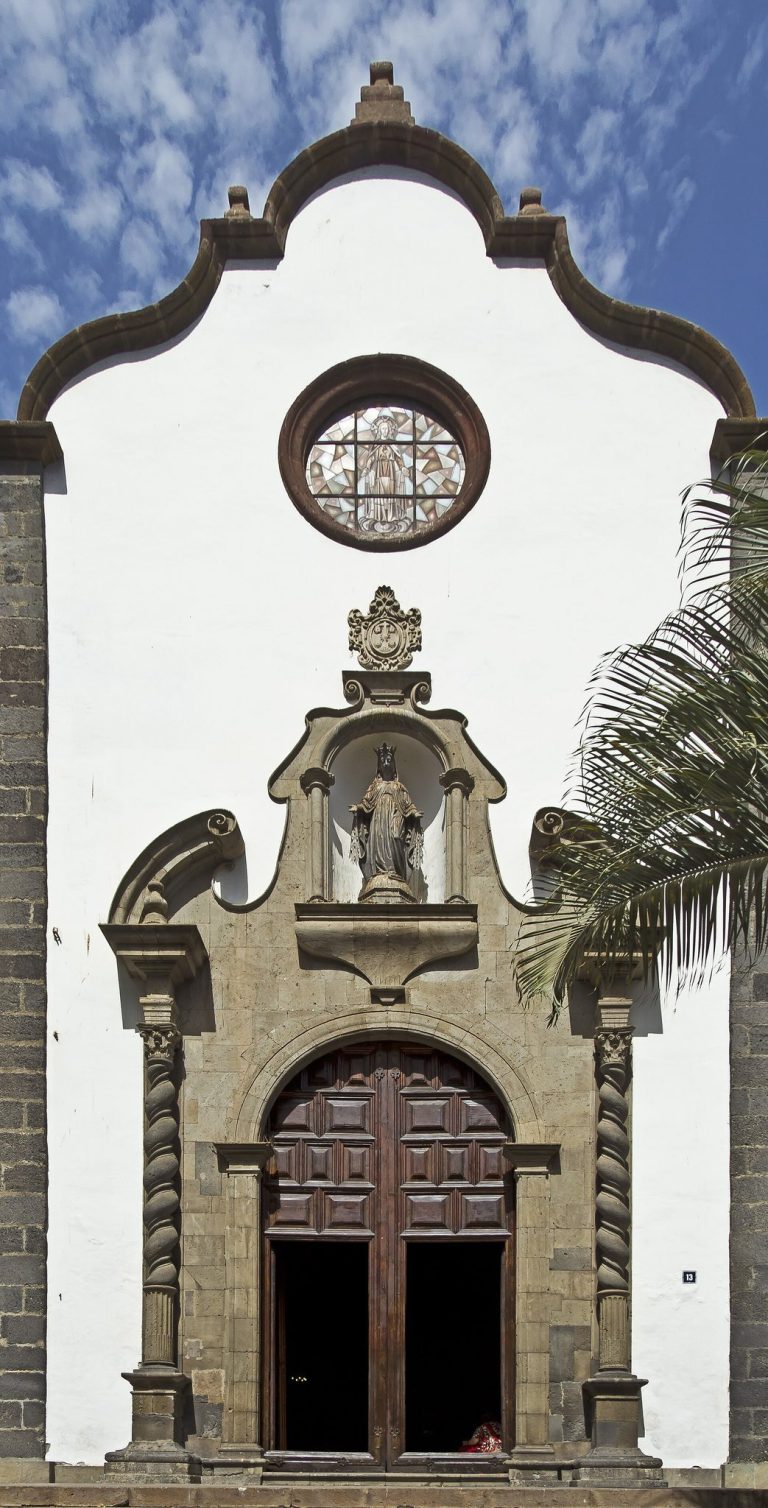
The Church of the Conception is a Roman Catholic church in San Cristóbal de La Laguna, Spain, dedicated to the Immaculate Conception, the Catholic belief that Mary was preserved from original sin from the moment of her conception. Castilian military leader Alonso Fernández de Lugo selected its site after the Corpus Christi celebration in 1496. The parish was established in 1497, and the church was founded and built in 1511. It became Tenerife’s first parish and the mother parish from which other parishes on the island developed. Its architectural character is associated with Baroque forms and the Colonial architecture of the Canary Islands.
Parish and city
The church was established in Villa de Arriba, where artisan guilds and other residents lived. Villa de Abajo, where La Laguna Cathedral and Plaza del Adelantado stood, was the city’s center of political and religious power. The parish belongs to the Diocese of San Cristóbal de La Laguna, within the ecclesiastical province of Seville. It is served by secular clergy, priests who minister outside religious orders.
Alterations and changing roles
The church underwent successive alterations and extensions, including a major eighteenth-century rebuilding campaign. Deterioration caused several naves to collapse in 1972, and extensive reconstruction followed in 1974. From 2002 to 2014, while La Laguna Cathedral was under restoration, the church served provisionally as the diocesan cathedral and as the seat of the cathedral parish of Los Remedios.
The church also received burials. During epidemics, deaths could exceed its capacity, and interments extended to the surrounding religious precinct. It was declared a historic-artistic monument in 1948 and is protected in Spain as a property of cultural interest in the monument category.
Religious associations and civic traditions
Six brotherhoods, confraternities, and related religious associations are based at the church. A confraternity is a lay religious association often organized around devotion to a saint or sacred image. One is the Pontifical, Imperial, Royal and Venerable Brotherhood of the Immaculate Conception, affiliated in 1757 with the Brotherhood of the Immaculate Conception at Rome’s Basilica of Saint Lawrence outside the Walls. Another association, devoted to Saint John the Evangelist, was founded after a bubonic-plague epidemic in 1648. The oil associated with the saint was said to have sweated miraculously, after which the plague disappeared from the island.
The annual feast of the Immaculate Conception takes place on 8 December, with a torchlight procession around the church on the eve. After the image received a canonical coronation in 1954, a formal ecclesiastical recognition of a Marian image, the city council unanimously proclaimed the Immaculate Conception honorary mayor of San Cristóbal de La Laguna. During the procession, the mayor entrusts the municipal staff of office to the parish priest, who places it with the image; it is returned to the mayor afterward.
Remains
Building and bell tower
Plan and construction
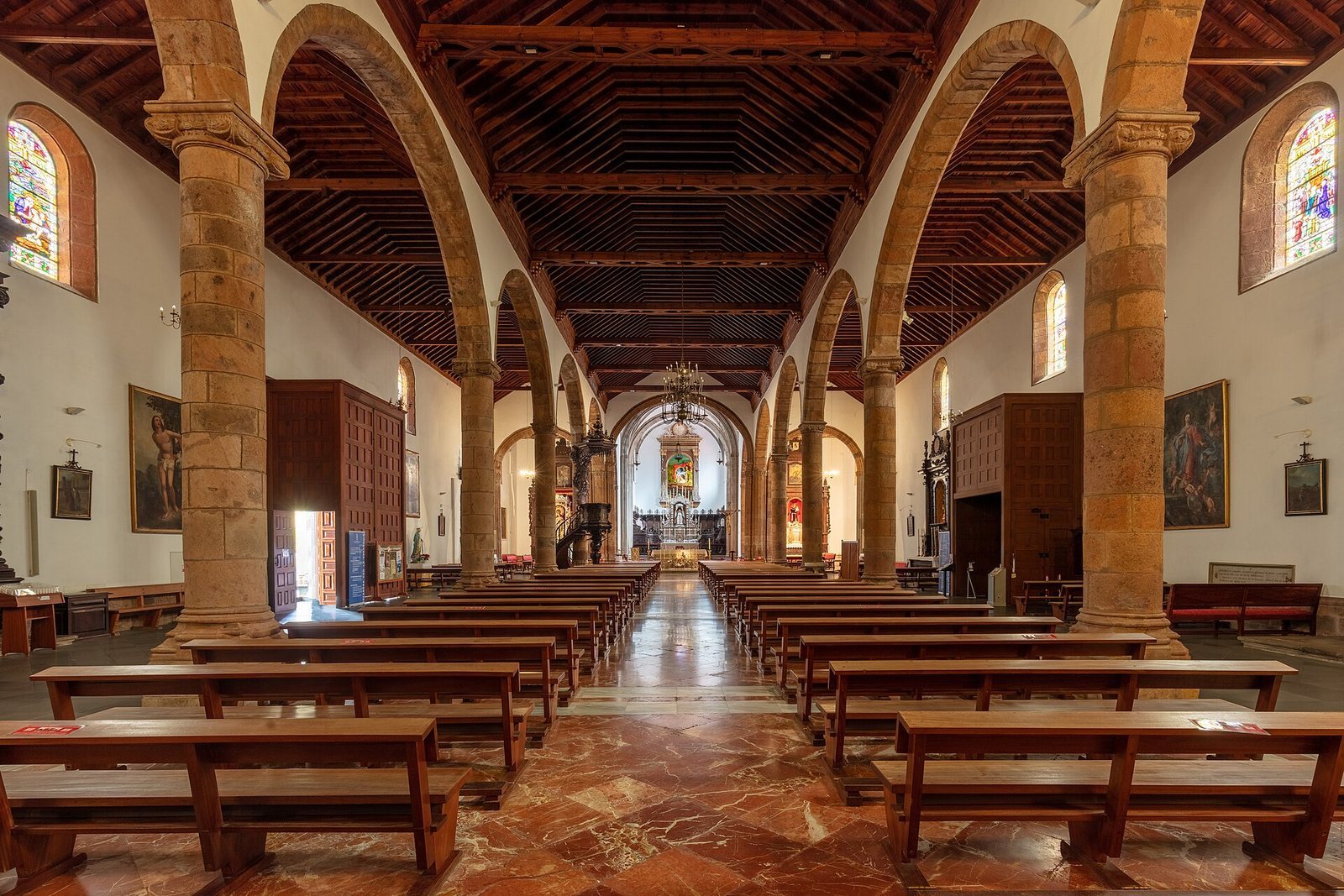
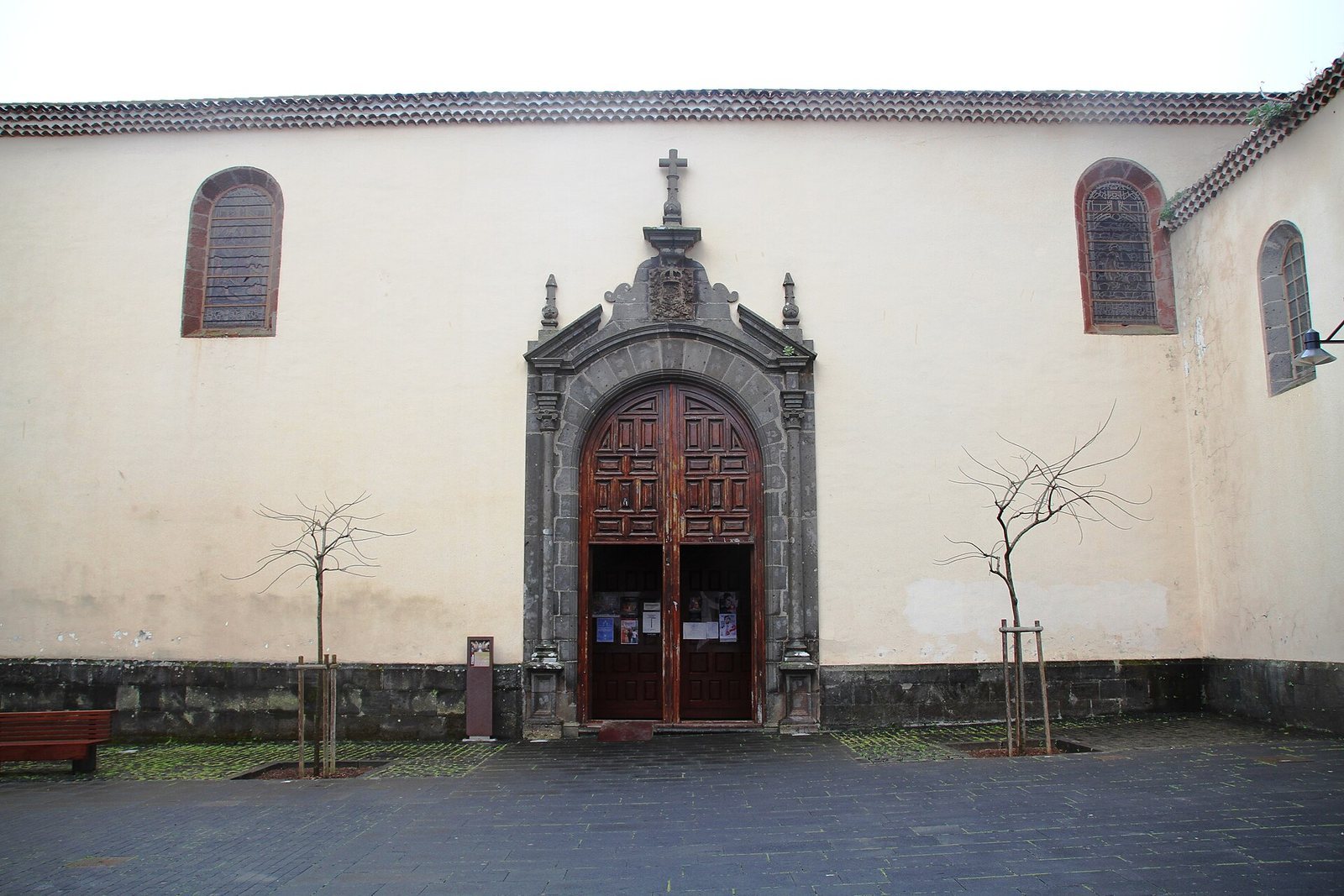
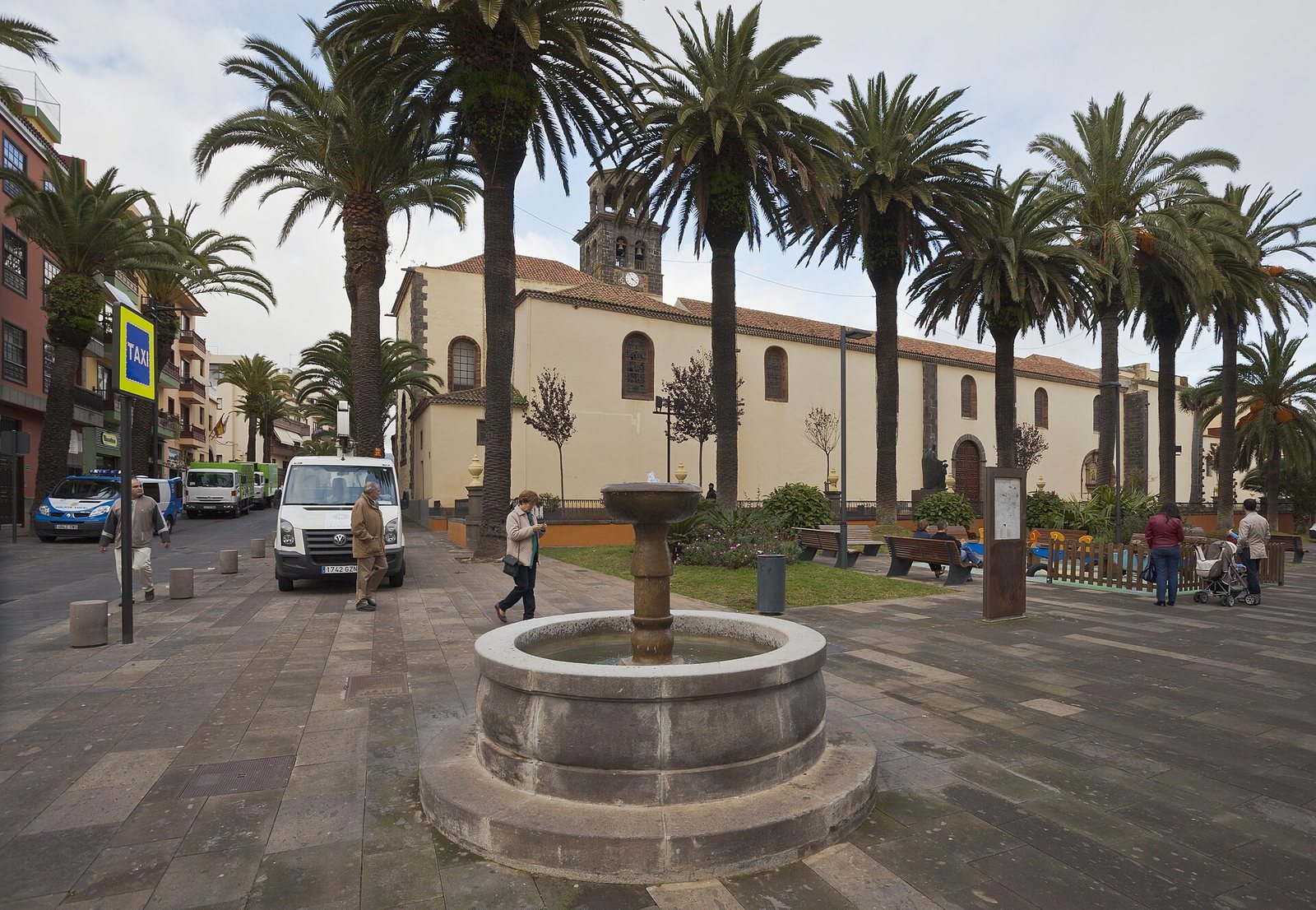
The church stands between Plaza de la Concepción and Plaza Doctor Olivera, with its façade facing east. Its three naves, or longitudinal sections of a church, are joined by semicircular arches and covered by a coffered ceiling divided into recessed panels. The ceiling follows the Mudéjar tradition, an Iberian style combining Christian forms with techniques associated with Muslim craftsmanship. The church is also described as almost a twin of the Church of the Conception in Santa Cruz de Tenerife.
Bell tower
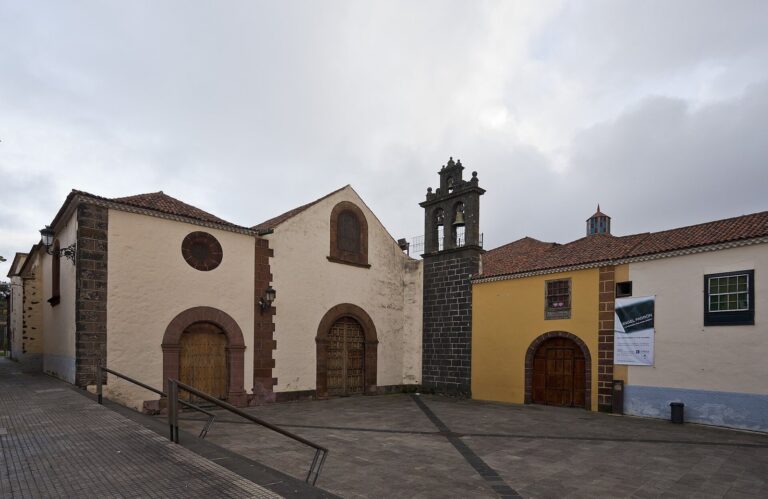
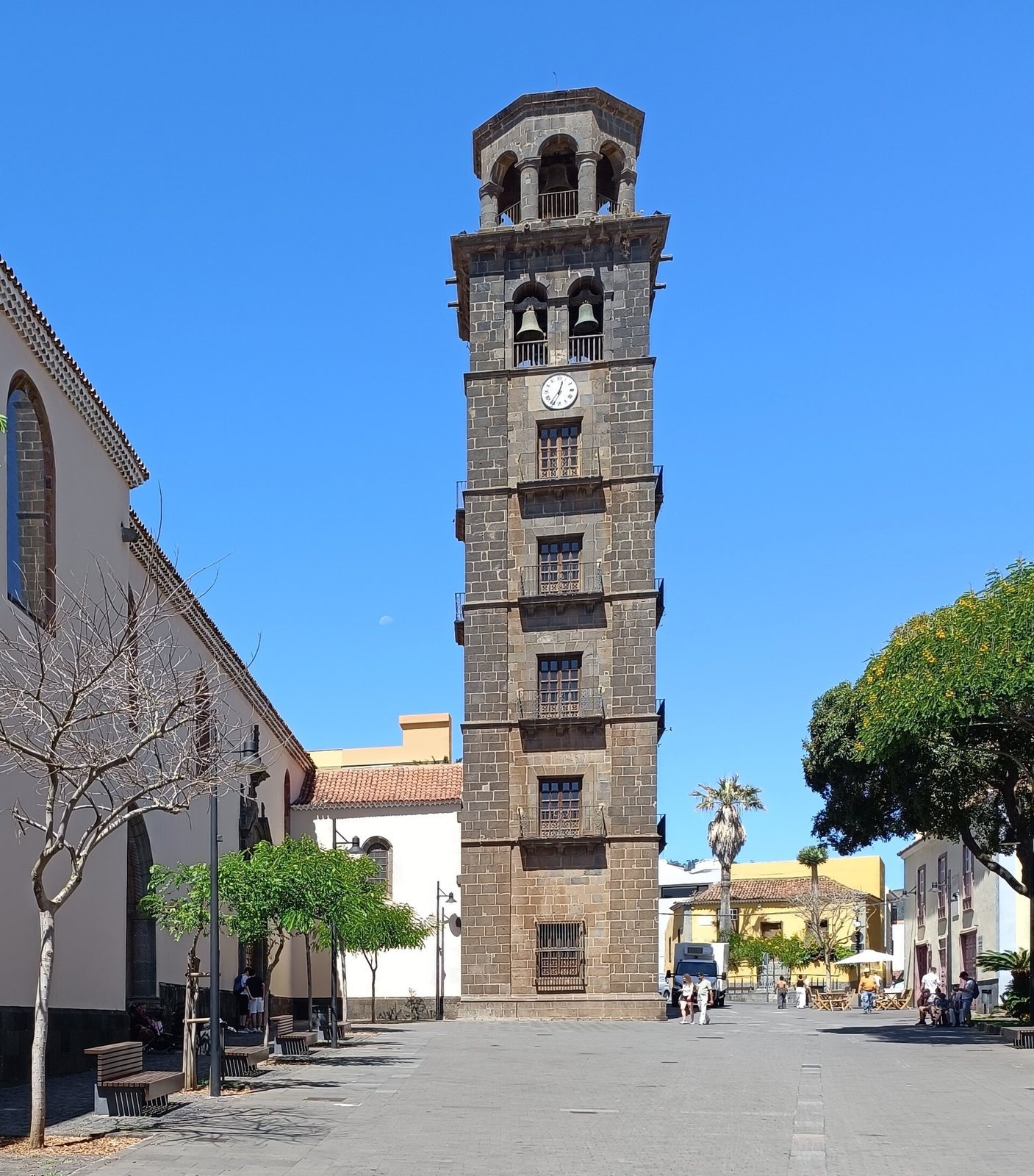
Dating to the late seventeenth century, the 28-metre bell tower is Tuscan in style and contains the largest bell in the Canary Islands. Its design is described as resembling the bell tower of Turin Cathedral.
Altars, images, and devotional objects
Image of the Immaculate Conception
The high altar and the devotional chamber for the Immaculate Conception are among the church’s principal features. The image is carried on a seventeenth-century processional platform beneath a silver canopy decorated in relief, hammered from the reverse of the metal.
Other altarpieces and images
Altarpieces are dedicated to the Pietà and the Holy Family, as well as to Our Lady of Sorrows. The image of Our Lady of Sorrows, known as La Predilecta, is by Canarian sculptor Luján Pérez. A small image of Our Lady of Montserrat, patron of Catalonia, sits below that altarpiece.
Rear chapels
At the rear of the church are chapels dedicated to the Souls in Purgatory and Saint Bartholomew. The latter contains a silver carving made by silversmiths of La Laguna, whose workshops were on Calle del Agua.
Font, sculpture, and relics
A glazed-ceramic baptismal font dates to the period of the conquest of the Canary Islands. The church’s artworks include pieces by Canarian sculptors Fernando Estévez and Luján Pérez, and painter Cristóbal Hernández de Quintana. Beside the high-altar table stands the image of Christ of the Rescue, acquired in 1558 and also venerated as Christ of La Antigua, Christ of the Good Voyage, and Christ of the Good Death. The church preserves a relic believed to be wood from Christ’s Cross, along with oil associated with Saint John the Evangelist.
Exterior features and burial ground
Exterior mosaic
A mosaic of Our Lady of Perpetual Help occupies an exterior niche facing Plaza Doctor Olivera.
Pope John Paul II monument
Beside the church entrance in Plaza Doctor Olivera stands a bronze monument by Polish sculptor Czesław Dźwigaj. Brought from Poland and unveiled in 2012, it depicts Pope John Paul II blessing two children dressed in traditional Canarian clothing.
Ossuary
An ossuary, a structure for storing human bones, formerly stood outside the church. Burials also took place around the religious precinct.